Anal Fissure Symptoms: Causes, Diagnosis, Treatment Guide
Recognizing the signs of anal fissures: pain, bleeding, and more explained for better understanding and relief.
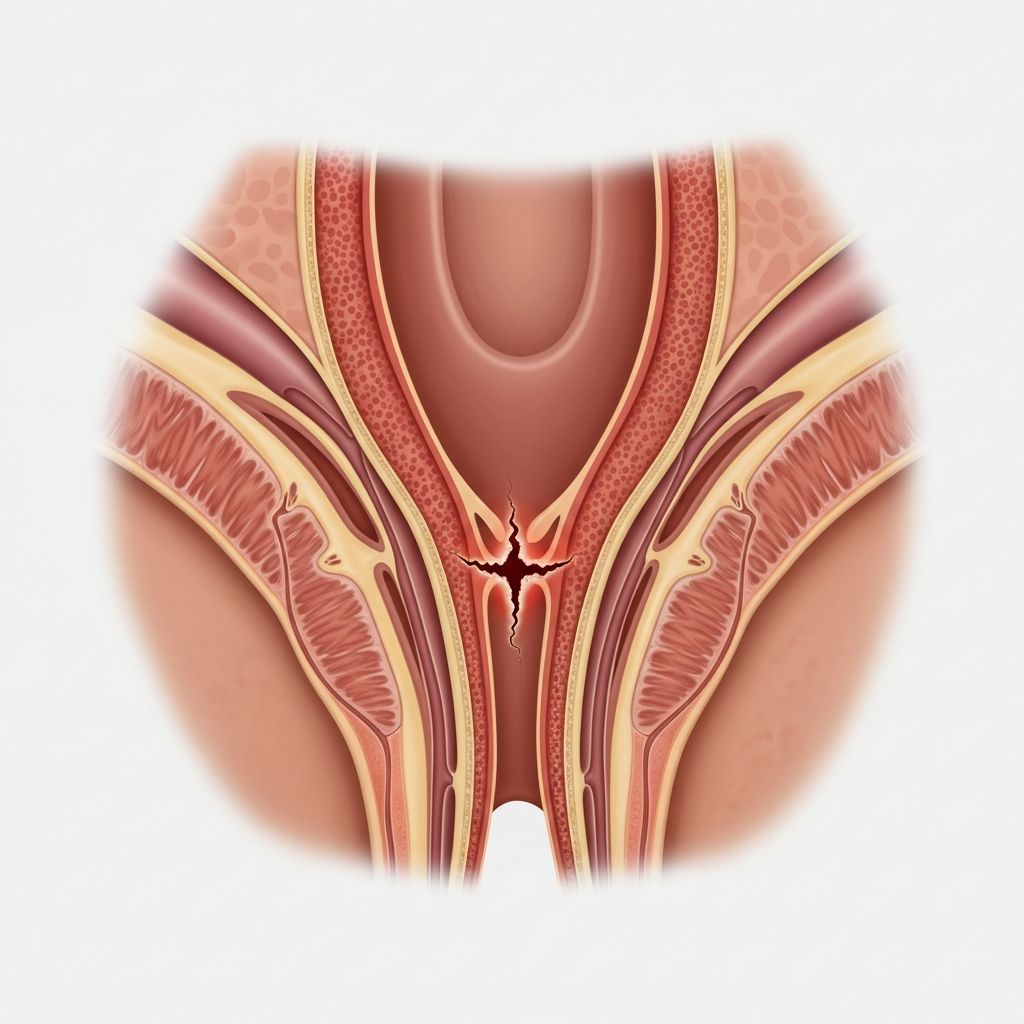
An anal fissure is a small tear in the delicate lining of the anus, often causing significant discomfort during bowel movements. These tears typically result from passing hard stools or straining, leading to sharp pain and bright red bleeding.
What Is an Anal Fissure?
An
anal fissure
refers to a linear tear or crack in the thin, moist tissue (anoderm) lining the anal canal, which is the final segment of the digestive tract where stool exits the body. This condition is common, affecting people of all ages, including infants and adults, and is frequently linked to constipation or trauma from hard stools.The anal canal is surrounded by the internal anal sphincter, a ring of muscle that controls bowel movements. When a fissure develops, it can extend into this muscle, triggering spasms that worsen pain and impede healing. Acute fissures last less than six weeks and often heal with self-care, while chronic ones persist longer, showing signs like fibrosis, sentinel skin tags, or hypertrophied anal papillae.
Fissures most commonly occur in the posterior midline due to poorer blood flow in that area, which is less than half that of other regions. Atypical locations, such as lateral or multiple fissures, may signal underlying issues like inflammatory bowel disease (IBD), HIV, tuberculosis, or malignancy. Approximately 40% of acute fissures progress to chronic if untreated.
Symptoms of an Anal Fissure
The hallmark symptoms of an anal fissure revolve around pain and bleeding associated with defecation. Patients describe the pain as severe, sharp, tearing, cutting, or burning, often radiating to the buttocks, thighs, or lower back.
- Pain during bowel movements: Intense, knife-like pain as stool passes over the tear.
- Prolonged pain after bowel movements: Burning or aching that can last minutes to several hours.
- Bright red blood: Streaks on toilet paper, stool surface, or in the toilet bowl, indicating fresh bleeding from the fissure.
- Anal sphincter spasms: Involuntary contractions of the anal muscle, exacerbating pain and reducing blood flow to the area.
- Visible tear: A small crack or linear laceration near the anus, sometimes with a skin tag or lump.
In chronic cases, symptoms become recurrent, with indurated edges, exposed internal sphincter fibers, and associated features like sentinel tags. Some individuals experience itching or a sensation of incomplete evacuation. Not everyone feels pain, but 90% do, distinguishing fissures from hemorrhoids, which are less painful.
Anal Fissure vs. Hemorrhoids
Anal fissures and hemorrhoids (piles) share symptoms like rectal bleeding and anal discomfort, often leading to confusion. Both can stem from straining during constipation.
| Feature | Anal Fissure | Hemorrhoids |
|---|---|---|
| Pain Level | Severe, episodic sharp pain (90% of cases) | Mild to moderate, often constant if thrombosed |
| Bleeding | Bright red streaks on stool/paper | Dripping blood or on paper |
| Location | Posterior midline tear | Swollen veins around anus/rectum |
| Other Signs | Spasms, skin tag possible | Itching, prolapse, thrombosis |
Fissures cause more intense pain during defecation, while hemorrhoids may itch or prolapse. Fissures are diagnosed clinically by visualization, whereas hemorrhoids appear as cushions.
Causes of Anal Fissures
Related Stories



Most anal fissures are idiopathic but triggered by local trauma. Key causes include:
- Constipation and hard stools: Straining passes large, firm stools that tear the anoderm.
- Chronic diarrhea: Repeated irritation from loose stools.
- Anal sphincter hypertonicity: Elevated resting pressure reduces perfusion, delaying healing.
- Childbirth or anal intercourse: Mechanical trauma.
- Underlying conditions: IBD (e.g., Crohn’s), infections (HIV, TB), or prior surgery for atypical fissures.
Hypertonicity of the internal anal sphincter creates ischemia, perpetuating a cycle of spasm, pain, and non-healing.
Diagnosis
Diagnosis is primarily clinical, based on history and physical exam. Patients report painful defecation with bleeding. During exam, the provider separates the buttocks to visualize the posterior midline tear, noting tenderness or spasms.
A digital rectal exam (gloved, lubricated finger) assesses sphincter tone but may be skipped if too painful. Anoscopy or sigmoidoscopy rules out other causes like abscesses, ulcers, or cancer in atypical cases. Acute fissures show sharp edges; chronic ones have fibrosis and tags.
Treatment
Most acute fissures (over 50%) heal within weeks with conservative measures. Treatment aims to reduce pain, soften stools, and relax the sphincter.
Self-Care and Home Remedies
- Dietary fiber increase: 25-30g daily from fruits, vegetables, whole grains to prevent constipation.
- Stool softeners: Bulk-forming agents like psyllium.
- Warm sitz baths: 10-20 minutes, 3-4 times daily to soothe and promote healing.
- Topical analgesics: Lidocaine ointment for pain relief.
- Hydration: 8-10 glasses of water daily.
Medical Treatments
For persistent fissures:
- Nitroglycerin ointment (0.2%): Relaxes sphincter, improves blood flow; side effect: headaches.
- Calcium channel blockers (e.g., diltiazem): Reduces pressure without headaches.
- Botulinum toxin injection: Temporarily paralyzes sphincter for 2-3 months, allowing healing (success rate 60-80%).
Surgery
Chronic fissures unresponsive to meds (10-15%): Lateral internal sphincterotomy cuts sphincter to relieve pressure; 95% success but 5-10% incontinence risk. Fissurectomy removes the tear.
When to See a Doctor
- Pain lasting >1 week despite self-care.
- Heavy bleeding or black/tarry stools.
- Fissure not healing after 6 weeks.
- Atypical features (multiple/off-midline).
- Fever, pus, or weight loss suggesting infection/IBD.
Prevention
Avoid constipation: High-fiber diet, exercise, hydration. Respond promptly to bowel urges. Treat diarrhea quickly.
Frequently Asked Questions (FAQs)
Can anal fissures heal on their own?
Yes, most acute anal fissures heal within a few weeks with self-care like fiber, water, and sitz baths.
How long does anal fissure pain last?
Pain peaks during and lasts minutes to hours post-bowel movement; chronic cases recur until treated.
Is an anal fissure dangerous?
Rarely; complications like chronicity or abscess are uncommon but require prompt care.
Do anal fissures cause cancer?
No, but non-healing ones need evaluation to rule out malignancy.
What’s the difference between fissure and piles pain?
Fissure pain is sharp/episodic; hemorrhoid pain is dull/constant.
References
- Anal fissure – NHS — NHS. 2023. https://www.nhs.uk/conditions/anal-fissure/
- Anal fissure – Symptoms and causes — Mayo Clinic. 2023-10-23. https://www.mayoclinic.org/diseases-conditions/anal-fissure/symptoms-causes/syc-20351424
- Anal Fissure: What It Is, Symptoms, Causes & Treatment — Cleveland Clinic. 2023-09-07. https://my.clevelandclinic.org/health/diseases/13177-anal-fissures
- Anal Fissures — StatPearls, NCBI Bookshelf. 2025. https://www.ncbi.nlm.nih.gov/books/NBK526063/
Similar Articles








Read full bio of medha deb