Anatomical Pathology: Disease Diagnosis Through Tissue Examination
Understanding how pathologists diagnose disease by examining body tissues and cells.
What is Anatomical Pathology?
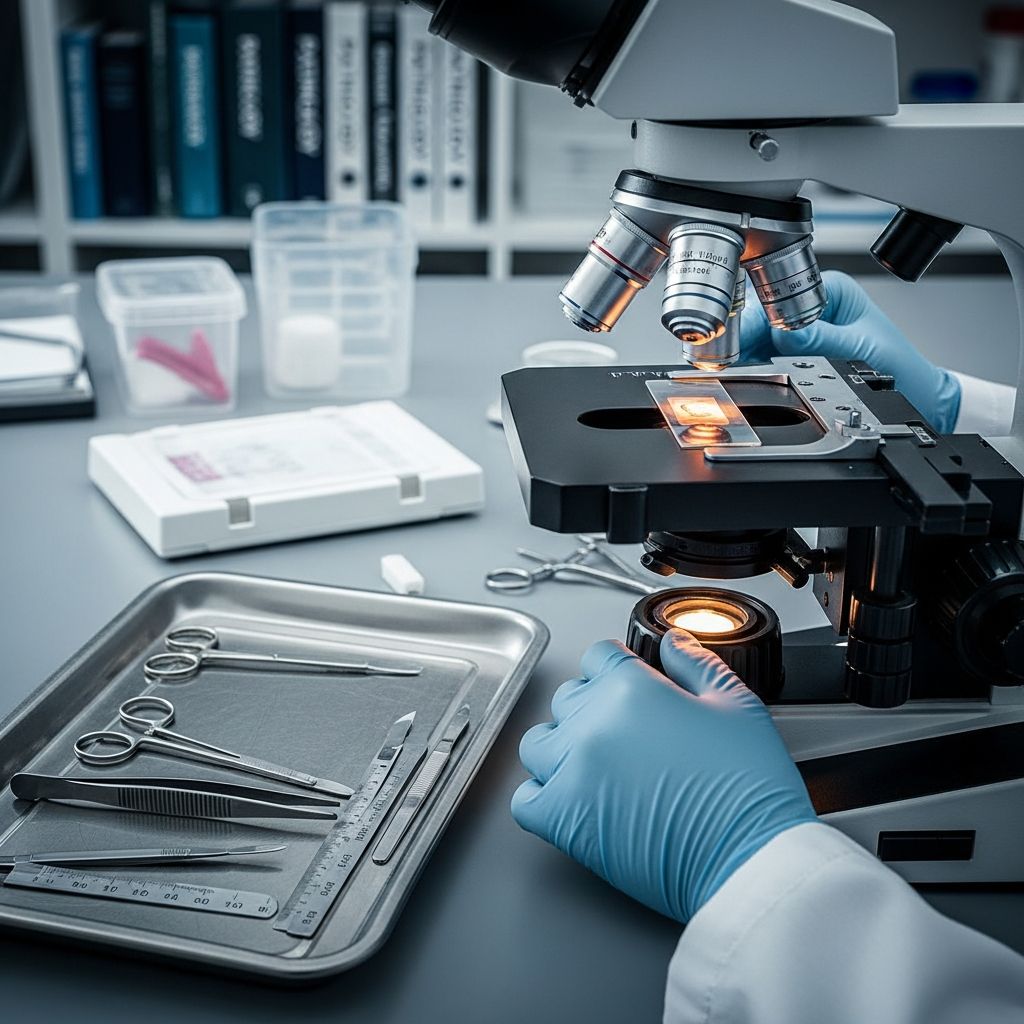
Anatomical pathology is a medical specialty focused on diagnosing disease by examining the structure of body organs and tissues, both at the gross level and under the microscope. This branch of medicine plays a critical role in healthcare by identifying abnormalities that help physicians understand disease processes, guide treatment decisions, and predict patient outcomes. The primary objective of anatomical pathology is to provide accurate and precise diagnoses that form the foundation for clinical decision-making across all medical specialties.
The field encompasses a wide range of diagnostic techniques and examinations, from studying individual cells to evaluating entire organs. Anatomical pathologists serve as essential consultants in hospitals and clinical settings, working closely with surgeons, oncologists, and other specialists to ensure that tissue samples are properly analyzed and interpreted. In most hospitals, all tissue removed during surgery must be examined by a pathologist, underscoring the importance of this specialty in patient care.
The Role of Anatomical Pathology in Modern Medicine
Anatomical pathology serves as the critical bridge between basic laboratory science and clinical patient care. Pathologists act as medical detectives, meticulously examining how disease alters the cellular and tissue structure of the human body. Their findings directly influence treatment strategies, surgical decisions, and long-term patient management plans. By providing detailed diagnoses of tissue abnormalities, anatomical pathologists help physicians understand the nature, severity, and extent of disease in their patients.
The specialty has evolved significantly over the 20th and 21st centuries, transitioning from historical whole-body examinations to modern, targeted diagnostic practices centered on cancer diagnosis and treatment guidance. Today, anatomical pathology is indispensable in oncology, where accurate tumor classification and staging are essential for determining appropriate therapeutic interventions and predicting patient prognosis.
Main Subdivisions of Anatomical Pathology
Anatomical pathology comprises several interconnected subdisciplines, each employing different techniques and methodologies to diagnose disease:
Histopathology
Histopathology represents the most common and fundamental technique within anatomical pathology. This subdiscipline involves the microscopic examination of intact tissue samples obtained through biopsy or surgical removal. The process begins with chemical treatment of the tissue, followed by slicing into extremely thin sections and staining to highlight cellular and tissue structures. Pathologists study the morphology—the form and structure—of cells to identify abnormalities indicative of disease.
The standard staining technique in histopathology uses haematoxylin and eosin (H&E), which provides distinctive coloration of different cellular components. However, many specialized staining methods exist to highlight specific tissue components or microorganisms. Additionally, histopathologists employ antibody-based techniques called immunohistochemistry to identify specific cellular markers, proteins, and other molecular features that aid in precise disease diagnosis and classification.
Cytopathology
Cytopathology, also referred to as cytology, focuses on the examination of individual cells or small groups of cells rather than intact tissue samples. These cells are typically obtained through scrapings, fine-needle aspirations, or fluid aspiration from various body sites. The sampled material is smeared onto microscope slides, stained, and examined under the microscope by a trained cytopathologist.
Related Stories



One of the most widely recognized cytopathology tests is the cervical Pap smear, a screening procedure that has dramatically reduced the incidence of cervical cancer. Cytopathologists examine the number of cells present, identify cell types, assess how cells are grouped together, and analyze detailed cellular characteristics including shape, size, and nuclear features. While technologists often perform initial screening of cytology preparations, pathologists provide the definitive diagnosis to healthcare practitioners.
Surgical Pathology
Surgical pathology involves the examination of solid tissue specimens obtained through biopsy or surgical excision. When a biopsy is performed—typically involving a small tissue sample obtained by incision, core needle biopsy, or endoscopy—the surgical pathologist determines what disease process is present and the extent of disease involvement. This subdiscipline is closely affiliated with clinical and surgical departments, serving as the basis for diagnosis either during surgery (intraoperatively) or following the surgical procedure.
Autopsy Pathology
Autopsy pathology involves the post-mortem examination of deceased patients to determine what diseases were present, how extensive they were, and to establish an explanation for the patient’s death. Autopsy examinations can answer important questions for family members and contribute significantly to medical knowledge and understanding of disease processes for physicians and researchers.
Clinical Applications and Disease Diagnosis
Anatomical pathology is valuable in diagnosing and managing an extensive range of diseases and conditions. While the specialty is frequently associated with cancer diagnosis and tumor management, its applications extend far beyond oncology:
Cancer Diagnosis and Classification
Anatomical pathologists are particularly adept at diagnosing various cancer types, including breast cancer, lung cancer, colon cancer, and prostate cancer. Beyond simple identification, pathologists classify tumors according to type, grade, and stage, provide prognostic information, and identify specific molecular features that may guide targeted therapy selection. This detailed analysis is crucial for oncologists to select appropriate treatment strategies and predict patient outcomes.
Infectious Diseases
Through microscopic examination of tissue samples, anatomical pathologists can identify bacterial, viral, fungal, and parasitic infections. Special staining techniques allow visualization of microorganisms that might otherwise be invisible with standard H&E staining, enabling rapid diagnosis and appropriate antimicrobial therapy initiation.
Organ-Specific Diseases
Anatomical pathology plays an essential role in diagnosing diseases of specific organs. Kidney biopsies reveal the nature of renal disease, whether glomerulonephritis, diabetic nephropathy, or other pathologic processes. Liver biopsies help diagnose cirrhosis, hepatitis, fatty liver disease, and liver malignancies. Bone marrow examinations identify hematologic disorders, including leukemias and lymphomas.
Autoimmune and Inflammatory Conditions
Tissue examination allows pathologists to identify patterns of inflammation and immune cell infiltration characteristic of autoimmune diseases. Conditions such as lupus, rheumatoid arthritis, and inflammatory bowel disease often require histopathologic confirmation for accurate diagnosis.
The Anatomical Pathology Report
Anatomical pathology reports provide comprehensive documentation of tissue findings and diagnostic conclusions. A typical anatomical pathology report includes five main sections:
Report Components
- Specimen Information: Details the type of tissue or organ involved, specifies the anatomical location from which the sample was obtained, and describes the collection method.
- Clinical History: Provides relevant patient background and clinical context that aids pathologist interpretation.
- Gross Description: Documents the pathologist’s macroscopic observations of the tissue sample, including size, color, consistency, and any visible abnormalities.
- Microscopic Findings: Describes the detailed microscopic examination results, including cellular morphology, tissue architecture, and presence of abnormal elements.
- Diagnosis: Presents the definitive diagnosis and may include additional interpretive comments. The diagnosis section may appear at the beginning or end of the report and ranges from brief, straightforward statements to more extensive descriptions depending on case complexity.
Advanced Techniques in Anatomical Pathology
Molecular Pathology
Molecular pathology represents an emerging and increasingly important discipline within anatomical pathology. This subdiscipline employs nucleic acid-based techniques such as in-situ hybridization, reverse-transcriptase polymerase chain reaction (RT-PCR), and nucleic acid microarrays to perform specialized studies of disease at the molecular level. Molecular pathology shares aspects with both anatomic and clinical pathology and is sometimes considered a “crossover” discipline that bridges traditional histopathology with molecular diagnostics.
Immunohistochemistry and Immunocytochemistry
These techniques use antibodies to identify and localize specific antigens, proteins, and cellular markers within tissue and cell samples. By using labeled antibodies that bind to specific molecular targets, pathologists can visualize the presence, absence, or altered expression of particular markers that aid in disease classification and prognosis determination.
Special Staining Techniques
Beyond standard H&E staining, numerous special stains are available to highlight specific tissue components or infectious organisms. Examples include Gram stains for bacteria, Periodic Acid-Schiff (PAS) stains for fungi and carbohydrates, Masson trichrome stains for collagen in fibrotic conditions, and Iron stains for hemosiderin deposits.
Anatomical Pathology vs. Clinical Pathology
While related, anatomical pathology and clinical pathology represent distinct specialties with different focuses and methodologies. Anatomical pathology emphasizes tissue examination and morphologic diagnosis, while clinical pathology involves laboratory analysis of bodily fluids and tissues through various chemical, serologic, and microbiologic methods.
Clinical pathology procedures may include blood sample analysis, urinalysis, stool sample analysis, analysis of spinal fluid, and microbiological culture and identification. Clinical pathologists often specialize in areas such as blood banking, clinical chemistry, microbiology, hematology, and coagulation studies. However, many pathologists practice both anatomical and clinical pathology, a combination known as general pathology, allowing them to provide comprehensive diagnostic services.
The Importance of Accurate Pathology Diagnosis
Accurate anatomical pathology diagnosis is fundamental to appropriate patient care. An incorrect diagnosis can lead to inappropriate treatment, delayed therapy, patient harm, and poor outcomes. Conversely, precise pathologic diagnosis enables physicians to select targeted therapies, avoid unnecessary treatments, and provide patients with accurate prognostic information. This makes the work of anatomical pathologists critically important to the entire healthcare system.
Frequently Asked Questions
Q: What is the difference between a biopsy and a cytology specimen?
A: A biopsy involves removal of intact tissue that is examined histologically under the microscope, while a cytology specimen consists of individual cells or small cell groups obtained through scraping or aspiration and examined microscopically.
Q: How long does it take to receive anatomical pathology results?
A: Routine pathology results typically take 3-7 business days. However, frozen section analysis performed during surgery can provide results within minutes to allow intraoperative decision-making.
Q: Why is anatomical pathology important in cancer treatment?
A: Anatomical pathology provides definitive cancer diagnosis, determines tumor type and grade, identifies molecular markers that guide targeted therapy selection, and provides prognostic information essential for treatment planning.
Q: Can anatomical pathology identify all infectious diseases?
A: While anatomical pathology can identify many infections through tissue examination and special stains, some infections require culture or molecular testing through clinical pathology for definitive identification.
Q: What qualifications do anatomical pathologists have?
A: Anatomical pathologists complete medical school, followed by specialized residency training in pathology, and often pursue board certification through the American Board of Pathology or similar organizations.
References
- Anatomic Pathology — Testing.com. 2024. https://www.testing.com/articles/anatomic-pathology/
- Anatomical pathology — Wikipedia. 2024. https://en.wikipedia.org/wiki/Anatomical_pathology
- Anatomic Pathology — UCLA Health Department of Pathology. 2024. https://www.uclahealth.org/departments/pathology/clinical-services/anatomic-pathology
- Anatomic Pathology — Duke University School of Medicine, Department of Pathology. 2024. https://pathology.duke.edu/divisions/anatomic-pathology
- Overview of Anatomic and Clinical Pathology — College of American Pathologists. 2019. https://documents.cap.org/documents/overview-anatomic-clinical-pathology-medical-students.pdf
- Anatomic Pathology — Yale Medicine Departments. 2024. https://www.yalemedicine.org/departments/anatomic-pathology
Similar Articles








Read full bio of Sneha Tete