Endocrine System: Complete Guide To Glands, Hormones
Discover how hormones regulate your body's vital functions through specialized glands.
Understanding the Endocrine System
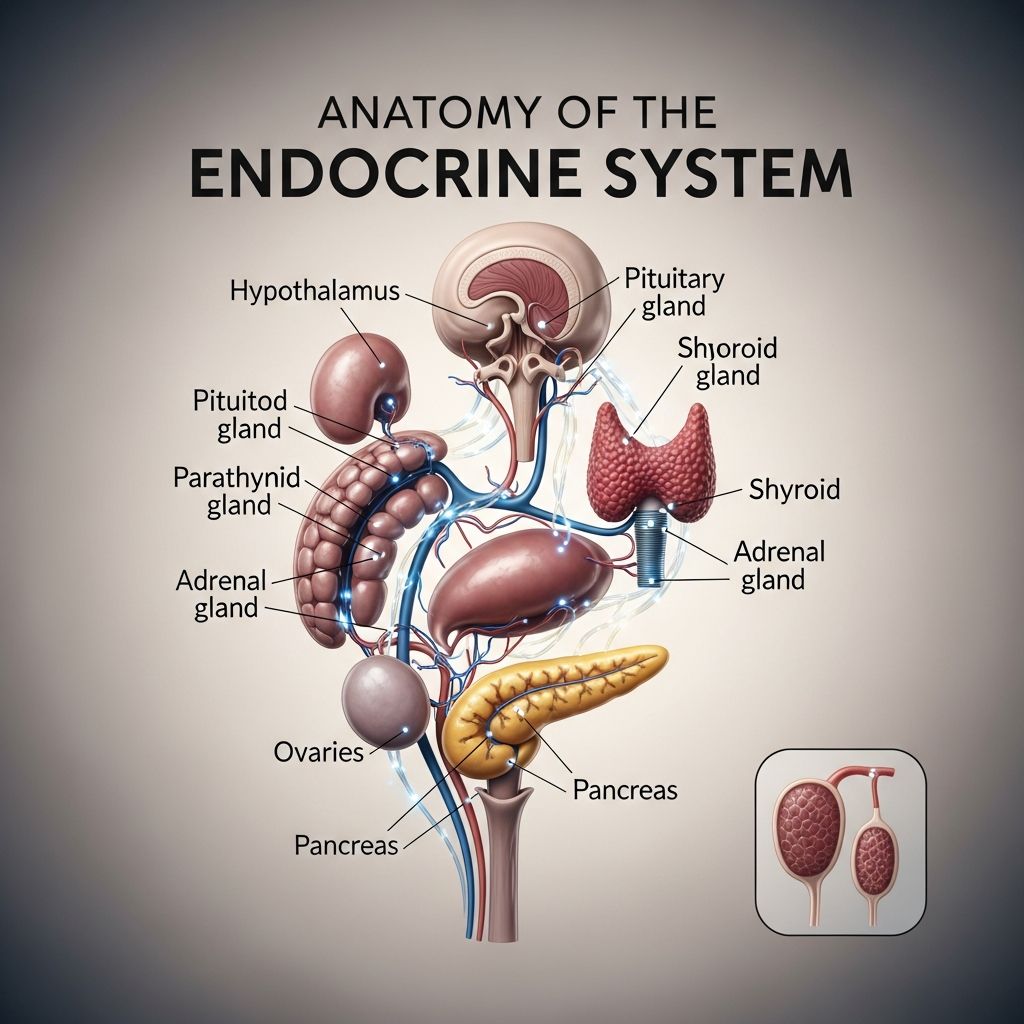
The endocrine system is your body’s chemical messenger system, responsible for regulating growth, metabolism, reproduction, mood, and many other essential functions. Unlike the nervous system, which uses electrical signals, the endocrine system communicates through specialized chemical messengers called hormones. These hormones are secreted by various glands throughout the body and travel through the bloodstream to reach target organs and tissues, where they trigger specific responses. Understanding the anatomy and function of the endocrine system is crucial for maintaining overall health and recognizing when something might be amiss.
What is the Endocrine System?
The endocrine system consists of a network of glands and organs that produce and release hormones into the bloodstream. These hormones regulate numerous bodily processes, including energy production, growth and development, reproduction, mood regulation, and fluid balance. The endocrine system works closely with the nervous system to maintain homeostasis—the body’s internal balance. While the nervous system provides rapid responses to stimuli, the endocrine system provides longer-lasting effects through hormonal regulation. The hypothalamus, a region in the brain, acts as the master control center, linking the endocrine system to the nervous system through the pituitary gland.
Major Glands of the Endocrine System
The endocrine system comprises several major glands, each with specific functions and hormone productions:
The Pituitary Gland
Often called the “master gland,” the pituitary gland is a small, pea-sized organ located at the base of the brain, just below the hypothalamus. It has two distinct parts: the anterior pituitary and the posterior pituitary. The anterior pituitary produces and releases growth hormone, thyroid-stimulating hormone (TSH), adrenocorticotropic hormone (ACTH), follicle-stimulating hormone (FSH), luteinizing hormone (LH), and prolactin. The posterior pituitary stores and releases hormones produced by the hypothalamus, including antidiuretic hormone (ADH) and oxytocin. These hormones regulate growth, metabolism, reproduction, and fluid balance.
The Thyroid Gland
The thyroid is a butterfly-shaped gland located in the front of the neck, just below the larynx. It produces thyroxine (T4) and triiodothyronine (T3), hormones that regulate metabolism, energy production, and body temperature. The thyroid also produces calcitonin, which helps regulate calcium levels in the blood. The pituitary gland controls thyroid function through thyroid-stimulating hormone (TSH). When thyroid hormone levels are adequate, the pituitary reduces TSH production, demonstrating the body’s elegant feedback system.
The Parathyroid Glands
Four small glands located on the back of the thyroid produce parathyroid hormone (PTH), which regulates calcium and phosphorus levels in the blood and bones. When blood calcium levels drop, the parathyroid glands increase PTH production, which stimulates the release of calcium from bones and increases calcium absorption in the intestines. This maintains the calcium levels necessary for nerve and muscle function, blood clotting, and bone health.
The Adrenal Glands
Sitting atop each kidney are the adrenal glands, which consist of two parts: the adrenal cortex and the adrenal medulla. The adrenal cortex produces cortisol, which helps the body respond to stress and regulates metabolism and immune function. It also produces aldosterone, which regulates sodium and potassium balance, and androgens, which contribute to male and female sexual characteristics. The adrenal medulla produces epinephrine (adrenaline) and norepinephrine (noradrenaline), hormones that trigger the “fight or flight” response during stress or emergency situations.
The Pancreas
The pancreas is a dual-function organ that acts as both an endocrine and exocrine gland. The endocrine portion contains clusters of cells called islets of Langerhans, which produce insulin and glucagon. Insulin lowers blood glucose levels by promoting glucose uptake by cells, while glucagon raises blood glucose levels by stimulating the release of stored glucose from the liver. These two hormones work together to maintain stable blood sugar levels, a critical function for energy metabolism.
Related Stories



The Pineal Gland
Located deep within the brain, the pineal gland produces melatonin, a hormone that regulates sleep-wake cycles. Melatonin production increases in darkness and decreases in light, helping to synchronize the body’s circadian rhythm with the external environment. This is why melatonin is often called the “sleep hormone.”
The Thymus Gland
Located behind the breastbone, the thymus gland is most active during childhood and adolescence. It produces hormones that help develop and mature T cells, which are crucial immune cells that fight infections and disease. As people age, the thymus shrinks and produces fewer hormones, which is one reason immune function typically declines with age.
The Testes and Ovaries
The male testes produce testosterone, which promotes male sexual characteristics, sperm production, and muscle development. The female ovaries produce estrogen and progesterone, which regulate the menstrual cycle, support pregnancy, and promote female sexual characteristics. Both hormones also play important roles in bone health, cardiovascular function, and cognitive function.
Hormones: Chemical Messengers
Hormones are organic compounds produced by endocrine glands that act as chemical messengers. They travel through the bloodstream to reach distant target cells and tissues, where they bind to specific receptors and trigger biological responses. Hormones regulate virtually every major bodily function, including metabolism, growth, reproduction, mood, immune function, and fluid balance. The endocrine system operates through feedback loops, where changes in hormone levels trigger responses that maintain homeostasis.
How the Endocrine System Works
The endocrine system operates through complex feedback mechanisms. The hypothalamus, a region of the brain, monitors various body conditions and signals the pituitary gland to release or inhibit hormones. For example, when body temperature drops, the hypothalamus signals the pituitary to release TSH, which stimulates the thyroid to produce more thyroid hormones, increasing metabolic rate and heat production. Once body temperature normalizes, the hypothalamus reduces its signal, and hormone production decreases. This negative feedback loop maintains stability.
The endocrine system also works closely with the nervous system. The autonomic nervous system directly stimulates the adrenal medulla to release epinephrine and norepinephrine during stress. The parasympathetic nervous system signals the pancreas to release insulin after meals. This integration ensures that the body’s responses are appropriate to current conditions.
Key Hormones and Their Functions
| Hormone | Gland | Primary Functions |
|---|---|---|
| Growth Hormone (GH) | Anterior Pituitary | Promotes growth, metabolism, and protein synthesis |
| Thyroid Hormones (T3, T4) | Thyroid | Regulate metabolism and body temperature |
| Insulin | Pancreas | Lowers blood glucose levels |
| Glucagon | Pancreas | Raises blood glucose levels |
| Cortisol | Adrenal Cortex | Stress response, metabolism regulation |
| Testosterone | Testes | Male development and reproduction |
| Estrogen & Progesterone | Ovaries | Female development and reproduction |
| Melatonin | Pineal Gland | Sleep-wake cycle regulation |
| Parathyroid Hormone (PTH) | Parathyroid Glands | Calcium and phosphorus regulation |
| Calcitonin | Thyroid | Calcium level regulation |
Development of the Endocrine System
The endocrine system begins developing very early in fetal life. The fetal endocrine system is one of the first systems to develop during prenatal development, beginning around the third week of gestation. By four weeks of gestation, the parathyroid glands begin to develop from the pharyngeal pouches. The thyroid gland begins forming around the same time and later migrates to its position in the neck.
During the first trimester, the anterior pituitary undergoes cellular differentiation, and by 20 weeks of gestation, the hypophyseal portal system—the network of blood vessels connecting the hypothalamus to the pituitary—has fully developed. The posterior pituitary forms from neural tissue. During the second and third trimesters, the pancreatic islets mature, the adrenal glands develop, and the sex organs begin producing hormones that influence sexual development.
The Hypothalamic-Pituitary Axis
The hypothalamic-pituitary axis is the central control system of the endocrine system. The hypothalamus produces releasing hormones that stimulate the anterior pituitary to produce and release hormones, which then signal other endocrine glands. For example, corticotropin-releasing hormone (CRH) from the hypothalamus stimulates the anterior pituitary to release ACTH, which signals the adrenal cortex to produce cortisol. This three-tiered system allows for precise regulation of hormone levels through feedback loops.
Common Endocrine Disorders
When the endocrine system malfunctions, various disorders can develop. Hypothyroidism occurs when the thyroid produces insufficient hormone, leading to fatigue and weight gain. Hyperthyroidism results from excess thyroid hormone production, causing weight loss and anxiety. Diabetes mellitus involves impaired insulin production or function, affecting blood glucose regulation. Cushing’s syndrome results from excess cortisol, while Addison’s disease involves insufficient cortisol. Recognizing symptoms and seeking appropriate medical evaluation are essential for managing endocrine disorders.
Frequently Asked Questions
Q: What is the difference between the endocrine and nervous systems?
A: The nervous system uses electrical signals for rapid communication, while the endocrine system uses hormones for slower, longer-lasting effects. Both systems work together to regulate body functions.
Q: Why is the pituitary gland called the “master gland”?
A: The pituitary gland controls many other endocrine glands by producing hormones that stimulate or inhibit their hormone production, making it central to endocrine regulation.
Q: How do hormones know which cells to affect?
A: Hormones bind to specific receptors on target cells. Only cells with the appropriate receptors respond to particular hormones, ensuring precise regulation of body functions.
Q: What happens if hormone levels become too high or too low?
A: Feedback loops normally maintain hormone levels within a narrow range. If levels deviate, the body adjusts production to restore balance. Persistent imbalances may indicate endocrine disorders requiring medical treatment.
Q: Can stress affect the endocrine system?
A: Yes, chronic stress can dysregulate the hypothalamic-pituitary-adrenal axis, leading to sustained elevation of cortisol and other stress hormones, which can negatively impact health.
Q: Why do hormone levels change during different life stages?
A: Hormone production changes throughout life due to development, aging, and natural cycles. For example, estrogen and progesterone fluctuate during the menstrual cycle, and growth hormone levels peak during adolescence.
References
- Endocrine system — Wikipedia. https://en.wikipedia.org/wiki/Endocrine_system
- Chapter 17 Endocrine System Terminology — National Center for Biotechnology Information (NCBI). https://www.ncbi.nlm.nih.gov/books/NBK607443/
- BIOL 109 Human Anatomy & Physiology: Endocrine — Community College of Baltimore County Libraries. https://libraryguides.ccbcmd.edu/anatomy/endocrine
Similar Articles








Read full bio of Sneha Tete