Eye Anatomy: Complete Guide to Eye Structure
Understand the intricate structures and functions of the human eye
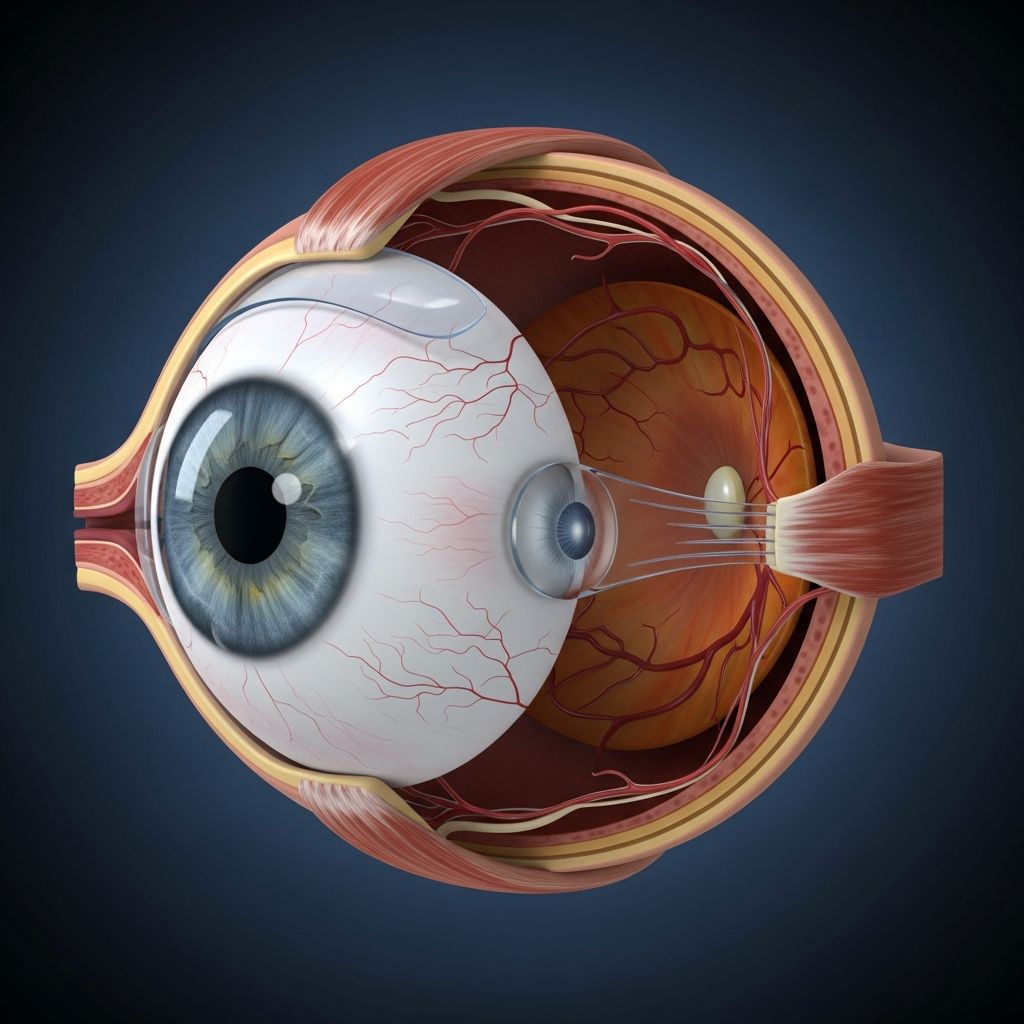
Anatomy of the Eye: Understanding Your Visual System
The human eye is one of the most complex and sophisticated sensory organs in the body, enabling us to perceive the world around us through light and color. While many people can see the visible structures of the eye such as the pupil and iris, the complete anatomy of the eye involves numerous internal components working in perfect harmony. Understanding how each part functions is essential for appreciating how we see and for recognizing when something might not be working properly. This comprehensive guide explores the detailed structure and function of every major component of the eye.
External Structures of the Eye
The eye’s external anatomy consists of several easily observable structures that play crucial roles in vision and eye protection.
The Cornea
The cornea is a transparent dome-shaped structure covering the front of the eye. It serves as the eye’s outermost lens and is responsible for bending light rays as they enter the eye, making it the first and most powerful focusing lens in the optical system. The cornea protects the eye from dust, germs, and other foreign particles while allowing light to pass through clearly. Its transparency is maintained by a unique structure that lacks blood vessels, receiving oxygen directly from the air.
The Sclera
The sclera, commonly known as the “white of the eye,” is a tough, fibrous tissue that forms the supporting structure of the eyeball. This opaque outer layer covers approximately 80% of the eye’s surface and provides attachment points for the muscles that move the eye. The sclera is composed of dense connective tissue that protects the internal structures while maintaining the eye’s shape. It is continuous with the cornea at the front and with the optic nerve sheath at the back.
The Iris and Pupil
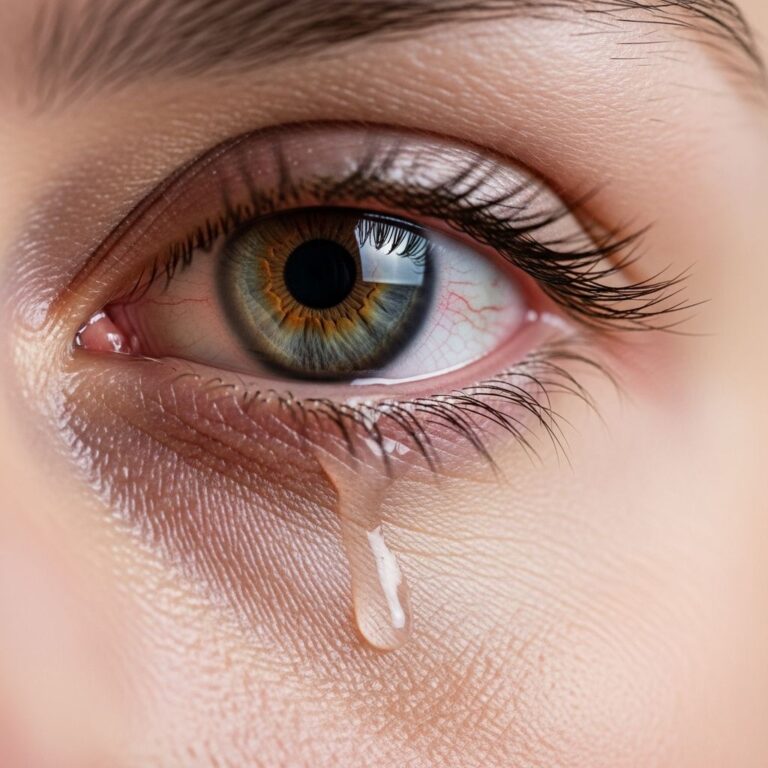
The iris is the colored portion of the eye, containing pigments that determine eye color. This muscular structure is located between the cornea and the lens and controls the size of the pupil—the black aperture at the center of the iris. The pupil allows light to enter the eye, appearing dark because of absorbing pigments in the retina. The iris automatically adjusts the pupil’s size in response to light conditions, widening in dim light to allow more light entry and narrowing in bright light to protect the retina.
Internal Eye Structures and Layers
The eye is composed of three distinct layers, each with specific functions in the visual process.
The Fibrous Tunic
The fibrous tunic forms the outermost layer of the eye and consists of the cornea anteriorly and the sclera posteriorly. This layer provides structural support and protection for the delicate internal components while maintaining the eye’s shape and integrity.
The Vascular Tunic (Uvea)
The vascular tunic, also known as the uvea, is the middle layer of the eye composed of three main parts:
- The Choroid: A highly vascular layer lining the internal surface of the sclera, providing blood supply to the outer layers of the retina
- The Ciliary Body: Contains ciliary processes that secrete aqueous humor and ciliary muscles that control lens shape for accommodation
- The Iris: The visible colored structure that regulates light entry through pupil dilation and constriction
Related Stories



The Retina
The retina is the innermost sensory layer of the eye, consisting of specialized neural tissue. This light-sensitive membrane contains millions of photoreceptor cells called rods and cones that convert light energy into electrical signals. The retina processes these signals and transmits them to the brain via the optic nerve, where they are interpreted as visual images. The retina develops in an inside-to-out manner during fetal development, with ganglion cells forming first and photoreceptor cells maturing last.
The Lens and Accommodation
The lens is a transparent, biconvex structure suspended behind the iris by zonular fibers attached to the ciliary body. Unlike the cornea, which has fixed focusing power, the lens changes shape to focus light precisely on the retina. This process, called accommodation, allows the eye to maintain sharp focus on objects at varying distances. The ciliary muscle contracts and relaxes, adjusting the tension on zonular fibers, which in turn alters the lens curvature. As we age, the lens loses elasticity, making accommodation progressively more difficult—a condition known as presbyopia.
Eye Chambers and Fluids
The eye contains three fluid-filled chambers that maintain internal pressure, provide nutrition, and support optical clarity.
Anterior Chamber
Located between the cornea and iris, the anterior chamber is filled with aqueous humor. This clear watery fluid provides nutrients to the cornea and lens while maintaining the eye’s shape and internal pressure.
Posterior Chamber
Positioned behind the iris and in front of the zonular fibers and lens, the posterior chamber is also filled with aqueous humor. The ciliary processes continuously produce aqueous humor, which flows from the posterior chamber through the pupil into the anterior chamber and is eventually drained through the trabecular meshwork.
Vitreous Chamber
The largest chamber, located between the lens and retina, is filled with vitreous humor—a clear, gel-like substance. Unlike aqueous humor, the vitreous does not undergo rapid replacement. This viscous fluid holds the retina firmly against the choroid while maintaining optical clarity. It contains specialized cells that remove debris to preserve vision, though sometimes debris may cast shadows appearing as floaters, which are more common in older individuals.
The Optic Nerve and Visual Pathway
The optic nerve serves as the communication highway between the eye and brain. Approximately 1.2 million nerve fibers converge at the optic disc to form this crucial structure. The central retinal artery, a branch of the ophthalmic artery, runs within the optic nerve to supply blood to the retina. Light signals processed by the retina travel along the optic nerve to the visual cortex in the brain, where they are finally interpreted as the images we see.
Eye Movement and Extraocular Muscles
Six extraocular muscles control eye movement, allowing the eyes to track objects and maintain binocular vision. These muscles work in coordinated pairs:
- Rectus Muscles: Four muscles (superior, inferior, medial, and lateral rectus) move the eye in cardinal directions, running straight from the muscle attachment point on the eyeball to the bony orbit
- Oblique Muscles: Two muscles (superior and inferior oblique) provide rotational movements at oblique angles
The oculomotor nerve innervates four of these muscles, while the trochlear nerve controls the superior oblique and the abducens nerve controls the lateral rectus. These muscles are coordinated so precisely that both eyes move together to keep images focused on the fovea, the area of sharpest vision in the central retina.
Blood Supply to the Eye
The internal carotid artery supplies nearly all internal eye structures through its branch, the ophthalmic artery. This artery further divides into posterior ciliary arteries, retinal arteries, and muscular arteries that supply the ciliary bodies, retina, and extraocular muscles respectively. The central retinal artery, another important branch, provides the main blood supply to the inner retina. The external carotid artery supplies the eyelids and conjunctiva.
Accessory Structures
Beyond the eyeball itself, several accessory structures contribute to eye function and protection:
- Eyelids: Protective folds that close to shield the eye and spread tears across the surface
- Eyelashes: Hair-like structures that provide additional protection from debris
- Eyebrows: Skin-covered ridges that help direct sweat away from the eyes
- Lacrimal Apparatus: The tear system that produces, distributes, and drains tears to maintain corneal hydration and health
Development of the Eye
Eye development occurs during fetal life and continues even after birth. The retina develops from the inside outward, with ganglion cells forming first and photoreceptor cells maturing last. By five months of gestation, most basic neural connections in the retina have been established. The fovea continues its development through rearrangement and alteration of cone shape until approximately four years after birth. Other important structures like the lens, iris, and cornea develop from surface membranes that form the boundaries of the eye chambers.
Eye Size and Protection
The adult eyeball measures approximately 2.5 centimeters in diameter, with only about one-sixth exposed to the outside air. The remaining portion is protected within the bony orbit of the skull. This protective socket, formed by bones of the skull, provides cushioning through fat and connective tissue while allowing necessary mobility for eye movements.
Frequently Asked Questions
Q: What is the most important part of the eye for vision?
A: The retina is arguably the most critical component, as it contains photoreceptor cells that detect light and initiate the visual process. However, all major structures—cornea, lens, retina, and optic nerve—must function properly for clear vision.
Q: How does the eye focus on objects at different distances?
A: The ciliary muscle contracts or relaxes to adjust the tension on zonular fibers, changing the lens shape. This accommodation process allows the lens to focus light precisely on the retina regardless of object distance.
Q: Why is the cornea so important?
A: The cornea is the first and most powerful lens in the eye’s optical system, accounting for approximately 65-75% of the eye’s total focusing power. Its transparency and refractive properties are essential for clear vision.
Q: What causes floaters in the eye?
A: Floaters are caused by debris within the vitreous humor casting shadows on the retina. While usually harmless and more common with age, sudden appearance of floaters should be evaluated by an eye care professional.
Q: How do the extraocular muscles work together?
A: The six extraocular muscles work in coordinated pairs to move both eyes together in the same direction, maintaining binocular vision and keeping images focused on the fovea for optimal clarity.
Q: What is the function of aqueous humor?
A: Aqueous humor nourishes the cornea and lens, maintains internal eye pressure, and helps maintain the eye’s shape. It is continuously produced and drained to maintain optimal conditions for vision.
Q: Can the lens repair itself?
A: Unlike the cornea, the lens cannot repair itself once damaged. This is why protecting the lens from injury and UV radiation is crucial for maintaining long-term vision health.
References
- Gross Anatomy of the Eye — National Center for Biotechnology Information (NCBI), National Institutes of Health. 2024. https://www.ncbi.nlm.nih.gov/books/NBK11534/
- Anatomy, Head and Neck, Eye — StatPearls, NCBI Bookshelf, National Institutes of Health. 2024. https://www.ncbi.nlm.nih.gov/books/NBK482428/
- The Johns Hopkins Atlas of Human Functional Anatomy — Johns Hopkins University Press. 2024. https://www.press.jhu.edu/books/title/2679/johns-hopkins-atlas-human-functional-anatomy
Similar Articles








Read full bio of Sneha Tete