Anatomy Of The Urinary System: 4 Main Structures Explained
Understand how your kidneys, ureters, bladder, and urethra work together to filter and eliminate waste.
Anatomy of the Urinary System
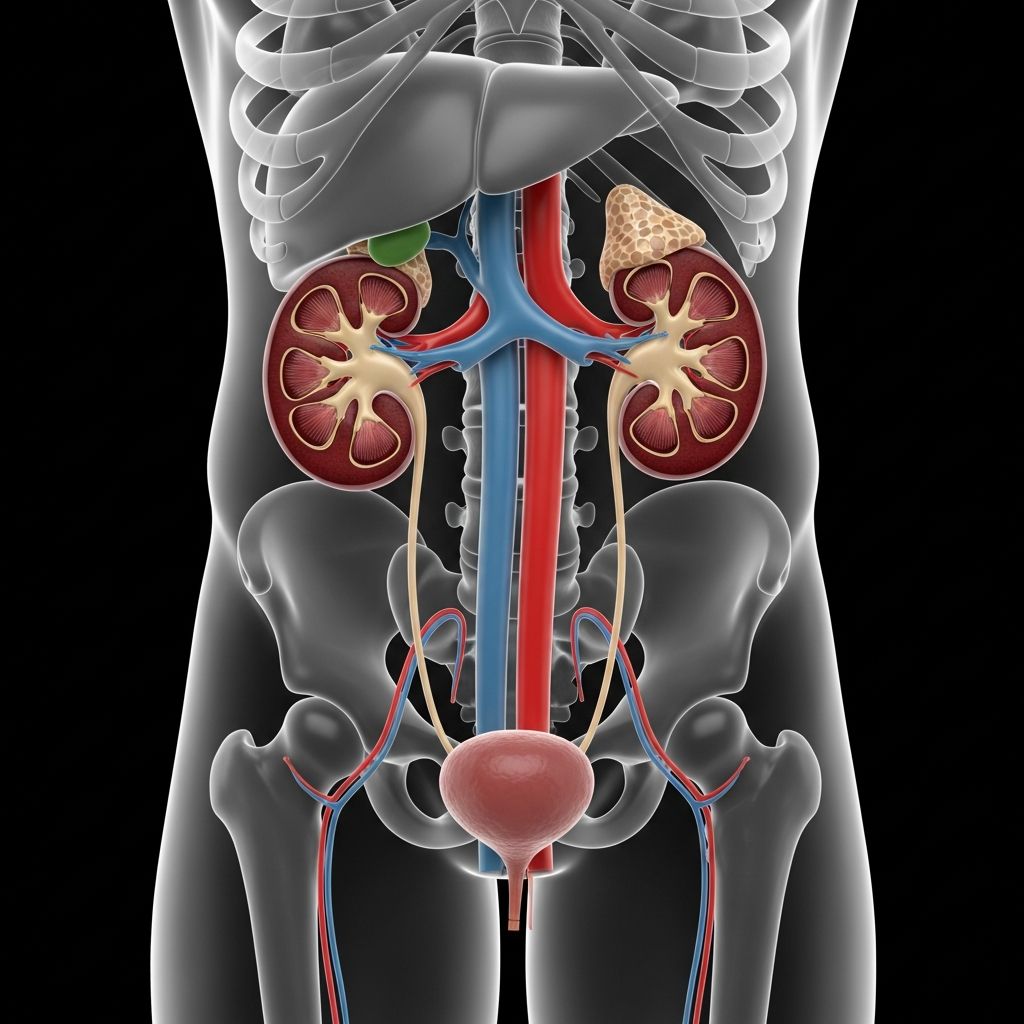
The urinary system, also known as the renal system or urinary tract, is a vital part of the body responsible for filtering waste products from the blood and eliminating them as urine. This complex system consists of four main structures: the kidneys, ureters, bladder, and urethra. Understanding the anatomy and function of each component is essential for maintaining urinary health and recognizing potential problems that may arise. The urinary system works continuously to maintain the body’s fluid balance and remove metabolic waste.
Overview of Urinary System Components
The urinary system functions as the body’s waste management system, filtering approximately 120 to 150 quarts of blood daily to produce roughly one to two quarts of urine. Each component of this system plays a distinct role in the filtration, storage, and elimination of waste. Together, these organs maintain electrolyte balance, regulate blood pressure, and produce hormones that stimulate red blood cell production.
The Four Main Structures
The primary organs of the urinary system include:
- Kidneys — Filter blood to produce urine
- Ureters — Transport urine from kidneys to the bladder
- Bladder — Stores urine until elimination
- Urethra — Carries urine from the bladder to outside the body
The Kidneys: Filtration Centers
The kidneys are two bean-shaped organs roughly the size of a human fist, positioned on either side of the spine in the retroperitoneal space, which is the area between the parietal peritoneum and the posterior abdominal wall. Protected by muscle, fat, and ribs, the kidneys are well-vascularized organs receiving approximately 25 percent of the cardiac output at rest. The male kidney is typically slightly larger than the female kidney.
Kidney Internal Structure
A cross-section of the kidney reveals distinct layers and regions, each playing a crucial role in urine formation. The outer region is called the renal cortex, while the inner region is known as the renal medulla. The renal cortex contains the outer portions of the nephrons, while the medulla contains the loops of the nephrons and collecting ducts.
The renal pyramids and renal papillae are distinctive features of the medulla. These pyramids are cone-shaped structures composed of tubules and collecting ducts. The papillae are bundles of collecting ducts that transport urine produced by nephrons to the calyces of the kidney for excretion. The renal columns are connective tissue extensions that radiate downward from the cortex through the medulla, separating the renal pyramids and providing a supportive framework for vessels that enter and exit the cortex.
The Nephron: Functional Unit of the Kidney
Nephrons are the functional units of the kidney, responsible for cleansing the blood and maintaining the balance of constituents in circulation. Each kidney contains approximately one million nephrons. The nephron consists of two main parts: the glomerulus and the renal tubule.
The glomerulus is a specialized structure formed by afferent arterioles that create a tuft of high-pressure capillaries approximately 200 micrometers in diameter. This cluster of capillaries is surrounded by a structure called Bowman’s capsule, which begins the filtration process by collecting the filtered fluid from the blood.
The Renal Tubule
Following the glomerulus, the nephron continues with the renal tubule, a long and sophisticated tubular structure that is slightly more than an inch long. The renal tubule has three primary segments through which the filtrate flows: the proximal convoluted tubule, the loop of the nephron (also called the loop of Henle), and the distal convoluted tubule. Different portions of the renal tubule have varying permeabilities for solutes and water, allowing for selective reabsorption of essential substances.
Related Stories



The loop of Henle consists of a descending limb and an ascending limb that form a hairpin-like structure. The descending loop includes an initial short, thick portion and a long, thin portion, while the ascending loop consists of an initial short, thin portion followed by a long, thick portion. The thin portions consist of simple squamous epithelium, which facilitates the movement of substances between the tubule and surrounding blood vessels.
Urine Formation Process
To produce urine, nephrons and collecting ducts carry out three basic functions: glomerular filtration, tubular reabsorption, and tubular secretion. Glomerular filtration is the initial filtering of the blood that takes place in the glomerulus. The renal tubule receives this filtered fluid, called glomerular filtrate, and electrolytes and water are selectively reabsorbed in different parts of the renal tubule and returned to circulation. The remaining waste products pass as urine from the nephrons into collecting ducts.
The Ureters: Urine Transport
As urine is formed in the kidneys, it drains into small structures called calyces, which merge to form the funnel-shaped renal pelvis in the hilum of each kidney. The renal hilum is the entry and exit site for structures servicing the kidneys, including vessels, nerves, lymphatics, and ureters.
The ureters are two muscular tubes, each approximately 30 centimeters long, that transport urine from the renal pelvis to the urinary bladder. Unlike passive drainage, urine does not simply flow through the ureters due to gravity. Instead, the muscular layer of the ureter creates peristaltic contractions — wavelike muscular contractions that propel urine into the bladder. The smooth muscle in the renal pelvis funnels urine via peristalsis into the ureter, ensuring efficient transport regardless of body position.
The Urinary Bladder: Storage and Function
The urinary bladder is a hollow, muscular organ that collects and stores urine from both ureters until it is ready to be eliminated from the body. In females, the bladder lies anterior to the uterus, posterior to the pubic bone, and anterior to the rectum. During late pregnancy, the bladder’s capacity is reduced due to compression by the enlarging uterus, resulting in increased frequency of urination.
In males, the anatomy is similar, with the addition of the prostate gland, which is located inferior to the bladder. The bladder is partially retroperitoneal, meaning it is outside the peritoneal cavity, with its peritoneal-covered dome projecting into the abdomen when the bladder becomes distended, or stretched out, with urine.
Bladder Capacity and Function
As the bladder fills and reaches approximately 150 milliliters (5 ounces), it sends signals to the brain to create an urge to urinate. The bladder can hold much more urine than this minimum threshold, with typical capacity ranging from 400 to 600 milliliters in adults. The walls of the bladder contain specialized muscle tissue called the detrusor muscle, which contracts during urination to expel urine.
The Urethra: Final Elimination Pathway
The urethra is the final component of the urinary system, responsible for transporting urine from the bladder to the outside of the body during urination. Notably, the urethra is the only urologic organ that shows a significant anatomic difference between males and females; all other urine transport structures are identical.
Female Urethra
In females, the urethra is shorter, approximately 1.5 inches long, and positioned closer to the rectum. This anatomical difference increases the risk for urinary tract infections, as bacteria from the gastrointestinal tract can more easily ascend through the shorter female urethra to the bladder.
Male Urethra
In males, the urethra is longer, approximately 8 inches, and passes through the prostate gland and the penis. The longer length and more complex path provide greater protection against urinary tract infections. The male urethra serves a dual purpose, functioning not only in urine elimination but also in the transport of semen during ejaculation.
Urinary Sphincters and Micturition Control
Urination is regulated by two urinary sphincters — circular muscles that constrict an opening to control the flow of urine. These sphincters work together to maintain continence and allow controlled elimination of urine when appropriate.
Internal Urinary Sphincter
The internal urinary sphincter is an involuntary sphincter composed of smooth muscle, controlled by the autonomic nervous system. This sphincter remains contracted to keep urine in the bladder, even during sleep or when unconscious.
External Urinary Sphincter
The external urinary sphincter is a voluntary sphincter composed of skeletal muscle that can be consciously controlled. This sphincter allows individuals to postpone urination and gives us the ability to control when and where we urinate.
As the bladder fills and reaches about 150 milliliters, it sends signals to the brain to create an urge to urinate. The internal and external urinary sphincters work together to close off the urethra to keep urine in the bladder until the brain sends signals that it is appropriate to urinate.
Blood Supply to the Kidneys
The kidneys receive a rich blood supply essential for their filtration function. The renal arteries branch directly from the descending aorta and deliver approximately 20 to 25 percent of the cardiac output to the kidneys at rest. After blood has been filtered and cleansed by the kidneys, the renal veins return the cleaned blood directly to the inferior vena cava, the major vein that returns blood to the heart.
The arrangement of the artery, vein, and renal pelvis is in an anterior-to-posterior order at the renal hilum. This strategic positioning ensures efficient blood flow and urine drainage from the kidney.
Functions of the Urinary System
Beyond waste removal, the urinary system performs several critical functions:
- Filtration — Removes metabolic wastes and excess water from blood
- Fluid Balance — Regulates the amount of water retained or eliminated
- Electrolyte Balance — Maintains proper levels of sodium, potassium, and other minerals
- Blood Pressure Regulation — Controls fluid volume to help maintain healthy blood pressure
- Hormone Production — Produces hormones that stimulate red blood cell production and regulate calcium absorption
- pH Regulation — Maintains the body’s acid-base balance
Frequently Asked Questions
What is the main function of the urinary system?
The primary function of the urinary system is to filter waste products from the blood and eliminate them as urine. It also regulates fluid balance, electrolyte levels, blood pressure, and produces hormones essential for various bodily functions.
How much urine does the body produce daily?
In healthy adults, the body typically produces one to two quarts of urine daily, though this can vary depending on fluid intake, diet, and individual factors.
Why is the female urethra more prone to infections?
The female urethra is shorter and positioned closer to the rectum, making it easier for bacteria to travel from the gastrointestinal tract to the bladder, increasing the risk of urinary tract infections.
How do the kidneys filter blood?
Filtering occurs in the nephrons through three processes: glomerular filtration (initial filtering in the glomerulus), tubular reabsorption (selective reabsorption of needed substances), and tubular secretion (removal of additional waste products).
What controls urination?
Urination is controlled by two sphincters — the internal urinary sphincter (involuntary, controlled by the autonomic nervous system) and the external urinary sphincter (voluntary, under conscious control) — working together with signals from the brain.
References
- Chapter 8: Renal and Urinary System Alterations — National Center for Biotechnology Information, U.S. National Library of Medicine. 2023. https://www.ncbi.nlm.nih.gov/books/NBK613065/
- 1.5: Urinary System — LibreTexts Medicine, University of California. 2023. https://med.libretexts.org/Bookshelves/Medicine/Medical_Terminology_(Grimm_Allee_Strachota_Zielinski_Gotz_Randolph_and_Belitz)/01:_Chapters/1.05:_Urinary_System
- Chapter 5: Urinary System Terminology — National Center for Biotechnology Information, U.S. National Library of Medicine. 2023. https://www.ncbi.nlm.nih.gov/books/NBK607447/
Similar Articles








Read full bio of medha deb