Androgens: Functions, Health Effects & Treatment
Comprehensive guide to androgens: Understanding hormone functions, imbalances, and therapeutic options.
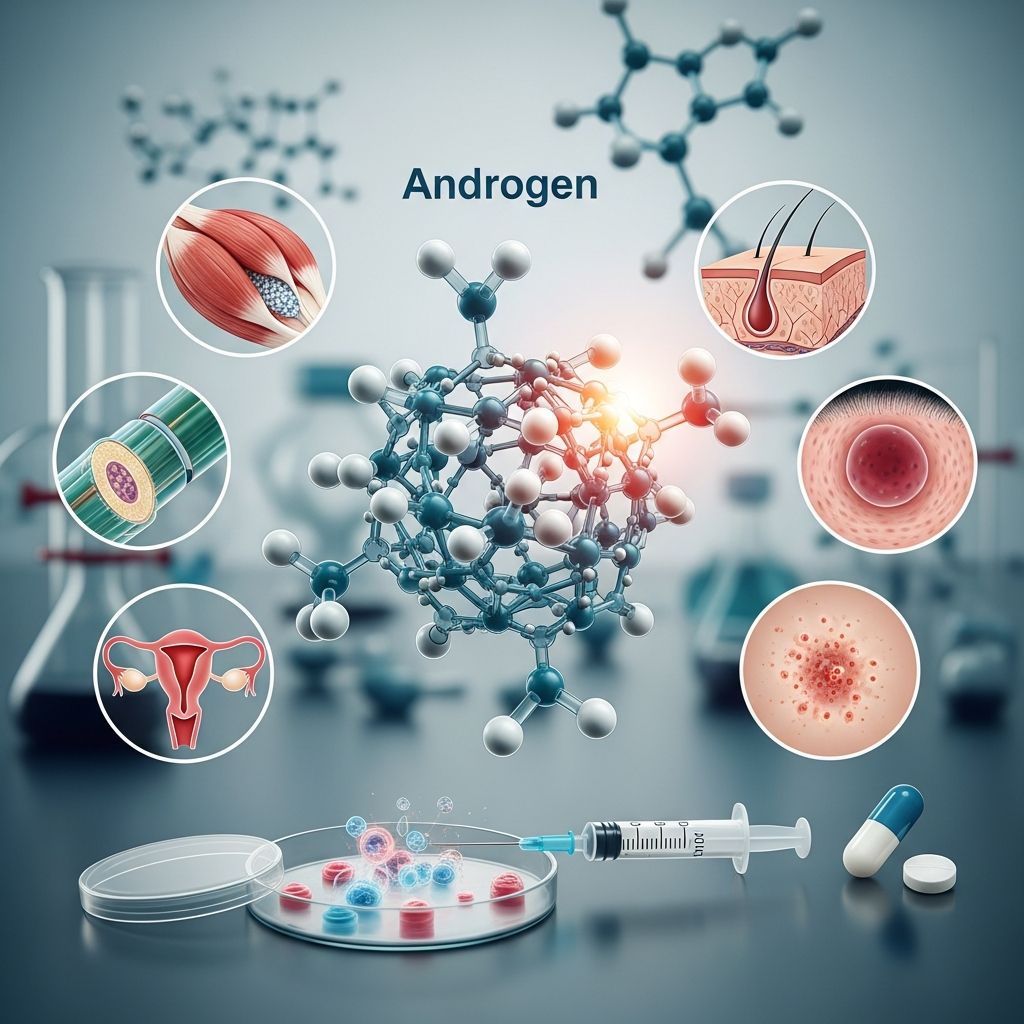
Androgens are a group of hormones that play crucial roles in the development and maintenance of male and female reproductive health, bone density, muscle mass, mood regulation, and numerous other physiological processes. While often associated with male development and characteristics, androgens are essential hormones in both men and women, though produced in different quantities. Understanding androgens and their effects on the body is vital for recognizing hormonal imbalances and seeking appropriate treatment when necessary.
What Are Androgens?
Androgens are steroid hormones responsible for developing and maintaining male characteristics and reproductive tissues. The primary androgen is testosterone, though the group also includes other important hormones such as dehydroepiandrosterone (DHEA), dehydroepiandrosterone sulfate (DHEA-S), androstenedione, and dihydrotestosterone (DHT). These hormones belong to a class of steroid hormones that have profound effects on physical development, sexual function, and overall health.
Testosterone is classified as an anabolic-androgenic steroid, meaning it promotes muscle building (anabolic) while simultaneously stimulating the development of male sexual characteristics (androgenic). It is important to distinguish between natural testosterone produced by the body and synthetic variations of testosterone, often referred to as “anabolic steroids,” which are laboratory-created compounds sometimes misused for performance enhancement.
Where Are Androgens Produced?
Androgens are synthesized in several locations throughout the body. In men, the primary production site is the testicles, while in women, the ovaries are the main source. Both sexes also produce androgens in their adrenal glands, which sit atop the kidneys. Additionally, some androgens are produced peripherally in various tissues throughout the body through enzymatic conversion of prohormones.
In women specifically, androgen production is distributed among multiple sites: approximately 25% originates in the adrenal glands, 25% comes from the ovaries, and the remaining production occurs through peripheral conversion of prohormone precursors. This distributed production system in women results in naturally lower androgen levels compared to men, though androgens remain physiologically important for female health.
Physiological Functions of Androgens
In Males
In male development and health, androgens are responsible for initiating and maintaining numerous critical functions. During puberty, androgens trigger the development of male sexual characteristics, including the growth of the penis and scrotum, deepening of the voice, development of facial and body hair, and increased muscle mass. Beyond puberty, androgens continue to regulate sexual function, including erectile function and sex drive, while supporting bone density, muscle maintenance, and metabolic health.
In Females
While often overlooked in women, androgens serve important physiological roles beyond their role as precursors to estrogen. These hormones contribute to sexual desire and satisfaction, cognitive function, mood regulation, bone health, muscle development, cardiovascular health, and breast health. In women, the balance between androgens and estrogens is particularly important for maintaining optimal health across multiple body systems.
Androgen Levels: Sex Differences
A fundamental difference between males and females involves the quantity of androgens produced. Males naturally produce significantly higher levels of testosterone than females—typically 15 to 20 times higher. This substantial difference in androgen production underlies the development of sex-specific characteristics during puberty and contributes to ongoing physiological differences between sexes. However, both sexes require appropriate androgen levels for optimal health.
Related Stories



Conditions Associated with Androgen Imbalance
Low Testosterone (Hypogonadism)
Low testosterone, clinically known as hypogonadism, occurs when androgen levels fall below normal ranges. This condition can affect men of any age but becomes increasingly common with advancing age. Symptoms may include reduced sex drive, erectile dysfunction, decreased energy levels, mood changes, reduced muscle mass, and increased body fat. Low testosterone is not a life-threatening condition but can significantly impact quality of life and warrant medical evaluation.
Recent clinical evidence has provided important reassurance regarding testosterone replacement therapy. The landmark TRAVERSE trial, a Cleveland Clinic-led study enrolling 5,246 men aged 45 to 80 with low testosterone and preexisting or high-risk cardiovascular disease, found that testosterone replacement therapy did not increase the incidence of major adverse cardiac events. However, researchers emphasize that these findings should not be used as justification for widespread, indiscriminate prescribing of testosterone products to all men, and treatment decisions should involve careful consideration of individual circumstances.
Hyperandrogenism
Hyperandrogenism occurs when androgen levels are abnormally elevated. This condition affects approximately 5% to 10% of females of reproductive age and is less common in males. Common symptoms in women include acne, irregular menstrual periods, excessive hair growth (hirsutism), male-pattern baldness, and increased muscle mass. Hyperandrogenism can result from various underlying conditions requiring proper diagnosis and management.
Approximately 80% to 90% of females with hyperandrogenism have polycystic ovary syndrome (PCOS), a common endocrine disorder affecting reproductive-age women. Another important cause is congenital adrenal hyperplasia (CAH), a group of genetic conditions affecting the adrenal glands. In CAH, genetic mutations cause the body to have insufficient levels of certain enzymes needed to produce important hormones, resulting in the adrenal glands producing excess testosterone as a compensatory mechanism.
Androgen Insensitivity Syndrome
Androgen insensitivity syndrome (AIS) represents a different category of androgen disorder. In this condition, individuals have normal or elevated androgen production, but their body tissues fail to respond appropriately to androgens due to defects in androgen receptors. This rare genetic condition affects sexual development and can present with varying degrees of severity depending on the degree of receptor dysfunction.
Androgens in Women: Special Considerations
While testosterone and other androgens are often discussed primarily in the context of male health, their importance in women cannot be overstated. In women, androgens serve as precursors for estrogen synthesis and have independent physiological effects on multiple organ systems. The evidence-based indication for testosterone therapy in women is currently limited to treating hypoactive sexual desire disorder in postmenopausal women, where randomized controlled trials have demonstrated short-term safety and efficacy when doses approximate physiologic levels.
Various medical conditions and medications can reduce androgen levels in women, including chemotherapy, radiation therapy, ovarian insufficiency, adrenal insufficiency, malnutrition, hormonal contraceptives, corticosteroids, antiandrogenic medications, oral estrogen therapy, and opioid medications. Healthcare providers must consider these factors when evaluating women with symptoms suggesting androgen deficiency.
Diagnosis of Androgen Disorders
Proper diagnosis of androgen disorders begins with clinical evaluation and blood tests to measure hormone levels. Healthcare providers assess total testosterone levels, which include both biologically active testosterone and inactive testosterone bound to sex hormone-binding globulin (SHBG), a liver-synthesized protein with high affinity for sex steroids. Understanding the distinction between total and free testosterone is important, as SHBG levels can be influenced by various conditions and medications, affecting the interpretation of testosterone measurements.
When hyperandrogenism is suspected, providers typically order blood tests to measure androgen levels and rule out other possible causes of symptoms, potentially including imaging studies such as pelvic ultrasound or adrenal imaging to identify structural abnormalities.
Treatment Approaches for Androgen Disorders
Hyperandrogenism Treatment
Treatment of hyperandrogenism focuses on reducing androgen levels or blocking their effects. Providers can achieve this through medications that block androgen production by the ovaries or adrenal glands, or by using medications that block androgen effects at the tissue level. Treatment plans should be individualized based on the underlying cause, patient symptoms, and fertility desires.
Low Testosterone Treatment
For men with low testosterone, treatment options include testosterone replacement therapy in various formulations, including gels, injections, patches, and implants. The TRAVERSE trial demonstrated that testosterone replacement therapy using daily 1.62% testosterone gel was safe regarding cardiovascular outcomes in men with hypogonadism and cardiovascular disease or risk factors. However, researchers emphasize several important cautions: these findings should not justify treating men without hypogonadism, and they should not be interpreted as indicating that large doses misused by athletes are safe.
Men with low testosterone should never attempt self-treatment without medical supervision. The market contains numerous “natural” testosterone boosters and supplements that lack rigorous clinical trial evidence and FDA approval for treating low testosterone levels. These products may be ineffective or potentially harmful, making medical evaluation and supervision essential.
Important Considerations and Safety
Several important safety considerations apply to androgen therapy. First, testosterone replacement should only be considered after confirmed diagnosis of hypogonadism through appropriate testing. Second, treatment decisions should involve careful discussion of potential benefits and risks specific to each individual’s circumstances. Third, patients require ongoing monitoring during therapy to assess treatment efficacy and safety. Finally, testosterone therapy is not appropriate for all individuals and may be contraindicated in certain conditions.
The FDA specifically required testosterone product manufacturers to conduct well-designed clinical trials to clarify whether increased risks of heart attack or stroke exist for users. The TRAVERSE trial addressed this FDA mandate, providing important evidence regarding safety in a high-risk population. However, this evidence does not justify broad, indiscriminate prescribing practices.
Frequently Asked Questions
What is the difference between testosterone and other androgens?
Testosterone is the most abundant and well-known androgen, but it is part of a broader group of hormones including DHEA, DHEA-S, androstenedione, and DHT. While testosterone has the most potent androgenic effects, other androgens serve important physiological roles and can be converted to testosterone or serve as precursors for estrogen in women.
Can women benefit from testosterone therapy?
Yes, some women can benefit from testosterone therapy, though current evidence-based indications are limited. The primary established indication is treating hypoactive sexual desire disorder in postmenopausal women using physiologic doses approved through rigorous clinical trials. Women considering testosterone therapy should discuss potential benefits and risks with their healthcare provider.
Is testosterone replacement therapy safe?
The TRAVERSE trial demonstrated that testosterone replacement therapy does not increase major adverse cardiac events in men with hypogonadism and cardiovascular disease or risk factors. However, safety varies depending on individual circumstances, and men must undergo proper evaluation before starting therapy. All testosterone therapy requires medical supervision and periodic monitoring.
What causes high androgen levels in women?
Common causes include PCOS (affecting 80–90% of women with hyperandrogenism), congenital adrenal hyperplasia, ovarian tumors, adrenal tumors, and other endocrine disorders. Proper diagnosis requires blood tests and possibly imaging studies to identify the underlying cause.
Are testosterone supplements safe?
Over-the-counter testosterone supplements and “natural” testosterone boosters have not undergone rigorous clinical trials and lack FDA approval for treating low testosterone. These products may be ineffective, contain unlisted ingredients, or carry unknown risks. Men with concerns about testosterone levels should consult healthcare providers rather than self-treating with supplements.
Conclusion
Androgens play essential roles in maintaining health across multiple body systems in both men and women. Understanding these hormones, recognizing signs of imbalance, and seeking appropriate medical evaluation when concerned are important for optimal health. Whether facing low testosterone, elevated androgens, or other androgen-related conditions, individuals should work with qualified healthcare providers to determine appropriate testing, diagnosis, and treatment options tailored to their specific circumstances. Medical science continues to advance our understanding of androgens and their therapeutic applications, enabling more informed and personalized approaches to hormonal health.
References
- Cleveland Clinic-Led Trial Finds Testosterone-Replacement Therapy Does Not Increase Incidence of Major Adverse Cardiac Events for Men with Low Testosterone — Cleveland Clinic Newsroom. 2023-06-16. https://newsroom.clevelandclinic.org/2023/06/16/cleveland-clinic-led-trial-finds-testosterone-replacement-therapy-does-not-increase-incidence-of-major-adverse-cardiac-events-for-men-with-low-testosterone
- Prescribing Testosterone and DHEA: The Role of Androgens in Women — Cleveland Clinic. PubMed. https://pubmed.ncbi.nlm.nih.gov/33384313/
- Hyperandrogenism: What It Is, Symptoms & Treatment — Cleveland Clinic. https://my.clevelandclinic.org/health/diseases/24639-hyperandrogenism
- Prescribing Testosterone and DHEA: The Role of Androgens in Women — Cleveland Clinic ConsultQD. https://consultqd.clevelandclinic.org/prescribing-testosterone-and-dhea-the-role-of-androgens-in-women
- Testosterone: What It Is, Function & Levels — Cleveland Clinic. https://my.clevelandclinic.org/health/articles/24101-testosterone
- Androgen Insensitivity Syndrome (AIS): Types & Symptoms — Cleveland Clinic. https://my.clevelandclinic.org/health/diseases/22199-androgen-insensitivity-syndrome
Similar Articles








Read full bio of medha deb