Anetoderma: 7 FAQs On Causes, Diagnosis & Treatment
Uncommon skin condition causing loss of dermal elastic tissue, leading to characteristic depressed or bulging patches.
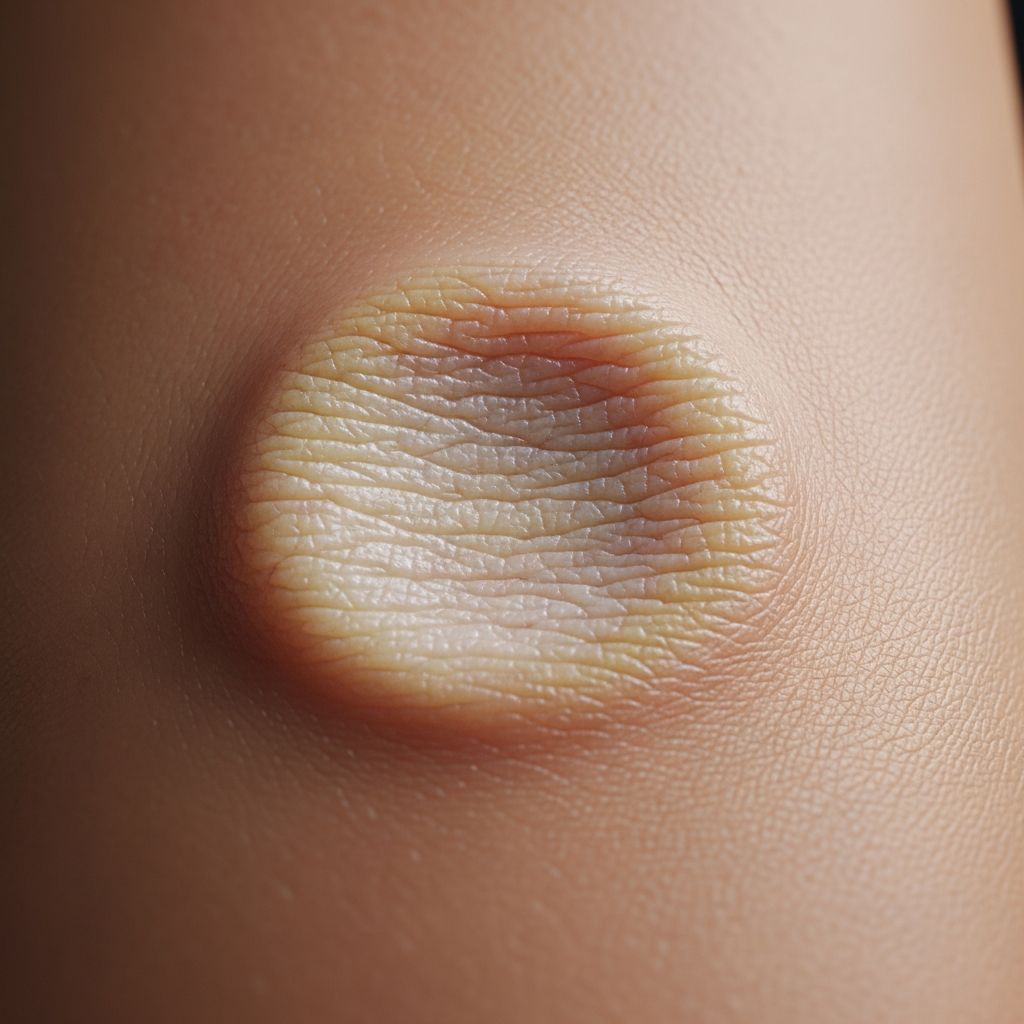
Anetoderma, also known as macular atrophy, is an uncommon elastolytic disorder characterised by focal loss of dermal elastic tissue, resulting in well-defined areas of wrinkled, depressed, or herniated skin.
Who gets anetoderma?
Anetoderma affects individuals across all ages but is most commonly diagnosed in young to middle-aged adults, particularly women, with a female-to-male ratio of approximately 2:1. It is rare, with prevalence estimates below 1 in 100,000, though exact figures are unavailable due to underreporting.
- Primary anetoderma arises on previously normal skin and accounts for the majority of cases.
- Secondary anetoderma develops at sites of prior inflammation or pathology, such as acne scars, chickenpox lesions, or other dermatoses.
Associations with systemic conditions are notable: up to 30% of primary cases link to autoimmune disorders, including antiphospholipid syndrome (APS), lupus erythematosus, and thyroiditis. Infectious links include syphilis, leprosy, and Lyme disease, while HIV has been implicated in some reports.
What causes anetoderma?
The precise aetiopathogenesis remains elusive, with multiple theories proposed. Key hypotheses include:
- Elastophagocytosis: Macrophages engulf and degrade elastic fibres, observed histologically.
- Autoimmune mechanisms: Elevated antiphospholipid antibodies (aPL), antinuclear antibodies (ANA), and antithyroid peroxidase antibodies in affected patients suggest immune dysregulation.
- Prothrombotic phenomena: Microvascular thrombosis may contribute, especially in APS-associated cases.
- Genetic predisposition: Familial cases are rare but reported, hinting at heritable factors.
- Environmental triggers: Post-inflammatory changes in secondary forms; possible roles for infections or trauma.
Primary forms are subdivided into Jadassohn-Pellizzari (preceded by inflammatory macules) and Schweninger-Buzzi (on normal skin) types, though both show identical histology.
Clinical features of anetoderma
Lesions typically present as discrete, round-to-oval, 0.5–2 cm patches of loose, wrinkled skin, often with a characteristic button-hole sign—the lesion herniates or depresses on palpation.
- Appearance: Skin-coloured, hypopigmented, bluish-white, or erythematous; flat, raised, or sac-like.
- Sites: Predominantly trunk (chest, back), proximal arms, thighs; neck occasionally; face, palms, soles spared.
- Progression: Evolve over 2–3 weeks from macules/papules to atrophic patches; persist indefinitely; new crops may appear for 1–15 years.
- Symptoms: Usually asymptomatic; mild pruritus in <20% of cases.
Lesion number varies: solitary to >100. Secondary lesions overlie prior pathology (e.g., acne).
Images description (based on typical findings)
Clinical images show multiple oval, hypopigmented, wrinkled patches on the upper back with palpable atrophy and button-hole sign on stretching.
Diagnosis of anetoderma
Diagnosis is primarily clinical, supported by histopathology. Key differentials include:
| Condition | Key Features | Distinguishing Histology |
|---|---|---|
| Mid-dermal elastolysis | Widespread fine wrinkles on trunk/arms; no herniation | Selective mid-dermal elastolysis |
| Acquired cutis laxa | Generalised sagging; laxity beyond focal patches | Pannicular elastolysis |
| Atrophoderma of Pasini-Pierini | Hyperpigmented cliff-drop borders on back | Normal elasticity |
| Granulomatous slack skin | Red folds; lymphoma association | Granulomas engulf elastin |
| Nephrogenic systemic fibrosis | Post-Gd exposure; indurated plaques | Fibrosis + elastolysis |
Related Stories



Histopathology: Punch biopsy essential; routine H&E shows normal collagen with mild lymphohistiocytic infiltrate. Special stains (Verhoeff-van Gieson, orcein) confirm absent elastic fibres in upper/mid-dermis.
Investigations for associations: ANA, aPL, lupus anticoagulant, anti-thyroid antibodies; consider HIV, syphilis serology if secondary.
Treatment of anetoderma
No curative therapy exists; management is supportive or preventive. Lesions persist once formed.
- Early inflammatory lesions: Topical/superficial corticosteroids, intralesional steroids to halt progression (limited evidence).
- Other therapies (anecdotal): Hydroxychloroquine (autoimmune cases), colchicine, dapsone, penicillin (possible infectious trigger).
- Physical: Excision or fillers for cosmetic concern (small lesions).
- Systemic associations: Treat underlying APS (anticoagulation), thyroiditis, etc.
Preventive measures: Early intervention on inflammatory precursors; sun protection to avoid elastolysis aggravation.
Prognosis: Benign, non-progressive post-active phase; monitor for autoimmunity.
Frequently asked questions (FAQs) on anetoderma
What is anetoderma?
Anetoderma is a rare condition causing patches of loose, wrinkled skin due to dermal elastic fibre loss.
Is anetoderma dangerous?
No, it is cosmetic; however, screen for autoimmune associations like APS.
Does anetoderma go away?
Lesions persist indefinitely but new ones may stop after years.
How is anetoderma diagnosed?
Clinical exam + biopsy with elastic stains.
Can anetoderma be treated?
No cure; early anti-inflammatory Rx may prevent spread.
Is anetoderma linked to other diseases?
Yes, especially autoimmunity (lupus, thyroiditis, APS).
Primary vs secondary anetoderma?
Primary: on normal skin; secondary: post-inflammation.
References
- Anetoderma – MD Searchlight — MD Searchlight. 2023. https://mdsearchlight.com/skin-problems-and-treatments/anetoderma/
- Anetoderma: an alert for antiphospholipid antibody syndrome — Anais Brasileiros de Dermatologia. 2019-10-01. https://www.anaisdedermatologia.org.br/en-anetoderma-an-alert-for-antiphospholipid-articulo-S0365059619301667
- Anetoderma (macular atrophy) — DermNet NZ. 2011 (reviewed 2023). https://dermnetnz.org/topics/anetoderma
- Anetoderma: Spots on the Torso and Arms — Dermatology Advisor. 2023. https://www.dermatologyadvisor.com/ddi/anetoderma-spots-on-the-torso-and-arms/
- Anetoderma: Is It a Sign of Autoimmunity? — PMC / NIH. 2010-06-15. https://pmc.ncbi.nlm.nih.gov/articles/PMC2895220/
Similar Articles








Read full bio of medha deb