Angiolipoma Pathology: Key Histology Features For Diagnosis
Detailed pathology of angiolipoma: benign subcutaneous hamartoma with fat and vascular features.
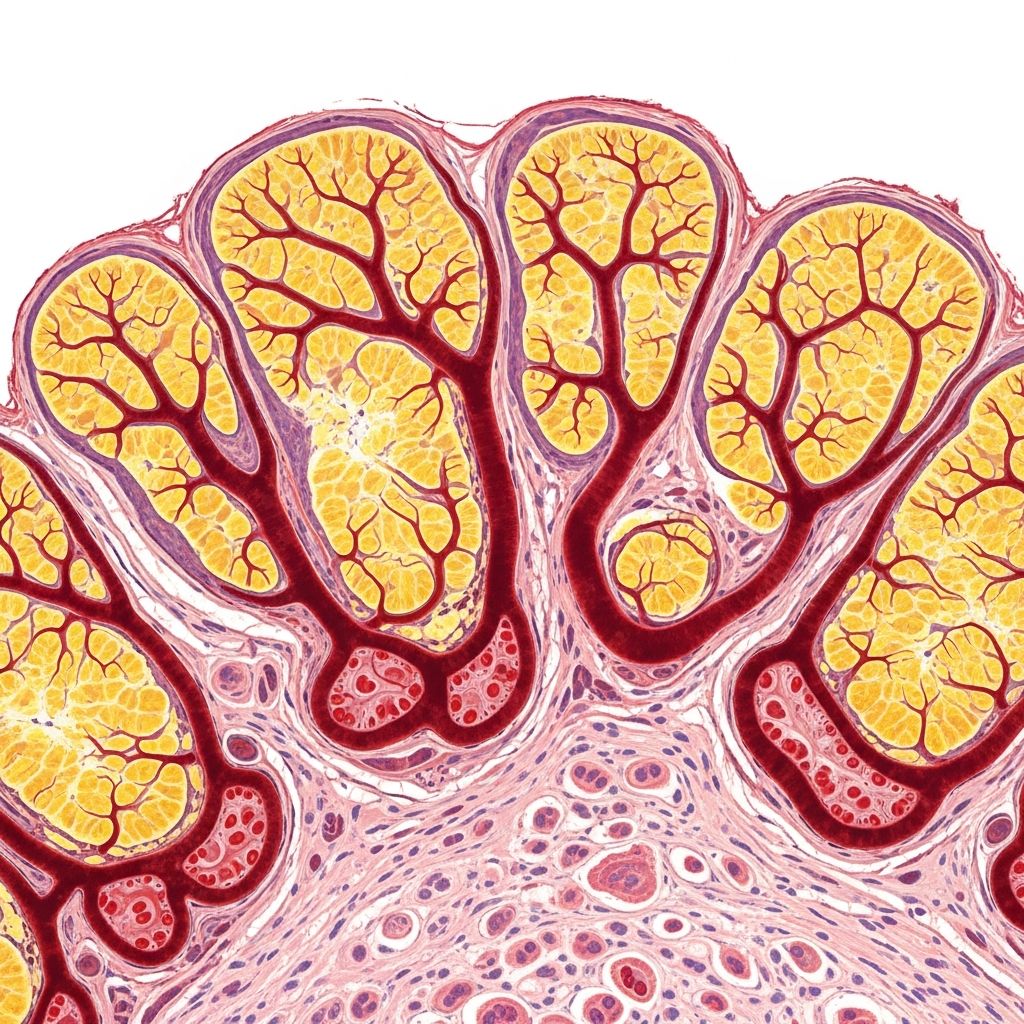
Angiolipoma is a relatively common benign subcutaneous lesion that frequently presents in multiplicity. Unlike true neoplasms, no specific genetic abnormalities have been identified, leading many experts to classify it as a hamartoma—a benign malformation of normal tissue elements rather than a neoplastic growth.
Introduction
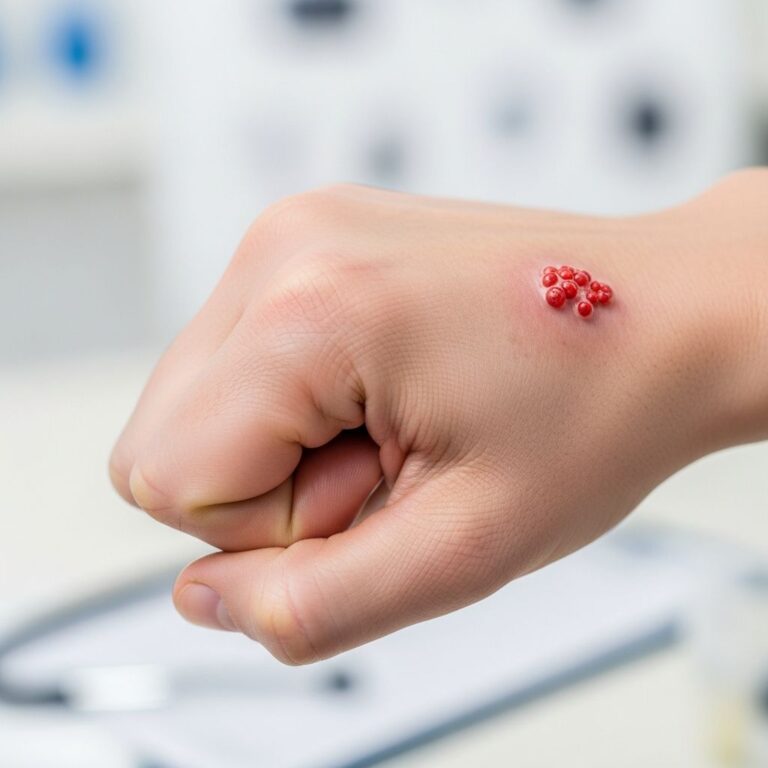
Angiolipomas represent a subtype of lipoma characterized by the presence of both mature adipose tissue and a prominent vascular component. They typically arise in young adults, often on the forearms, trunk, or upper arms, and may be solitary or multiple. Clinically, these lesions appear as soft, skin-colored nodules or plaques that can be tender or painful, distinguishing them from classic painless lipomas.
Histopathologically, angiolipomas are well-circumscribed subcutaneous tumors composed of lobules of mature adipocytes interspersed with clusters of small, capillary-sized blood vessels. The vascular elements are often concentrated at the periphery of fat lobules and may contain fibrin thrombi, contributing to the lesion’s tenderness.
Approximately 5% of cases show familial inheritance, suggesting a genetic predisposition in a subset of patients, though no consistent cytogenetic changes like those seen in ordinary lipomas (e.g., rearrangements of chromosomes 12, 6, or 13) have been reported. This absence of clonal abnormalities supports the hamartomatous nature of angiolipomas.
Understanding angiolipoma pathology is crucial for accurate diagnosis, as it overlaps with other fatty and vascular tumors. Biopsy confirmation is recommended when clinical features suggest vascular involvement, such as pain or rapid growth, to rule out mimics like liposarcoma or vascular neoplasms.
Histology
Microscopic examination of angiolipoma reveals a distinctive biphasic pattern: nonseptate mature adipose tissue admixed with proliferations of small capillaries. Key histological features include:
- Mature adipocytes: Lobules of uniform, large fat cells with peripheral displacement by vascular elements. The fat lacks the thin fibrous septa typical of ordinary lipomas.
- Peripheral capillary congeries: Clusters of small, thin-walled capillaries rimming the fat lobules, often forming a ‘chicken-wire’ network. These vessels are most prominent at the lesion’s periphery.
- Fibrin thrombi: Frequent intraluminal organization with fibrin plugs, contributing to the painful nature of these tumors. Thrombi may be recanalized or show organizing features.
- Cellular variant (cellular angiolipoma): Rare adipocytes amid numerous capillaries, mimicking a vascular neoplasm. Despite the cellularity, mitoses are absent, and atypia is not seen.
- Absence of atypia: No nuclear hyperchromasia, pleomorphism, or increased mitotic activity in adipocytes or endothelial cells, confirming benignity.
Low-power views show a well-circumscribed nodule in the subcutis without infiltration into deeper tissues, though rare infiltrating variants exist that extend into muscle. Higher magnification highlights the intimate admixture of fat and vessels, with occasional mast cells or lymphocytes in the stroma.
In traumatized lesions, fat necrosis or inflammatory changes may be superimposed, but these are secondary and do not alter the diagnosis.
Special Studies
Ancillary studies are generally unnecessary for routine diagnosis of angiolipoma, as the classic histology is diagnostic. However, immunohistochemistry (IHC) can aid in challenging cases:
- CD34: Highlights endothelial cells of capillaries, accentuating the vascular component.
- Factor VIII, CD31: Confirm vascular endothelium in cellular variants to exclude other tumors.
- S100: Positive in adipocytes, supporting the fatty component.
- Ki-67: Low proliferation index (<5%), reassuring against malignancy.
Cytogenetics or molecular studies are not routinely performed, as no recurrent abnormalities exist, unlike lipomas. Electron microscopy is obsolete but historically showed normal capillary basement membranes without Weibel-Palade bodies indicative of hemangioma.
In familial cases or multiplicity, genetic counseling may explore syndromic associations, though angiolipomas are not major features of conditions like tuberous sclerosis (which features angiomyolipomas).
Differential Diagnoses
Angiolipoma must be distinguished from other subcutaneous fatty and vascular lesions. The table below summarizes key differentials:
| Lesion | Key Features | Distinguishing from Angiolipoma |
|---|---|---|
| Lipoma | Mature fat with thin fibrous septa; painless | Lacks prominent capillaries/thrombi; less tender |
| Cellular Angiolipoma | Predominantly vascular with scant fat | Still benign; no atypia, but more cellular |
| Hibernoma | Brown fat cells; multivacuolated | Different adipocyte cytology; no vessels |
| Liposarcoma (Atypical Lipomatous Tumor) | At Lipoblasts, hyperchromasia, plexiform vessels | Malignant; infiltrative, atypical cells |
| Kaposiform Hemangioendothelioma | Infiltrative, spindle cells, glomeruloid bodies | Infantile; aggressive locally; GLUT1+ |
| Angiomyolipoma | Smooth muscle, thick vessels; renal/association with TSC | Epithelioid cells; HMB45+; not cutaneous |
Related Stories



Cellular angiolipomas with thrombosis may mimic kaposiform hemangioendothelioma, but lack infiltration, spindle cells, and GLUT1 positivity. Painful lesions raise concern for liposarcoma, but slow growth and well-defined borders favor angiolipoma.
Clinical Features and Management
Though pathology-focused, clinical correlation enhances understanding. Angiolipomas occur in 20-30-year-olds, measuring 1-4 cm, rubbery, and tender on pressure. Multiple lesions (up to dozens) are common, especially familial.
Diagnosis is clinical but biopsy-confirmed histologically. Imaging (ultrasound/MRI) shows vascular flow in some cases. Excision is curative for symptomatic lesions; observation suffices for asymptomatic ones, as malignant transformation is unreported.
Frequently Asked Questions (FAQs)
Q: Is angiolipoma cancerous?
A: No, angiolipoma is a benign hamartoma with no risk of malignant transformation.
Q: Why are angiolipomas painful?
A: Pain arises from distended capillaries and fibrin thrombi within the lesion, especially on pressure.
Q: Do angiolipomas require treatment?
A: Only if symptomatic; simple excision is curative and straightforward due to well-circumscribed nature.
Q: Can angiolipomas be multiple or familial?
A: Yes, up to 5% are familial, and multiplicity is common, often on forearms.
Q: How is angiolipoma diagnosed pathologically?
A: By histology showing mature fat with peripheral capillary clusters and thrombi; no special stains needed routinely.
Prognosis and Key Takeaways
Angiolipomas have an excellent prognosis, with no recurrence post-excision. Recognition of their hamartomatous nature avoids overtreatment. Pathologists should emphasize the vascular component in reports to guide clinical management.
References
- Lipoma (fatty lumps) — DermNet NZ. 2023. https://dermnetnz.org/topics/lipoma
- Tuberous Sclerosis Complex — StatPearls, NCBI Bookshelf, NIH. 2023-10-01. https://www.ncbi.nlm.nih.gov/books/NBK538492/
- Angiolipoma: Symptoms, Causes and Treatment — Cleveland Clinic. 2023. https://my.clevelandclinic.org/health/diseases/21958-angiolipoma
- Angiolipoma — DermNet NZ. 2023. https://dermnetnz.org/topics/angiolipoma
- Angiolipoma pathology — DermNet NZ. 2013. https://dermnetnz.org/topics/angiolipoma-pathology
- Lipoma pathology — DermNet NZ. 2023. https://dermnetnz.org/topics/lipoma-pathology
Similar Articles








Read full bio of Sneha Tete