Angioma Serpiginosum: Causes, Symptoms & Treatment
Complete guide to angioma serpiginosum: understanding this rare vascular skin condition.
What is Angioma Serpiginosum?
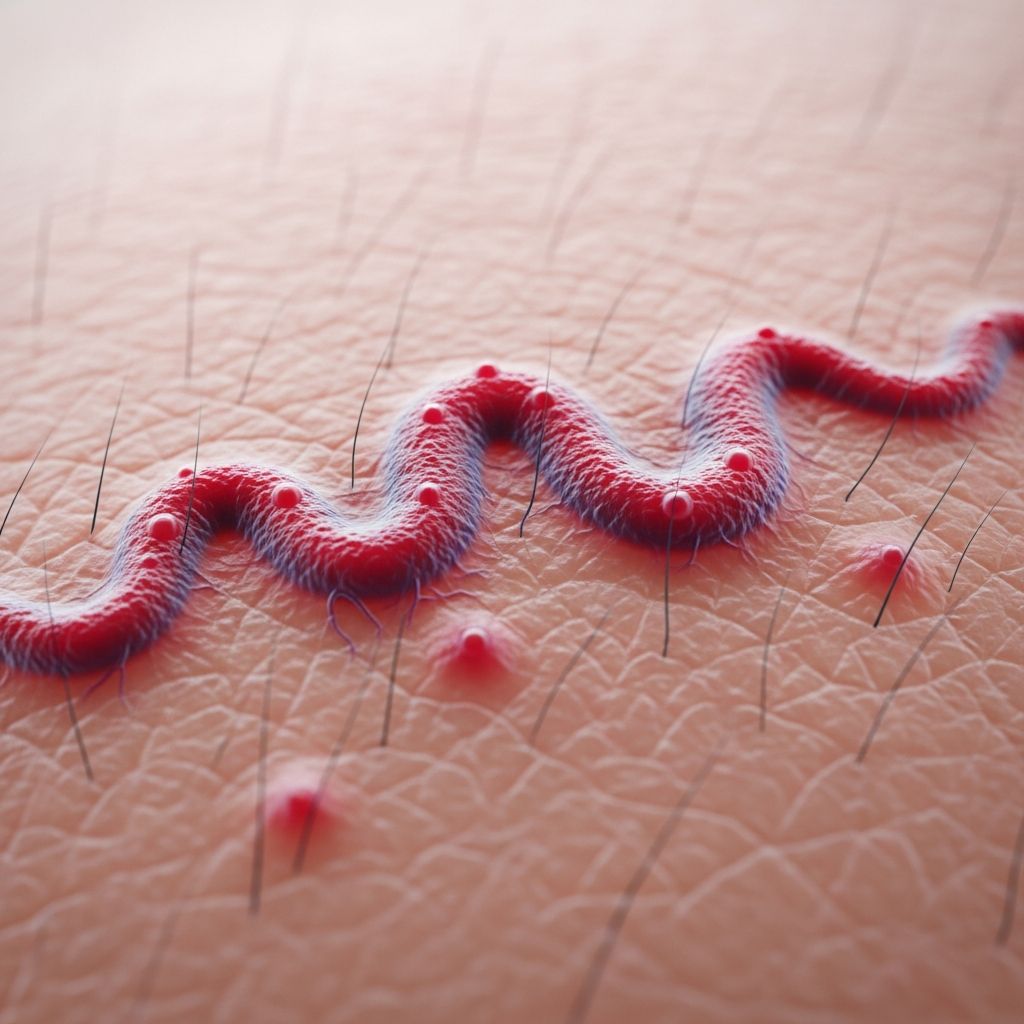
Angioma serpiginosum (AS) is a rare, benign vascular skin condition characterized by small blood vessels located near the skin surface. The condition presents as tiny red or purple dots, known as puncta, that cluster together to form distinctive linear or snake-like patterns called serpiginous configurations, or ring-shaped patterns referred to as gyrate formations. Unlike other vascular conditions, angioma serpiginosum does not cause bleeding, inflammation, or pigmentation changes in the affected skin.
This condition is considered a nevoid vascular disorder, meaning it involves an abnormal collection of blood vessels that is present from birth or develops early in life. The dilated capillaries are located in the papillary dermis, which is the uppermost layer of the dermis beneath the epidermis. Although angioma serpiginosum is asymptomatic and does not cause physical discomfort, many patients seek treatment for cosmetic reasons due to the visible appearance of the lesions.
Historical Background and Recognition
Angioma serpiginosum was originally described by Jonathan Hutchinson in 1889, who defined it as a “serpiginous or infective nevus.” Since its initial description, the condition has been extensively studied and documented in dermatological literature, allowing for better understanding of its clinical presentation, pathophysiology, and treatment options. Despite over a century of recognition, angioma serpiginosum remains relatively uncommon, with relatively few cases reported in medical literature.
Clinical Presentation and Characteristics
Angioma serpiginosum presents with distinctive clinical features that help differentiate it from other vascular conditions. The primary characteristics include:
- Multiple grouped macules and papules with copper-red to bright red coloration
- Lesions that are non-blanchable or partially blanchable under diascopy, meaning they do not blanch or only partially blanch when pressure is applied
- Small punctate lesions arranged in a linear manner along Blaschko’s lines, following the body’s natural developmental growth lines
- Unilateral presentation in most cases, typically affecting one side of the body
- Background erythema surrounding the lesions
- Asymptomatic nature with no pain, itching, or discomfort
The lesions characteristically enlarge by developing new lesions at the periphery while those in the center fade, creating the distinctive serpiginous or gyrate patterns that give the condition its name. This pattern of growth is progressive but typically slow, and lesions may continue to develop over years or decades.
Demographics and Epidemiology
Angioma serpiginosum shows a distinct demographic pattern in its presentation. The condition most commonly appears in females during adolescence and late childhood. While cases are typically sporadic, some families have demonstrated an autosomal dominant inheritance pattern, suggesting genetic factors may play a role in susceptibility.
The lesions most frequently develop on the lower extremities, particularly on the lower legs and buttocks, though involvement can occur in other locations including the arms and feet. Late-onset cases in older adults, such as presentation in individuals in their late 40s, are considered atypical and are relatively rare in clinical practice.
Related Stories



Genetic and Molecular Factors
Recent research has identified specific genetic mutations associated with angioma serpiginosum. Mutations in the porcupine O-acyltransferase gene are often observed in patients with this condition. These genetic alterations likely contribute to the abnormal development and function of the capillary vessels that characterize the disorder.
The understanding of these molecular mechanisms has important implications for research into the pathophysiology of the condition and may eventually lead to more targeted therapeutic approaches. However, the sporadic nature of many cases suggests that environmental factors or somatic mutations occurring during development may also play a role in the development of angioma serpiginosum.
Diagnostic Approaches
Clinical Examination
Diagnosis of angioma serpiginosum begins with careful clinical examination by a dermatologist. The distinctive appearance of grouped red macules arranged in serpiginous or gyrate patterns on a background of erythema, combined with the non-blanchable nature of the lesions under diascopy, provides strong diagnostic clues. The linear distribution following Blaschko’s lines and unilateral presentation further support the diagnosis.
Dermoscopy
Dermoscopy is a valuable, non-invasive diagnostic tool that significantly aids in diagnosing angioma serpiginosum at the bedside. This technique allows magnification and detailed examination of the lesions. Under dermoscopic examination, angioma serpiginosum characteristically displays:
- Well-demarcated oval to round red lagoons, which are bright-red lacunae filled with blood
- Dilated vascular spaces within the papillary or superficial reticular dermis
- A pattern that helps narrow differential diagnoses and confirm the diagnosis without invasive procedures
Dermoscopy is particularly useful because it is quick, non-invasive, and provides immediate diagnostic information that can guide clinical decision-making and treatment planning.
Histopathological Examination
When a skin biopsy is performed, histopathological examination reveals the characteristic features of angioma serpiginosum. The microscopic findings include:
- Dilated, thin-walled capillaries in the papillary dermis
- Capillaries lined by flattened endothelial cells of normal appearance
- Increased numbers of proliferated capillaries in the upper dermis
- Notably, absence of significant inflammatory cell infiltration
- Absence of red blood cell extravasation and hemosiderin deposition
- Hyperkeratosis in some cases
The histological distinction between angioma serpiginosum and similar conditions lies in the presence of intravascular lesions composed of tiny spots and streaks with pallid domains between them, whereas conditions like chronic purpura show extravascular blood.
Differential Diagnosis
Angioma serpiginosum must be differentiated from several other vascular conditions that may present similarly. Key differential diagnoses include:
| Feature | Angioma Serpiginosum | Unilateral Nevoid Telangiectasia | Pigmented Purpuric Dermatosis |
|---|---|---|---|
| Definition | Nevoid vascular disorder affecting small vessels of upper dermis | Rare congenital and acquired primary telangiectasia | Collection of benign chronic purpuric skin eruptions |
| Clinical Features | Multiple grouped asymptomatic bright red macules in linear pattern along Blaschko’s lines | Multiple unilateral linear blanching telangiectases in dermatomal or Blaschkoid pattern with anemic halo | Red to purple macules, patches and petechiae, most common on lower extremities |
| Dermoscopy | Well-demarcated oval to round red lagoons | Red tortuous capillaries with reticulated appearance | Coppery red to red-brown background, red dots and globules, dotted and blotchy red vessels |
| Histopathology | Dilated thin-walled capillaries in papillary dermis | Multiple dilated thin-walled vessels with plumped endothelial cells in papillary and upper reticular dermis | Dilated capillaries in dermis with extravasated RBC and hemosiderin pigment infiltrate |
Understanding these differences is crucial for accurate diagnosis and appropriate treatment planning, as the management and prognosis of these conditions may differ significantly.
Course and Prognosis
Angioma serpiginosum is a progressive condition that slowly worsens over time. Although spontaneous involution may occur in some cases, it is never complete, meaning the lesions will not fully disappear on their own. The condition is typically benign and does not pose significant health risks, but the progressive nature and visible appearance often motivate patients to seek cosmetic treatment.
The lesions are permanent in the absence of intervention, though they may stabilize after reaching a certain extent. Individual lesions do not typically cause pain or systemic complications, making this primarily a cosmetic concern for affected individuals.
Treatment Options
Pulsed Dye Laser Therapy
Pulsed dye laser (PDL) represents the most effective and widely recommended treatment for angioma serpiginosum. This therapeutic approach uses laser light at wavelengths that are specifically absorbed by oxyhemoglobin, the pigment in red blood cells. The laser energy selectively destroys the dilated capillaries while minimizing damage to surrounding tissue.
Treatment with pulsed dye laser may improve or eliminate the angiomatous lesions, with multiple sessions often required for optimal results depending on the extent and severity of involvement. The procedure is minimally invasive and has become the gold standard for treating symptomatic angioma serpiginosum.
Intense Pulsed Light Therapy
Intense pulsed light (IPL) is an alternative light-based treatment that has shown promise in managing angioma serpiginosum. IPL emits high-energy light within the continuous wave spectrum from 500nm to 1,200nm and is indicated for treatment of vascular lesions due to selective absorption by the oxyhemoglobin chromophore.
Clinical cases have demonstrated successful treatment of angioma serpiginosum with IPL therapy, with some patients showing significant improvement after a series of sessions. This option may be considered when pulsed dye laser therapy is unavailable or when additional treatment options are desired.
Counseling and Conservative Management
For patients who are not concerned about cosmetic appearance or who prefer to avoid invasive procedures, conservative management with careful observation is an option. Patients should be counseled about the nature of the condition, its benign course, and the progressive but typically slow nature of lesion development. This allows informed decision-making regarding treatment.
Frequently Asked Questions
Q: Is angioma serpiginosum cancerous or dangerous?
A: No, angioma serpiginosum is a benign vascular condition that does not become cancerous or pose significant health risks. It is purely a cosmetic concern for most patients.
Q: Can angioma serpiginosum be cured?
A: While complete cure is not possible, pulsed dye laser and intense pulsed light treatments can significantly improve or eliminate visible lesions. However, new lesions may develop over time in some cases.
Q: Why does angioma serpiginosum most commonly affect females?
A: The reason for the female predominance is not entirely understood, though hormonal factors may play a role. Most cases appear during adolescence when hormonal changes are occurring.
Q: Can angioma serpiginosum be inherited?
A: While most cases are sporadic, some families have shown an autosomal dominant inheritance pattern, suggesting a genetic component in some instances.
Q: How long does laser treatment take?
A: Individual laser sessions are typically quick, lasting only minutes. However, multiple sessions spaced several weeks apart are usually required to achieve optimal results.
Q: Will the lesions return after laser treatment?
A: While laser treatment effectively destroys existing lesions, new lesions may develop over time due to the progressive nature of the condition. Regular follow-up and additional treatments may be necessary.
Conclusion
Angioma serpiginosum is a rare, benign vascular skin condition that presents as small red dots arranged in distinctive snake-like or ring-shaped patterns. While asymptomatic and not dangerous, many patients seek treatment for cosmetic reasons. Modern diagnostic techniques including dermoscopy and histopathology allow accurate diagnosis and differentiation from similar conditions. Light-based therapies such as pulsed dye laser and intense pulsed light offer effective treatment options for managing this progressive condition. Patients diagnosed with angioma serpiginosum can be reassured about the benign nature of the condition while being informed about available treatment options to address cosmetic concerns.
References
- Angioma Serpiginosum: A Rare Vascular Anomaly with Unique Clinical and Dermoscopic Features — Cosmoderma. Accessed January 28, 2026. https://cosmoderma.org/angioma-serpiginosum-a-rare-vascular-anomaly-with-unique-clinical-and-dermoscopic-features/
- Atypical Angioma Serpiginosum — National Center for Biotechnology Information (NIH). Accessed January 28, 2026. https://pmc.ncbi.nlm.nih.gov/articles/PMC2615349/
- Angioma Serpiginosum — JAMA Dermatology. Accessed January 28, 2026. https://jamanetwork.com/journals/jamadermatology/fullarticle/530135
- Angioma Serpiginosum with Extensive Cutaneous Involvement — Northwestern University Scholars. Accessed January 28, 2026. https://www.scholars.northwestern.edu/en/publications/angioma-serpiginosum-with-extensive-cutaneous-involvement/
- Angioma Serpiginosum — DermNet. Accessed January 28, 2026. https://dermnetnz.org/topics/angioma-serpiginosum
- Successful Treatment of Angioma Serpiginosum with Intense Pulsed Light — Journal of Surgical and Cosmetic Dermatology. Accessed January 28, 2026. http://www.surgicalcosmetic.org.br/details/610/en-US/successful-treatment-of-angioma-serpiginosum-with-intense-pulsed-light
- Angioma Serpiginosum: MedlinePlus Medical Encyclopedia — U.S. National Library of Medicine. Accessed January 28, 2026. https://medlineplus.gov/ency/imagepages/2099.htm
Similar Articles








Read full bio of Sneha Tete