Angular Cheilitis: Causes, Symptoms, and Treatment
Complete guide to angular cheilitis: understanding causes, recognizing symptoms, and effective treatment options.
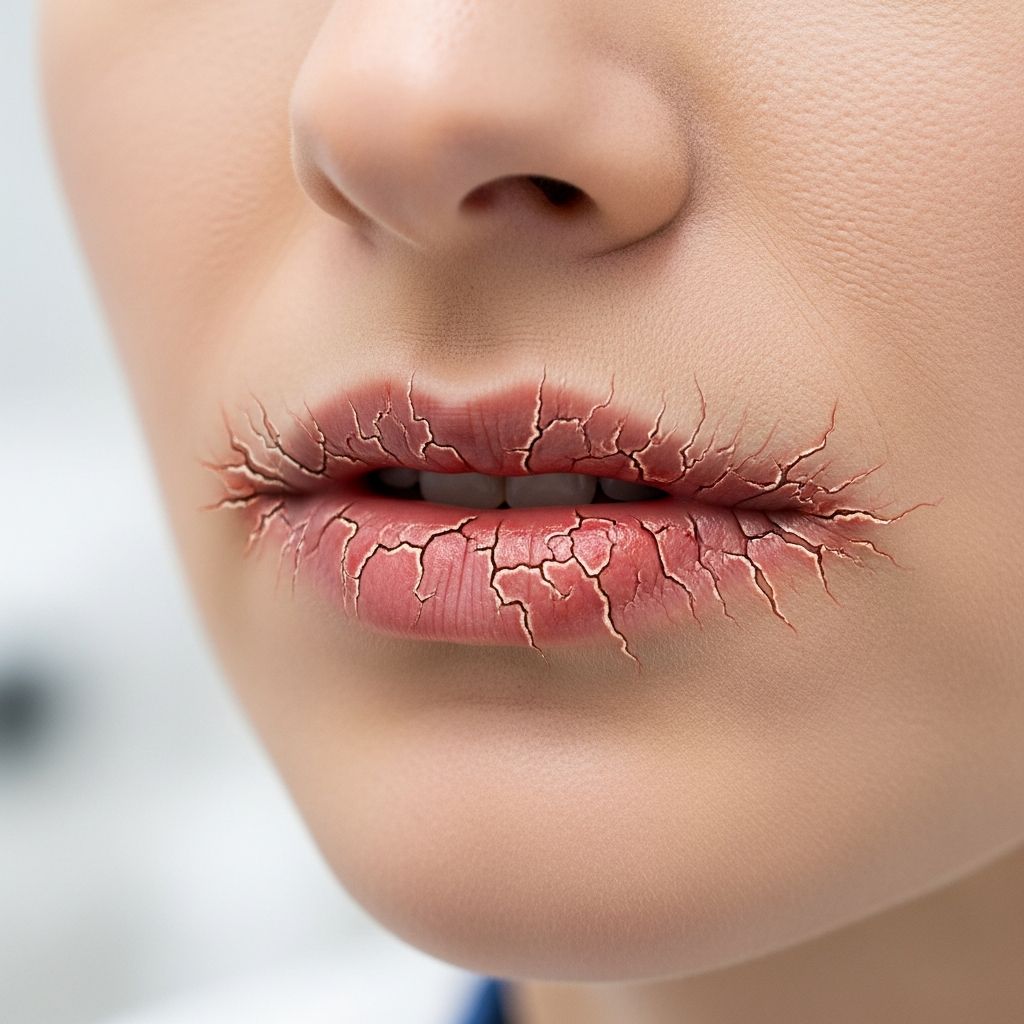
Angular cheilitis, also known as perlèche, is a common inflammatory condition that affects the corners of the mouth, causing cracks, fissures, irritation, and sometimes bleeding. This condition typically presents as painful lesions at the oral commissures—the angles where the upper and lower lips meet. Angular cheilitis can affect individuals of any age but is particularly common in older adults, those wearing dentures, and people with certain nutritional deficiencies or systemic conditions.
Understanding Angular Cheilitis
Angular cheilitis is characterized by inflammation and maceration (softening and breaking down) of the skin at the corners of the mouth. The condition often develops due to a combination of local and systemic factors working together to compromise the skin barrier. While the condition is not serious, it can be uncomfortable and may lead to secondary infections if left untreated. The good news is that in many cases, angular cheilitis resolves on its own without intervention, and when treatment is necessary, it is usually curative with improvement seen within the first few days of appropriate therapy.
Causes and Risk Factors
Angular cheilitis can develop due to multiple contributing factors, which healthcare providers must identify to ensure successful treatment:
- Saliva pooling: Excessive saliva accumulation at the mouth corners creates a moist environment that softens the skin and promotes fungal and bacterial overgrowth.
- Poor denture fit: Ill-fitting dentures, particularly when they do not maintain proper mouth closure or cause moisture pooling, are a common precipitating factor.
- Candida infection: Fungal infections, particularly Candida albicans, are frequently implicated in angular cheilitis development.
- Bacterial infection: Secondary bacterial infections, often involving Staphylococcus aureus, may occur alongside fungal infections.
- Nutritional deficiencies: Deficiencies in iron, vitamin B12, folate, and zinc can significantly impair skin barrier function and immune response.
- Dry mouth (xerostomia): Reduced salivary flow compromises the protective function of saliva.
- Oral thrush: Concurrent intraoral Candida infection increases the risk of angular cheilitis development.
- Lip licking habit: Frequent licking of the lips irritates the skin and perpetuates moisture and damage.
- Systemic conditions: Conditions such as diabetes, HIV infection, lupus, and other immunocompromised states increase susceptibility.
- Medications: Certain medications, including those causing dry mouth or affecting immune function, can predispose to angular cheilitis.
- Trauma or irritation: Irritation from orthodontic appliances, lip balm overuse, or mechanical trauma can initiate the condition.
Clinical Presentation and Symptoms
Angular cheilitis typically manifests with characteristic clinical features that help differentiate it from other oral conditions. Patients commonly report:
- Cracks or fissures at the corners of the mouth
- Redness and inflammation localized to the oral commissures
- Pain or discomfort, particularly when eating or speaking
- Irritation and soreness in the affected areas
- Maceration or softening of the skin
- Possible bleeding from the fissures
- Secondary crusting or scaling
- In some cases, pustules or exudate indicating secondary infection
Symptoms may be mild and intermittent or severe and persistent depending on the underlying cause and the presence of secondary infections. Some patients experience symptoms only during eating or speaking, while others have continuous discomfort.
Diagnostic Evaluation
Proper diagnosis of angular cheilitis requires a comprehensive clinical assessment and, when indicated, laboratory evaluation. A healthcare provider should:
- Take a detailed history: Understanding the duration of symptoms, triggering factors, associated symptoms, medical history, and current medications is essential.
- Perform physical examination: Direct visualization of the affected areas, assessment of oral hygiene, examination of dentures or orthodontic appliances, and evaluation of general oral health.
- Assess predisposing factors: Evaluation of prosthesis fit, oral hygiene status, presence of intraoral fungal infection, and local salivary gland function.
- Consider laboratory tests: If nutritional deficiency is suspected, measurement of ferritin levels and full blood count to determine hemoglobin levels represents a first-line approach.
- Cytological or microbiological studies: While not routinely necessary, swabs may be taken to identify the causative organism if infection is suspected.
- Skin biopsy: Generally not necessary unless the diagnosis is unclear or malignancy is suspected.
Related Stories



The diagnostic process should identify all contributing factors, as successful treatment depends on addressing the specific underlying causes.
Treatment Approaches
General Measures
Before initiating pharmacological treatment, several general measures should be implemented to create an environment conducive to healing:
- Improved general hydration to maintain moisture balance
- Regular use of lip balm or thick moisturizing ointments, particularly those containing petroleum jelly or occlusive agents
- Evaluation and adjustment of dentures or orthodontic appliances to prevent saliva pooling
- Maintenance of excellent oral hygiene to minimize microbial growth
- Patient education regarding avoidance of lip licking and excessive lip balm use
- Removal or modification of irritating appliances if necessary
Topical Pharmacological Treatment
Antifungal therapy: Topical antifungal agents are among the most commonly prescribed treatments for angular cheilitis. Recommended options include clotrimazole, miconazole, and nystatin, which are effective against Candida-related cases. Miconazole oral gel can be applied inside the mouth and to the affected corners of the mouth for seven days, with continuation for an additional seven days if response is observed. The evidence base supports the effectiveness of these agents, and they are frequently prescribed by dermatologists and general practitioners.
Antibacterial therapy: When bacterial infection is present or suspected, mupirocin or fusidic acid should be considered. These agents are effective against gram-positive organisms such as Staphylococcus aureus.
Combination therapy: Many clinicians prefer using combination products that contain both antifungal and antibacterial agents, which address mixed infections more effectively. A typical prescription approach involves nystatin and triamcinolone acetonide cream applied to affected areas twice daily, combined with an over-the-counter petroleum-based ointment such as Aquaphor or Vaseline applied between medication applications. This approach treats the Candida with the antifungal agent, reduces inflammation with the corticosteroid, and soothes sores while forming a protective barrier against saliva.
Corticosteroid combination: Combination antifungal/antibacterial/glucocorticosteroid ointments such as Viaderm-K.C. represent an alternative approach that addresses all three components simultaneously. The corticosteroid component reduces inflammation, which promotes faster healing.
Application protocol: Topical medications should be applied in a thin layer to the angles of the mouth two to three times daily for two weeks. Patients should use a new toothbrush when management is started, as their existing toothbrush may be contaminated with causative organisms.
Systemic Treatment
For persistent or recurrent cases that do not respond to topical therapy, systemic antifungal agents may be necessary. Fluconazole is an effective systemic antifungal for extensive fungal infections that have not responded to topical treatment. Systemic treatment may also be warranted when investigating and managing underlying systemic conditions such as diabetes, HIV infection, or lupus that contribute to angular cheilitis development.
Management of Underlying Causes
Addressing underlying causes is critical for successful long-term management:
- Nutritional supplementation: Correcting deficiencies in iron, B vitamins, or zinc through dietary modification or supplementation is essential when nutritional deficiency is identified as a contributing factor. Notably, topical therapy is likely to fail in cases of nutritional deficiency.
- Oral appliance adjustments: Ensuring proper fit of dentures or orthodontic devices prevents saliva pooling and mechanical irritation. In orthodontic patients, modification or temporary removal of irritating appliances may be necessary.
- Saliva management: Recommending barrier creams like petroleum jelly to prevent pooling at the commissures helps protect the skin from excessive moisture.
- Treatment of concurrent oral thrush: If intraoral fungal infection is present, appropriate therapy should be initiated.
Over-the-Counter and Home Remedies
For mild cases or as adjunctive therapy, several over-the-counter options may be considered. Frequently applying lip balm or petroleum jelly can treat angular cheilitis caused by saliva buildup. Staying hydrated supports overall skin health and reduces the tendency toward dryness. While natural remedies such as tea tree oil or coconut oil are sometimes discussed, there is limited evidence supporting their effectiveness as primary treatments, though extra virgin olive oil has shown promise in some clinical observations.
Follow-Up and Monitoring
Follow-up evaluation is recommended at two weeks after initiating treatment:
- If the condition has resolved, continue monitoring to detect early recurrence.
- If the condition has not resolved, consider prescribing an appropriate systemic antifungal.
- If systemic issues are suspected as the cause, refer the patient to their primary care physician for additional evaluation and management.
Improvement is usually seen within the first few days of appropriate treatment, with typical resolution occurring within two weeks.
Prognosis and Prevention
Angular cheilitis typically responds well to treatment and is rarely associated with permanent scarring or pigmentation changes. However, repeat occurrences are common, particularly in individuals with non-modifiable risk factors such as nutritional deficiency or systemic disease. The condition is not contagious, though it can easily recur if not treated properly or if underlying causes persist.
Prevention strategies include maintaining good oral hygiene, using properly fitted dentures, managing nutritional status, treating concurrent oral infections, avoiding lip licking habits, and using protective lip balms when appropriate.
Special Considerations
Angular Cheilitis in Pregnancy
Angular cheilitis can occur during pregnancy due to hormonal changes, increased risk of Candida overgrowth, and potential nutritional deficiencies. Dentists and healthcare providers should emphasize the importance of maintaining oral health during pregnancy and select pregnancy-safe treatment options.
Angular Cheilitis Related to Medications
Medications like Accutane (isotretinoin) can predispose to angular cheilitis by causing significant dryness. In these cases, educating patients about the importance of moisturizing, using barrier protection like petroleum jelly, and avoiding irritants is essential.
Orthodontic-Related Angular Cheilitis
Angular cheilitis related to orthodontic appliances may not resolve until the appliance is removed or modified. After symptoms subside, typically within two weeks, a modified version of the appliance can be reinstalled with adjustments to prevent recurrence.
When to Seek Specialist Referral
Referral to a specialist such as a dermatologist or infectious disease expert should be considered for:
- Persistent or recurrent angular cheilitis that does not respond to topical therapy
- Suspected nutritional deficiencies requiring hematologic evaluation
- Possible underlying systemic conditions requiring investigation
- Diagnostic uncertainty or atypical presentations
Frequently Asked Questions
Q: How long does angular cheilitis take to resolve?
A: After starting treatment, angular cheilitis usually improves within a couple of weeks, with noticeable improvement often seen within the first few days of appropriate therapy. Some cases resolve on their own without treatment.
Q: Is angular cheilitis contagious?
A: No, angular cheilitis is not contagious. However, the condition can easily recur if not treated properly or if underlying causes persist.
Q: What is the best over-the-counter treatment for angular cheilitis?
A: Many healthcare providers recommend miconazole (Monistat) or clotrimazole (Lotrimin) for angular cheilitis treatment. Petroleum jelly or Aquaphor applied between antifungal applications also provides soothing relief and protection.
Q: Can angular cheilitis come back after treatment?
A: Yes, repeat occurrences of angular cheilitis are common, especially in those with non-modifiable risk factors such as nutritional deficiency or certain systemic conditions. Proper identification and management of underlying causes helps prevent recurrence.
Q: What should I do if topical treatment doesn’t work?
A: If topical therapy is not effective after two weeks, consult your healthcare provider about systemic antifungal therapy or referral to assess for underlying nutritional deficiencies or systemic conditions.
References
- How Do I Manage a Patient with Angular Cheilitis? — Journal of the Canadian Dental Association (JCDA). 2024. https://jcda.ca/article/d68
- Understanding Angular Cheilitis: A Guide for Dentists 2025 — DentalRx. 2025. https://dentalrx.ca/articles/how-to-treat-angular-cheilitis
- Treatment Options for Angular Cheilitis — Journal of Clinical Orthodontics (JCO). December 2022. https://www.jco-online.com/archive/2022/12/691-the-editors-corner-well-always-have-perlèche/
- Angular cheilitis — The Pharmaceutical Journal. 2024. https://pharmaceutical-journal.com/article/ld/angular-cheilitis
- Angular Cheilitis: What to Know — WebMD. 2024. https://www.webmd.com/oral-health/angular-cheilitis
- Angular Cheilitis: Symptoms, Causes, and Management with Images — DermNet NZ. 2024. https://dermnetnz.org/topics/angular-cheilitis
Similar Articles








Read full bio of medha deb