Angulated Lines In Dermoscopy: Melanoma Detection Insights
Understanding angulated lines: Key dermoscopic feature in lentigo maligna and sun-damaged skin melanomas.
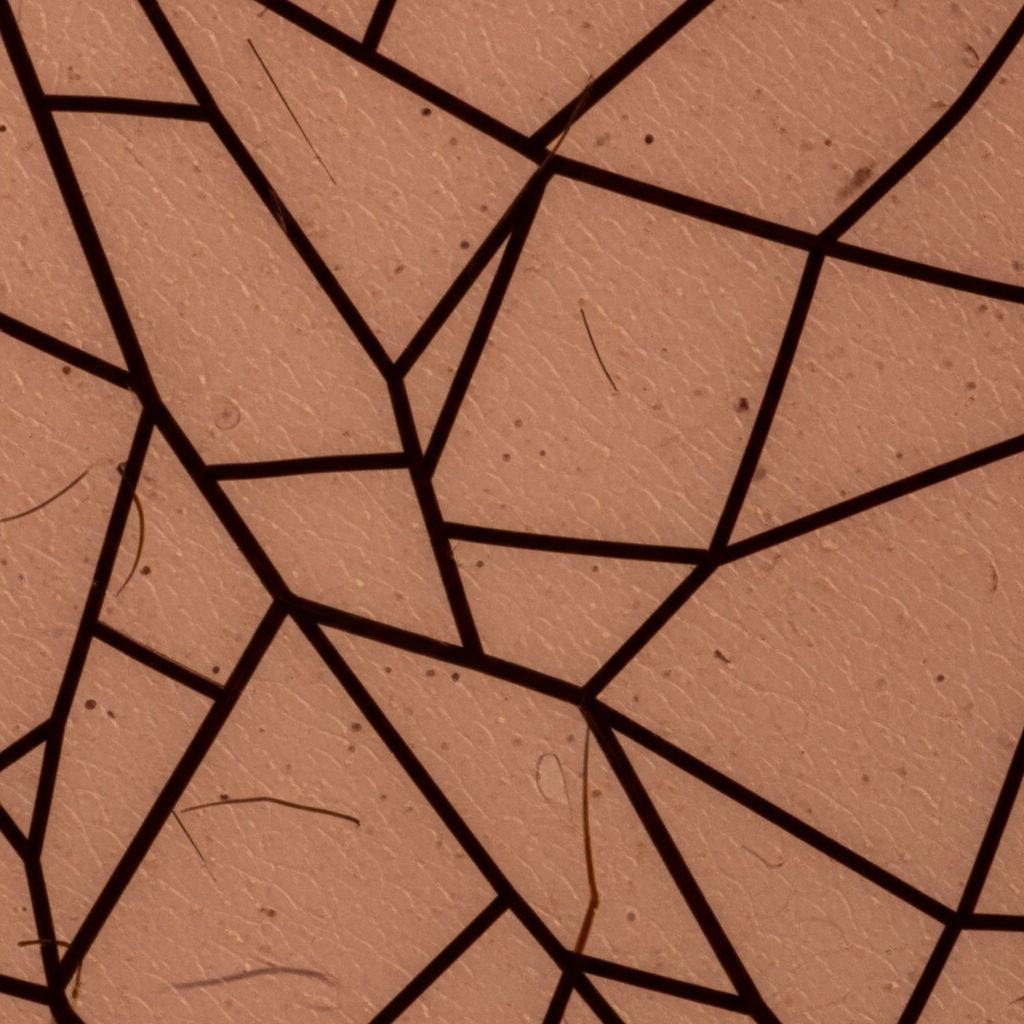
Angulated lines represent a critical dermoscopic structure characterized by geometrical lines forming a zig-zag pattern, often coalescing into polygons known as rhomboids. These features are particularly significant in the diagnosis of melanomas on sun-damaged skin, especially lentigo maligna (LM).
What are Angulated Lines?
Angulated lines are defined as straight or slightly curved pigmented lines that meet at angles greater than 90 degrees without intersecting, creating a distinctive zig-zag or polygonal appearance. When observed on the face or neck, they are termed rhomboids or zig-zag patterns and strongly correlate with lentigo maligna. In other body locations, these lines tend to be larger and raise suspicion for lentiginous melanomas on chronically sun-exposed skin.
This pattern emerges due to alterations in the dermoepidermal junction (DEJ), where proliferation of atypical melanocytes leads to a flattened DEJ with blunted rete pegs and superficial dermal melanophages. Unlike intersecting lines, angulated lines maintain separation, forming partial or complete polygons that aid in differentiating malignant from benign lesions.
Clinical Significance
Angulated lines serve as a high-specificity indicator for early melanomas, particularly in photoaged skin. On the face, rhomboidal structures indicate LM, a subtype of melanoma in situ prevalent in elderly patients with chronic sun exposure. Extrafacial locations show similar but larger patterns, observed in 70% of extrafacial lentigo maligna cases alongside tan structureless areas.
- Association with Lentigo Maligna: Rhomboids/zig-zag patterns on head and neck.
- Lentiginous Melanomas: Larger angulated lines on trunk and extremities.
- Diagnostic Value: Present in melanoma in situ and thin melanomas, less common in thicker invasive types.
Studies confirm angulated lines as the most frequent criterion in extrafacial LM (70%), outperforming atypical pigment networks in some cohorts. Their presence prompts biopsy, enhancing early detection on sun-damaged areas like the back (61.4% of cases) and upper extremities.
Dermoscopic Characteristics
Under dermoscopy, angulated lines appear as discrete, pigmented lines in a zig-zag configuration, often gray-brown or black, contrasting with surrounding skin. They may coalesce into polygons without obliterating follicular openings, distinguishing them from basal cell carcinoma mimics.
| Feature | Description | Associated Lesions |
|---|---|---|
| Zig-zag Lines | Geometrical lines >90° angles, non-intersecting | Lentigo maligna, rhomboids |
| Polygons/Rhomboids | Coalesced lines forming closed shapes | Facial LM |
| Larger Angulated Lines | Broad zig-zag on non-facial skin | Lentiginous melanoma |
| Accompanying Structures | Tan structureless areas, granularity | Extrafacial LM (70%) |
Global patterns include angulated lines pattern (55% of cases), tan structureless/granularity (15.6%), and patchy peripheral pigmented islands (11.6%). No significant differences across trunk, arms, or legs.
Histopathological Correlation
Histologically, angulated lines correspond to a flattened DEJ with reduced, blunted rete pegs due to atypical melanocyte proliferation at the junctional zone. Focal melanophage accumulation in the superficial dermis contributes to the polygonal shadowing.
Unlike atypical pigment networks, which reflect varied rete ridge elongation from melanocytic nests, angulated lines indicate junctional atrophy common in sun-damaged melanomas. This distinguishes them from dysplastic nevi or thicker melanomas showing blue-white veils or milky-red areas.
- Flattened DEJ with blunted rete pegs
- Atypical melanocytes at DEJ
- Superficial dermal melanophages
- Absence in thick melanomas (favoring regression structures)
Related Stories



Differential Diagnosis
Angulated lines mimic benign solar lentigines or seborrheic keratoses but lack obliterated follicles and show asymmetry. Basal cell carcinomas may present similar patterns without vascular structures or pink areas. Differentiate from atypical networks (irregular meshes) and branched streaks.
| Lesion | Key Dermoscopic Features | Distinguishing from Angulated Lines |
|---|---|---|
| Lentigo Maligna | Rhomboids, zig-zag on face | Matches pattern |
| Extrafacial LM | Angulated lines + tan areas | Most common pattern (55%) |
| BCC (flat pigmented) | Angulated lines, no follicles obliterated | Lacks vessels, pink areas |
| Thick Melanoma | Milky-red areas, blue veil | Angulated lines rare |
| Dysplastic Nevus | Atypical network | Irregular meshes, not zig-zag |
Diagnostic Algorithms
Incorporate angulated lines into two-step algorithms: first assess asymmetry/color, then specific structures. High suspicion in sun-exposed lesions >10mm with zig-zag patterns. More colors (>5) in extrafacial sites heighten risk.
For thin melanomas, angulated lines predominate (P<0.002 vs. thick). Combine with granularity, vessels for outlier detection on photoaged skin.
Frequently Asked Questions (FAQs)
What causes angulated lines in dermoscopy?
They result from flattened DEJ, blunted rete pegs, atypical melanocytes, and dermal melanophages in sun-damaged melanomas.
Are angulated lines specific to lentigo maligna?
Highly associated on face/neck (rhomboids), but larger forms indicate extrafacial lentiginous melanomas.
How common are they in melanoma subtypes?
70% in extrafacial LM; angulated lines pattern in 55%; more in thin/in situ vs. thick melanomas.
Can benign lesions show angulated lines?
Rarely; flat pigmented BCC mimics without obliterated follicles or vessels.
What is the management for lesions with angulated lines?
Biopsy recommended due to high melanoma suspicion, especially on sun-exposed skin.
Conclusion
Angulated lines are indispensable in dermoscopy for identifying early melanomas on chronically sun-exposed skin. Their recognition improves diagnostic accuracy, prompting timely intervention.
References
- Angulated lines – dermoscopedia — Dermoscopedia. 2016. https://dermoscopedia.org/Angulated_lines
- Melanoma – dermoscopedia — Dermoscopedia. 2016. https://dermoscopedia.org/04-Melanoma
- Extrafacial Lentigo Maligna: A Clinical And Dermoscopic Analysis — Dermatol Pract Concept. 2022-01-01. https://dpcj.org/index.php/dpc/article/download/1940/1464/33599
- Dermoscopy of angled lines — Doctor Hoogstra. N/A. https://doctorhoogstra.com/en/wiki/dermoscopy-of-angled-lines-2/
- Dermoscopy as a Tool for Estimating Breslow Thickness in Melanoma — Actas Dermo-Sifiliográficas. 2021. http://www.actasdermo.org/en-dermoscopy-as-tool-for-estimating-articulo-resumen-S1578219021000913
- Basal Cell Carcinomas Presenting as Flat Pigmented Macules — NIH PMC. 2023-02-01. https://pmc.ncbi.nlm.nih.gov/articles/PMC9946124/
- Role of Dermoscopy — Plastic Surgery Key. N/A. https://plasticsurgerykey.com/role-of-dermoscopy/
Similar Articles








Read full bio of medha deb