Animal-Type Melanoma: Guide To Diagnosis & Treatment
Rare heavily pigmented melanoma resembling equine tumors: clinical features, diagnosis, and management insights.
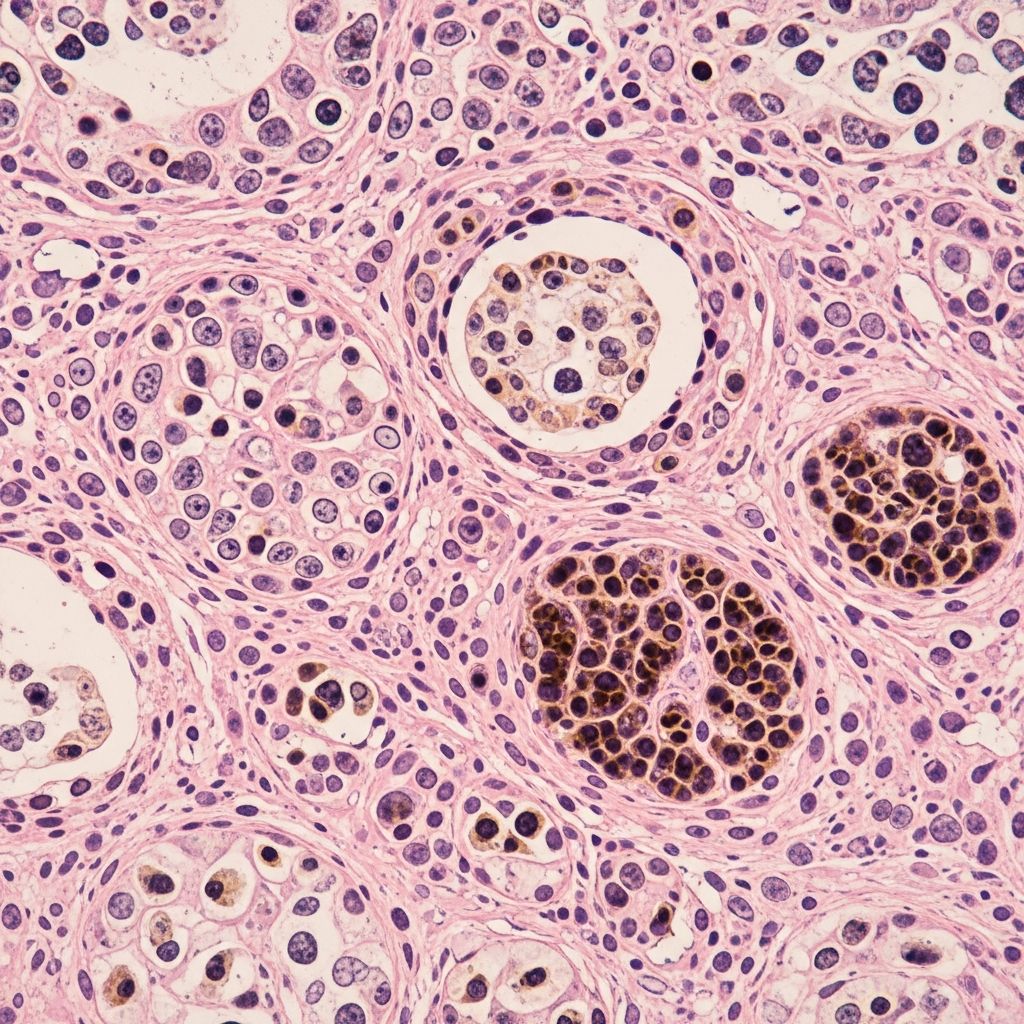
Animal-type melanoma is a very rare form of melanoma characterised by its dark brown/black appearance. The diagnosis is made from its histological appearance on biopsy.
Introduction
Melanoma is a skin cancer that arises from pigment cells known as melanocytes. Animal-type melanoma, also called equine-type melanoma, pigment synthesising melanoma, or pigmented epithelioid melanocytoma (PEM), is a distinct rare subtype characterised by proliferation of heavily pigmented epithelioid and spindled melanocytes that resemble the heavily pigmented melanomas seen in grey horses. While conventional melanomas are highly aggressive, animal-type melanoma generally exhibits more indolent behaviour with lower mortality, though it can metastasise to regional lymph nodes. The name derives from its histological similarity to melanocytic tumours in grey horses, which are often slowly progressive and benign. First described in humans in 1979 by Levene, this variant involves sheets and nodules of heavily pigmented epithelioid melanocytes throughout the dermis. Despite its rarity, understanding its features is crucial for accurate diagnosis and management, as it may mimic benign lesions like blue naevi.
Demographics
Animal-type melanoma predominantly affects younger individuals, with a median age of around 35 years in reported series. Cases have been documented in both adults and elderly patients, including men in their late years. It shows no strong gender predilection based on limited data, though small case series report occurrences in both sexes. The condition is exceedingly rare, with only scattered case reports and small cohorts described in the literature, making comprehensive demographic profiling challenging. Unlike conventional melanoma, which has strong associations with UV exposure and older age, animal-type melanoma arises independently of sunlight and can occur in younger patients without typical risk factors. Racial demographics are not well-defined due to rarity, but heavily pigmented lesions suggest visibility across skin types. Genetic factors remain understudied, but its distinction from UV-driven melanomas highlights unique pathogenesis.
Appearance
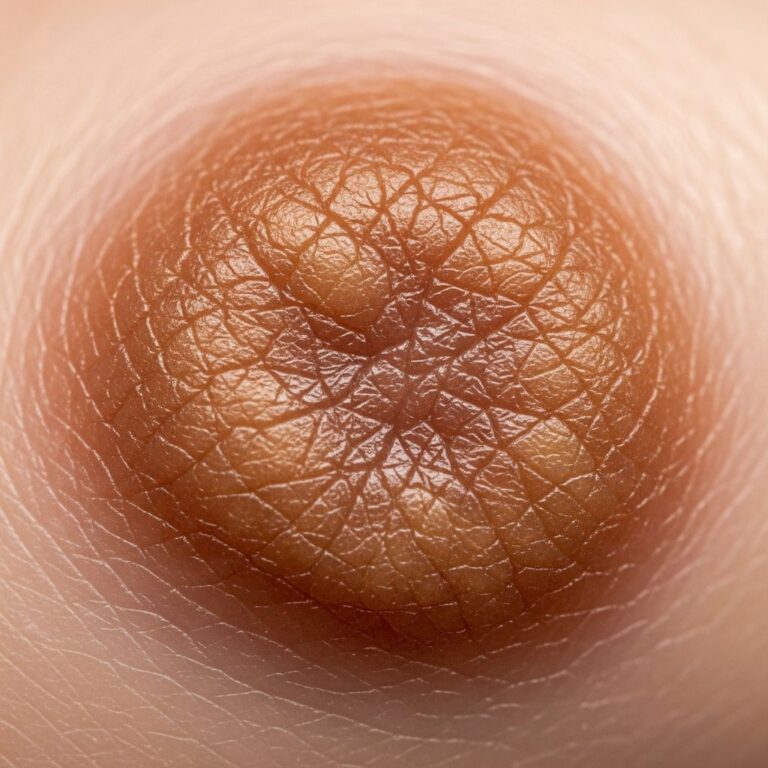
Animal-type melanoma typically presents as a dark brown or black papule or nodule arising de novo from normal, unaffected skin, rather than pre-existing moles. By the time of diagnosis, lesions have often been present for a year or longer, growing slowly. They exhibit the ABCDE criteria (excluding E for evolution in some contexts): asymmetry, irregular borders, colour variation (homogeneous blue-black pigmentation), and diameter often exceeding 6 mm. Common sites include the trunk, extremities, and head/neck, similar to other melanomas. Clinically, it resembles cellular blue naevus variants or heavily pigmented Spitz naevi, leading to potential misdiagnosis as benign. Dermoscopically, it shows a structureless blue pattern, irregular whitish structures, and atypical large blood vessels, aiding in suspicion prior to biopsy. In advanced cases, nodules may ulcerate infrequently or show balloon-cell changes histologically. The equine-like heavy pigmentation throughout the dermis is a hallmark, distinguishing it visually.
- Asymmetry: Uneven shape across halves.
- Border irregularity: Notched or blurred edges.
- Colour variation: Shades of black, blue, brown.
- Diameter: >6 mm typically.
Clinical differential diagnosis
The clinical appearance overlaps with several benign and malignant mimics:
- Blue naevus (common, cellular, or epithelioid variants): Uniform blue-black, dome-shaped.
- Spitz naevus: Symmetrical, dome-shaped nodule in younger patients.
- Metastatic melanoma: Multiple lesions, history of primary.
- Bednar tumour (pigmented dermatofibrosarcoma protuberans): Rare, indurated plaque.
- Malignant blue naevus: Rapid growth, irregular pigmentation.
Dermoscopy helps differentiate: animal-type melanoma lacks the regular globules of blue naevi. Biopsy is essential for confirmation.
Tests
Following clinical suspicion, dermoscopy reveals structureless blue areas, irregular white lines, and atypical vessels. Definitive diagnosis requires excisional biopsy with histopathological examination. Key histological features include:
- Heavily pigmented dermal melanocytic tumour with epithelioid and spindled melanocytes.
- Bland to malignant cytology, low mitotic rate (<1-2/mm²).
- Expansion throughout dermis, pushing rather than infiltrating subcutaneous fat.
- Infrequent ulceration, no regression features.
- Occasional balloon-cell or dendritic melanocytes.
Sentinel lymph node biopsy (SLNB) is recommended for deeper lesions (median Breslow 2.22 mm), positive in ~47% of cases. Immunohistochemistry (S100, HMB45, Melan-A positive) confirms melanocytic origin. Molecular testing may show low mutational burden unlike conventional melanoma. Clark level often V, with nest/columnar growth patterns.
Treatment
Standard management mirrors other melanomas: wide local excision (WLE) with 1-2 cm margins based on Breslow depth. SLNB for staging if depth >1 mm or ulceration. Positive nodes warrant completion lymphadenectomy or observation per guidelines. Adjuvant therapy is not standard due to indolence, but immunotherapy or targeted therapy considered for metastatic disease. In reported cases, WLE sufficed for low-risk lesions with follow-up. Recurrence risk ties to SLNB positivity and unequivocal histology. Multidisciplinary oncological input guides equivocal cases.
Related Stories



Staging
Uses AJCC TNM system for melanoma:
| Stage | Description |
|---|---|
| IA | <1 mm, no ulceration, node-negative |
| IB | 1-2 mm no ulceration or <1 mm ulcerated |
| IIA | 1-2 mm ulcerated or 2-4 mm no ulceration |
| IIB | 2-4 mm ulcerated or >4 mm no ulceration |
| IIC | >4 mm ulcerated |
| III | Regional nodal involvement (SLNB+) |
| IV | Distant metastasis |
Animal-type cases often stage IB-IIB due to depth, with 47% N1 from SLNB.
Follow-up
Patients require lifelong skin checks every 3-6 months initially, then annually. Imaging (CT/PET) for high-risk (SLNB+, deep lesions). Monitor for locoregional recurrence, rare distant spread. Self-examination encouraged using ABCDE rule. Prognosis better than conventional melanoma; young age correlates with indolence.
Outlook
Generally favourable despite lymphatic spread propensity; 47% SLNB+, but low disseminated metastasis rate (few recurrences, 1 death in 22 cases). Spectrum of behaviour: equivocal histology or SLNB- have excellent outcomes. Mortality lower than other melanomas due to low mitotic activity and indolence. Long-term survival post-WLE common.
Frequently asked questions
What is animal-type melanoma?
A rare, heavily pigmented melanoma subtype resembling equine tumours, with epithelioid/spindled melanocytes in dermis.
Who gets it?
Often younger adults (median 35 years), no UV link.
How is it diagnosed?
Dermoscopy then biopsy showing pigmented dermal melanocytes.
Is it aggressive?
More indolent than conventional melanoma but can spread to nodes.
What is the treatment?
Excision ± SLNB.
References
- Animal-type melanoma — Wikipedia. 2023. https://en.wikipedia.org/wiki/Animal-type_melanoma
- Animal-type melanoma: a clinical and histopathological study of 22 cases — PubMed (J Am Acad Dermatol). 2009-08-01. https://pubmed.ncbi.nlm.nih.gov/19709103/
- Animal-type melanoma — DermNet NZ. 2023. https://dermnetnz.org/topics/animal-type-melanoma
- Animal Type Melanoma: A Report of a Case With Balloon-Cell Change — PubMed (Am J Dermatopathol). 2001-08. https://pubmed.ncbi.nlm.nih.gov/11481528/
- Animal-Type Melanoma/Pigmented Epithelioid Melanocytoma: A Case Report — PMC (NIH). 2021. https://pmc.ncbi.nlm.nih.gov/articles/PMC8293039/
- Animal-type Melanoma: Clinical and Dermoscopic Features of 3 Cases — Actas Dermo-Sifiliográficas. 2014. https://www.actasdermo.org/en-animal-type-melanoma-clinical-dermoscopic-features-articulo-S1578219014000225
- Animal-type melanoma/pigmented epithelioid melanocytoma: Three cases — Anais Brasileiros de Dermatologia. 2023. https://www.anaisdedermatologia.org.br/en-animal-type-melanoma-pigmented-epithelioid-melanocytoma-three-articulo-S0365059623001526
Similar Articles








Read full bio of Sneha Tete