Ankle Joint: Anatomy, Structure & How It Works
Complete guide to ankle anatomy: bones, ligaments, cartilage, muscles, and movement mechanics.
Understanding the Ankle Joint: Your Complete Anatomy Guide
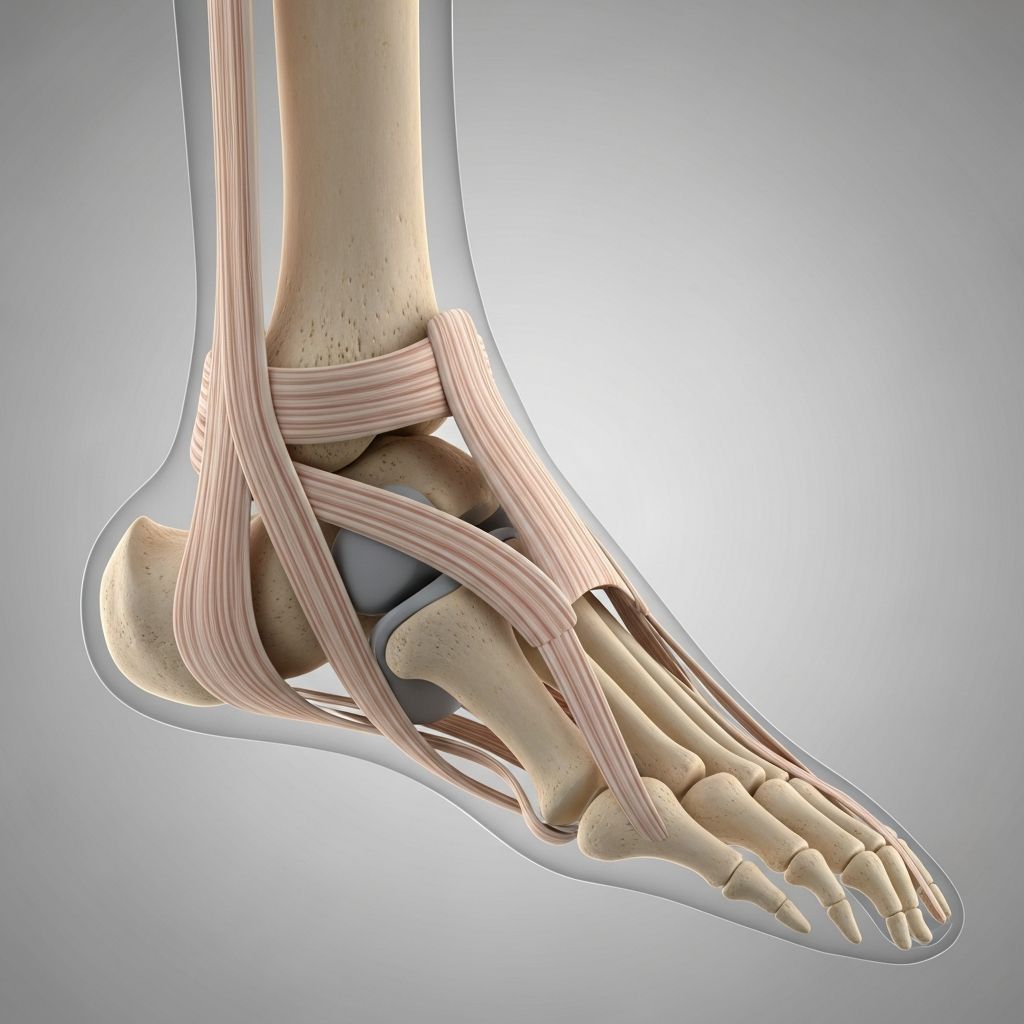
The ankle joint is a remarkable structure where three major bones meet to create one of your body’s most mobile and load-bearing joints. Located where your shin bone (tibia), calf bone (fibula), and talus bone converge, your ankle serves as the critical connection point between your foot and lower leg. Beyond these bones, your ankle comprises cartilage, ligaments, muscles, nerves, and blood vessels that work in perfect harmony to enable movement, provide stability, and support your body weight through daily activities.
Understanding ankle anatomy is essential for recognizing how this complex joint functions and why injuries or degenerative conditions can significantly impact mobility. Whether you’re an athlete, healthcare professional, or someone seeking to understand your body better, learning about ankle structure and mechanics provides valuable insight into one of your most essential joints.
What Is the Ankle Joint?
The ankle joint represents one of the most sophisticated hinge joints in your body. Technically classified as a synovial joint, your ankle possesses remarkable freedom of movement through its unique structural design. The joint functions as a true hinge, similar to door hinges that allow controlled movement in specific directions while maintaining stability.
Synovial joints feature a cavity within one bone where another bone fits precisely, creating a space filled with lubricating fluid. A slippery membrane called the synovial membrane lines this space, secreting fluid that reduces friction and protects the joint surfaces. This sophisticated lubrication system allows your ankle to move with minimal resistance and maximum efficiency.
The Bones That Form Your Ankle
Three primary bones compose the ankle joint, each playing a distinct role in creating this functional unit:
The Tibia (Shin Bone)
The tibia is the larger of the two lower leg bones and bears most of your body weight. The inner bump on your ankle, called the medial malleolus, is the lower end of the tibia. This bony prominence serves as an attachment point for important ligaments that stabilize your ankle on the inner side.
The Fibula (Calf Bone)
The fibula is the smaller bone running alongside your tibia. Its lower end creates the lateral malleolus, which forms the outer bump on your ankle. Despite being smaller than the tibia, the fibula plays a crucial role in ankle stability by serving as an anchor point for lateral ligaments.
The Talus
The talus is a small but exceptionally important bone positioned between your foot and lower leg. Shaped like a saddle with two flared lower ends and a domed ridge in the middle, the talus serves as the vital connection point where your tibia and fibula lock securely around it. The talus sits deeper within your foot toward the back and supports significant weight while enabling smooth ankle movement. Even though it’s relatively small, the talus plays an outsized role in your ability to stand, walk, and maintain balance.
Cartilage: The Protective Cushion
Cartilage is a strong, flexible tissue that protects your joints and acts as a shock absorber throughout your body. Your ankle is lined with hyaline cartilage, the most common type found in your body and sometimes called articular cartilage. This smooth, spongy substance covers the ends of bones that form the ankle joint, allowing them to glide gently over each other without pain or friction.
Related Stories



Hyaline cartilage serves multiple critical functions in ankle health. It acts as a shock absorber, cushioning the forces generated during walking, running, and jumping. It also provides lubrication, reducing friction between bone surfaces and enabling smooth movement. The layer of cartilage covering the talus is particularly important, functioning as both a cushion and a lubricant that helps your ankle move smoothly through its entire range of motion.
The Ligament System: Stability and Support
Ligaments are strong, cord-like connective tissues made of fibrous material that connect your foot bones with your lower leg bones. These firm bands perform the critical function of keeping your bones in their proper position while stabilizing your ankle joint. They prevent your ankle from twisting, folding, or collapsing during daily activities and athletic pursuits.
Three Main Ligament Groups
Your ankle contains three distinct sets of ligaments, each surrounding and supporting different parts of your ankle to keep your body moving properly:
Medial Ligaments (Deltoid Ligaments)
Located on the inner side of your ankle, the medial ligaments start at the medial malleolus, the inner bump formed by the tibia. From this point, they fan out to connect to your talus, calcaneus (heel bone), and navicular bones. These four main medial ligaments work together to prevent over-rotation of your foot and rolling your ankle inward. The deltoid ligament complex acts as a counterbalance to the lateral ligaments on the ankle’s outer side, providing comprehensive medial stability.
Lateral Ligaments
The lateral ligaments are positioned on the outer side of your ankle, originating from the lateral malleolus (the outer bump formed by the fibula). From there, they connect to your talus and calcaneus bones. The three main lateral ligaments include the anterior talofibular ligament, calcaneofibular ligament, and posterior talofibular ligament. These ligaments work together to prevent your ankle from rolling outward and provide stability to the lateral ankle structure.
Syndesmotic Ligaments
The syndesmotic ligaments connect your tibia and fibula bones, holding these two leg bones together firmly. This ligament group includes five main structures that maintain the relationship between these bones and contribute significantly to overall ankle stability. The syndesmotic ligaments are particularly important in preventing separation of the tibia and fibula, which would compromise ankle function.
Muscles: Movement and Control
Muscles are soft tissues made of stretchy fibers that contract and flex to pull and move parts of your body. Muscles attached to your legs and feet control all ankle movements through coordinated contractions and relaxations. These muscles work in partnership with your skeletal structures to enable the full range of ankle motion.
Plantarflexion Muscles
Muscles that control plantarflexion allow you to flex your foot downward, away from your body. This motion is essential for activities like pressing the gas pedal while driving, rising onto your tiptoes, and the push-off phase of walking. Key muscles controlling this movement include the gastrocnemius, soleus, and plantaris muscles in your calf region.
Dorsiflexion Muscles
Muscles controlling dorsiflexion enable you to move your foot upward toward your body. This motion is crucial for lifting your foot while walking and maintaining proper gait mechanics. The tibialis anterior muscle, located on the front of your shin, is the primary dorsiflexor, working to lift your foot and prevent tripping during the swing phase of walking.
Nerves: Sensation and Control
Nerves function like cables that carry electrical impulses between your brain and the rest of your body. These impulses enable you to feel sensations and allow your brain to control muscle movement. Three main nerves pass through your ankle region, including the tibial nerve, fibular nerve, and sural nerve. These nerves provide both motor control for ankle muscles and sensory feedback about ankle position, movement, and external stimuli.
Blood Vessels: Oxygen and Nutrition
Blood vessels are channels that carry blood throughout your body in a closed loop circuit beginning and ending at your heart. Three primary arteries carry blood to and from your ankle, including the anterior tibial artery, posterior tibial artery, and fibular artery. This robust blood supply ensures your ankle tissues receive adequate oxygen and nutrients while removing metabolic waste products. The rich vascularization of the ankle also supports healing when injuries occur.
How Your Ankle Moves
Your ankles move in two main directions, and you use these movements constantly throughout daily life. Understanding these movement patterns helps explain how ankle injuries occur and why certain motions may be restricted following injury or joint disease.
Plantarflexion and Dorsiflexion
Plantarflexion brings your ankle downward, away from your body—the motion you make when pressing the gas pedal or standing on your tiptoes. Dorsiflexion brings your ankle upward toward your body—the motion your foot makes when you lift it while walking. These up-and-down movements occur primarily at the ankle joint itself and represent the main hinge-like motions of your ankle.
Inversion and Eversion
Beyond the primary hinge movements, your ankle enables side-to-side movement through a joint located beneath the ankle joint, called the subtalar joint. Inversion turns the sole of your foot inward, while eversion turns it outward. These movements are essential for walking on uneven ground, such as along hillsides, and for rapidly shifting side to side during sports or other activities. These motions also contribute to maintaining balance on unstable surfaces.
Why Your Ankle Structure Matters
The intricate design of your ankle joint reflects millions of years of evolutionary refinement. The three-bone structure with its ligament support system creates a remarkably stable yet mobile joint. The cartilage provides shock absorption for forces many times your body weight, while the nerve and blood vessel networks ensure proper control and nutrition of ankle tissues.
Your ankle must accomplish seemingly contradictory goals simultaneously: it must be stable enough to support your body weight and prevent injury, yet mobile enough to adapt to uneven surfaces and enable varied movement patterns. The ankle’s anatomy represents an elegant compromise between these requirements, making it one of the most sophisticated joints in the human body.
Common Ankle Conditions
Because of the ankle’s complexity and the forces it must withstand, various conditions can affect ankle health. Ankle sprains occur when ligaments overstretch or tear, ranging from mild to severe. Osteoarthritis can develop as cartilage degenerates over time. Fractures can occur to any of the ankle bones, including injuries to the talus that may require surgery and physical therapy due to the talus’s critical role in ankle function and its slower healing characteristics.
Frequently Asked Questions
Q: What bones make up the ankle joint?
A: The ankle joint consists of three bones: the tibia (shin bone), fibula (calf bone), and talus. These three bones meet and lock together to form the ankle joint, which connects your foot to your lower leg.
Q: How many ligaments does the ankle have?
A: The ankle contains three main groups of ligaments with multiple individual ligaments within each group. The medial ligaments include four structures, the lateral ligaments include three structures, and the syndesmotic ligaments include five structures, providing comprehensive stability.
Q: What is the synovial membrane in the ankle?
A: The synovial membrane is a fluid-filled sac that lubricates and protects the ankle joint. It lines the space between the ankle bones and provides the extra cushioning that helps synovial joints move with minimal friction.
Q: What type of cartilage lines the ankle?
A: Your ankle is lined with hyaline cartilage, also called articular cartilage. This is the most common type of cartilage in the human body and provides shock absorption, lubrication, and protection for your joint surfaces.
Q: How do ankle movements contribute to balance and walking?
A: Your ankle’s up-and-down movements (plantarflexion and dorsiflexion) enable the push-off and swing phases of walking. The side-to-side movements (inversion and eversion) at the subtalar joint allow adaptation to uneven surfaces and help maintain balance during dynamic activities.
Q: Why is the talus bone so important despite its small size?
A: The talus is the connection point where your tibia and fibula lock securely around it. It supports your body weight, helps your ankle move smoothly, and plays a critical role in your ability to stand and walk. Injuries to the talus can take longer to heal and have higher complication risks.
Q: What happens if ankle ligaments are injured?
A: When ankle ligaments overstretch or tear (a sprain), your ankle can become unstable and painful. Sprains range from mild to severe, and while many heal with conservative treatment, severe sprains or repeated injuries can lead to chronic instability.
References
- Ankle Joint: Anatomy & How It Works — Cleveland Clinic. 2024. https://my.clevelandclinic.org/health/body/24909-ankle-joint
- Ankle Ligaments: What They Are, Anatomy & Function — Cleveland Clinic. 2024. https://my.clevelandclinic.org/health/body/21609-ankle-ligament
- Talus Bone: Anatomy, Function & Common Conditions — Cleveland Clinic. 2024. https://my.clevelandclinic.org/health/body/23416-talus-bone
- Medial Ankle Ligament, Deltoid Ligament Sprain — Cleveland Clinic. 2024. https://my.clevelandclinic.org/health/body/22407-deltoid-ligament
- Ankle Surgery: Types, Risks, Pain & Recovery Time — Cleveland Clinic. 2024. https://my.clevelandclinic.org/health/treatments/21047-ankle-surgery
- Foot Ligaments: What They Are, Anatomy & Function — Cleveland Clinic. 2024. https://my.clevelandclinic.org/health/body/21597-foot-ligaments
- Joints in the Human Body: Anatomy, Types & Function — Cleveland Clinic. 2024. https://my.clevelandclinic.org/health/body/25137-joints
Similar Articles








Read full bio of Sneha Tete