Ankle Ligaments: Anatomy, Function & Injuries
Discover the anatomy, function, and common injuries of ankle ligaments for better joint health.
Ankle Ligaments: What They Are
Ankle ligaments are strong, flexible bands of connective tissue that connect the bones of your foot to those of your lower leg. These ligaments play a crucial role in stabilizing your ankle joint and preventing excessive movement that could lead to injury. They are essential for maintaining balance, supporting your body weight, and enabling smooth movement during walking, running, and other activities.
Anatomy of Ankle Ligaments
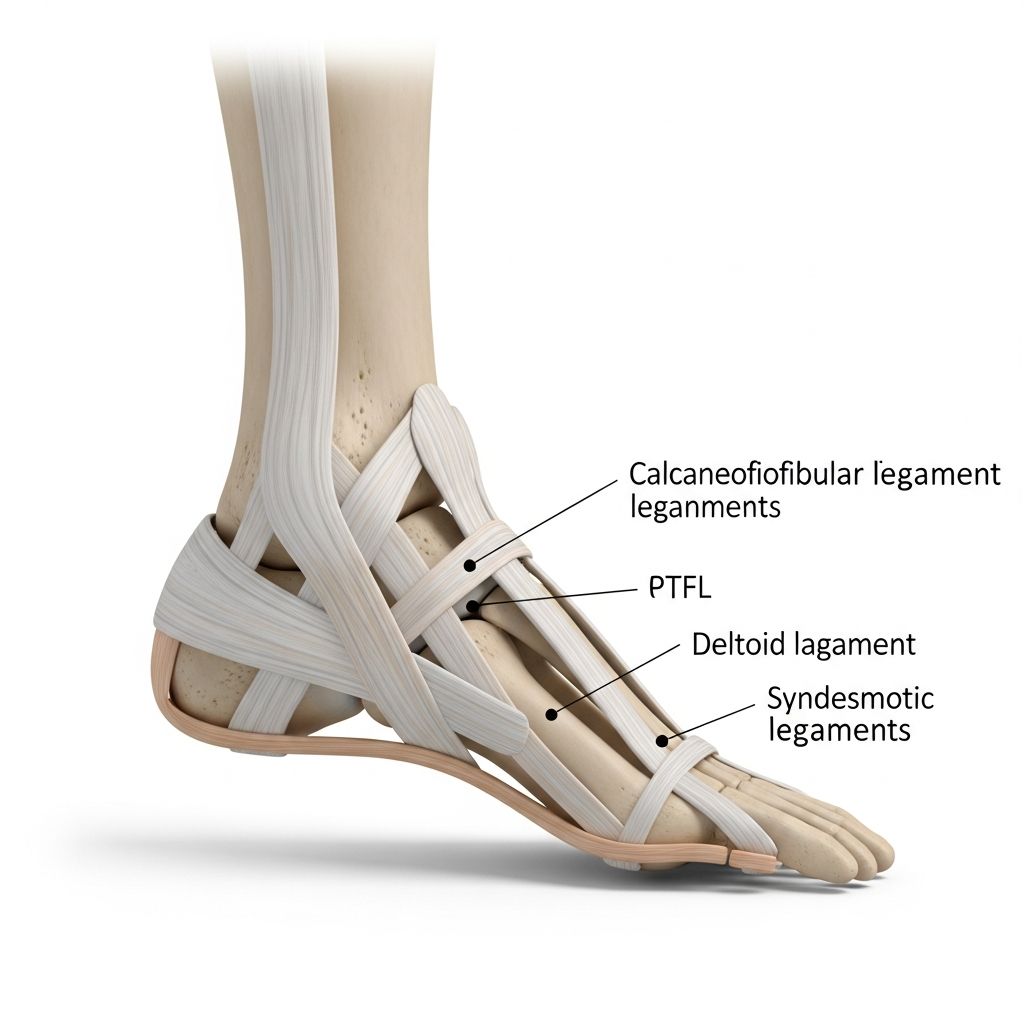
The ankle is a complex joint formed by the meeting of the tibia (shinbone), fibula (calf bone), and talus (ankle bone). Ligaments in the ankle are categorized into three main groups based on their location and function:
- Medial (Deltoid) Ligaments
- Lateral Ligaments
- Syndesmotic Ligaments
Medial (Deltoid) Ligaments
The medial ligaments, also known as the deltoid ligaments, are located on the inner side of the ankle. They originate from the medial malleolus (the bony prominence at the end of the tibia) and fan out to connect to several bones in the foot, including the talus, calcaneus, and navicular bones. The deltoid ligament is a strong, triangular structure that provides significant stability to the inner ankle.
Lateral Ligaments
The lateral ligaments are found on the outer side of the ankle. They originate from the lateral malleolus (the end of the fibula) and connect to the talus and calcaneus bones. The lateral ligament complex consists of three main ligaments:
- Anterior Talofibular Ligament (ATFL)
- Posterior Talofibular Ligament (PTFL)
- Calcaneofibular Ligament (CFL)
These ligaments work together to stabilize the outer ankle and prevent excessive inversion (rolling inward) of the foot.
Syndesmotic Ligaments
The syndesmotic ligaments connect the tibia and fibula bones above the ankle joint. They include the anterior inferior tibiofibular ligament, posterior inferior tibiofibular ligament, and the interosseous membrane. These ligaments are crucial for maintaining the alignment of the tibia and fibula, which is essential for weight-bearing and joint stability.
Function of Ankle Ligaments
Ankle ligaments serve several important functions:
- Stabilize the ankle joint and prevent excessive movement
- Support body weight during standing, walking, and running
- Enable smooth and coordinated movement of the foot and ankle
- Protect the joint from injury by limiting abnormal motion
Common Ankle Ligament Injuries
Ankle ligaments can be injured through overstretching or tearing, commonly referred to as a sprain. Ankle sprains are among the most frequent injuries, ranging from mild to severe. The severity of a sprain depends on the extent of ligament damage:
- Grade 1 Sprain: Mild stretching of the ligament with minimal swelling and pain
- Grade 2 Sprain: Partial tearing of the ligament with moderate swelling, pain, and some loss of function
- Grade 3 Sprain: Complete tearing of the ligament with significant swelling, pain, and loss of function
Causes of Ankle Sprains
Ankle sprains typically occur when the foot is twisted or rolled, often during sports, physical activity, or even everyday movements. Common causes include:
Related Stories



- Walking or running on uneven surfaces
- Stepping off a curb or stair
- Participating in sports that involve sudden changes in direction
- Wearing improper footwear
Symptoms of Ankle Sprains
The symptoms of an ankle sprain may include:
- Pain and tenderness around the ankle
- Swelling and bruising
- Difficulty bearing weight on the affected foot
- Instability or a feeling of the ankle giving way
- Reduced range of motion
Diagnosis and Treatment of Ankle Ligament Injuries
Diagnosing an ankle ligament injury typically involves a physical examination, imaging tests (such as X-rays or MRI), and a review of symptoms. Treatment options depend on the severity of the injury and may include:
- RICE Method: Rest, Ice, Compression, and Elevation to reduce swelling and pain
- Medications: Over-the-counter pain relievers and anti-inflammatory drugs
- Physical Therapy: Exercises to restore strength, flexibility, and balance
- Bracing or Immobilization: Use of braces or casts to support the ankle during healing
- Surgery: In severe cases, surgical repair or reconstruction of torn ligaments may be necessary
Prevention of Ankle Ligament Injuries
Preventing ankle ligament injuries involves several strategies:
- Wearing appropriate footwear for different activities
- Warming up before exercise and stretching regularly
- Strengthening the muscles around the ankle
- Using ankle braces or supports during high-risk activities
- Being cautious on uneven surfaces
Frequently Asked Questions (FAQs)
Q: What are the main types of ankle ligaments?
A: The main types of ankle ligaments are the medial (deltoid) ligaments, lateral ligaments, and syndesmotic ligaments.
Q: How do ankle ligaments prevent injury?
A: Ankle ligaments stabilize the joint, support body weight, and limit excessive movement, reducing the risk of injury.
Q: What is the most common ankle ligament injury?
A: The most common ankle ligament injury is a sprain, which involves overstretching or tearing of the ligaments.
Q: How long does it take for an ankle ligament to heal?
A: Healing time varies depending on the severity of the injury, but mild sprains may heal in a few days to weeks, while severe sprains can take several months.
Q: Can ankle ligament injuries be prevented?
A: Yes, ankle ligament injuries can be prevented by wearing proper footwear, warming up before exercise, strengthening muscles, and being cautious on uneven surfaces.
References
- Ankle Ligaments: What They Are, Anatomy & Function — Cleveland Clinic. 2023. https://my.clevelandclinic.org/health/body/21609-ankle-ligament
- Anatomy of Ankle Ligaments | Expert Physio Review — YouTube. 2023. https://www.youtube.com/watch?v=WvaPAk2nK1E
- Ankle: Anatomy & How It Works — Cleveland Clinic. 2023. https://my.clevelandclinic.org/health/body/24909-ankle-joint
Similar Articles








Read full bio of Sneha Tete