Annual vs Biennial Eye Screening for Diabetic Retinopathy
Exploring whether extending diabetic retinopathy screenings from yearly to every two years risks delayed detection and vision loss in key populations.
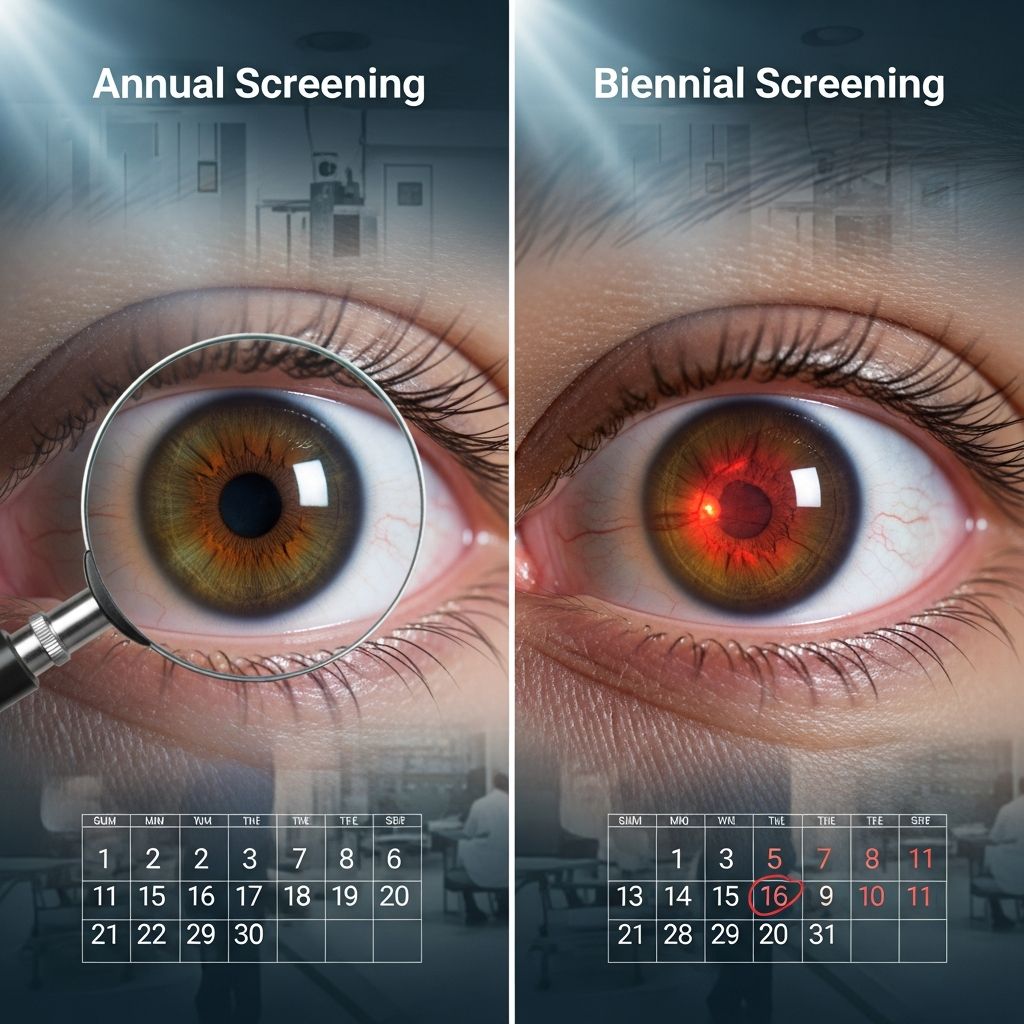
Diabetic retinopathy (DR) remains a leading cause of preventable blindness among people with diabetes. Regular eye screenings are essential for early detection and treatment to preserve vision. However, recent debates question whether low-risk patients need annual exams or if biennial (every two years) screenings suffice. This article examines emerging evidence suggesting that less frequent checks could lead to significant delays in identifying sight-threatening conditions, particularly in certain demographic groups.
Understanding Diabetic Retinopathy and Screening Basics
DR develops when high blood sugar damages retinal blood vessels, potentially leading to leakage, swelling, or abnormal growth that threatens vision. Sight-threatening DR includes severe non-proliferative stages and proliferative DR (PDR), where new vessels can cause bleeding or detachment. Early intervention with laser therapy, injections, or surgery can halt progression in most cases.
Guidelines vary globally. In the US, the American Diabetes Association recommends annual dilated eye exams for most type 1 and type 2 diabetes patients. Some regions, like the UK, propose biennial intervals for low-risk individuals—those with no DR on two consecutive screens—to optimize resources. Yet, accumulating data challenges this approach, showing risks even in seemingly stable patients.
Key Findings from Large-Scale Studies on Screening Intervals
A comprehensive analysis of over 82,000 patients in North-East London with diabetes and no initial DR provides critical insights. Over 4.3 years, 1,788 cases of sight-threatening DR and 103 PDR cases emerged. Incidence rates per 100 person-years were highest among Black patients (0.77), followed by South Asian (0.55) and white (0.34) groups.
Switching to biennial screening would delay diagnosis by one year in 56.3% of sight-threatening DR cases and 43.6% of PDR cases. Black patients faced over twice the delay risk, with cumulative rates of 1,904 per 100,000 versus 1,276 for South Asian and 844 for white patients. Younger adults under 45 experienced more delayed sight-threatening DR events, while older patients saw higher PDR delays—concerning given youth’s longer disease exposure.
| Ethnic Group | Sight-Threatening DR Incidence (per 100 person-years) | Delayed Diagnosis Rate (per 100,000, biennial) |
|---|---|---|
| Black | 0.77 | 1,904 |
| South Asian | 0.55 | 1,276 |
| White | 0.34 | 844 |
This table summarizes ethnic disparities, underscoring how biennial protocols could exacerbate inequalities.
Demographic and Age-Related Risks
Ethnicity profoundly influences DR progression. Black individuals showed elevated rates, possibly linked to genetic factors, socioeconomic barriers, or comorbidities like hypertension. Researchers warn that biennial shifts could widen healthcare disparities, delaying interventions for vulnerable groups.
- Black patients: 2x higher delay likelihood.
- Younger patients (<45): Peak delayed sight-threatening DR.
- Older patients: More PDR delays despite lower overall incidence.
Age compounds risks. Adolescents and young adults, despite lower baseline rates, face prolonged exposure, making timely detection vital. Pediatric studies offer nuance: in well-controlled youth, retinopathy rarely progresses rapidly, suggesting biennial might suffice for children without risk factors like poor glycemic control (HbA1c >10%) or long diabetes duration. However, adult data contradicts blanket extensions.
Cost-Effectiveness: Balancing Economics and Outcomes
Proponents of biennial screening cite cost savings. UK analyses indicate it’s economical for type 2 diabetes (T2DM) low-risk patients, regardless of HbA1c or duration, potentially easing overburdened systems. Base-case models show favorable quality-adjusted life years (QALYs) per cost.
Related Stories



Yet, critics argue delayed diagnoses increase long-term expenses through advanced treatments, hospitalizations, and vision loss impacts. The National Eye Institute notes half of blindness is preventable via early detection, emphasizing annual exams’ value—even for low-risk adults 18-64. American Optometric Association (AOA) now advocates yearly checks across ages to catch subtle issues early.
Global Guidelines and Evolving Recommendations
Policies differ:
- US (ADA/AOA): Annual for most.
- UK (NSC): Biennial for low-risk post-two negatives.
- Australia (pediatrics): Biennial safe for controlled youth; annual for high-risk.
Scotland uses AI for remote triage, reducing visits while maintaining accuracy—a promising model pending wider licensing.
These variations highlight needs for tailored, evidence-based strategies. Recent US pushes for annual exams in diabetics stress comprehensive assessments beyond DR, detecting glaucoma, cataracts, or refractive errors.
Role of Technology in Future Screening
AI-driven retinal imaging could transform protocols, automating low-risk triages for biennial human reviews. While effective in trials, regulatory hurdles limit adoption. Until then, annual in-person dilated exams remain gold standard, per major bodies.
Practical Advice for Patients and Providers
Diabetes patients should prioritize annual exams, regardless of risk perception. Discuss personal factors—ethnicity, age, HbA1c, duration—with providers. High-risk features (poor control, hypertension) demand stricter adherence.
Providers: Counsel on risks, advocate equity-focused policies. Use teleophthalmology where available to boost access.
Frequently Asked Questions (FAQs)
What is the optimal screening frequency for diabetic retinopathy?
Annual dilated exams are recommended for most adults by ADA and AOA, though biennial may suit select low-risk pediatric cases.
Who faces highest risks from biennial screening?
Black patients, young adults under 45, and those with emerging risk factors; delays exceed 50% in many cases.
Is biennial screening cost-effective?
Yes for T2DM low-risk per UK models, but potential vision loss costs may offset savings.
Can AI replace annual visits?
Promising for triage, but not yet widely licensed; annual exams advised currently.
How does ethnicity affect DR risk?
Black individuals show highest incidence and delay risks, urging targeted vigilance.
Implications for Public Health Policy
Evidence tilts against universal biennial adoption for adults. Policymakers must weigh efficiency against equity, prioritizing high-burden groups. Future trials integrating AI, genetics, and biomarkers could refine intervals, but prudence favors annual until proven otherwise. Vision preservation demands proactive, inclusive strategies to curb diabetes’s ocular toll.
(Word count: 1678)
References
- Biennial Screenings May Delay Sight-threatening DR Diagnosis — Review of Optometry. 2023. https://www.reviewofoptometry.com/article/biennial-screenings-may-delay-sightthreatening-dr-diagnosis-in-50-of-cases
- Everyone Can Benefit from Yearly Eye Exams — UCI Ophthalmology. 2023. https://ophthalmology.uci.edu/news/everyone-can-benefit-yearly-eye-exams
- The Case for Biennial Retinopathy Screening in Children and Adolescents — Diabetes Care (ADA Journal). 2005-03-01. https://diabetesjournals.org/care/article/28/3/509/27764/The-Case-for-Biennial-Retinopathy-Screening-in
- Cost-effectiveness of biennial screening for diabetes related retinopathy — PMC/NCBI (Peer-reviewed). 2020. https://pmc.ncbi.nlm.nih.gov/articles/PMC7423794/
- Importance of Annual Eye Exams in Diabetes — Dr. Mohan’s Diabetes Specialities Centre (.edu equivalent health org). 2023. https://drmohans.com/importance-of-annual-eye-exams-in-diabetes/
Similar Articles








Read full bio of Sneha Tete