Anogenital Warts: Diagnosis, Treatment, Prevention Guide
Comprehensive guide to anogenital warts: causes, symptoms, diagnosis, treatment, and prevention strategies for HPV-related genital warts.
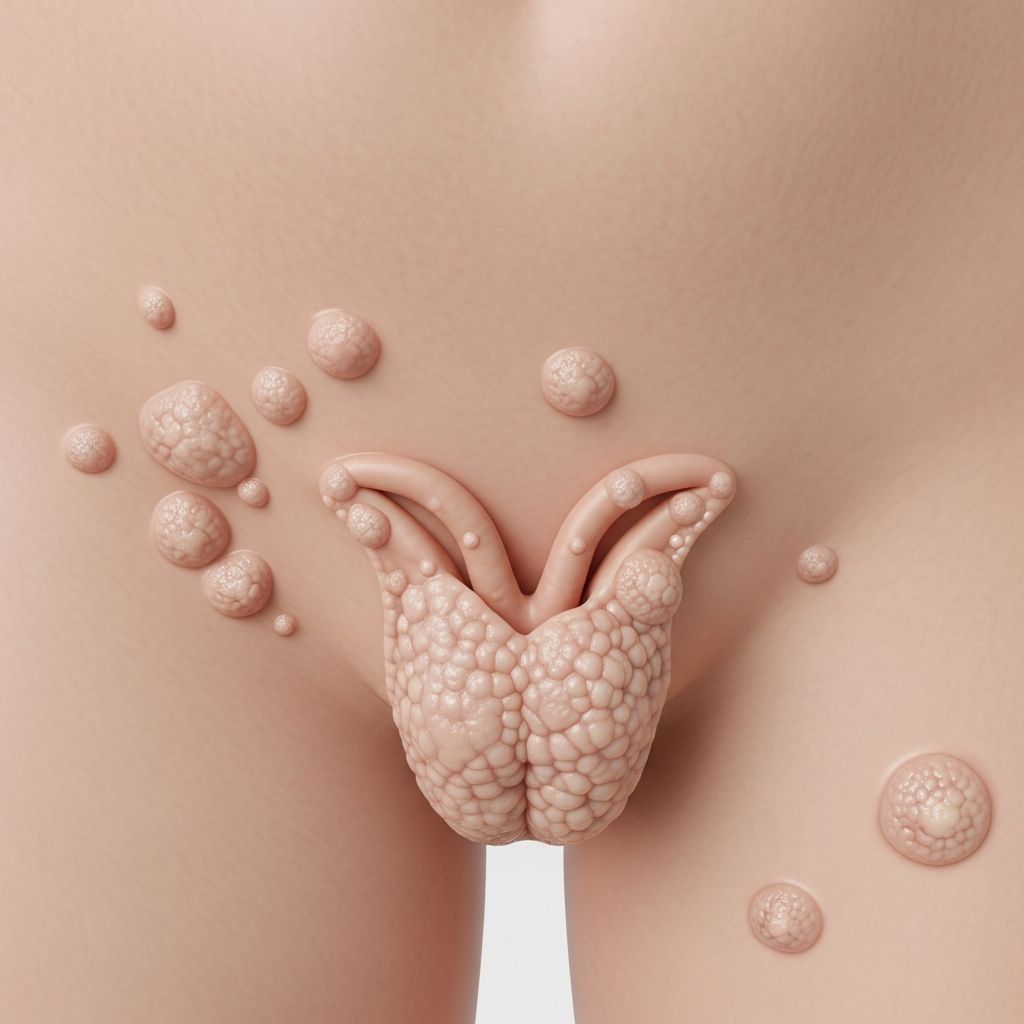
Anogenital warts, also known as condyloma acuminata or genital warts, are benign growths caused by certain strains of the human papillomavirus (HPV). These common sexually transmitted infections (STIs) primarily affect the genital, anal, and perianal regions, appearing as flesh-coloured or greyish growths that can vary from small bumps to large cauliflower-like clusters.
What is anogenital warts?
Anogenital warts result from infection with low-risk HPV types, most commonly HPV-6 and HPV-11, which account for approximately 90% of cases. Unlike high-risk HPV strains linked to cancers, these low-risk types cause visible exophytic (outward-growing) lesions rather than dysplasia. Transmission occurs through skin-to-skin contact during sexual activity, including vaginal, anal, or oral sex. Warts may appear weeks to months after exposure, or remain subclinical.
Who gets anogenital warts? These affect sexually active individuals, peaking in prevalence among those aged 20–29 years. Risk factors include multiple sexual partners, unprotected sex, immunosuppression (e.g., HIV), smoking, and prior HPV exposure. Young children rarely acquire them sexually but may through non-sexual means like perinatal transmission, potentially leading to juvenile-onset respiratory papillomatosis.
Clinical features
Anogenital warts present as single or multiple papules, often coalescing into plaques or verrucous growths. Common sites include:
- Vulva, vagina, cervix in women
- Penis shaft, glans, prepuce, urethra in men
- Perianal area, anal canal in both sexes
- Perineum, scrotum, groin
Symptoms, when present, include itching, irritation, burning, bleeding (especially anal warts during defecation), discomfort, or dyspareunia. Many cases are asymptomatic, causing psychological distress due to appearance. Lesions are typically soft, moist, non-keratinised on mucosal surfaces, or harder keratinised on dry skin. Giant condylomas (Buschke-Löwenstein tumours) are rare aggressive variants mimicking squamous cell carcinoma.
Diagnosis
Diagnosis relies on visual inspection by a clinician experienced in STIs. Typical features confirm the diagnosis without further tests. Biopsy is reserved for atypical lesions (pigmented, indurated, bleeding, ulcerated, fixed to tissue), treatment failures, immunocompromised patients, or uncertain cases to exclude malignancy like squamous cell carcinoma or Bowen disease.
Additional evaluations:
- Anal inspection: Digital exam, anoscopy, or high-resolution anoscopy for perianal/anal warts to detect intra-anal lesions.
- Cervical/vaginal: Colposcopy and biopsy if exophytic cervical warts to rule out high-grade squamous intraepithelial lesion (HSIL).
- Subclinical infection: Detected via acetic acid (acetowhitening), colposcopy, or HPV testing, but routine treatment not recommended as it does not reduce transmission or recurrence.
Differential diagnoses include molluscum contagiosum, condyloma lata (syphilis), pearly penile papules, seborrhoeic keratosis, lichen planus, and skin tags.
Treatment of anogenital warts
Treatment aims to remove visible warts, alleviate symptoms, and address psychosocial impact. Warts may regress spontaneously (30% within 4 months), persist, or grow. No therapy eradicates HPV; recurrence occurs in 20–50%. Patient-applied vs provider-administered options exist; choice depends on wart size, number, location, cost, convenience, and patient preference.
Related Stories



Patient-applied treatments
- Imiquimod 5% cream: Immune response modifier stimulating interferon. Apply 3x/week at bedtime for up to 16 weeks; wash off after 6–10 hours. Effective for external warts; warn of local irritation. Contraindicated in pregnancy.
- Podofilox 0.5% solution/gel: Antimitotic causing necrosis. Apply 2x/day for 3 days, then 4 days off; up to 4 cycles. Limit to 10 cm² total area.
Provider-administered treatments
Cryotherapy: Liquid nitrogen freezes warts, causing necrosis. Apply every 1–2 weeks; best for moist, small warts. Well-tolerated; pre-treat with lignocaine if needed.
Trichloroacetic acid (TCA) or bichloroacetic acid (BCA) 80–90%: Caustic agent applied weekly to destroy tissue. Ideal for small, moist lesions; neutralise excess with powder/talc.
| Wart Type/Location | Recommended Treatments | Comments |
|---|---|---|
| Soft, vulvar, perianal, mucosal, prepuce | Imiquimod OR Podophyllotoxin OR Cryotherapy OR TCA/BCA | Patient-applied for convenience; monitor irritation. |
| Keratinised, longstanding | Cryotherapy | Low scarring risk. |
| Large, extensive, intra-anal/urethral | Surgical (excision, laser, electrocautery) | Consult specialist; local/general anaesthesia. |
| Cervical | Consult gynaecologist; biopsy first | Rule out HSIL. |
Surgical options
For large areas: tangential excision, curettage, electrocautery, CO₂ laser, or fulguration post-anaesthesia. Provides immediate removal but risks recurrence, scarring, pain. Post-op: sitz baths, pain relief, abstain from sex until healed.
Follow-up and complications
Evaluate response within 3 months; switch modalities if no improvement. Factors affecting outcome: immunosuppression, compliance, moist sites respond better to topicals. Complications rare: hypopigmentation/hyperpigmentation, scarring, pain syndromes (vulvodynia), infection, bleeding. Anal warts may cause defecation pain or fistulas.
Partner notification and condom use advised, though condoms do not fully prevent transmission (may weaken with topicals). Screen for other STIs.
Prevention
HPV vaccination (Gardasil 9) prevents wart-causing strains; recommended up to age 45. Safe sex practices reduce but do not eliminate risk. Routine cervical screening detects high-risk HPV changes.
Frequently Asked Questions (FAQs)
Q: Are anogenital warts always visible?
A: No, many are subclinical; visible warts appear weeks to months post-infection. Visual inspection diagnoses most; biopsy for atypical cases.
Q: Can warts be treated at home?
A: Yes, with imiquimod or podofilox under guidance. Provider treatments like cryotherapy/TCA preferred for some sites.
Q: Do warts come back after treatment?
A: Yes, 20–50% recurrence due to persistent HPV. Repeat treatment as needed; vaccination prevents new infections.
Q: Is HPV testing needed for warts?
A: Not routinely; genotyping unnecessary for low-risk types. Test for high-risk HPV in cervical screening.
Q: Can pregnant women be treated?
A: Avoid imiquimod/podofilox; use cryotherapy, TCA, or surgery. Consult specialist.
References
- Anogenital Warts – Human Papillomavirus (HPV) Infection — Centers for Disease Control and Prevention (CDC). 2021-07-22. https://www.cdc.gov/std/treatment-guidelines/anogenital-warts.htm
- Anogenital Wart Treatment in Rochester, NY — Rochester Colon & Rectal Surgeons. Accessed 2026. https://www.rochestercolon.com/services/anogenital-warts/
- Anogenital warts & HPV treatment guidelines — Melbourne Sexual Health Centre (MSHC). Accessed 2026. https://www.mshc.org.au/health-professionals/treatment-guidelines/genital-warts-hpv
- Management of Genital Warts — American Academy of Family Physicians (AAFP). 2004-12-15. https://www.aafp.org/pubs/afp/issues/2004/1215/p2335.html
- Genital warts – Diagnosis and treatment — Mayo Clinic. Accessed 2026. https://www.mayoclinic.org/diseases-conditions/genital-warts/diagnosis-treatment/drc-20355240
Similar Articles








Read full bio of Sneha Tete