Ant Bites And Stings: 6 Ant Types, Symptoms, Treatment
Comprehensive guide to identifying, treating, and preventing bites and stings from various ant species worldwide.
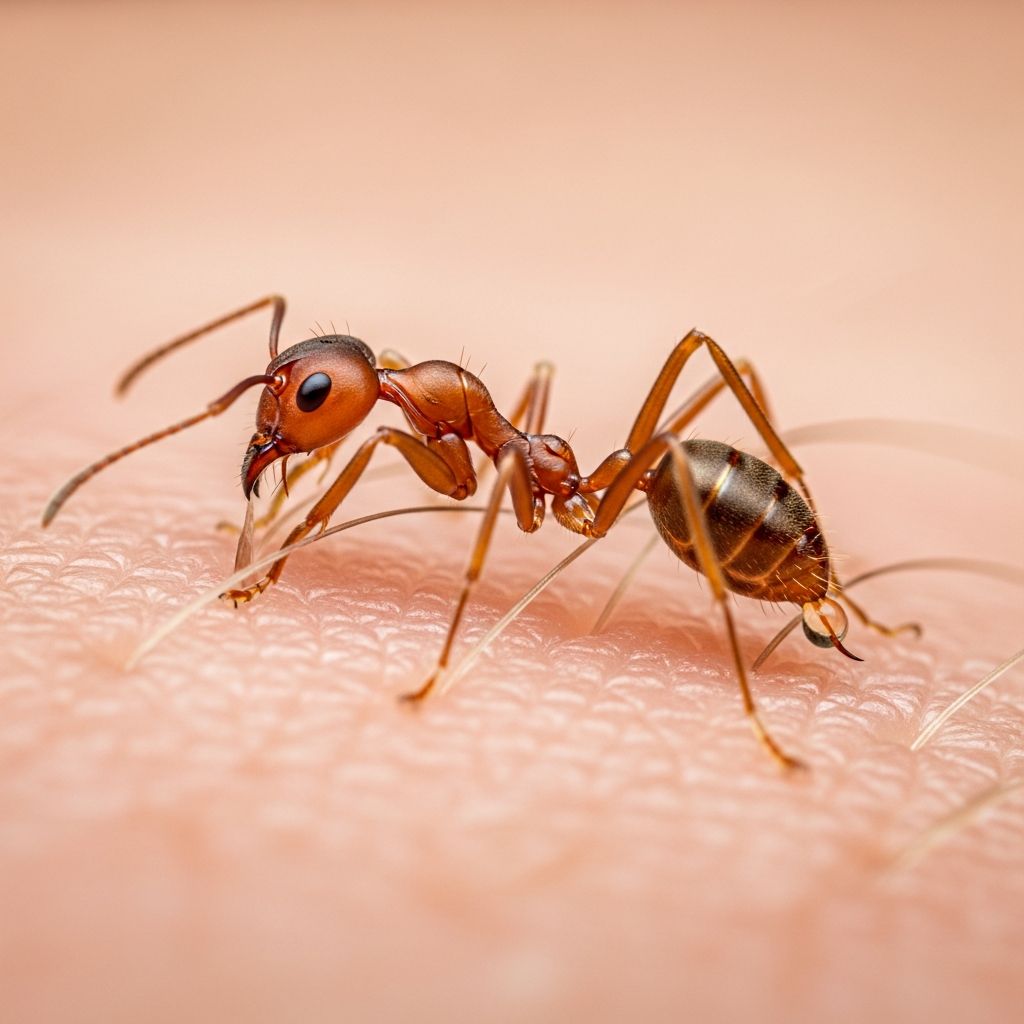
Ants are ubiquitous insects that can bite or sting humans, causing a range of reactions from mild discomfort to severe allergic responses. While most ant encounters result in transient symptoms, certain species like fire ants pose significant risks due to their potent venom. This article details the clinical features, management, and prevention of ant bites and stings, drawing from authoritative medical sources.
What are ant bites and stings?
Ants belong to the order Hymenoptera, alongside bees and wasps. Bites occur when ants use their mandibles to pinch the skin, often injecting formic acid, while stings involve venom delivery via a stinger. Common biting ants include carpenter ants and pavement ants; stinging species feature fire ants (Solenopsis invicta and S. richteri), bulldog ants, and jack jumper ants. Fire ants are notorious for aggressive swarming attacks, stinging multiple times.
Reactions vary by ant species, individual sensitivity, and sting number. Local effects include pain, erythema, and edema; systemic responses range from mild urticaria to life-threatening anaphylaxis.
Who is at risk?
Anyone contacting ant nests or foraging ants risks bites or stings. High-risk groups include outdoor workers (gardeners, farmers), children playing in infested areas, and immunocompromised individuals. Fire ant infestations in warmer climates like the southern US, Australia, and South America heighten exposure. Allergic individuals, especially those with prior Hymenoptera sensitivity, face amplified risks due to venom cross-reactivity.
Types of ants that bite or sting
- Fire ants (Solenopsis invicta, S. richteri): Imported species causing intense pain and pustules; swarm attackers.
- Jack jumper ants (Myrmecia spp.): Australian ants with severe allergic potential.
- Green-head ants (Rhytidoponera spp.): Mild stings with transient pain.
- Bull ants (Myrmecia spp.): Large, aggressive with potent venom.
- Carpenter ants (Camponotus spp.): Painful bites without venom injection.
- Non-aggressive species: Sugar ants, odorous house ants cause minor irritation.
Clinical features of ant bites and stings
Local reactions
Immediate burning pain, wheal-and-flare response with central pallor and surrounding erythema. Bites show mandible marks; stings may leave a stinger (rare in ants). Fire ant stings evolve: within 24 hours, itchy wheals form pustules (sterile, venom-induced necrosis); these persist 3-8 days, ulcerate, and scar.
| Time Post-Sting | Fire Ant Sting Evolution |
|---|---|
| 0-1 hour | Sharp pain, edematous wheal |
| 24 hours | Pustule formation (white, 3-5mm) |
| 3-7 days | Pustule peaks, red halo, itchiness |
| 1 week+ | Ulceration, scab, possible scar |
Large local reactions
Swelling >10cm, lasting days; intense pain/itch, functional impairment (e.g., hand/foot bites).
Severe reactions
Anaphylaxis in 2% of stings: urticaria, angioedema, dyspnea, hypotension, gastrointestinal symptoms. Risk increases with repeated exposure; children more susceptible.
Diagnosis
Primarily clinical: history of ant exposure, characteristic lesions (pustules diagnostic for fire ants). Visual exam confirms bite/sting sites. Allergy suspected if systemic symptoms; skin prick tests or serum IgE for confirmation. Identify ant if possible for targeted advice.
Related Stories



Management of ant bites and stings
First aid
- Remove ants by brushing/vacuuming (avoid crushing).
- Wash with soap/water.
- Apply cold compress (reduces swelling/pain).
- Elevate affected area.
Symptomatic relief
- Analgesics: Paracetamol/acetaminophen or ibuprofen.
- Antihistamines: Loratadine, cetirizine for itch.
- Topicals: Hydrocortisone 1% cream; avoid popping pustules (infection risk).
When to seek medical care
- Symptoms persist >7-10 days.
- Signs of infection: increasing redness, pus, fever.
- Systemic symptoms: chest pain, nausea, dyspnea, swelling beyond site.
- Anaphylaxis: Call 911/emergency services immediately.
Severe/large reactions
Intramuscular epinephrine for anaphylaxis; corticosteroids (prednisone) for large locals; antibiotics if infected. Allergists may recommend venom immunotherapy.
Complications
- Infection: Secondary bacterial from scratching pustules.
- Necrosis/Scarring: Especially multiple fire ant stings.
- Rhabdomyolysis: Massive envenomations.
- Anaphylaxis/Deaths: Rare but documented (e.g., 83 US deaths reported).
Prevention of ant bites and stings
- Avoid nests (mounds, trails).
- Wear protective clothing/shoes outdoors.
- Use insect repellents (DEET).
- Control infestations: professional extermination for fire ants.
- Allergy management: Carry EpiPen, medical alert bracelet.
Fire ants
Imported fire ants (red/black) are invasive, polymorphic (majors/minors). Nests in soil mounds. Venom piperidine alkaloids cause necrosis; attacks coordinated via alarm pheromones. Global spread threatens public health.
Frequently Asked Questions
Are ant pustules infected?
No, fire ant pustules are sterile due to venom’s antimicrobial properties; do not pop to avoid infection.
How long do fire ant stings last?
Pain 1-2 days, pustules 3-10 days, scars up to a month.
Can ant stings cause anaphylaxis?
Yes, in ~2% of cases; prior stings increase risk. Use epinephrine immediately.
Do all ants sting?
No, many bite only; stinging ants have stingers (e.g., fire ants).
Is immunotherapy available?
Yes, for confirmed fire ant allergy via venom extracts.
References
- Stung by an ant? — Poison Control. 2023. https://www.poison.org/articles/stung-by-an-ant-183
- Ant Bites: Symptoms, Treatment, Prevention & Pictures — Cleveland Clinic. 2023-10-12. https://my.clevelandclinic.org/health/diseases/22943-ant-bites
- Medical Information — Texas A&M AgriLife Extension. 2024. https://fireant.tamu.edu/manage/medical-information/
- Fire ants — MedlinePlus, U.S. National Library of Medicine. 2023-07-24. https://medlineplus.gov/ency/article/002843.htm
- The Fire Ant Sting — Mississippi State University Extension Service. 2023. https://extension.msstate.edu/insects/fire-ants/the-fire-ant-sting
- Fire Ant Allergy: How to Identify and Treat — Asthma and Allergy Foundation of America. 2024. https://aafa.org/allergies/types-of-allergies/insect-allergy/fire-ant-allergy/
- Fire ant stings — Fire Ants Australia. 2024. https://www.fireants.org.au/dangers/stings
Similar Articles








Read full bio of Sneha Tete