Anterior Placenta: Understanding Placement and Pregnancy Impact
Learn about anterior placenta positioning, diagnosis, and how it affects your pregnancy and delivery.
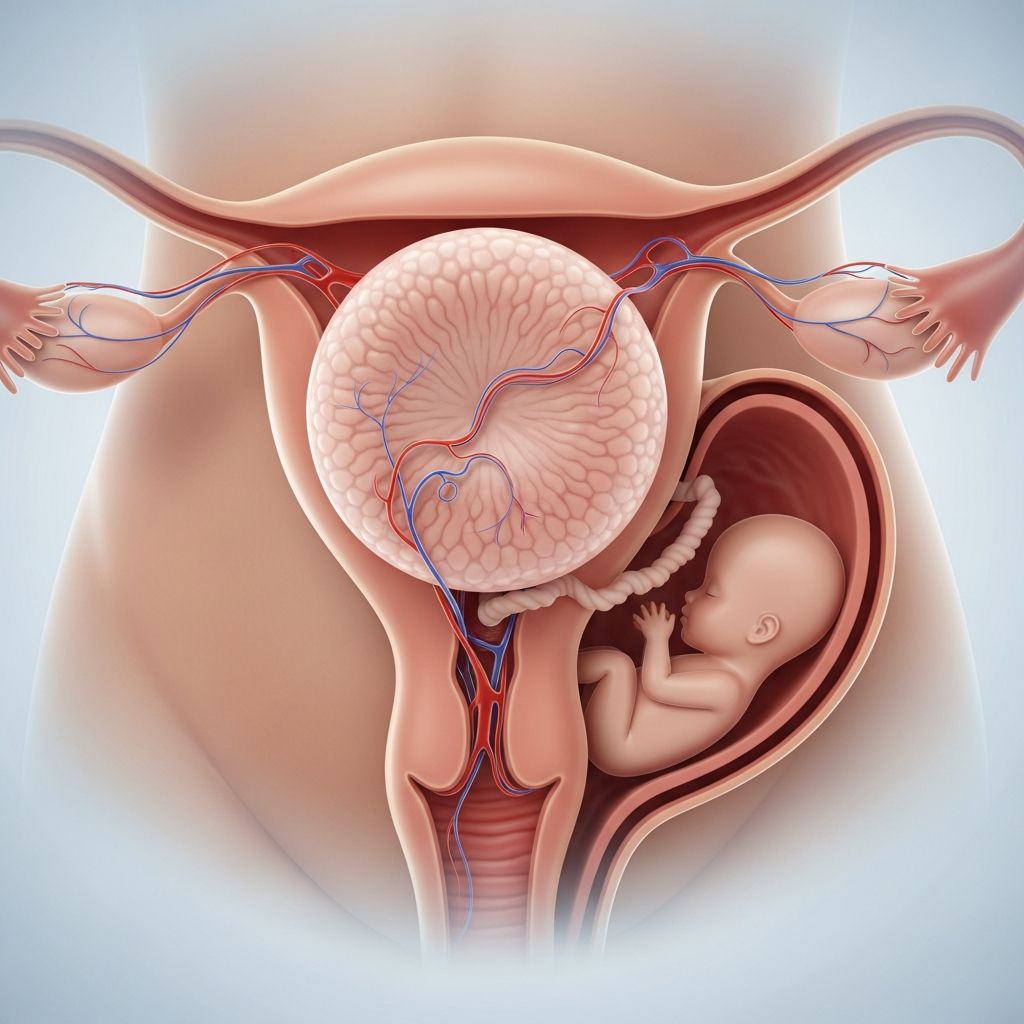
Understanding Anterior Placenta During Pregnancy
An anterior placenta occurs when the placenta grows and attaches to the front wall of the uterus, positioned closest to your abdomen. This is a common condition during pregnancy and is typically identified during routine prenatal ultrasound screening. The placenta is a temporary organ that serves as the connection between you and your developing baby, transferring oxygen and nutrients through the umbilical cord while removing waste products. When positioned anteriorly, the placenta creates an extra cushioning layer between your abdominal wall and your baby, which can affect how you experience certain sensations during pregnancy.
Most pregnant individuals with an anterior placenta progress through their pregnancy without complications, and this positioning does not interfere with the placenta’s vital functions. The condition is often discovered as a routine observation during your mid-pregnancy anatomy scan, with no additional intervention typically required unless other complications are present. Understanding the distinction between an anterior placenta and other placental positioning issues is essential for managing your pregnancy with confidence.
What Does Anterior Placenta Mean?
An anterior placenta specifically refers to the location of the placenta on the front wall of your uterus. Unlike conditions such as placenta previa, where the placenta covers or partially covers the cervix, an anterior placenta does not obstruct the birth canal and rarely causes serious complications. The placenta remains a relatively thin organ, so the shape or size of your belly should not change significantly due to its anterior positioning.
The primary distinction to understand is between an anterior placenta and placenta previa. While an anterior placenta describes simple front-wall positioning that typically poses no problems, placenta previa occurs when the placenta grows downward and covers the cervical opening. This is an important difference because placenta previa can create significant pregnancy complications, whereas an anterior placenta generally does not.
Diagnosis and Timeline of Discovery
Healthcare providers typically identify an anterior placenta during a routine ultrasound examination performed between 18 and 21 weeks of pregnancy, commonly referred to as the anatomy scan or fetal scanning. During this comprehensive ultrasound, your medical team evaluates your baby’s size, all major organs, and the placental position. Because the placenta can shift position as your uterus expands during pregnancy, an anterior placenta may not be definitively diagnosed until around 20 weeks of gestation.
In some cases, if a first-trimester ultrasound was performed for other reasons, placental positioning might be noted earlier. However, no additional diagnostic steps are typically required unless the placenta is positioned low-lying or other complications are identified. The placenta may continue to change position up until approximately 32 weeks of pregnancy, after which the position typically remains stable. In many pregnancies, the placenta naturally migrates upward and away from the cervix as the baby grows, which is why early anterior positioning does not necessarily indicate a long-term problem.
How Anterior Placenta Affects Pregnancy
Delayed Detection of Fetal Movement
The most noticeable effect of an anterior placenta is delayed sensation of fetal kicks and movements. The extra cushioning layer created by the anterior placental position means that your baby’s movements do not transmit as strongly through to your abdominal wall. If you are a first-time mother, you might wonder why you do not feel kicks as early or as intensely as you expected. This delayed sensation can create anxiety, as many first-time parents anticipate feeling movement at specific gestational ages. However, this is a normal consequence of anterior placental positioning and does not indicate any problem with your baby’s health or movement patterns.
Related Stories



As your pregnancy progresses and your baby becomes larger and stronger, you will eventually feel movements more clearly, even with an anterior placenta. Many parents find that they eventually forget about their anterior placenta because it causes no ongoing problems or complications.
Difficulty Detecting Fetal Heartbeat
Similarly, healthcare providers may experience slightly more difficulty locating and detecting your baby’s heartbeat during routine examinations when an anterior placenta is present. The extra tissue layer can make it marginally more challenging to pick up fetal heart tones on Doppler devices during office visits. This does not indicate any abnormality in your baby’s heart or cardiac function—it simply requires your provider to take additional time or reposition the Doppler to locate the heartbeat clearly. Ultrasound imaging is not affected by anterior placental positioning in the same way, so fetal heartbeat assessment via ultrasound remains straightforward.
Potential Impact on Labor Duration
Some research suggests that an anterior placenta may slightly increase the likelihood that your baby will be positioned in an occiput posterior (OP) position during labor. In this position, your baby’s head is still lower than the rest of the body, but the baby’s face points forward rather than toward your back. This positioning can make it more difficult for the baby to navigate through the pelvis during labor, potentially leading to prolonged labor. However, this is not a certainty, and many pregnancies with anterior placentas progress through normal labor timelines.
Does Anterior Placenta Affect Delivery?
Vaginal Delivery Considerations
An anterior placenta does not prevent vaginal delivery. Most pregnant individuals with anterior placentas can expect to have a normal vaginal delivery unless other complications are present. The anterior positioning does not obstruct the birth canal, allowing your baby to progress through the pelvis and vaginal opening during labor. Your healthcare provider will not recommend a cesarean section solely based on anterior placental positioning.
Cesarean Section Procedures
If you require a cesarean section for other reasons, an anterior placenta does not complicate the surgical procedure. Your healthcare provider will use ultrasound imaging to locate the placenta’s exact position and determine the optimal location for the surgical incision. The surgical team will plan the incision to avoid the placenta whenever possible, though this is not always achievable depending on overall placental coverage and uterine size.
Important Distinctions: Related Conditions
Anterior Placenta vs. Low-Lying Placenta
It is crucial to distinguish between an anterior placenta and a low-lying placenta. A low-lying placenta means your placenta is positioned at the bottom of your uterus and may cover some or all of your cervix. A low-lying placenta (also called placenta previa) is a pregnancy complication that can cause mild to severe vaginal bleeding and typically requires closer monitoring and potential cesarean delivery. An anterior placenta, by contrast, is positioned at the front of your uterus and does not cause bleeding unless other complications develop.
You can theoretically have both conditions simultaneously—an anterior placenta combined with a low-lying cervix. If this occurs, your healthcare provider will treat you for the low-lying placenta (placenta previa) specifically, as that is the condition requiring intervention.
Anterior Placenta vs. Placenta Previa
While related to placental positioning, placenta previa is a distinct condition that occurs in roughly one out of 200 pregnancies. In placenta previa, the placenta partially or completely covers the cervical opening. As your baby grows during pregnancy, the placenta may migrate upward, and in many cases, placenta previa resolves by the third trimester. However, if placenta previa persists near your delivery date, cesarean delivery is typically required for maternal and fetal safety.
Rare Complications Associated with Anterior Placenta
Although uncommon, certain complications can arise in pregnancies with anterior placentas. Your medical team will closely monitor your pregnancy to identify and address potential issues early.
Placental Abruption
Placental abruption occurs when the placenta detaches from the uterine wall before delivery. This is a serious complication that requires immediate medical attention. Signs of placental abruption include heavy vaginal bleeding and severe abdominal pain. While placental abruption can occur in any pregnancy regardless of placental position, close monitoring helps identify this complication quickly if it develops.
Decreased Fetal Movement
Any significant decrease in your baby’s normal movement patterns warrants medical evaluation. While anterior placentas do naturally reduce the intensity of felt movements, a dramatic change in the frequency or quality of movements could indicate a problem requiring assessment. Your healthcare provider can perform additional monitoring to ensure your baby is thriving.
When to Contact Your Healthcare Provider
While most pregnancies with anterior placentas progress smoothly without complications, certain symptoms require immediate medical attention:
- Heavy vaginal bleeding: Any significant bleeding may indicate serious conditions such as placental abruption, placenta previa, or other pregnancy complications.
- Severe abdominal pain: Unexplained, sharp, or persistent abdominal pain could signal placental issues or other complications requiring urgent evaluation.
- Significantly decreased fetal movement: If you notice fewer or weaker kicks than your normal pattern, especially later in pregnancy, contact your doctor promptly.
- Vaginal bleeding with abdominal pain: The combination of bleeding and pain is particularly concerning and requires emergency evaluation.
Your healthcare team can help determine whether these symptoms are related to your anterior placenta or another underlying condition. Early detection and treatment are essential for protecting both your health and your baby’s well-being.
Treatment and Prevention of Anterior Placenta
To date, there is no specific medical treatment to correct or change an anterior placental position. This condition typically does not lead to complications, and treatment is only necessary if an anterior placenta develops into placenta previa or if other pregnancy complications arise. You cannot prevent an anterior placenta, as placental positioning is largely determined during early pregnancy development.
The good news is that for most pregnant individuals, an anterior placenta requires no treatment or intervention beyond routine prenatal care and monitoring. Focus on maintaining healthy prenatal habits, attending all scheduled appointments, and communicating any concerns or unusual symptoms to your healthcare provider.
Managing Pregnancy with Anterior Placenta
Sleep and Comfort Recommendations
Comfortable sleeping positions are important throughout pregnancy. Side-lying positions, supported with pillows between the knees and under the abdomen, can improve rest quality and reduce pressure on your developing baby and placenta. Avoid sleeping flat on your back for extended periods during the later stages of pregnancy, as this can restrict blood flow.
Routine Prenatal Care
Continue attending all scheduled prenatal appointments and ultrasound examinations as recommended by your healthcare provider. These visits allow your provider to track placental positioning changes, monitor your baby’s growth and development, and identify any emerging complications early. Pay close attention to your baby’s movement patterns and report any significant changes.
Education and Support
Understanding your anterior placenta helps reduce anxiety about delayed fetal movement sensations. Connect with other pregnant individuals or support groups to share experiences and learn that anterior placentas are common and usually benign. Your healthcare provider can answer specific questions about your individual pregnancy circumstances.
Frequently Asked Questions
Q: Does an anterior placenta affect my baby’s growth?
A: No, an anterior placenta does not affect your baby’s growth or development. The placenta’s position does not interfere with its ability to deliver nutrients and oxygen to your baby or remove waste products.
Q: Will I need more frequent ultrasounds because of my anterior placenta?
A: Not necessarily. Standard prenatal ultrasound schedules apply unless additional complications are identified. Your provider may recommend extra ultrasounds if placenta previa is a concern or other complications develop.
Q: Can an anterior placenta cause my baby to be born prematurely?
A: An anterior placenta alone does not increase the risk of premature delivery. Pregnancy complications that can occur alongside anterior placentas might require early intervention, but anterior positioning itself is not a premature birth risk factor.
Q: When will I start feeling my baby’s movements with an anterior placenta?
A: You may feel movements later than expected—typically in the second half of pregnancy. First-time mothers often feel movements between 18-25 weeks, while those with anterior placentas might not notice movements until later in this range.
Q: Is an anterior placenta considered high-risk?
A: No, an anterior placenta by itself is not considered high-risk. It is a common, benign variation in placental positioning that does not typically require special precautions or interventions.
Q: Can my placental position change from anterior to posterior?
A: Yes, placental positioning can shift as your uterus expands, particularly up to 32 weeks of pregnancy. However, anterior positioning does not necessarily require repositioning for a healthy pregnancy outcome.
References
- How an Anterior Placenta Affects Pregnancy and Delivery — Rupa Health. 2024. https://www.rupahealth.com/post/how-an-anterior-placenta-affects-pregnancy-and-delivery
- The Importance of Understanding Anterior Placenta in Pregnancy — Boca Indonesia. 2024. https://bocahindonesia.com/en/the-importance-of-understanding-anterior-placenta-in-pregnancy/
- Anterior Placenta: What It Means, Diagnosis & Complications — Cleveland Clinic. 2024. https://my.clevelandclinic.org/health/diseases/23306-anterior-placenta
- What Is an Anterior Placenta During Pregnancy? — WebMD. 2024. https://www.webmd.com/baby/what-is-an-anterior-placenta-during-pregnancy
- Placenta: Overview, Anatomy, Function & Complications — Cleveland Clinic. 2024. https://my.clevelandclinic.org/health/body/22337-placenta
- Placenta Position and When it Matters — Parents Guide to Cord Blood. 2024. https://parentsguidecordblood.org/en/news/placenta-position
Similar Articles








Read full bio of Sneha Tete