Antimicrobial Peptides: Mechanisms, Skin Roles, And Therapies
Discover the role of antimicrobial peptides in innate immunity, skin defense, and emerging therapies against infections and cancer.
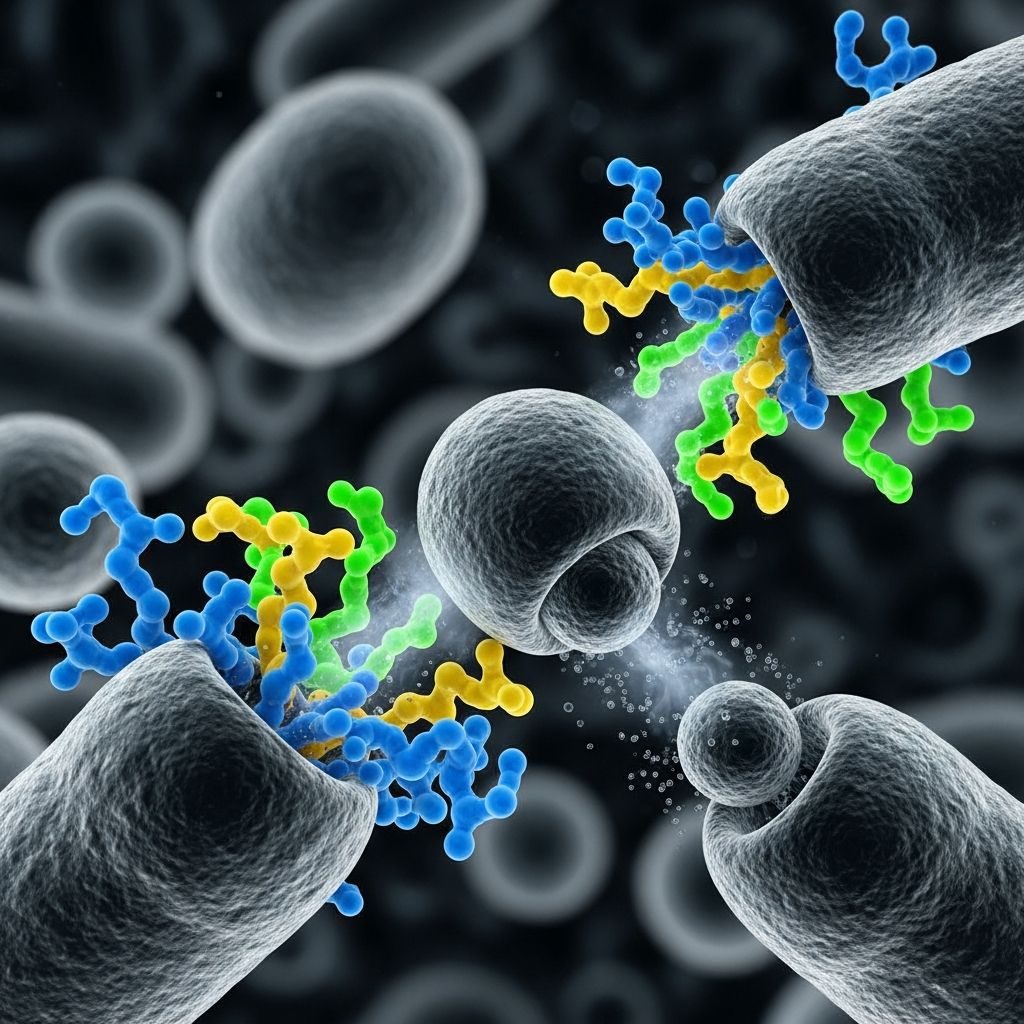
Antimicrobial peptides (AMPs), also known as host defence peptides, are small cationic peptides produced by nearly all multicellular organisms as a fundamental part of the innate immune system. These peptides exhibit broad-spectrum activity against bacteria, fungi, viruses, and parasites, while also demonstrating immunomodulatory properties that enhance host defence mechanisms. In human skin, AMPs play a critical role in maintaining barrier function and preventing infections, making them particularly relevant in dermatological conditions.
What are they?
Antimicrobial peptides are typically 12–50 amino acids long, possess a net positive charge (+2 to +9), and feature amphipathic structures with hydrophobic and hydrophilic regions. This composition enables them to interact selectively with microbial membranes, which differ from mammalian cell membranes in lipid composition—bacterial membranes contain negatively charged phospholipids like phosphatidylglycerol, while mammalian membranes are predominantly neutral. AMPs exist across all kingdoms of life, from plants to humans, underscoring their evolutionary conservation as first-line defenders.
Over 3,000 AMPs have been identified, categorized by structure into α-helical (e.g., magainins, cecropins), β-sheet (e.g., defensins, cathelicidins), extended, and looped peptides. In humans, key families include defensins (α- and β-defensins) expressed in epithelial tissues and neutrophils, and cathelicidins like LL-37 produced by keratinocytes, neutrophils, and macrophages. These peptides not only kill pathogens but also promote angiogenesis, wound healing, and immune cell recruitment.
Who gets them / What causes them?
AMPs are constitutively expressed in barrier tissues like skin, mucosa, and sweat glands, providing immediate protection. Expression increases dramatically in response to microbial invasion, injury, or inflammation via pattern recognition receptors (PRRs) such as Toll-like receptors (TLRs). In skin, keratinocytes produce β-defensins (hBD-1 to hBD-4) and cathelicidin (LL-37) upon stimulation by pathogens or cytokines like IL-1 and TNF-α.
Conditions associated with dysregulated AMP production include:
- Atopic dermatitis: Reduced AMP expression (e.g., low hBD-2, LL-37) due to Th2 cytokines (IL-4, IL-13) contributes to Staphylococcus aureus overgrowth and recurrent infections.
- Psoriasis: Overexpression of hBD-2, hBD-3, and LL-37 driven by IFN-γ and IL-17, correlating with disease severity and plaque formation.
- Rosacea: Elevated cathelicidin and kallikrein-5 protease activity generate inflammatory LL-37 fragments.
- Wound healing: AMPs like PR-39 promote granulation tissue formation.
Structure and mechanism of action
AMPs adopt amphipathic α-helical or β-sheet conformations upon membrane binding. Their positive charge facilitates electrostatic attraction to anionic microbial surfaces. Four primary membrane disruption models explain their bactericidal action:
- Barrel-stave model: Peptides insert as bundles forming transmembrane pores (e.g., magainins).
- Carpet model: Peptides cover the membrane surface, inducing detergent-like micelle formation (e.g., cecropins).
- Toroidal pore model: Peptides bend the membrane into continuous pores with lipid heads lining the channel (e.g., magainin 2).
- Aggregation/disruption: Non-pore formation via membrane thinning and leakage.
Beyond membranes, intracellular targets include DNA/RNA binding (e.g., buforin II), protein synthesis inhibition, and cell wall synthesis disruption. Gram-negative bacteria resistance via efflux pumps can be overcome synergistically with conventional antibiotics.
Skin infections due to antimicrobial peptide defects
| Condition | AMP Defect | Clinical Features | Pathogens |
|---|---|---|---|
| Atopic dermatitis | ↓ hBD-2, LL-37 | Recurrent impetigo, eczema herpeticum | S. aureus, HSV |
| Chronic granulomatous disease | Neutrophil dysfunction | Catalase+ infections | S. aureus, Aspergillus |
| Pityriasis rubra pilaris | Unknown AMP role | Keratoderma, erythroderma | Secondary infections |
Related Stories



Defects in AMP production or function predispose to severe cutaneous infections. For instance, atopic dermatitis patients exhibit 100-fold higher S. aureus colonization due to impaired β-defensin expression.
Related / similar conditions
- Morbihan disease: Facial oedema with possible Demodex role; AMP dysregulation suspected.
- Neutrophilic dermatoses: AMPs contribute to sterile inflammation.
- Vitiligo: Reduced melanocyte AMPs may impair local immunity.
Treatment of antimicrobial peptide defects
Strategies target underlying AMP dysregulation:
- Topical vitamin D analogues: Induce cathelicidin expression in atopic dermatitis.
- Phototherapy (NB-UVB): Upregulates epidermal AMPs.
- Probiotics: Enhance defensin production via microbiota modulation.
- Recombinant AMPs: LL-37 in phase II trials for venous leg ulcers.
Systemic immunosuppressants must be used cautiously as they further suppress AMP production.
Clinical applications and therapeutic potential
AMPs offer promise against antibiotic-resistant pathogens:
- Pexiganan: Synthetic magainin derivative for diabetic foot ulcers (phase III).
- Daptomycin: Cyclic lipopeptide for Gram+ infections.
- Omiganan: Indolicidin analogue for rosacea papules.
Challenges include protease degradation, cytotoxicity, and resistance, addressed via nanoparticle delivery and chemical modifications. AMPs also show anti-biofilm, anticancer, and wound healing properties.
Disease associations
- Acne vulgaris: hBD-1/2 overexpressed; LL-37 promotes inflammation.
- Hidradenitis suppurativa: Reduced AMPs in apocrine glands.
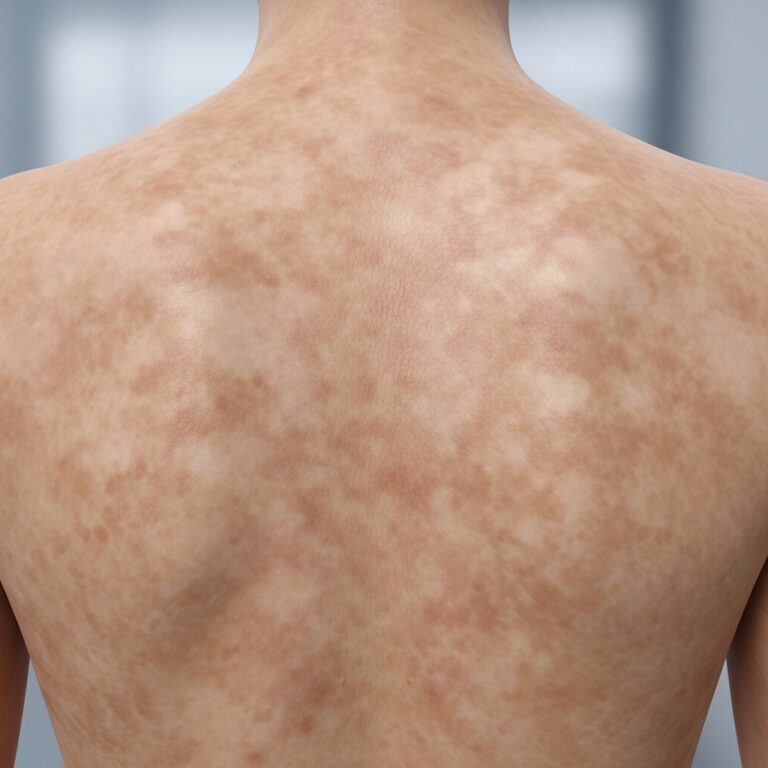
- Melasma: Altered AMP profile affects pigmentation.
History
Frogs first revealed AMPs in 1960s (magainins, 1987). Human defensins discovered 1985; LL-37 cloned 1995. Clinical trials accelerated post-2000 amid resistance crisis.
Frequently Asked Questions
Are antimicrobial peptides safe for topical use?
Most exhibit selective toxicity for microbes over human cells, though high doses may cause irritation. Clinical trials confirm safety profiles comparable to standard antimicrobials.
Can AMPs replace antibiotics?
Not entirely, but their multi-target action reduces resistance risk. Best as adjuncts in combination therapies.
How do AMPs contribute to wound healing?
Via angiogenesis promotion (PR-39), immune modulation, and biofilm disruption, accelerating tissue repair.
Further information
- Defensins knowledge base: defensins.it
- APD3 database: aps.unmc.edu
References
- Antimicrobial peptides — Wikipedia. 2024-01-15. https://en.wikipedia.org/wiki/Antimicrobial_peptides
- Introduction to Antimicrobial Peptides — Bachem. 2023-06-12. https://www.bachem.com/knowledge-center/white-papers/introduction-to-antimicrobial-peptides/
- Antimicrobial Peptides: An Emerging Category of Therapeutic Agents — Frontiers in Cellular and Infection Microbiology. 2016-12-20. https://www.frontiersin.org/journals/cellular-and-infection-microbiology/articles/10.3389/fcimb.2016.00194/full
- Antimicrobial Peptides: Versatile Biological Properties — PMC / National Library of Medicine. 2013-06-25. https://pmc.ncbi.nlm.nih.gov/articles/PMC3710626/
- Antimicrobial peptides: Application informed by evolution — Science Magazine. 2019-02-20. https://www.science.org/doi/10.1126/science.aau5480
Similar Articles








Read full bio of Sneha Tete