Antioxidant Supplements: What You Need to Know
Discover the truth about antioxidant supplements, their benefits, risks, and whether whole foods are better.
Antioxidant supplements have become increasingly popular as people seek ways to protect their health and prevent chronic diseases. From vitamin C tablets to complex multi-ingredient formulations, these products line store shelves with promises of cellular protection and disease prevention. However, the scientific evidence on antioxidant supplements is complex and sometimes contradictory. Understanding what antioxidants are, how they work, and what research actually shows about supplementation is essential for making informed health decisions.
What Are Antioxidants?
Antioxidants are molecules that help protect cells from damage caused by free radicals, which are unstable molecules produced during normal cellular processes and in response to environmental stressors like pollution and radiation. Free radicals can accumulate in the body and damage cells, a process known as oxidative stress. Antioxidants work by donating electrons to free radicals, neutralizing them and preventing cellular damage.
There are hundreds, possibly thousands, of different substances that can act as antioxidants. The most familiar and well-studied include vitamins C and E, beta-carotene and other carotenoids, and the minerals selenium and manganese. Beyond these common forms, antioxidants also include glutathione, coenzyme Q10, lipoic acid, flavonoids, phenols, polyphenols, and phytoestrogens. Most antioxidants occur naturally in foods, where they serve as a natural defense against oxidative damage in the plant’s local environment.
The human body produces some antioxidants internally, but others must be obtained through diet. This dual source of antioxidants means that maintaining adequate intake through both natural production and dietary consumption is important for optimal cellular health.
How Do Antioxidants Work in Your Body?
Understanding the mechanism of antioxidant action helps explain why supplement dosing matters and why more isn’t always better. When an antioxidant molecule encounters a free radical, it donates an electron to neutralize it. This interaction prevents the free radical from damaging important cellular structures like DNA, proteins, and cell membranes.
However, the process doesn’t end when an antioxidant acts on a free radical. Vitamin E, for example, becomes unable to function as an antioxidant after it interacts with a free radical unless it is enzymatically regenerated. Vitamin C plays an important role in regenerating some of the vitamin E that has already acted on free radicals, allowing these antioxidants to be recycled and used multiple times. This regeneration process is remarkably efficient—vitamin C can exist in your body as a functioning antioxidant for many weeks after being regenerated.
The body tightly controls vitamin C status to maintain steady concentrations in tissues and plasma. If you consume high doses of vitamin C, your body absorbs less from the intestine and excretes more in urine to prevent excessive accumulation. This regulatory mechanism demonstrates that your body has evolved sophisticated systems to manage antioxidant levels—systems that may be disrupted by high-dose supplementation.
Dietary Sources of Antioxidants
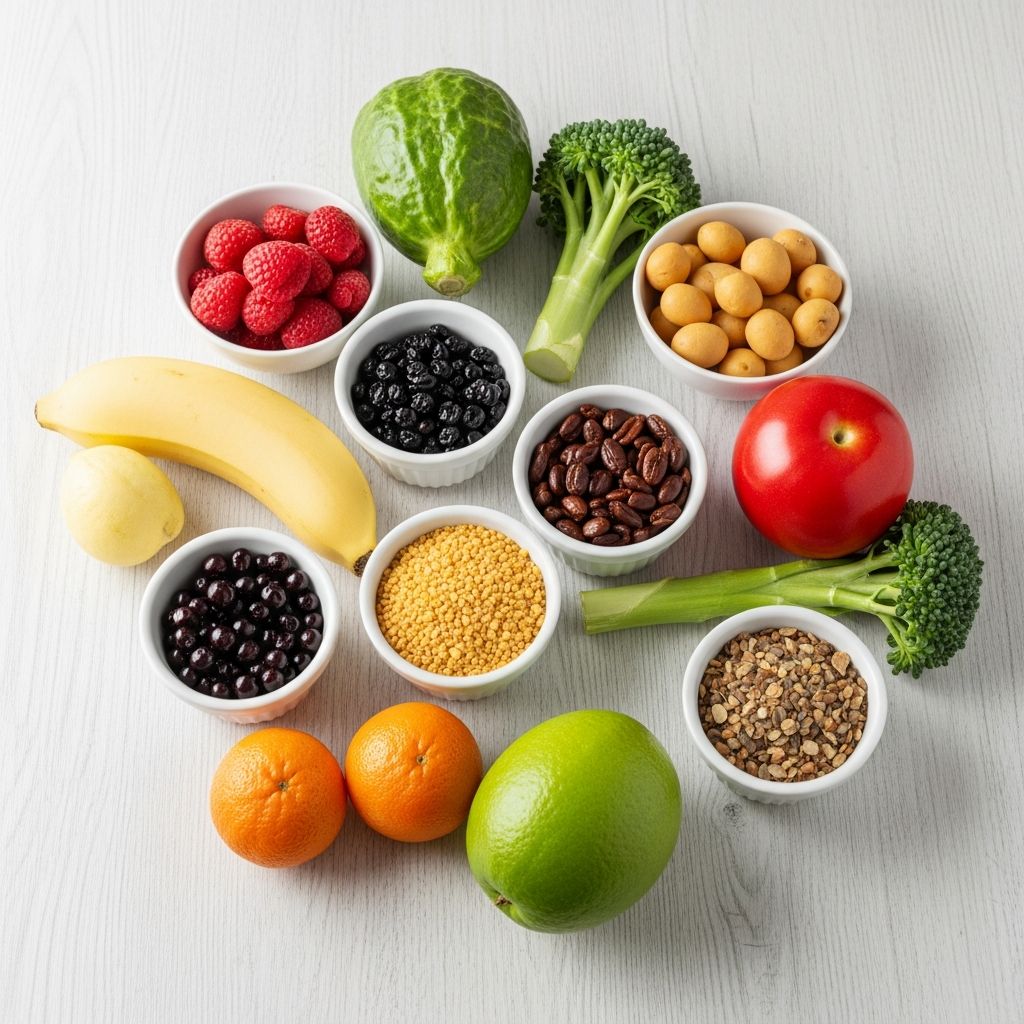
The best way to obtain antioxidants is through a varied diet rich in plant-based foods. Fruits, vegetables, whole grains, nuts, seeds, herbs, spices, and even cocoa all contain naturally occurring antioxidants. Plants synthesize these compounds as part of their natural defense mechanisms, and when we consume these foods, we benefit from these protective compounds.
Vitamin C-Rich Foods
Vitamin C, also called ascorbic acid, is a water-soluble vitamin that humans cannot synthesize themselves and must obtain from diet. Its ability to easily donate electrons makes it a highly effective antioxidant. As a water-soluble compound, it acts both inside and outside cells to protect molecules in aqueous environments. Excellent sources include citrus fruits, berries, bell peppers, broccoli, and tomatoes. A single cup of fresh strawberries contains approximately 80 mg of vitamin C, providing not just the vitamin but also plant chemicals like proanthocyanins and flavonoids that possess their own antioxidant activity.
Vitamin E-Rich Foods
Vitamin E, primarily in the form of alpha-tocopherol, plays antioxidant roles in the body while also supporting immune function, gene expression regulation, and cell signaling. Beyond its antioxidant properties, vitamin E enhances blood vessel dilation and inhibits blood clot formation. Excellent dietary sources include nuts, seeds, and vegetable oils, with additional amounts provided by green leafy vegetables and fortified cereals.
Other Antioxidant Sources
Selenium and manganese are minerals with antioxidant properties found in whole grains, nuts, and seeds. Nuts and seeds are particularly nutrient-dense foods, providing protein, healthy fats, and various phytochemicals alongside their antioxidant compounds. These foods offer multiple nutritional benefits beyond their antioxidant content, including fiber, low saturated fat and cholesterol levels, and various vitamins and minerals.
Antioxidant Supplements vs. Food Sources
While antioxidant supplements might seem like a convenient way to ensure adequate intake, research suggests that whole foods offer advantages that supplements cannot replicate. A cup of strawberries containing 80 mg of vitamin C provides far more than just that single nutrient—it delivers polyphenols and other plant compounds that may work synergistically with the vitamin to promote health. A supplement containing 500 mg of vitamin C lacks these accompanying compounds and their potential benefits.
The reason antioxidant supplements sometimes prove ineffective or even harmful may relate to the fact that free radicals play important roles in the body. Adding high doses of antioxidant supplements can overwhelm the normal balance of free radicals and antioxidants, potentially doing more harm than good. Additionally, the benefits of antioxidant-rich foods come not just from antioxidants but from the entire package of nutrients, including fiber and phytochemicals—a combination that simply cannot be replicated in pill form.
Research Evidence on Antioxidant Supplements
Common Cold Prevention
Many people believe that taking vitamin C supplements can prevent the common cold or decrease symptom severity. This idea was popularized by Linus Pauling in the 1970s and continues to be promoted today through over-the-counter products like Emergen-C and Airborne, which typically contain 1,000 mg of vitamin C—far higher than normal dietary levels.
A comprehensive 2013 systematic review and meta-analysis by the Cochrane Collaboration summarized results from 29 studies on this question. The review concluded that for most people, high-dose vitamin C supplements don’t prevent the common cold. However, they can reduce symptom duration by approximately 8% in adults and 14% in children—amounting to only a day or two of relief—but only if taken consistently every day and started before cold symptoms begin.
Age-Related Macular Degeneration
One of the most significant findings in antioxidant supplementation research concerns age-related macular degeneration (AMD), an eye condition affecting older adults. A 2023 Cochrane review of 26 studies involving 11,952 people aged 65 to 75 found moderate-certainty evidence that antioxidant vitamin and mineral supplementation—specifically the AREDS formulation containing vitamins C and E, beta-carotene, and zinc—probably slows progression to late-stage AMD.
The research indicates that people with intermediate AMD have a higher likelihood of benefiting from antioxidant supplements, as their risk of disease progression is greater than those with early-stage AMD. Additionally, lutein and zeaxanthin may be a suitable replacement for the beta-carotene used in the original AREDS formula for some individuals.
Cardiovascular Health
Research on antioxidant supplements for cardiovascular health has produced mixed results. In the Women’s Health Study, nearly 40,000 initially healthy women took 600 IU of natural source vitamin E or placebo every other day for 10 years. At the study’s end, rates of major cardiovascular events and cancer were not lower among those taking vitamin E than those taking placebo. However, the trial did observe a significant 24% reduction in total cardiovascular mortality, though this was not a primary study endpoint.
Overall Mortality and Disease Prevention
Most research shows that taking multivitamins does not result in living longer, slowing cognitive decline, or lowering the chances of developing cancer or heart disease. A systematic review examining 78 randomized clinical trials on antioxidant supplements including beta-carotene, vitamins A, C, and E, and selenium found limited evidence supporting their use for disease prevention in the general population.
Safety Concerns with Antioxidant Supplements
High-Dose Vitamin C
While vitamin C is generally recognized as safe at dietary levels, high-dose supplementation carries risks. When combined with iron at very high doses, vitamin C has sometimes been found to increase oxidative stress rather than reduce it, suggesting that antioxidants from food sources are preferable to high-dose supplements. Additionally, evidence suggests that taking vitamin C supplements at high doses increases the likelihood of developing kidney stones, particularly in people who already have multiple risk factors for this condition.
Cancer Treatment Interactions
A particular concern exists regarding antioxidant supplement use during cancer treatment. While some patients use antioxidant supplements to reduce chemotherapy side effects and improve prognosis, other research suggests that antioxidant dietary supplements may interfere with chemotherapy and reduce its curative effects. This represents a critical safety consideration for cancer patients considering supplementation.
General Concerns About High-Dose Supplementation
Researchers aren’t completely certain why some antioxidant supplements have proven dangerous, but several theories exist. The most compelling suggests that free radicals play important physiological roles in the body, and high-dose supplementation disrupts the normal balance between free radicals and antioxidants. Additionally, the complex interactions among nutrients in whole foods cannot be replicated in supplement form, and these interactions may be crucial for health benefits.
Recommendations for Antioxidant Intake
Based on current scientific evidence, you can obtain adequate levels of dietary antioxidants simply by eating a healthy, varied diet rich in plant-based foods. Rather than turning to supplements, focus on consuming a rainbow of fruits and vegetables, whole grains, nuts, seeds, and herbs and spices. These foods provide not just antioxidants but also fiber, vitamins, minerals, and other beneficial plant compounds that work together to support health.
If you’re considering antioxidant supplementation, particularly for specific health conditions, consult with a healthcare provider first. This is especially important if you have existing health conditions, take medications, or are undergoing cancer treatment, as supplement-drug and supplement-treatment interactions can occur.
Frequently Asked Questions
Q: Are antioxidant supplements necessary if I eat a healthy diet?
A: No. If you consume a varied diet rich in fruits, vegetables, whole grains, nuts, and seeds, you obtain adequate antioxidants naturally. Whole foods provide not just antioxidants but also complementary nutrients and plant compounds that work synergistically for health.
Q: Can antioxidant supplements prevent chronic diseases?
A: Research generally shows that antioxidant supplements do not prevent chronic diseases like heart disease and cancer in the general population. The exception is the AREDS formulation for age-related macular degeneration in people with intermediate disease.
Q: Are there risks associated with high-dose antioxidant supplements?
A: Yes. High-dose vitamin C can increase kidney stone risk, particularly in susceptible individuals. At very high doses combined with iron, vitamin C may increase oxidative stress. Additionally, antioxidant supplements may interfere with certain cancer treatments.
Q: Can vitamin C supplements prevent the common cold?
A: Research shows that vitamin C supplements don’t prevent the common cold for most people. They may reduce symptom duration by about 8% in adults if taken consistently before symptoms appear, but this amounts to only one or two days of relief.
Q: How much antioxidants do I need daily?
A: Specific recommendations vary by nutrient. Rather than tracking individual antioxidant intake, focus on consuming a variety of colorful plant-based foods, which naturally provide antioxidants within appropriate ranges for health.
Q: Should cancer patients take antioxidant supplements?
A: Cancer patients should consult with their oncology team before taking antioxidant supplements, as evidence suggests they may interfere with chemotherapy effectiveness. Do not self-supplement during cancer treatment.
Conclusion
Antioxidant supplements have generated significant consumer interest and marketing hype, yet scientific evidence does not support their routine use for disease prevention in generally healthy people. While specific formulations like AREDS for age-related macular degeneration show promise, the evidence overall suggests that antioxidants obtained from whole foods are more effective and safer than high-dose supplements. The synergistic effects of nutrients and plant compounds in food cannot be captured in pill form, and high-dose supplementation may actually disrupt your body’s delicate balance of free radicals and antioxidants. For optimal health, focus on eating a diverse diet rich in colorful fruits, vegetables, whole grains, nuts, and seeds rather than reaching for antioxidant supplement bottles.
References
- Vitamins and Minerals as Antioxidants – Introduction to Nutrition — Middle Tennessee State University Pressbooks. Accessed 2025. https://mtsu.pressbooks.pub/nutrition/chapter/8e-antioxidant-vitamins-minerals/
- Risks and benefits of antioxidant dietary supplement use during chemotherapy — PubMed Central. 2021. https://pubmed.ncbi.nlm.nih.gov/33849858/
- What Are Antioxidants? — Harvard T.H. Chan School of Public Health, The Nutrition Source. Accessed 2025. https://nutritionsource.hsph.harvard.edu/antioxidants/
- Dietary Supplements for Eye Conditions: What the Science Says — National Center for Complementary and Integrative Health (NCCIH). 2023. https://www.nccih.nih.gov/health/providers/digest/dietary-supplements-for-eye-conditions-science
- Add antioxidants to your diet — Mayo Clinic. Accessed 2025. https://www.mayoclinic.org/healthy-lifestyle/nutrition-and-healthy-eating/in-depth/add-antioxidants-to-your-diet/art-20546814
- Using Dietary Supplements Wisely — National Center for Complementary and Integrative Health (NCCIH). Accessed 2025. https://www.nccih.nih.gov/health/using-dietary-supplements-wisely
Similar Articles







Read full bio of medha deb