Antiretroviral Therapy (ART): How It Works & Side Effects
Comprehensive guide to antiretroviral therapy: understanding HIV treatment, mechanisms, medications, and achieving undetectable viral loads.
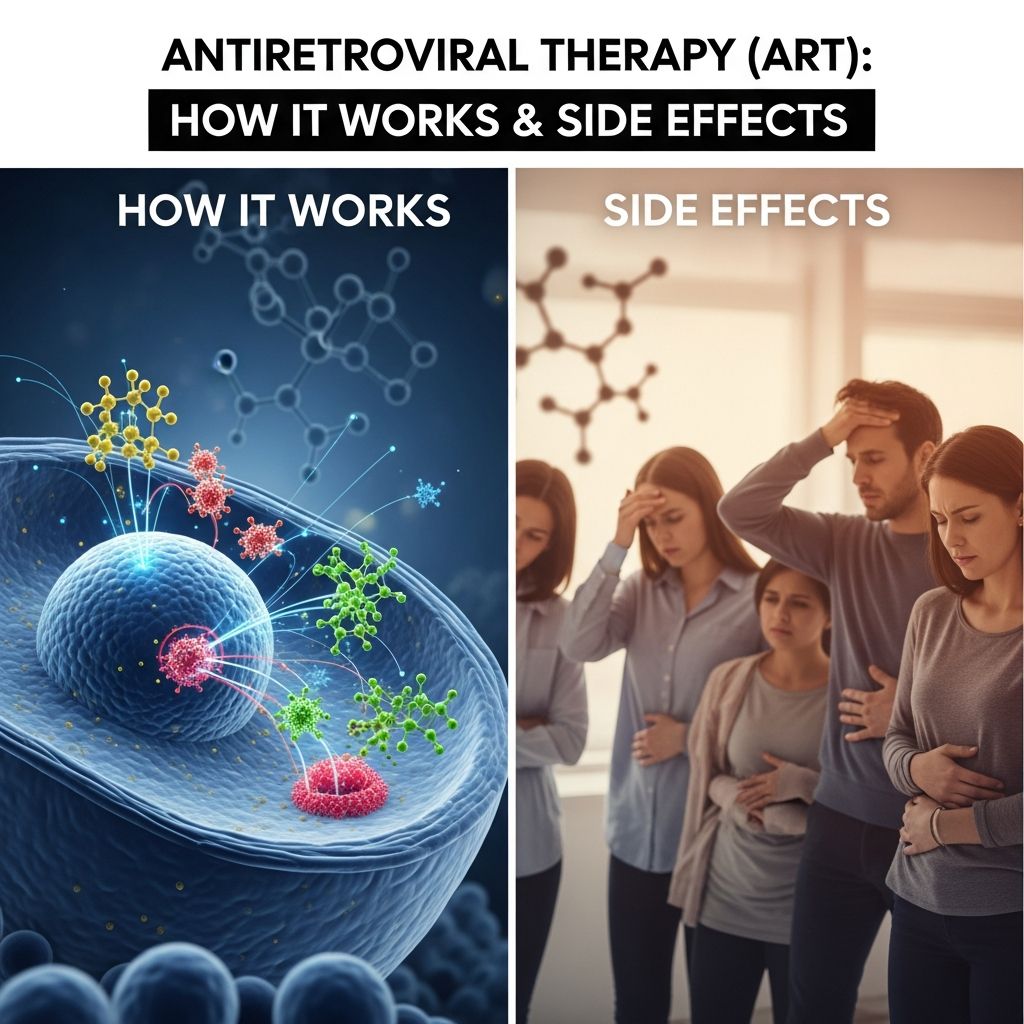
Understanding Antiretroviral Therapy (ART)
Antiretroviral therapy (ART) is a combination of medications specifically designed to treat HIV (human immunodeficiency virus), one of the most significant health challenges of our time. HIV is a virus that systematically attacks and destroys CD4 cells, also known as helper T-cells, which form a critical component of your immune system. Without adequate protection from CD4 cells, your body becomes vulnerable to life-threatening infections and various opportunistic diseases.
While ART cannot completely cure HIV, it represents a revolutionary approach to managing the virus effectively. When taken consistently and correctly, ART can reduce HIV levels in your body to such low levels that standard blood tests cannot detect them—a status known as “undetectable.” This achievement is transformative, not only for individual health outcomes but also for preventing transmission to others. Many people who start ART soon after their HIV diagnosis and maintain consistent treatment can expect to live as long as someone without HIV, a remarkable achievement in modern medicine.
How HIV Infects Your Cells
To fully appreciate how antiretroviral therapy works, it’s essential to understand the process by which HIV infects your cells and reproduces. Think of it as a sophisticated infiltration: HIV gets inside your cells and essentially rewrites their genetic instructions. Once inside, the virus reprograms your cells’ natural security systems, allowing even more viral copies to enter and establishing a continuous cycle of replication.
HIV carries instructions in the form of RNA and possesses specialized enzymes that act as tools in the replication process. These tools are housed within the virus’s capsid core. HIV’s replication process is remarkably complex: the proteins making up the capsid must undergo specific transformations to allow the virus to reproduce effectively. HIV uses your cells’ own machinery to manufacture copies of itself, all while destroying your T-cells in the process. This destruction prevents your immune system from fighting off other infectious diseases, making you progressively more vulnerable to illness.
The Mechanisms of ART: How Different Medications Work
Antiretroviral medications employ diverse strategies to interrupt HIV’s replication cycle at multiple stages. This multi-pronged approach is crucial to treatment success. Each medication type targets different points in the virus’s copying process, attacking the problem from various angles simultaneously. The primary categories of ART medications include:
Nucleoside Reverse Transcriptase Inhibitors (NRTIs)
NRTIs work by breaking or preventing HIV’s enzymes from functioning properly. These medications are often used as the “backbone” of combination therapy and are frequently paired with other medication classes to enhance effectiveness.
Non-Nucleoside Reverse Transcriptase Inhibitors (NNRTIs)
Similar to NRTIs, these medications disable the enzymes HIV relies on to replicate. They represent another approach to attacking the same target from a slightly different angle, providing additional therapeutic options.
Protease Inhibitors (PIs)
Protease inhibitors work by disabling the protease enzymes that HIV needs to assemble new viral particles. These medications prevent the virus from creating functional copies of itself, even if some replication has begun.
Integrase Strand Transfer Inhibitors (INSTIs)
INSTIs represent a newer class of medications that prevent HIV from integrating its genetic material into your cells’ DNA. This action stops the virus at a critical juncture in its replication process. These second-generation integrase inhibitors have become increasingly popular in modern HIV treatment regimens due to their effectiveness and tolerability.
Entry and Fusion Inhibitors
These medications prevent HIV from entering your cells in the first place or from fusing with your cell membranes, essentially blocking the virus at the doorway before it can cause damage.
Related Stories



The Power of Combination Therapy
One of the most important principles in HIV treatment is that combining medications is significantly more effective than taking a single drug. You typically take a combination of two to four medications that work in different ways to reduce your viral load—the amount of HIV virus in your body. This combination approach serves multiple critical purposes:
First, combination therapy reduces the risk that the virus will develop resistance to the treatment. HIV is notorious for its ability to mutate and adapt to single medications, which is why monotherapy (single-drug treatment) has been abandoned as a treatment approach. Second, multiple medications working together can achieve much lower viral loads than any single medication could accomplish alone. Third, this approach provides backup: if one medication encounters resistance, the other medications can continue working to suppress the virus.
Many ART medications come in convenient combination pills, with two or three different drugs incorporated into a single tablet. The most common combination consists of two NRTIs (called the “backbone”) combined with another type of ART medication, usually an INSTI or NNRTI, or sometimes a PI with a booster to enhance its effectiveness. This convenient formulation makes it easier for patients to maintain consistent adherence to their treatment regimen.
Measuring Treatment Success: Viral Load and Undetectable Status
When taken correctly and consistently, ART is remarkably successful. Studies demonstrate that over 90% of people—that’s 9 out of every 10 individuals—who take ART medications as prescribed achieve undetectable levels of HIV in their blood within 12 months. This statistic alone demonstrates the transformative power of modern HIV treatment.
For most people, ART reduces HIV levels noticeably within six months, with some experiencing reductions as quickly as one to two months after starting treatment. Your healthcare provider typically monitors your viral load every four to eight weeks when you first begin ART. When your viral loads remain consistently below detectable levels for six months of treatment, they reach truly undetectable status.
Achieving and maintaining undetectable levels offers extraordinary benefits. Most significantly, if your viral load remains undetectable through consistent ART use, you cannot spread HIV to others through sexual contact. This principle, known as “Undetectable = Untransmittable” (U=U), has revolutionized the lived experiences of people with HIV and their partners. Furthermore, if you maintain undetectable viral loads through consistent treatment, you can expect to live as long as someone without HIV—a remarkable contrast to the pre-ART era.
Treatment Timeline and Expectations
Understanding realistic timelines helps patients set appropriate expectations for their HIV treatment journey. Without treatment, someone with HIV is typically expected to live eight to ten years before developing AIDS-related complications. This sobering reality underscores the critical importance of antiretroviral therapy.
With ART, the picture changes dramatically. Most people see significant reductions in viral load within the first several months, with many experiencing major suppression within one to two months. Your healthcare provider will establish a monitoring schedule, typically checking viral levels every four to eight weeks initially. Once your viral loads remain consistently suppressed, monitoring frequency typically decreases, though regular follow-up remains essential to ensure continued treatment success.
Important Considerations About ART
While ART represents a tremendous medical achievement, it’s crucial to understand its limitations and requirements. ART does not entirely eliminate HIV from your body. Instead, it works exclusively on viruses that are actively entering your cells and reproducing. HIV that has already integrated into your cells and is not actively making copies becomes essentially “invisible” to these medications.
This distinction has important implications: if you stop taking ART after reaching undetectable levels, the hidden virus can become active again. Moreover, this reactivated virus might develop resistance to your current medications, making it potentially harder to treat if you need to restart therapy. For this reason, ART must be continued indefinitely—missing doses or stopping treatment entirely can have serious consequences for your health and the possibility of transmitting HIV to others.
Consistency in taking your medications—called “treatment adherence”—is absolutely critical to achieving and maintaining the benefits of ART. Missing doses allows the virus to rebound, increasing viral load and potentially leading to drug resistance. Your healthcare team can work with you to establish routines and address any barriers to consistent medication use, whether those barriers are practical, financial, or related to side effects.
Long-Acting Antiretroviral Therapy Options
Recent advances in HIV treatment have introduced long-acting formulations of antiretroviral medications, offering patients alternatives to daily pills. Long-acting cabotegravir/rilpivirine (CAB/RPV) represents a significant innovation, having been approved for use in virally suppressed patients with no history of virologic failure. These injectable formulations can be administered either every four weeks or every eight weeks, depending on the specific regimen and approval status in your country.
Studies have demonstrated that long-acting ART maintains viral suppression levels around 93%, with patients reporting high satisfaction with these formulations. The convenience of monthly or bi-monthly injections rather than daily pills appeals to many individuals who struggle with daily medication routines or experience pill fatigue. Additionally, emerging research indicates potential for even longer-acting therapies, including new capsid inhibitors in development that could potentially be administered every six months, offering unprecedented flexibility in HIV treatment management.
Frequently Asked Questions
Q: Is antiretroviral therapy a cure for HIV?
A: No, ART is not a cure for HIV. However, when taken consistently, it can reduce viral loads to undetectable levels and allow people with HIV to live as long as those without the virus. The virus persists in your body in a dormant state, which is why treatment must continue indefinitely.
Q: How quickly does ART start working?
A: For most people, ART begins reducing viral load within six months, with many experiencing significant reductions within one to two months of starting treatment. However, individual responses vary based on factors like baseline viral load, immune status, and adherence to the medication regimen.
Q: Can I stop taking ART once I reach undetectable status?
A: No, you should not stop taking ART even after reaching undetectable status. Discontinuing treatment allows hidden virus to reactivate, and this reactivated virus may have developed resistance to your current medications, making it harder to treat in the future.
Q: What happens if I miss doses of my ART medications?
A: Missing doses allows HIV to rebound in your body, increasing viral load and potentially developing resistance to your current medications. Even a few missed doses can impact treatment effectiveness, which is why consistent adherence is crucial for treatment success.
Q: Does undetectable viral load mean I cannot transmit HIV?
A: Yes, when your viral load remains undetectable for at least six months through consistent ART use, you cannot transmit HIV to others through sexual contact. This principle is known as “Undetectable = Untransmittable” (U=U).
Q: Are there alternative treatment formats besides daily pills?
A: Yes, long-acting injectable formulations are now available for eligible patients. These can be administered every four to eight weeks, depending on the specific medication and your treatment history. Your healthcare provider can discuss whether long-acting options might be appropriate for you.
Q: How often will I need to see my healthcare provider while on ART?
A: Initially, your provider typically monitors your viral load every four to eight weeks to ensure treatment is working effectively. Once you achieve consistent viral suppression, monitoring frequency may decrease, but regular follow-up appointments remain essential for ongoing health management.
Q: Can I switch between different ART medications?
A: Yes, your healthcare provider may recommend switching medications for various reasons, including managing side effects, simplifying your regimen, or addressing drug interactions. Any medication changes should be made under medical supervision to maintain viral suppression.
References
- Antiretroviral Therapy (ART): How It Works & Side Effects — Cleveland Clinic. 2024. https://my.clevelandclinic.org/health/treatments/antiretroviral-therapy
- HIV & AIDS: Causes, Symptoms, Treatment & Prevention — Cleveland Clinic. 2024. https://my.clevelandclinic.org/health/diseases/4251-hiv-aids
- Long-Acting AntiRetroviral Therapy (ART) Can Be Considered Part of First-Line Therapy — Cleveland Clinic Journal of Medicine. 2021. https://www.ccjm.org/page/ias-2021/antiretroviral-therapy
- Progress in Cardiovascular Disease Prevention for People Living with HIV — Cleveland Clinic Journal of Medicine. 2023. https://www.ccjm.org/content/92/3/168
- The History of HIV Treatment: Antiretroviral Therapy and More — WebMD. 2024. https://www.webmd.com/hiv-aids/hiv-treatment-history
- Optimizing Antiretroviral Therapy in Treatment-Experienced Patients — PubMed. National Center for Biotechnology Information. 2019. https://pubmed.ncbi.nlm.nih.gov/31516088/
- Get HIV or AIDS Treatment — Cleveland Clinic. 2024. https://my.clevelandclinic.org/services/hiv-and-aids-treatment
Similar Articles








Read full bio of Sneha Tete