Antisynthetase Syndrome Guide: Symptoms, Diagnosis & Treatment
Rare autoimmune disorder causing myositis, arthritis, interstitial lung disease, and skin changes like mechanic's hands.
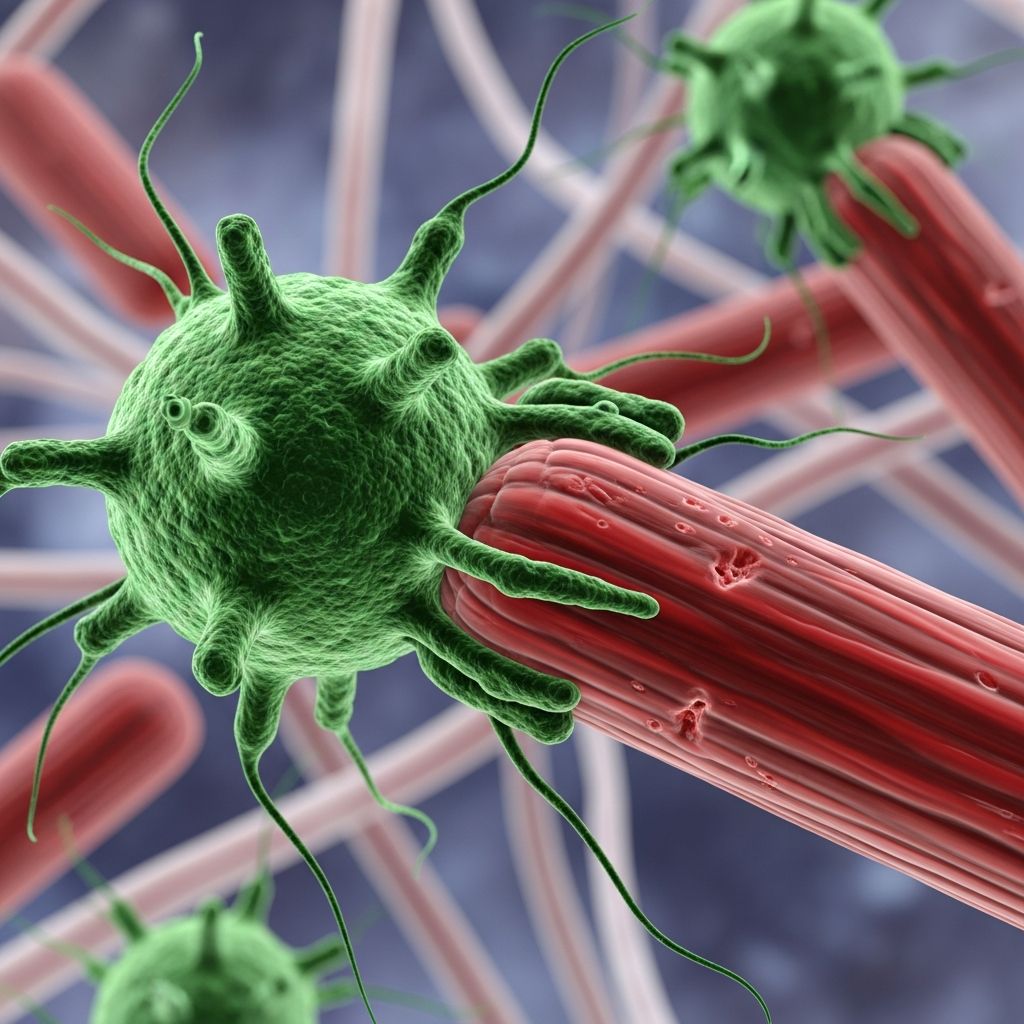
Antisynthetase syndrome is a rare idiopathic inflammatory myopathy characterised by autoantibodies to aminoacyl-tRNA synthetases (anti-synthetase antibodies), myositis, arthritis, interstitial lung disease (ILD), fever, Raynaud phenomenon and skin changes including mechanic’s hands. Antisynthetase syndrome is associated with antisynthetase antibodies, most commonly anti-Jo-1 but also anti-PL-7, anti-PL-12, anti-EJ, anti-OJ, anti-KS, anti-Zo and anti-YRS. Interstitial lung disease occurs in up to 90% of patients with antisynthetase syndrome.
What is the cause of antisynthetase syndrome?
Antisynthetase syndrome is an autoimmune disease in which the body produces antibodies against its own aminoacyl-tRNA synthetases. Aminoacyl-tRNA synthetases are cytoplasmic enzymes that catalyse the bonding of a cognate amino acid to its compatible tRNA thereby forming an aminoacyl-tRNA complex for use in protein synthesis. The cause for this abnormal autoimmune response is unknown.
Who gets antisynthetase syndrome?
Antisynthetase syndrome affects adults of any age but most commonly middle-aged women. Antisynthetase syndrome occurs in 20% of patients with polymyositis or dermatomyositis.
- Anti-Jo-1 antibodies occur in 20–30% of patients with myositis and 60–80% of patients with antisynthetase syndrome.
- Non-Jo-1 antisynthetase antibodies (anti-PL7, anti-PL12, anti-EJ, anti-OJ, anti-KS, anti-Zo and anti-YRS) occur in 3–9% of patients with myositis.
What are the clinical features of antisynthetase syndrome?
Clinical features of antisynthetase syndrome include:
- Myositis: Proximal muscle weakness (shoulder and pelvic girdle muscles).
- Arthritis: Non-erosive, asymmetric arthritis affecting small joints of hands and feet.
- Interstitial lung disease: Dyspnoea, cough, and bibasilar crackles on lung auscultation. May precede myositis.
- Raynaud phenomenon: Colour changes of the digits with cold exposure.
- Mechanic’s hands: Hyperkeratotic, fissured, scaly plaques on the sides of the fingers.
- Fever: Low-grade fever.
Other clinical features of antisynthetase syndrome include dysphagia, heart disease and malignancy.
Skin findings in antisynthetase syndrome
Skin findings occur in 70% of patients with antisynthetase syndrome and include:
- Mechanic’s hands: Hyperkeratotic, fissured palms and radial aspects of the fingers (see images below).
- Dermatomyositis-like rash: Heliotrope rash, Gottron papules, and shawl sign.
- Other rashes: Calcinosis cutis, panniculitis, urticaria, and alopecia.
How is antisynthetase syndrome diagnosed?
Antisynthetase syndrome is diagnosed clinically in the presence of:
- Consistent clinical features.
- Antisynthetase antibodies in the serum: Anti-Jo-1, anti-PL-7, anti-PL-12, anti-EJ, anti-OJ, anti-KS, anti-Zo or anti-YRS.
Antisynthetase antibodies are detected by immunoprecipitation, line blot immunoassay, or ELISA. Immunoprecipitation is the gold standard but line blot is more widely available.
Investigations for antisynthetase syndrome
Investigations for antisynthetase syndrome include:
- Muscle enzymes: Elevated creatine kinase (CK).
- Electromyography (EMG): Myopathic changes.
- Muscle biopsy: Perifascicular atrophy, inflammation.
- Pulmonary function tests (PFTs): Reduced diffusing capacity for carbon monoxide (DLCO).
- High-resolution CT chest (HRCT): Non-specific interstitial pneumonia (NSIP), organising pneumonia (OP), or usual interstitial pneumonia (UIP).
- Lung biopsy: Rarely required.
What is the differential diagnosis for antisynthetase syndrome?
The differential diagnosis for antisynthetase syndrome includes:
- Dermatomyositis and polymyositis.
- Overlap syndromes: Mixed connective tissue disease, systemic sclerosis.
- Hypersensitivity pneumonitis.
- Drug-induced myositis: Statins, checkpoint inhibitors.
What is the treatment for antisynthetase syndrome?
Treatment for antisynthetase syndrome requires immunosuppression. Most patients require multiple agents.
Related Stories



Induction therapy
- Corticosteroids: Prednisone 1 mg/kg/day.
- Second-line agents (start concurrently):
- Azathioprine 2–3 mg/kg/day.
- Mycophenolate mofetil 1–1.5 g twice daily.
Refractory disease
- Tacrolimus 0.075 mg/kg twice daily.
- Cyclophosphamide (severe ILD).
- Rituximab 1 g × 2 doses 2 weeks apart.
- IVIG 2 g/kg over 2–5 days monthly.
Supportive care
- Physical therapy.
- Pulmonary rehabilitation (for ILD).
- Proton pump inhibitors (steroid-induced gastritis).
| Drug | Starting Dose | Clinical Use | Monitoring | Adverse Effects |
|---|---|---|---|---|
| Corticosteroids | 1 mg/kg/day PO | First-line | Glucose, BP, weight | Hypertension, diabetes, osteoporosis |
| Azathioprine | 1–3 mg/kg/day PO | Steroid-sparing | CBC, LFTs | Bone marrow suppression, hepatotoxicity |
| Mycophenolate | 1 g BID PO | ILD, myositis | CBC, GI symptoms | GI upset, infections |
| Tacrolimus | 0.075 mg/kg BID PO | Refractory ILD | Trough levels, Cr | Nephrotoxicity, neurotoxicity |
| Rituximab | 1 g IV × 2 | Refractory disease | CBC | Infusion reactions, infections |
Complications of antisynthetase syndrome
Complications of antisynthetase syndrome include:
- Progressive ILD: Respiratory failure.
- Myositis: Muscle atrophy.
- Arthritis: Joint deformity.
- Cardiac involvement: Myocarditis, conduction abnormalities.
- Malignancy: Increased risk.
How can antisynthetase syndrome be prevented?
Antisynthetase syndrome cannot be prevented as the cause is unknown.
What is the prognosis for antisynthetase syndrome?
Prognosis for antisynthetase syndrome depends on:
- Severity of ILD (worst prognostic factor).
- Response to immunosuppression.
- Age and comorbidities.
5-year survival is 70–90%. Patients with anti-Jo-1 have better survival than those with anti-PL12.
Frequently asked questions about antisynthetase syndrome
What causes antisynthetase syndrome?
Antisynthetase syndrome is an autoimmune disease caused by antibodies against aminoacyl-tRNA synthetases. The trigger is unknown.
Who is at risk of antisynthetase syndrome?
Middle-aged women with myositis are at highest risk. It affects 20% of polymyositis/dermatomyositis patients.
What are the first symptoms of antisynthetase syndrome?
Common first symptoms include muscle weakness, joint pain, dyspnoea, fever, Raynaud phenomenon, and mechanic’s hands.
How is antisynthetase syndrome diagnosed?
Diagnosis requires clinical features plus antisynthetase antibodies (anti-Jo-1 etc). Elevated CK, abnormal PFTs/HRCT support diagnosis.
Is antisynthetase syndrome curable?
No cure exists. Immunosuppression controls symptoms but lifelong treatment is often required.
What does mechanic’s hands look like in antisynthetase syndrome?
Mechanic’s hands appear as hyperkeratotic, fissured, scaly plaques on palms and finger sides.
Can antisynthetase syndrome be fatal?
Yes, severe ILD can cause respiratory failure. Early aggressive treatment improves survival.
References
- The Diagnosis and Treatment of Antisynthetase Syndrome — Johnson C, et al. Clin Pulm Med. 2015-08-26. https://pmc.ncbi.nlm.nih.gov/articles/PMC5006392/
- Antisynthetase Syndrome — McGovern Medical School. 2023. https://med.uth.edu/neurosciences/antisynthetase-syndrome/
- Antisynthetase Syndrome — NORD (National Organization for Rare Disorders). 2024. https://rarediseases.org/rare-diseases/antisynthetase-syndrome/
- Antisynthetase Syndrome (ASyS) — The Myositis Association. 2023. https://www.myositis.org/about-myositis/types-of-myositis/antisynthetase-syndrome/
- Antisynthetase Syndrome: Symptoms, Causes & Treatment — Cleveland Clinic. 2024. https://my.clevelandclinic.org/health/diseases/25159-antisynthetase-syndrome
Similar Articles








Read full bio of medha deb