Anuria: Causes, Symptoms, Diagnosis & Treatment
Understanding anuria: A critical kidney condition requiring immediate medical attention and proper diagnosis.
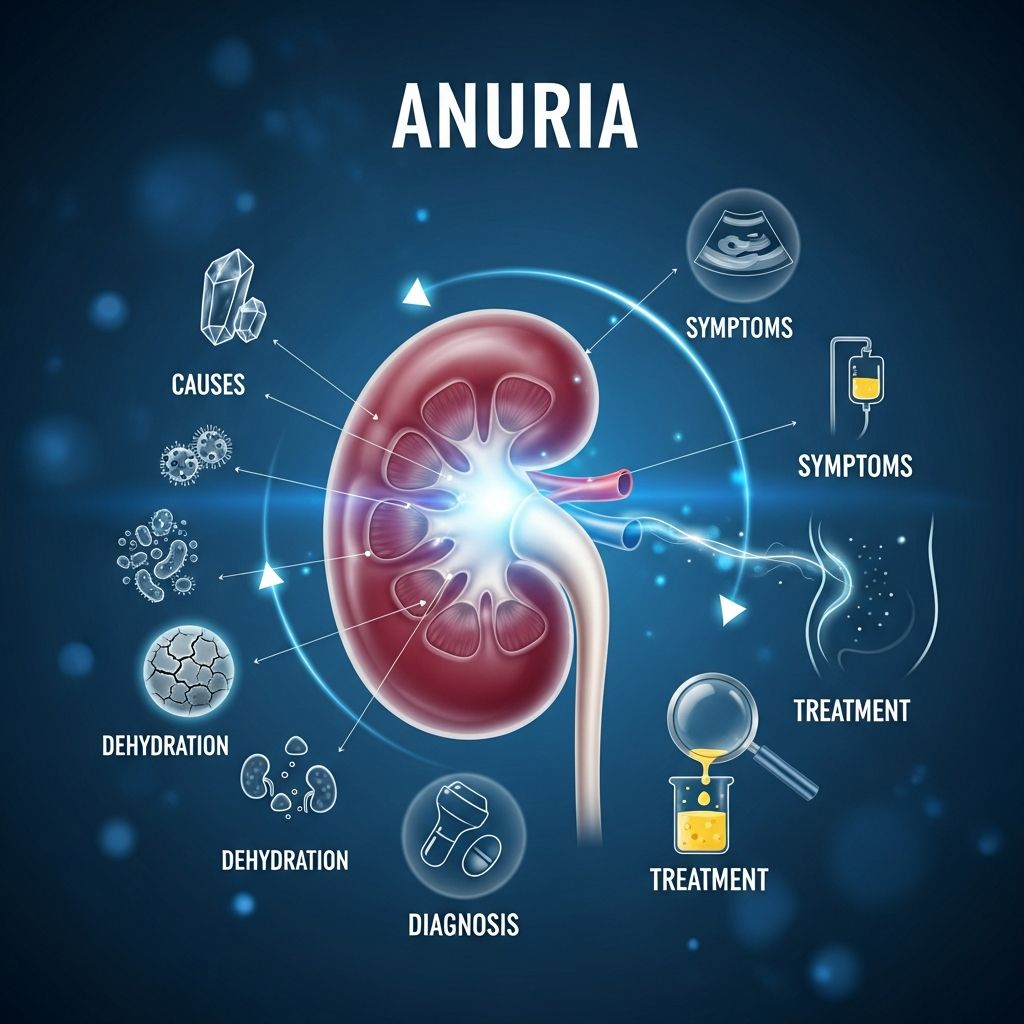
Understanding Anuria: What It Is and Why It Matters
Anuria is a serious medical condition in which the kidneys produce little to no urine. The term comes from the Greek word “a” meaning without and “ouron” meaning urine. When a person has anuria, their kidneys are either not functioning properly or there is a blockage in the urinary system that prevents urine from being eliminated from the body. This condition is defined as producing less than 50 milliliters of urine over a 24-hour period, or in some cases, less than 500 milliliters daily depending on the clinical definition used.
Urination is a vital bodily process that represents the kidneys’ ability to filter and remove waste products, excess fluids, electrolytes, and other substances the body no longer needs. When the kidneys cease working properly and urination stops or becomes severely reduced, dangerous substances back up in the body and are not removed. This blockage can cause serious health complications and become life-threatening if not treated promptly.
What Causes Anuria?
Anuria can result from various underlying medical conditions affecting the kidneys, urinary system, or overall circulatory health. Understanding these causes is essential for proper diagnosis and treatment.
Kidney-Related Causes
Acute Kidney Failure: When the kidneys suddenly stop functioning and cannot filter urine anymore, acute kidney injury occurs. This represents one of the most serious causes of anuria and requires immediate medical intervention. During acute kidney injury, the kidneys lose their ability to filter waste products from the blood, leading to dangerous accumulation of toxins.
Kidney Stones: These mineral deposits can cause blockages in the kidneys or ureters—the tubes that transport urine from the kidneys to the urethra where it exits the body. These blockages prevent urine from exiting the body and can lead to anuria.
Chronic Kidney Disease: Progressive kidney damage over time can eventually lead to anuria when the kidneys can no longer function adequately.
Systemic and Circulatory Causes
Diabetes: When a person’s blood sugar remains consistently high, such as with uncontrolled diabetes, it can result in diabetic ketoacidosis and damage to the small blood vessels in the kidneys. This vascular damage causes acute renal failure and poor or absent urine production.
High Blood Pressure (Hypertension): Also known as hypertension, high blood pressure can damage the blood vessels in the kidneys over time. Without proper treatment, hypertension can lead to permanent kidney damage and eventually anuria.
Heart Failure: Cardiac problems can significantly reduce blood flow to the kidneys, impairing their ability to produce urine. Acute cardiorenal syndrome, where worsening cardiac function leads to acute kidney injury, can result in oliguria or anuria.
Shock and Severe Blood Loss: Severe shock causes critically low blood pressure that leads to fluid conservation and decreased kidney filtration, essentially shutting down urine production. Severe blood loss (30-40% of total blood volume) leads to decreased circulating blood volume, which causes decreased kidney filtration and anuria.
Related Stories



Obstructive and Other Causes
Dehydration: Severe dehydration causes decreased blood volume leading to decreased kidney perfusion. The body conserves water, resulting in decreased urine output and eventually anuria.
Enlarged Prostate: An enlarged prostate can compress the urethra, making it difficult to empty the bladder and preventing urine passage. This outlet obstruction can cause urine to back up into the ureters and kidneys, causing kidney damage and decreased kidney filtration leading to anuria.
Bacterial Infections: Systemic bacterial infections can cause anuria through hemodynamic changes, direct damage to the kidneys, toxin release, or obstructive reasons.
Recognizing the Symptoms of Anuria
The primary symptom of anuria is the absence of urine production or producing less than two cups (approximately 500 milliliters) of urine every 24 hours. However, patients may experience additional symptoms related to the underlying conditions causing anuria.
Symptoms Associated with Kidney Disease
When anuria stems from kidney disease, patients may experience:
– Swelling in the legs, feet, ankles, and face- Rash or itching of the skin- Flank pain in the back or side- Nausea or vomiting- Shortness of breath- Dizziness- Difficulty concentrating- Fatigue
Symptoms Associated with Heart Failure
When anuria is caused by heart failure, symptoms may include:
– Shortness of breath- Swelling of the legs- Fatigue or dizziness- Nausea- Poor appetite- High heart rate- Coughing or wheezing
Symptoms of Acute Kidney Injury
Acute kidney injury can present with various symptoms including less urine output, fluid buildup causing shortness of breath and swelling in the legs and ankles, tiredness, confusion or fogginess, nausea, abdominal or side pain, weakness, irregular heartbeat, itching, loss of appetite, chest pain or pressure, and in severe cases, seizures or coma.
Diagnostic Approaches for Anuria
Diagnosing anuria and its underlying cause requires a comprehensive medical evaluation. The diagnostic process begins with a thorough medical history and patient interview.
Initial Medical Assessment
A healthcare provider will gather detailed information about the patient’s medical history and medication use. The doctor will specifically ask about symptoms and changes in urination, including:
– Presence of swelling- Fatigue levels- Changes in appetite- Blood in the urine- Frequency of urination- Quantity of urine passed- Abdominal or flank pain
Laboratory and Imaging Tests
Following the initial assessment, healthcare providers may order various tests to determine the cause of anuria. These may include blood tests to assess kidney function and electrolyte levels, urinalysis to examine urine composition, imaging studies such as ultrasound or CT scans to identify blockages or structural abnormalities, and other specialized kidney function tests to evaluate filtration capacity and waste removal.
Potential Complications of Anuria
Anuria is a serious condition with potentially life-threatening complications if not properly managed. The primary complication is kidney damage or failure, which can be permanent and may require dialysis or a kidney transplant. Without urine output restoration, the condition can be fatal. Additionally, the underlying condition causing anuria can be extremely dangerous. When toxins and waste products accumulate in the body without being eliminated, they can damage multiple organ systems and lead to metabolic acidosis and other critical complications.
Treatment Options for Anuria
If anuria is a sign of an underlying condition, treatment depends on what that specific underlying condition might be. The approach to managing anuria is highly individualized and focuses on addressing the root cause while supporting kidney function and maintaining electrolyte balance.
Managing Underlying Conditions
For anuria caused by dehydration, treatment involves carefully restoring hydration through intravenous fluids. For kidney stones, treatment may include medications to facilitate stone passage, extracorporeal shock wave lithotripsy, or surgical removal. Diabetic patients require strict blood sugar control and may need adjustments to their diabetes medications. Hypertension must be managed with antihypertensive medications and lifestyle modifications. Heart failure treatment may involve diuretics, medications to improve cardiac function, and addressing underlying cardiac conditions.
Supportive Care and Renal Replacement Therapy
In cases of acute kidney injury with anuria, supportive care is crucial. This may include dialysis to artificially filter waste products from the blood and remove excess fluid. Dialysis can be temporary while kidney function recovers or permanent if kidney failure is irreversible. Healthcare providers also carefully manage electrolyte levels, blood pressure, and fluid balance through medications and dietary modifications.
When to Seek Medical Help
Anuria is a medical emergency that requires immediate professional attention. Anyone experiencing no urine production or significantly reduced urine output should seek medical help immediately or proceed to the nearest urgent care or emergency room. The same applies to individuals experiencing any of the symptoms associated with kidney disease, heart failure, or diabetic ketoacidosis. Prompt treatment is vital because anuria can be fatal if not treated, and early intervention can prevent serious complications and permanent kidney damage.
Prevention Strategies
While not all cases of anuria can be prevented, certain lifestyle modifications and medical management can reduce the risk of developing this serious condition. Maintaining proper hydration throughout the day helps ensure adequate kidney perfusion. Managing chronic conditions such as diabetes and hypertension through medications and lifestyle changes can prevent kidney damage. Regular blood pressure monitoring and appropriate treatment of high blood pressure protects kidney function. Maintaining a healthy diet low in sodium and processed foods supports cardiovascular and kidney health. Regular physical activity promotes overall health and cardiovascular function. Avoiding nephrotoxic medications and substances when possible helps preserve kidney function. Regular medical check-ups allow early detection of kidney disease or other conditions that could lead to anuria.
Frequently Asked Questions About Anuria
Q: What is the difference between anuria and oliguria?
A: Oliguria is decreased urine output, defined as less than 500 milliliters of urine in adults over a 24-hour period, while anuria is the absence of urine production, typically defined as less than 50-100 milliliters per day. Anuria is the most serious form of oliguria.
Q: Is anuria always permanent?
A: No, anuria is not always permanent. In cases of acute kidney injury caused by reversible conditions like dehydration or urinary blockages, kidney function may recover with appropriate treatment. However, if kidney damage is severe or from chronic kidney disease, kidney function may not fully recover, potentially requiring long-term dialysis or transplantation.
Q: How is anuria managed if dialysis is needed?
A: Dialysis works by artificially filtering waste products and excess fluid from the blood when the kidneys cannot perform this function. Hemodialysis involves using a machine to clean the blood, typically performed several times weekly, while peritoneal dialysis uses the peritoneal membrane in the abdomen to filter blood through fluid exchanges.
Q: Can anuria develop suddenly?
A: Yes, anuria can develop suddenly, particularly in cases of acute kidney injury, severe dehydration, shock, severe blood loss, or urinary obstruction. In contrast, anuria from chronic kidney disease typically develops gradually over time.
Q: What should I do if I suspect I have anuria?
A: If you notice you have not urinated in 24 hours or are producing very little urine, seek immediate medical attention. This is a medical emergency. Contact your healthcare provider or proceed to the nearest emergency room or urgent care facility right away.
References
- Anuria: Definition, causes, and symptoms — Medical News Today. 2023. https://www.medicalnewstoday.com/articles/320663
- Acute kidney injury – Symptoms and causes — Mayo Clinic. 2024. https://www.mayoclinic.org/diseases-conditions/kidney-failure/symptoms-causes/syc-20369048
- What Is Anuria? — Aeroflow Urology. 2024. https://aeroflowurology.com/blog/what-is-anuria
- Chapter 8 Renal and Urinary System Alterations — National Center for Biotechnology Information, National Institutes of Health. 2024. https://www.ncbi.nlm.nih.gov/books/NBK613065/
- Acute cardiorenal syndrome: Mechanisms and clinical implications — Cleveland Clinic Journal of Medicine. 2019. https://www.ccjm.org/content/85/3/231
Similar Articles








Read full bio of medha deb