The Gut-Brain Connection: Anxiety and Digestive Health
Understanding how your digestive system influences mental wellness and anxiety levels.
What is the Link Between Anxiety and Gut Health?
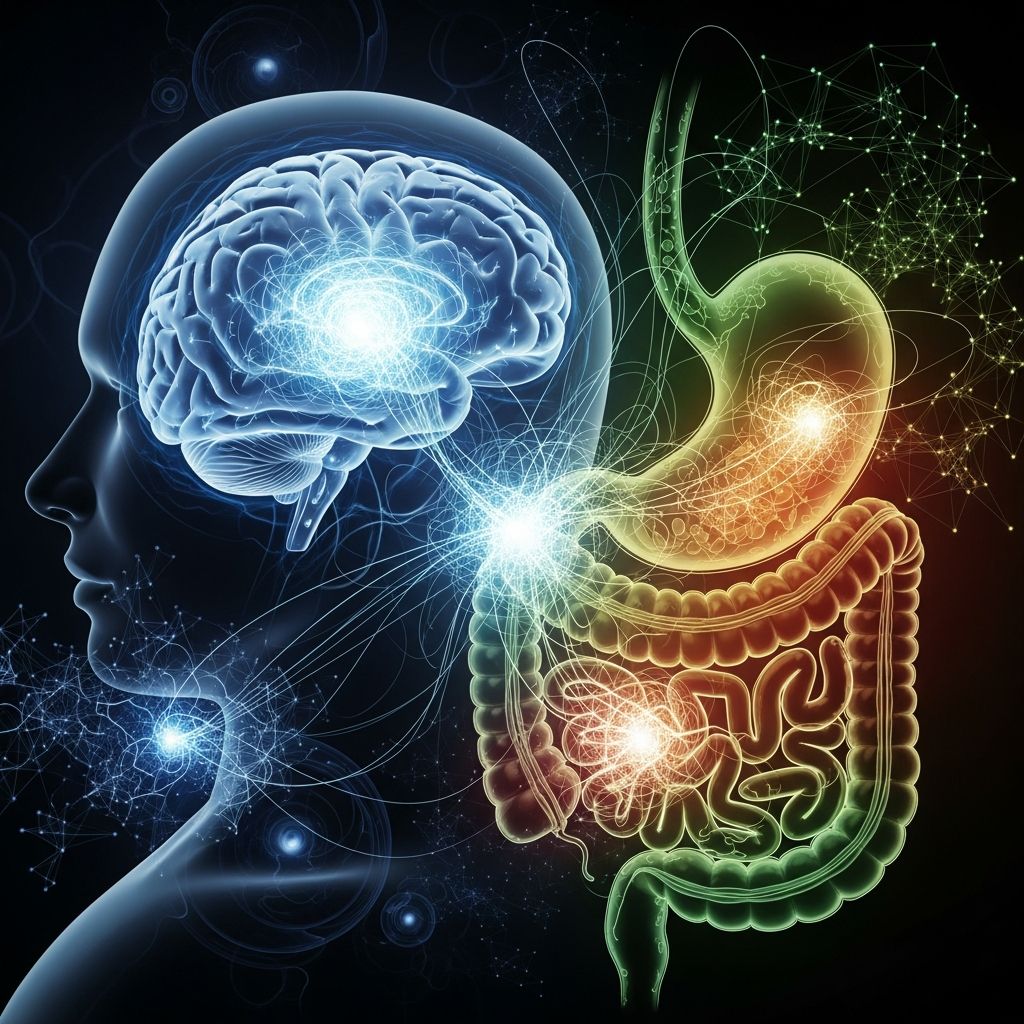
The relationship between anxiety and gut health represents one of the most fascinating discoveries in modern medicine, revealing that our digestive system and mental well-being are far more interconnected than previously understood. The gut-brain axis, a complex bidirectional communication system, explains why stress and anxiety can trigger digestive problems, and conversely, why poor gut health can contribute to anxiety and depression.
This connection operates through multiple pathways, including the vagus nerve, immune system signaling, and the production of neurotransmitters by gut bacteria. Understanding this relationship is crucial for anyone experiencing anxiety or gastrointestinal symptoms, as addressing one condition often helps improve the other.
Understanding the Gut-Brain Axis
The gut-brain axis is a sophisticated communication network connecting your digestive system directly to your central nervous system. This connection allows your brain to influence digestive processes through the vagus nerve, while simultaneously, your gut microbiota communicates with your brain through various biochemical pathways.
The gut microbiome—the community of trillions of microorganisms living in your digestive tract—plays a critical role in this relationship. Recent research has demonstrated that specific microbial communities directly influence anxiety levels. Scientists analyzing stool samples from patients with depression identified that individuals with low abundance of butyrate-producing bacteria exhibited significantly higher anxiety levels, highlighting how specific microbial compositions can affect mental health.
How Anxiety Affects Your Gut
Anxiety doesn’t simply make you feel worried; it triggers a cascade of physiological changes that directly impact your digestive system. When you experience anxiety, your body activates the sympathetic nervous system—the ”fight or flight” response—which significantly alters gut function.
Altered Gut Motility
One of the most immediate effects of anxiety is disrupted gut motility, the coordinated muscle contractions that move food through your digestive tract. During anxious moments, these contractions become irregular, causing food to move either too quickly, leading to diarrhea, or too slowly, resulting in constipation.
The effects can be immediate: a stressful presentation or major life event may trigger sudden cramps or diarrhea within hours. However, chronic anxiety produces longer-lasting consequences. Over time, repeated motility disruptions can lead to persistent bloating, irregular bowel habits, and abdominal discomfort that significantly impacts quality of life.
Increased Intestinal Inflammation
Anxiety goes beyond affecting movement patterns—it actively promotes inflammation in the digestive tract. The stress response weakens the intestinal barrier, increasing what scientists call ”leaky gut,” where bacteria and toxins can cross from your gut into the bloodstream.
This inflammation is particularly problematic because stress encourages cravings for processed and sugary foods, which further fuel inflammatory bacteria in your gut. Over extended periods, this creates a persistent inflammatory state that can contribute to conditions like inflammatory bowel disease (IBD) and exacerbate irritable bowel syndrome (IBS).
Heightened Gut Sensitivity
Many people with functional gastrointestinal disorders experience heightened visceral perception—a heightened sensitivity where the brain interprets normal gut activity as painful. During stressful periods, this sensitivity intensifies, making a bloated stomach or mild cramp feel significantly more severe.
Related Stories



This creates a problematic feedback loop: anxiety amplifies gut symptoms, and worsening symptoms increase anxiety further. Breaking this cycle often requires comprehensive approaches addressing both the gut and psychological factors.
How Poor Gut Health Affects Anxiety
The bidirectional nature of the gut-brain axis means that poor gut health doesn’t simply result from anxiety—it can actively cause or worsen anxiety and depression. When your microbiome becomes imbalanced, a condition called dysbiosis, several mechanisms trigger mental health symptoms.
Serotonin Production and Mood Regulation
The gut produces approximately 90% of your body’s serotonin, the neurotransmitter critical for mood regulation. When gastrointestinal conditions disrupt this production, mood disturbances follow naturally. Additionally, dysbiosis affects the production of short-chain fatty acids like butyrate, which support healthy neurological function and emotional regulation.
Inflammatory Pathways to Mental Health
Dysbiosis triggers inflammation in the gut lining, leading to the release of pro-inflammatory cytokines such as TNF-α and interleukin-6 (IL-6). These molecules cross the blood-brain barrier and directly influence brain function, causing anxiety, depression, and cognitive difficulties. Research has established a direct correlation between elevated cytokine levels and anxiety and depressive symptoms.
The gut microbiota also produces metabolites that influence brain activity. For instance, the metabolite 4-ethyl phenyl sulfate (4EPS) causes anxiety-like behaviors. Conversely, administration of beneficial bacteria like Bacteroides fragilis reduces production of neurotoxic metabolites, improving gut permeability and reducing anxiety-like behavior.
Beyond Anxiety: Broader Mental Health Effects
Poor gut health impacts cognitive function beyond anxiety and depression. Common cognitive symptoms associated with dysbiosis include memory problems, difficulty making decisions, trouble regulating mood, attention difficulties, and brain fog.
The Vicious Cycle: Creating a Feedback Loop
Perhaps the most challenging aspect of the anxiety-gut health connection is the self-perpetuating cycle it creates. As mental health experts explain, ”It is a vicious cycle”—gastrointestinal symptoms lead to depression and anxiety, and as depression and anxiety increase, they cause more physiological changes that disrupt the gut, worsening gastrointestinal symptoms.
This cycle means that treating only one aspect—either the anxiety or the gut symptoms—often proves insufficient. Comprehensive treatment addressing both the psychological and digestive components simultaneously yields the best outcomes.
Scientific Evidence Supporting the Connection
The connection between gut health and anxiety isn’t merely theoretical; substantial scientific evidence supports this relationship. Research published in Translational Psychiatry revealed that three distinct networks of gut microbial communities exist, with one specifically correlated with anxiety levels.
Studies examining individuals with major depressive disorder found higher levels of specific bacterial genera, including Oscillibacter and Alistipes, alongside altered production of short-chain fatty acids. Additionally, research demonstrates that stress-induced depression in animal models correlates with abnormal levels of gut microbiota-related metabolites, suggesting a fundamental biological connection.
The implications are significant: as researchers note, understanding the role of specific microbiota for anxiety subtypes represents an exciting frontier in mental health treatment, potentially leading to precise treatment targets using gut microbiome interventions to complement brain-based biomarkers.
Practical Strategies to Improve Both Conditions
Understanding the gut-brain connection opens multiple avenues for intervention. Effective management requires addressing both psychological and digestive aspects simultaneously.
Psychological Interventions
- Cognitive Behavioral Therapy (CBT): Evidence-based psychological treatment that addresses anxiety while reducing stress-induced physiological changes affecting the gut.
- Mindfulness Practices: Regular mindfulness meditation reduces anxiety activation of the sympathetic nervous system, allowing digestive function to normalize.
- Stress Management Techniques: Breathing exercises, progressive muscle relaxation, and meditation help interrupt the anxiety-digestion feedback loop.
Dietary and Nutritional Approaches
- Increased Fish and Omega-3 Fatty Acids: These anti-inflammatory compounds support both gut health and neurological function.
- Probiotic-Rich Foods: Fermented foods like yogurt, kefir, sauerkraut, and kimchi introduce beneficial bacteria supporting microbiome balance.
- Prebiotic Foods: Fiber-rich foods like garlic, onions, bananas, and asparagus feed beneficial bacteria, promoting their growth.
- Reduced Processed Foods: Limiting sugary and processed foods eliminates fuel for inflammatory bacteria, reducing gut inflammation and anxiety symptoms.
Microbiome-Targeted Treatments
- Probiotics: Supplemental beneficial bacteria can help restore microbiome balance and reduce anxiety symptoms.
- Synbiotics: Combinations of probiotics and prebiotics work synergistically to optimize microbiome composition.
- Postbiotics: Metabolites produced by beneficial bacteria can directly improve gut permeability and reduce anxiety.
- Fecal Microbiota Transplantation: In severe cases, transferring healthy microbiota from donors may help restore normal gut function.
Medical Management
When anxiety is severe, medications may be necessary to interrupt the feedback cycle. Addressing anxiety pharmacologically can improve gut function, while simultaneously improving gut health through dietary and probiotic interventions can enhance medication effectiveness.
FAQ: Common Questions About Anxiety and Gut Health
Q: Can fixing my gut health cure my anxiety?
A: While improving gut health can significantly reduce anxiety symptoms, it typically works best as part of a comprehensive approach that may include psychological treatment and, when necessary, medication. The connection is strong but not always complete on its own.
Q: How quickly can I expect improvement from dietary changes?
A: Some digestive symptoms may improve within days to weeks of dietary changes. However, microbiome composition changes typically require 4-8 weeks of consistent dietary modifications, and associated mental health improvements may take similar timeframes.
Q: Are probiotics effective for anxiety?
A: Research suggests that specific probiotic strains can support anxiety reduction, though effectiveness varies among individuals. Consulting healthcare providers about appropriate strains and dosages is recommended.
Q: Can stress alone cause lasting gut problems?
A: Chronic stress and anxiety can create persistent gut problems through repeated inflammation, altered motility, and dysbiosis. However, these changes are usually reversible with comprehensive stress management and gut health interventions.
Q: Should I see a specialist for the anxiety-gut connection?
A: A collaborative approach involving primary care providers, mental health professionals, and gastroenterologists often provides the most comprehensive care, as these professionals can address different aspects of the gut-brain axis.
Moving Forward: Taking an Integrated Approach
The evidence clearly demonstrates that anxiety and gut health are fundamentally connected through multiple biological pathways. Rather than viewing mental health and digestive health as separate concerns, an integrated approach that addresses both simultaneously offers the best chance for improvement.
Whether you’re experiencing anxiety with gastrointestinal symptoms, or digestive problems worsened by stress, recognizing and addressing the gut-brain connection provides a powerful framework for recovery. By combining psychological interventions, dietary modifications, stress management techniques, and when appropriate, targeted microbiome treatments, you can interrupt the anxious-gut feedback loop and support lasting improvement in both mental and digestive health.
References
- Study looks at ties between anxiety and gut bacteria — UT Southwestern Medical Center. 2023-11-08. https://www.utsouthwestern.edu/newsroom/articles/year-2023/nov-gut-bacteria-anxiety.html
- Gut health and anxiety: The surprising connection — Oshi Health. https://oshihealth.com/how-gut-health-affects-mental-health/
- 5 Ways Anxiety Can Affect Gut Health — American Journal of Managed Care (AJMC). https://www.ajmc.com/view/5-ways-anxiety-can-affect-gut-health
- Gut microbiota’s effect on mental health: The gut-brain axis — PubMed Central / National Institutes of Health. https://pmc.ncbi.nlm.nih.gov/articles/PMC5641835/
- Gut Microbiota in Anxiety and Depression — PubMed Central / National Institutes of Health. https://pmc.ncbi.nlm.nih.gov/articles/PMC10146621/
- The gut-brain connection: What the science says — Stanford Medicine. 2025-03-01. https://med.stanford.edu/news/insights/2025/03/gut-brain-connection-long-covid-anxiety-parkinsons.html
Similar Articles








Read full bio of Sneha Tete