Aortic Dissection Repair: Treatment Options
Understanding aortic dissection repair procedures and recovery options.
Understanding Aortic Dissection
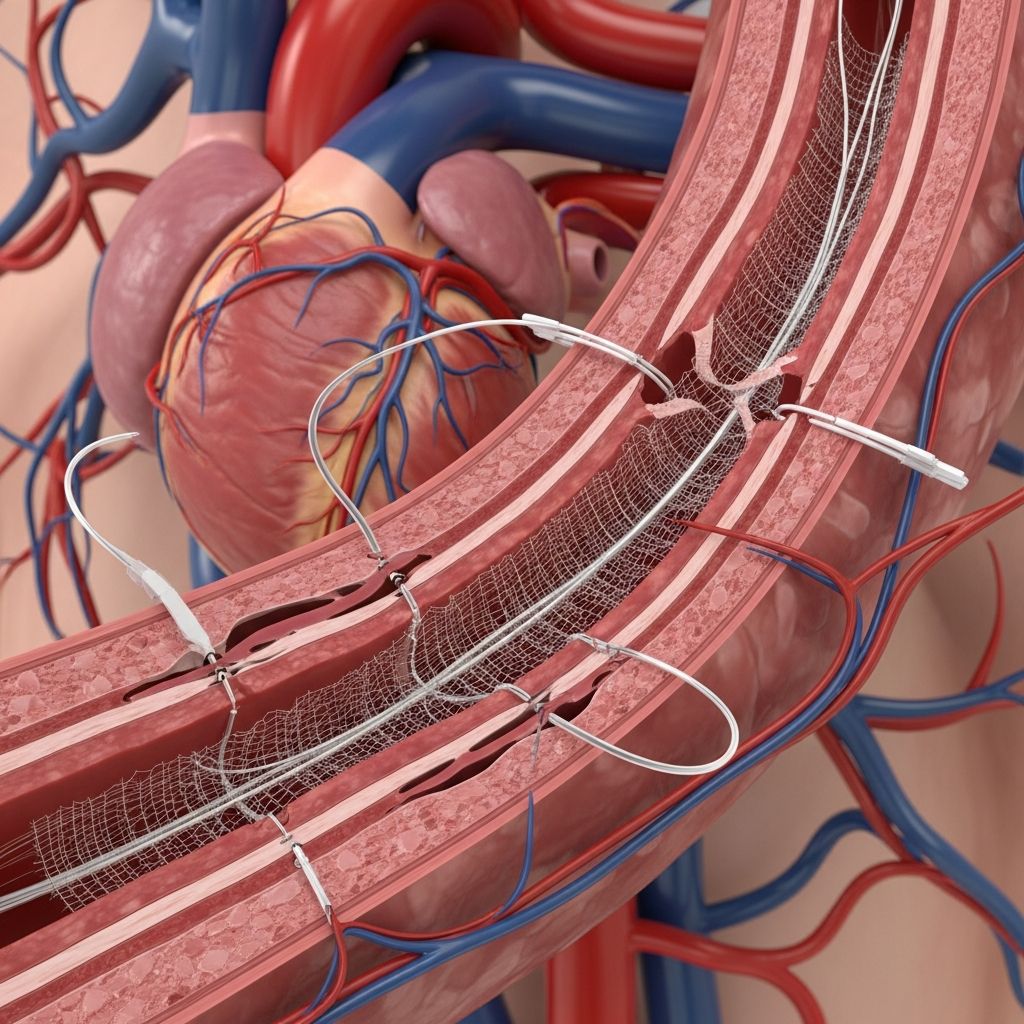
An aortic dissection is a life-threatening emergency condition that occurs when the inner layer of the aorta—the main artery that carries blood from the heart to the rest of the body—tears. This tear allows blood to seep between the layers of the aortic wall, which can lead to severe complications including rupture, organ damage, or death. The aorta is divided into two main sections: the ascending aorta (which branches into the coronary arteries) and the descending aorta (which extends down through the chest and abdomen). An aortic dissection can occur in either location, with the classification and treatment approach depending on where the tear originates.
Aortic dissections are classified into two main types based on their location. A Type A dissection involves the ascending aorta and requires immediate emergency surgery. A Type B dissection occurs in the descending aorta distal to the subclavian artery and accounts for approximately 25-40% of all aortic dissections. Type B dissections can be further categorized as uncomplicated (approximately 75% of cases) or complicated, depending on whether malperfusion or ischemia is present.
Types of Aortic Dissection Repair
The treatment approach for aortic dissection depends on several factors including the type and location of the dissection, the patient’s overall health, and whether the condition is acute or chronic. Medical professionals at specialized centers like Johns Hopkins evaluate each patient carefully to determine the most appropriate intervention.
Open Surgical Repair
Open surgery remains a critical treatment option for aortic dissection, particularly for Type A dissections involving the ascending aorta. During open repair surgery, the surgeon makes an incision to access the damaged aorta directly. For ascending aortic repairs, the breastbone (sternum) is opened, and the surgeon replaces the damaged portion of the aorta with a synthetic graft, typically made of Dacron material. This graft is durable and can last a patient’s entire lifetime.
Open surgical repair is a highly complex procedure that typically requires 6-8 hours depending on the complexity of the tear and the extent of damage. The surgery requires opening the breastbone and carefully replacing the torn portion of the aorta with grafting material. In some cases, coronary arteries must be reattached, and aortic valve repair or replacement may also be necessary.
While open surgery carries inherent risks, it remains the gold standard treatment for Type A dissections and some complicated Type B dissections. The procedure requires hospitalization, typically 5-7 days for recovery, with intensive care unit monitoring to ensure safe recovery from anesthesia and to manage pain. Most patients return home within a week following uncomplicated open aortic repair procedures.
Endovascular Aortic Repair (TEVAR)
Thoracic endovascular aortic repair (TEVAR) has emerged as an effective treatment option, particularly for Type B aortic dissections. This minimally invasive procedure involves inserting a stent-graft through blood vessels, typically via the femoral artery in the groin. The surgeon uses imaging guidance to position the stent-graft across the site of the dissection, which reinforces the aortic wall and reduces stress on the damaged tissue.
TEVAR offers several advantages over traditional open surgery, including reduced trauma to the body, shorter hospital stays, and faster recovery times. Patients undergoing TEVAR may only require 1-2 days of hospitalization compared to 5-7 days for open repair. However, endovascular procedures require more intensive long-term follow-up care. Patients typically need imaging studies at one month, six months, and twelve months after the procedure to monitor for any complications or changes in the stent-graft position.
Related Stories



For acute complicated Type B aortic dissections, TEVAR is now recognized as the treatment of choice according to multiple consensus statements. Emerging evidence also supports the use of TEVAR combined with best medical therapy for uncomplicated Type B dissections, offering improved outcomes compared to medical management alone.
Treatment Approaches by Dissection Type
The specific treatment recommendations vary based on the type of aortic dissection and its presentation:
Type A Dissection (Ascending Aorta)
Type A dissections are surgical emergencies requiring immediate intervention. These dissections can compromise blood flow to the coronary arteries, brain, and other vital organs. Open surgical repair is the standard treatment, often performed within hours of diagnosis. Without prompt surgical intervention, more than half of patients with Type A dissection will die within 48 hours. The urgency of treatment cannot be overstated, as the risk of aortic rupture, cardiac tamponade, or massive bleeding increases rapidly.
Type B Dissection (Descending Aorta)
Type B dissections require a more nuanced treatment approach. Uncomplicated Type B dissections have traditionally been managed with best medical therapy alone, which includes strict blood pressure control using antihypertensive medications and beta-blockers. However, medical management alone carries significant long-term risks, with studies showing 30% morbidity (including aneurysm degeneration of the affected segment) and 10% mortality over 5 years.
Complicated Type B dissections—those with evidence of end-organ malperfusion or ischemia—require intervention. TEVAR has become the preferred treatment modality for these cases. For uncomplicated Type B dissections, emerging evidence increasingly supports a combined approach of best medical therapy paired with TEVAR to improve long-term outcomes and reduce the risk of late complications such as aneurysm degeneration.
Medical Management
Regardless of the surgical approach chosen, medical management is a cornerstone of treatment for aortic dissection. Strict blood pressure control is essential to reduce stress on the aortic wall and prevent dissection progression. Beta-blockers are typically used as first-line agents to reduce contractility of the heart and decrease the rate of aortic pressure changes. Additional antihypertensive medications may be added to achieve target blood pressure goals, typically maintaining systolic blood pressure below 120 mmHg in the acute setting.
Pain management is another critical component of medical care during the acute phase. Patients often experience severe chest or back pain and require adequate analgesia, initially through intravenous medications and later transitioning to oral pain medications as recovery progresses.
Recovery and Follow-Up Care
Recovery from aortic dissection repair varies depending on the type of procedure performed. Following open surgery, patients typically spend 5-7 days in the hospital, with initial recovery focused on pain management, wound care, and gradual mobilization. Most patients are discharged to home or a rehabilitation facility where they continue physical therapy and activity progression.
Follow-up care differs significantly between surgical approaches. For open repairs, patients typically return for evaluation 6-8 weeks after surgery, at which point discussion begins regarding return to normal activities. For endovascular repairs, more frequent imaging follow-up is necessary, with studies at one month, six months, and one year to ensure the stent-graft is functioning properly and positioned correctly.
Long-term management includes continued blood pressure control, lifestyle modifications, and periodic imaging surveillance. Patients should maintain regular follow-up appointments with their vascular surgeon and cardiologist to monitor for any complications or changes that might require additional intervention.
Complications and Outcomes
While aortic dissection repair carries risks, outcomes have improved significantly with modern surgical techniques and multidisciplinary care. Open surgery carries higher immediate morbidity compared to endovascular approaches, but provides excellent long-term durability. The Dacron grafts used in open repair are highly durable and can last a patient’s entire lifetime with minimal fear of degeneration.
Potential complications of aortic dissection repair include bleeding, infection, organ dysfunction, and recurrent dissection. Spinal cord ischemia can occur after thoracic aortic repair, and patients may experience paraplegia or paraparesis. Pulmonary and renal complications, while less common, can occur and require careful postoperative management. Close monitoring in the intensive care unit during the initial recovery period helps identify and manage these complications promptly.
Why Choose a Specialized Center
Treatment of aortic dissection requires expertise and resources available at specialized cardiothoracic surgery centers. These centers maintain experienced teams of surgeons, cardiologists, intensivists, and nursing staff who work collaboratively to provide optimal outcomes. Institutions like Johns Hopkins bring together highly skilled physicians with expertise in multiple specialties to evaluate each patient’s unique situation and determine the best treatment approach based on current evidence and individual medical fitness.
The complexity of aortic dissection repair, combined with the time-critical nature of these emergencies, means that receiving care at a center with specialized expertise and 24/7 availability can significantly impact outcomes and recovery.
Frequently Asked Questions
Q: What are the warning signs of aortic dissection?
A: Common warning signs include sudden, severe chest or back pain (often described as tearing or ripping), shortness of breath, weakness or numbness in the legs, and loss of consciousness. Seek emergency medical care immediately if you experience these symptoms.
Q: How long does aortic dissection repair surgery take?
A: Open surgical repair typically requires 6-8 hours depending on the complexity of the tear and whether additional procedures such as valve repair are needed. Endovascular procedures are generally shorter but still require several hours.
Q: What is the recovery time after aortic dissection repair?
A: Hospital stay is typically 5-7 days for open surgery and 1-2 days for endovascular repair. Full recovery takes several weeks to months, with gradual return to activities as directed by your surgical team.
Q: Will I need additional surgery after aortic dissection repair?
A: Some patients may require additional interventions, particularly those who develop complications such as end-organ malperfusion. Close follow-up imaging helps identify any issues requiring further treatment.
Q: What is the difference between Type A and Type B aortic dissection?
A: Type A dissections involve the ascending aorta and require emergency open surgery. Type B dissections occur in the descending aorta; uncomplicated cases may be managed medically, while complicated cases require intervention.
Q: Can aortic dissection recur after repair?
A: Recurrent dissection is possible but uncommon with proper treatment and long-term blood pressure management. Regular follow-up with imaging surveillance helps detect any changes early.
Long-Term Lifestyle Management
After aortic dissection repair, maintaining appropriate blood pressure control is critical. Patients should take prescribed antihypertensive medications consistently and monitor blood pressure regularly. A heart-healthy diet low in sodium, regular moderate exercise as tolerated, stress reduction, and avoiding smoking are all important components of long-term management. Patients should discuss activity restrictions and gradual return to exercise with their surgical team, as this varies based on individual circumstances and the type of repair performed.
References
- Diagnosis and treatment of uncomplicated type B aortic dissection — Johns Hopkins University School of Medicine. 2016. https://pubmed.ncbi.nlm.nih.gov/27126951/
- Abdominal & Thoracic Aortic Aneurysm Treatment: Open Surgery — Johns Hopkins Medicine Heart and Vascular Institute. 2011. https://www.hopkinsmedicine.org/heart_vascular_institute/index.html
- Aortic Dissection Clinical Case Study — Johns Hopkins Medicine Cardiac Surgery Division. 2018. https://www.hopkinsmedicine.org/heart_vascular_institute/clinical_services/divisions/cardiac_surgery.html
Similar Articles








Read full bio of Sneha Tete