Aortic Valve: Function, Location & Anatomy
Understanding your aortic valve: Essential guide to function, location, and cardiac anatomy.
Understanding the Aortic Valve
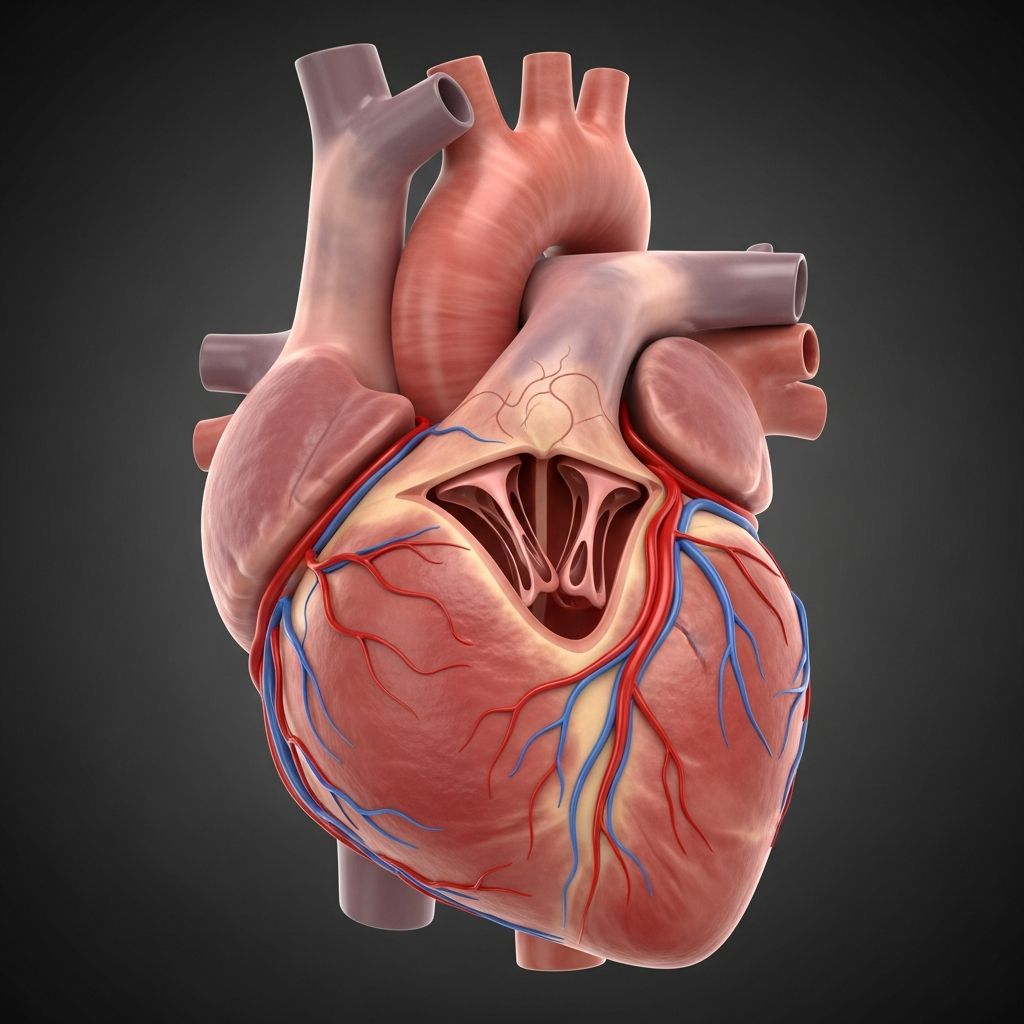
The aortic valve is one of your four main heart valves and plays a crucial role in maintaining proper blood circulation throughout your body. Located at the junction between your left ventricle and your aorta, this valve serves as a one-way gate that allows oxygen-rich blood to flow from your heart into the aorta, the largest artery in your body. Understanding the structure and function of your aortic valve is essential for recognizing potential health issues and maintaining cardiovascular wellness.
Location of the Aortic Valve
The aortic valve is positioned at the base of your heart, specifically between the left ventricle and the aorta. The left ventricle is the heart’s main pumping chamber responsible for forcing blood out to your entire body. When the left ventricle contracts, pressure builds up and forces the aortic valve to open, allowing blood to surge into the aorta. This strategic location makes the aortic valve essential for initiating systemic circulation, which delivers oxygenated blood to every tissue and organ in your body.
The aorta itself begins at the aortic valve and curves upward from the heart before descending along the spine. This positioning means the aortic valve is literally at the starting point of your body’s largest and most important artery system. The valve sits within the aortic root, a specialized area of the aorta that has been specifically designed to accommodate the valve apparatus.
Anatomy of the Aortic Valve
The aortic valve is a semilunar valve, meaning it has a half-moon shape. Most people are born with an aortic valve that consists of three leaflets, also called cusps or flaps. These three leaflets are typically equal in size and work together to create a functional seal. Each leaflet is composed of connective tissue and is attached to the aortic root at specific points called commissures, where two leaflets meet.
The structure of each leaflet includes three layers: the fibrosa on the ventricular side, the spongiosa in the middle, and the aortic layer facing the aorta. This layered composition provides both flexibility and durability, allowing the valve to open and close thousands of times per day without wearing out under normal circumstances. The commissures and the valve annulus, which is the fibrous ring that anchors the valve, provide structural support and help maintain the valve’s geometry.
The Aortic Root and Supporting Structures
The aortic root is the portion of the aorta that contains the aortic valve. It includes the aortic sinuses, which are three small pouches between the valve leaflets and the aortic wall. These sinuses have an important function during valve closure—they help create small whirlpools of blood that push the valve leaflets together and prevent blood from leaking backward into the left ventricle. Two of the aortic sinuses also contain the coronary arteries, which branch off to supply blood to the heart muscle itself.
How the Aortic Valve Functions
The aortic valve operates based on pressure gradients within your heart. During systole, when the left ventricle contracts, pressure inside the chamber increases dramatically. When this pressure exceeds the pressure in the aorta, the aortic valve opens, allowing blood to flow from the left ventricle into the aorta. This process happens very quickly, taking only about 0.3 seconds during each heartbeat.
Once the left ventricle finishes contracting and begins to relax during diastole, the pressure in the left ventricle drops below the pressure in the aorta. This pressure reversal causes the valve leaflets to snap shut, sealing the opening and preventing blood from flowing backward into the heart. In a healthy aortic valve, this opening and closing happens with remarkable precision, occurring approximately 100,000 times per day without significant wear.
Related Stories



The Cardiac Cycle and Valve Action
Understanding the aortic valve’s function requires knowledge of the cardiac cycle. When your heart beats, it goes through a coordinated sequence of contractions and relaxations. The right atrium and right ventricle pump deoxygenated blood to the lungs, while simultaneously, the left atrium fills with oxygenated blood returning from the lungs. When the left atrium contracts, it forces blood into the left ventricle. The left ventricle then contracts powerfully, and when the pressure in this chamber exceeds aortic pressure, the aortic valve opens.
As blood rushes through the open aortic valve into the aorta, the valve leaflets are pushed flat against the aortic wall, creating minimal resistance to blood flow. This efficient design ensures that the heart doesn’t have to work excessively hard to pump blood throughout the body. After ejection of blood is complete, the aortic valve closes, and the cycle begins again.
Blood Flow and Hemodynamics
The aortic valve is designed to handle significant volumes of blood with minimal energy loss. In a healthy adult at rest, approximately 5 liters of blood passes through the aortic valve every minute. During exercise or stress, this volume can increase three to four times, demonstrating the remarkable adaptability of this valve. The design of the valve ensures that blood can flow forward efficiently while being completely prevented from flowing backward.
The pressure gradient across the aortic valve during opening is typically minimal in a healthy valve—usually less than 5 millimeters of mercury. This low gradient indicates that the valve opens widely and offers minimal resistance to blood flow. The efficiency of this arrangement is critical because any obstruction to flow increases the workload on the left ventricle, which can eventually lead to problems.
The Bicuspid Aortic Valve Variant
While most people have three aortic valve leaflets, approximately 1-2% of the population is born with a bicuspid aortic valve, which has only two leaflets instead of three. This is one of the most common congenital heart conditions. Some individuals with a bicuspid aortic valve never experience problems, while others may develop aortic stenosis or aortic regurgitation over time. The bicuspid variant can also be associated with other conditions affecting the aorta, such as aortic dilation or aneurysm.
People with bicuspid aortic valve disease require periodic monitoring with echocardiography and may need activity restrictions if they have significant valve dysfunction. Inheritance patterns suggest that bicuspid aortic valve can run in families, and relatives of affected individuals should be screened.
Common Aortic Valve Problems
The aortic valve can develop two main types of dysfunction: aortic stenosis and aortic regurgitation. Aortic stenosis occurs when the valve becomes stiff and narrows, restricting blood flow from the left ventricle to the aorta. This forces the heart to work harder and increases pressure within the left ventricle. Over time, the left ventricular muscle thickens to compensate for this increased workload.
Aortic regurgitation, also called aortic insufficiency, occurs when the valve leaflets don’t close completely, allowing blood to leak backward into the left ventricle during diastole. This means some of the blood that was just pumped out returns to the chamber that just pumped it, reducing efficiency and forcing the heart to pump a larger volume of blood to maintain adequate circulation.
Causes of Aortic Valve Disease
Aortic stenosis most commonly develops due to calcification and thickening of the valve leaflets, a process that typically begins in middle age and progresses with advancing years. Senile aortic stenosis, the age-related form, affects an increasing percentage of people over 65 years old. Other causes include rheumatic heart disease, which can scar and thicken valve leaflets, and bicuspid aortic valve disease, which is predisposed to early calcification.
Aortic regurgitation can result from conditions that damage the valve leaflets directly, such as rheumatic disease or endocarditis (infection of the heart valve), or from conditions that damage the aortic root, such as aortic aneurysm or dissection. High blood pressure can also contribute to aortic regurgitation by causing gradual dilation of the aortic root over time.
Diagnosis and Evaluation
Aortic valve disease is typically suspected based on symptoms or findings on physical examination, such as a heart murmur detected through a stethoscope. Echocardiography, which uses ultrasound to visualize the heart, is the primary diagnostic tool for evaluating aortic valve function. This non-invasive test provides detailed information about valve structure, leaflet motion, and blood flow patterns.
Additional imaging modalities may include cardiac computed tomography (CT) or cardiac magnetic resonance imaging (MRI), which provide detailed anatomical information useful for surgical planning. In some cases, cardiac catheterization may be performed to assess the severity of valve disease and evaluate for coronary artery disease.
Treatment Options
Treatment for aortic valve disease depends on the severity of the condition and whether symptoms are present. Mild valve disease may only require periodic monitoring and lifestyle modifications. Moderate disease without symptoms typically requires regular follow-up studies to detect progression.
When symptoms develop or when testing shows severe disease even without symptoms, intervention becomes necessary. Surgical aortic valve replacement (SAVR) has been the traditional treatment for decades, involving open-heart surgery to remove the diseased valve and replace it with either a mechanical valve or a biological valve made from animal tissue or human donor tissue.
Transcatheter aortic valve replacement (TAVR) has emerged as an alternative for selected patients, particularly those at high surgical risk. This minimally invasive procedure involves inserting a catheter through a blood vessel and positioning a new valve inside the diseased native valve without surgically removing it. TAVR has expanded treatment options and improved outcomes for many patients who previously would have been considered too high-risk for surgery.
Advanced Surgical Techniques
Modern cardiac surgery offers numerous advanced options for aortic valve disease beyond simple replacement. Aortic valve repair can often be performed successfully, preserving the native valve while improving its function. This approach is often preferred when technically feasible because it avoids the long-term complications associated with prosthetic valves.
Complex procedures such as aortic root replacement, annular enlargement, and valve reimplantation are performed at high-volume centers to address complicated anatomic situations. The Ross procedure, which involves using the patient’s own pulmonary valve to replace the aortic valve and placing a donor valve in the pulmonary position, offers excellent long-term outcomes, particularly in younger patients. Homograft valves, which are donor aortic valves preserved specially, and the Ozaki procedure, which involves reconstructing the valve from the patient’s own tissue, represent additional surgical options.
Volume, Experience, and Outcomes
Research has consistently demonstrated that outcomes for both surgical and transcatheter aortic valve replacement correlate directly with the volume of procedures performed by individual surgeons and institutions. High-volume centers report mortality rates that are two to five times lower than national benchmarks, along with significantly reduced complication rates. Institutions that perform complex aortic valve procedures frequently, including combined operations with coronary bypass surgery or multiple valve replacements, achieve superior results compared to lower-volume centers.
This volume-outcome relationship reflects the importance of surgeon experience, optimized operative techniques, specialized perfusion strategies, and dedicated teams. Patients with complex anatomy, multiple valve disease, or other cardiac conditions benefit particularly from treatment at high-volume centers where teams regularly manage these complicated cases.
Frequently Asked Questions
Q: What does the aortic valve do?
A: The aortic valve opens when the left ventricle contracts, allowing oxygen-rich blood to flow into the aorta and be distributed throughout your body. It then closes to prevent blood from flowing backward into the heart.
Q: Where is the aortic valve located?
A: The aortic valve is located at the base of your heart, between the left ventricle and the aorta. It sits within the aortic root, which is the beginning portion of the aorta.
Q: How many leaflets does a normal aortic valve have?
A: A normal aortic valve has three leaflets, also called cusps. These leaflets work together to open and close with each heartbeat. However, approximately 1-2% of people are born with a bicuspid aortic valve that has only two leaflets.
Q: What is aortic stenosis?
A: Aortic stenosis occurs when the aortic valve becomes narrowed or stiff, restricting the flow of blood from the left ventricle into the aorta. This forces the heart to work harder and can lead to symptoms like shortness of breath and chest pain.
Q: What is aortic regurgitation?
A: Aortic regurgitation, also called aortic insufficiency, occurs when the aortic valve doesn’t close completely, allowing blood to leak backward into the left ventricle. This reduces the efficiency of blood circulation.
Q: How often does the aortic valve open and close?
A: The aortic valve opens and closes approximately 100,000 times per day during normal resting heart rate, demonstrating its remarkable durability and efficiency.
Q: What are treatment options for aortic valve disease?
A: Treatment options range from monitoring mild disease to surgical aortic valve replacement (SAVR), transcatheter aortic valve replacement (TAVR), valve repair, and specialized procedures like aortic root replacement or the Ross procedure, depending on severity and patient circumstances.
References
- Aortic Valve: Function, Location & Anatomy — Cleveland Clinic. 2024. https://my.clevelandclinic.org/health/body/22458-aortic-valve
- Minimally invasive aortic valve surgery: Cleveland Clinic experience — National Center for Biotechnology Information, U.S. National Library of Medicine. 2015. https://pmc.ncbi.nlm.nih.gov/articles/PMC4384260/
- How and Why Volumes Matter in Aortic Valve Replacement — Cleveland Clinic Consult QD. 2024. https://consultqd.clevelandclinic.org/how-and-why-volumes-matter-in-aortic-valve-replacement
- Bicuspid aortic valve: Basics and beyond — Cleveland Clinic Journal of Medicine. 2018. https://www.ccjm.org/content/85/10/779
- Aortic valve replacement: Options, improvements, and costs — Cleveland Clinic Journal of Medicine. 2013. https://www.ccjm.org/content/ccjom/80/4/253.full.pdf
Similar Articles








Read full bio of Sneha Tete