Aortic Valve Treatment: Options and Procedures
Comprehensive guide to aortic valve treatment options, from medical management to surgical and minimally invasive interventions.
Understanding Aortic Valve Treatment
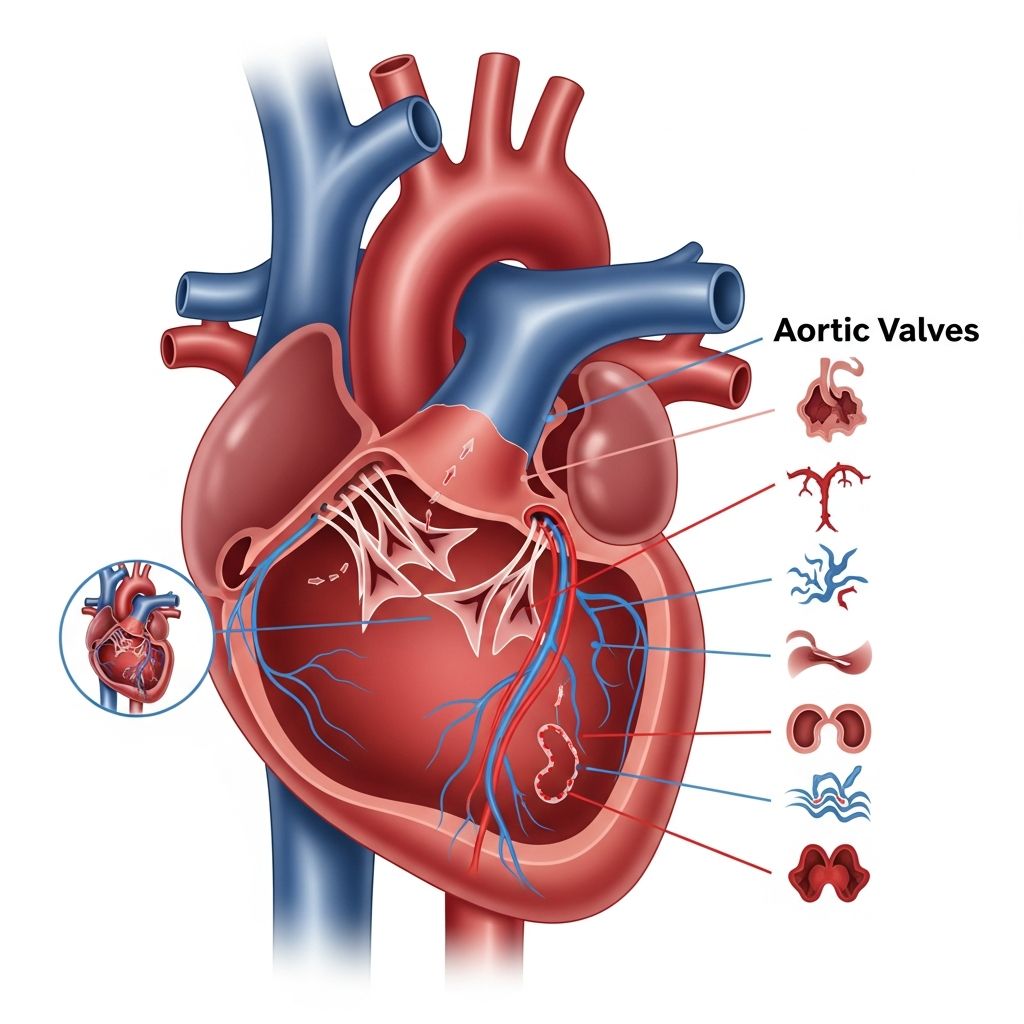
The aortic valve plays a critical role in heart function, controlling blood flow from the left ventricle to the aorta. When this valve becomes damaged or diseased, treatment becomes necessary to prevent serious complications. Aortic valve disease can develop due to various causes, including aging, infection, high blood pressure, or congenital conditions. Understanding the available treatment options helps patients and healthcare providers make informed decisions about the best approach for individual situations.
Treatment for aortic valve disease ranges from conservative medical management to surgical intervention, depending on the severity of the condition and the patient’s overall health status. The goal of any treatment is to improve heart function, relieve symptoms, and prevent long-term complications that could threaten the patient’s life.
Medical Management and Monitoring
For mild to moderate aortic valve disease, medical management may be the initial approach. This conservative strategy focuses on monitoring the condition and managing symptoms without surgical intervention. Patients with asymptomatic aortic stenosis may be managed with regular follow-up appointments and imaging studies to track disease progression.
Medical management typically includes:
- Regular echocardiograms to assess valve function and heart chamber size
- Blood pressure control with antihypertensive medications
- Management of other cardiovascular risk factors such as high cholesterol and diabetes
- Lifestyle modifications including diet, exercise, and stress reduction
- Antibiotic prophylaxis in some cases to prevent infection
However, it is important to note that medications cannot reverse or significantly slow the progression of aortic valve disease. When the valve becomes severely damaged or when symptoms develop, mechanical intervention becomes necessary to prevent serious complications and improve quality of life.
Surgical Aortic Valve Replacement
Surgical aortic valve replacement (SAVR) has been the standard treatment for aortic valve disease for decades and remains an important option for many patients. This procedure involves open-heart surgery, where the surgeon makes an incision in the chest to access the heart and remove the damaged valve, replacing it with either a mechanical or biological prosthetic valve.
Types of Prosthetic Valves
Two main types of replacement valves are available, each with distinct advantages and considerations:
Mechanical Valves: These durable artificial valves can last 20-30 years or longer, making them an excellent choice for younger patients. However, patients with mechanical valves must take blood thinning medications (anticoagulants) for life to prevent blood clots, which requires regular monitoring and has dietary restrictions.
Biological Valves: Also called tissue valves, these are made from animal tissue (typically pig or cow) or human tissue. They do not require lifelong anticoagulation therapy, making them attractive for patients who cannot tolerate blood thinners. However, biological valves typically last 10-15 years before deterioration occurs, necessitating repeat surgery.
Surgical Advantages and Considerations
Surgical valve replacement offers several advantages for appropriate candidates. The procedure provides a definitive, long-lasting solution to aortic valve disease. Surgeons have extensive experience with this approach, and long-term outcomes are well-established. For patients who are good surgical candidates with reasonable life expectancy, surgical replacement often provides excellent results.
However, open-heart surgery carries inherent risks, including infection, bleeding, irregular heart rhythm, and respiratory complications. The procedure requires general anesthesia and the use of a heart-lung machine (cardiopulmonary bypass), which can increase the risk of complications. Recovery typically requires 6-8 weeks, with most patients remaining hospitalized for 4-7 days following the procedure.
Transcatheter Aortic Valve Replacement (TAVR)
Transcatheter aortic valve replacement (TAVR) represents a revolutionary advancement in aortic valve treatment, particularly for high-risk and inoperable patients. This minimally invasive procedure has transformed the management of severe aortic stenosis and is now widely accepted as the preferred therapy for many patient populations.
How TAVR Works
TAVR involves guiding a small tube through one of the patient’s blood vessels to the site of the damaged aortic valve, then passing a replacement valve through the tube and fixing it inside the damaged valve. The procedure typically uses either transfemoral access (through the femoral artery in the groin) or alternative approaches such as transaortic or transapical access when femoral access is not feasible.
The catheter-based approach does not require opening the chest or dividing the breastbone, and in most cases, does not require the use of a heart-lung machine. Patients generally undergo the procedure with sedation rather than general anesthesia, meaning they do not require intubation or mechanical ventilation. This minimally invasive nature contributes to faster recovery and shorter hospital stays.
Advantages of TAVR
TAVR offers numerous advantages compared to surgical valve replacement, particularly for high-risk patients:
- Minimally invasive approach requires only small incisions
- No need for open-heart surgery or general anesthesia in most cases
- Significantly faster recovery time, typically 1-3 days in hospital versus 4-7 days for surgery
- Reduced procedural pain and discomfort
- Lower rates of major vascular complications in experienced centers
- May be the only viable option for patients unable to undergo open-heart surgery
- Excellent clinical outcomes with modern valve designs
Recent data demonstrates impressive outcomes with contemporary TAVR technology. Studies show that TAVR with newer-generation devices achieves 30-day all-cause mortality rates as low as 2.2% in high-risk and inoperable patients, with 1-year all-cause mortality of 14.4% in this challenging population. These results represent substantial improvement over earlier TAVR devices and surgical outcomes in comparable patient groups.
TAVR Valve Technologies
Modern TAVR systems utilize advanced valve designs that have undergone significant improvements. The SAPIEN 3, a third-generation balloon-expandable transcatheter heart valve system approved by the FDA in 2015, represents state-of-the-art technology. These newer devices incorporate enhanced delivery systems, improved positioning capabilities, and design modifications that reduce procedural complications.
The transfemoral (TF) approach, where the catheter is advanced through the femoral artery, provides superior outcomes compared to alternative access routes. Patients undergoing TF-TAVR experience lower rates of mortality (2.1%) and stroke (1%) compared to non-transfemoral approaches. The improved outcomes reflect both the advantages of the transfemoral route and the characteristics of patients suitable for this approach.
Clinical Outcomes and Patient Selection
TAVR has demonstrated excellent outcomes across different patient populations. For high-risk and inoperable patients with severe aortic stenosis, TAVR provides life-changing benefits. The procedure has expanded to intermediate-risk patients, with studies showing 1-year all-cause mortality of 7.4% in this population.
Modern TAVR systems achieve very low rates of paravalvular leak (PVL), valve embolization (0.2%), and multiple valve implantation (0.9%), thanks to improved delivery catheters that provide stable positioning and precise valve placement. These technical advances directly contribute to improved clinical outcomes and long-term valve durability.
Alternative Treatment Approaches
Beyond traditional valve replacement and TAVR, other innovative approaches are being developed for specific patient populations.
Valve-Sparing Procedures
For certain patients, particularly those with aortic root pathology, valve-sparing aortic root replacement may be an option. This approach preserves the patient’s native valve while replacing the diseased aortic root. This technique has become an important tool for managing aortic root disease in both children and adults, offering the advantage of preserving the patient’s own valve while addressing root pathology.
Percutaneous Mitral Valve Repair
In selected cases where patients require multiple cardiac interventions, catheter-based approaches to other valves may be combined with aortic interventions to address comprehensive cardiac disease in a single procedure.
Recovery and Rehabilitation
Recovery following aortic valve treatment varies significantly depending on the procedure chosen. Patients undergoing TAVR typically recover remarkably quickly, often returning home within 1-3 days with resumption of normal activities within 2-4 weeks. Most patients experience minimal discomfort and require only basic pain management.
Surgical valve replacement patients require longer recovery periods, typically 6-8 weeks before returning to normal activities. During this time, patients must follow specific restrictions on heavy lifting and strenuous activity. Cardiac rehabilitation programs, including supervised exercise and education, are commonly recommended to optimize recovery and long-term outcomes.
Regardless of the procedure chosen, long-term follow-up with a cardiologist is essential. Patients require periodic imaging studies to assess valve function and detect any complications. Those with mechanical valves require regular blood work to ensure anticoagulation therapy is optimally managed.
Factors Influencing Treatment Selection
The choice between surgical and catheter-based approaches depends on multiple factors, including patient age, overall health status, life expectancy, surgical risk, vessel anatomy, kidney function, and individual preferences.
Younger, healthier patients with good surgical risk profiles often undergo surgical valve replacement to benefit from the durability of prosthetic valves and avoid the need for future procedures. Older patients, those with multiple medical comorbidities, or those with prohibitive surgical risk frequently benefit from TAVR’s minimally invasive approach.
The specific anatomy of the aortic root and access vessels also influences treatment selection. Patients with severely calcified aortic annuli, small aortic roots, or abnormal vessel anatomy may require individualized approaches to optimize outcomes.
Outcomes and Success Rates
Modern aortic valve treatment achieves excellent outcomes in experienced centers. Johns Hopkins Aramco Healthcare reported TAVR outcomes that exceed US benchmarks established by the Society of Thoracic Surgeons and American College of Cardiology, demonstrating exceptional results in this minimally invasive procedure.
Both surgical and catheter-based approaches achieve high procedural success rates exceeding 95% in experienced hands. Long-term survival, quality of life improvement, and symptom relief are excellent with either approach when appropriately selected for individual patients.
Frequently Asked Questions
Q: What is the difference between TAVR and surgical valve replacement?
A: TAVR is a minimally invasive catheter-based procedure requiring only small incisions and typically local anesthesia, with faster recovery and shorter hospital stays. Surgical replacement involves open-heart surgery, general anesthesia, and longer recovery but offers durable, long-lasting valve replacement. The choice depends on individual patient factors including age, health status, and surgical risk.
Q: How long do replacement heart valves last?
A: Mechanical valves typically last 20-30 years or longer, while biological valves generally function for 10-15 years before deterioration. The specific lifespan varies based on individual factors, patient age, and valve type. Newer TAVR valves demonstrate promising durability but long-term data continue to evolve.
Q: What medications are required after valve replacement?
A: Patients with mechanical valves require lifelong anticoagulation therapy (blood thinners) to prevent blood clots. Those with biological valves typically do not require long-term anticoagulation but may receive short-term antiplatelet therapy. All patients benefit from blood pressure management and may require other cardiac medications based on individual conditions.
Q: What is the recovery time for TAVR versus surgical valve replacement?
A: TAVR patients typically spend 1-3 days in the hospital and resume normal activities within 2-4 weeks. Surgical valve replacement patients usually require 4-7 days hospitalization and 6-8 weeks recovery before returning to normal activities.
Q: Can younger patients have TAVR, or is it only for elderly patients?
A: While TAVR was initially used for high-risk and elderly patients, it has expanded to intermediate-risk and even lower-risk populations. Younger patients may be candidates depending on individual circumstances, though durability considerations and need for potential future interventions influence valve selection.
Q: What are the risks associated with aortic valve treatment?
A: Surgical valve replacement risks include infection, bleeding, arrhythmias, and respiratory complications. TAVR risks include vascular complications, stroke, and paravalvular leak, though modern techniques minimize these complications. All procedures carry procedural and anesthetic risks that vary by patient factors.
References
- JHAH TAVR Outcomes Surpass US Benchmarks in Minimally Invasive Procedure — Johns Hopkins Aramco Healthcare. 2024. https://www.jhah.com/en/news-events/news-articles/jhah-tavr-outcomes-exceed-benchmarks/
- Transcatheter Aortic Valve Replacement: Favorable Clinical Outcomes with SAPIEN 3 — Journal of Thoracic Disease, AME Publishing Company. 2017. https://jtd.amegroups.org/article/view/9076/html
- Management of Advanced Heart Valve Disease — Johns Hopkins Medicine Structural Heart Disease Program. 2024. https://www.youtube.com/watch?v=DZq1i4NpX3E
- Transcatheter Aortic Valve Replacement in Low-Risk Patients — Johns Hopkins University, Department of Cardiac Surgery. 2024. https://pure.johnshopkins.edu/en/publications/transcatheter-aortic-valve-replacement-in-low-risk-patients-a-met/
- FDA Approval: SAPIEN 3 Transcatheter Heart Valve System — U.S. Food and Drug Administration. 2015. https://www.fda.gov/medical-devices/recently-approved-devices/
Similar Articles








Read full bio of Sneha Tete