Aphakia: Understanding Lens Loss and Treatment Options
Comprehensive guide to aphakia: causes, symptoms, diagnosis, and effective treatment strategies.
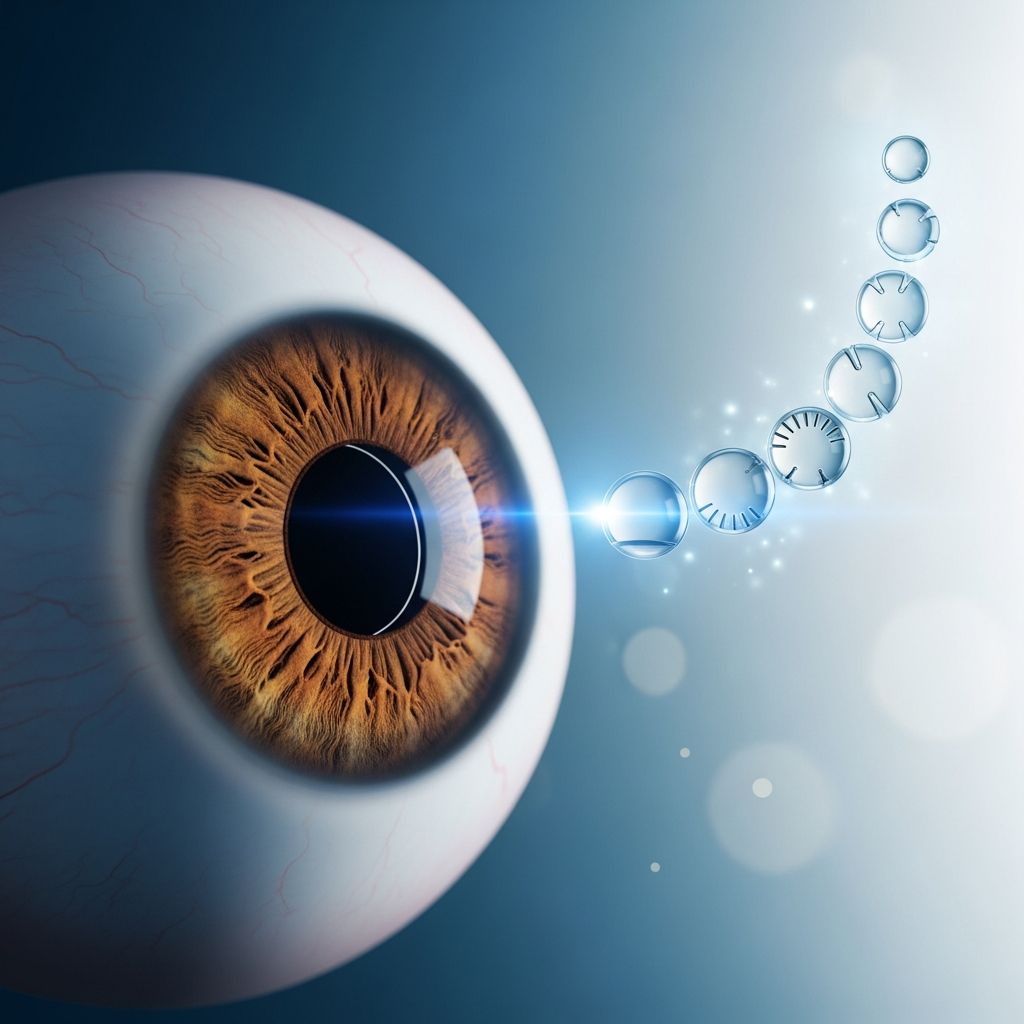
Aphakia is a medical condition characterized by the absence of the crystalline lens in one or both eyes. The lens is a critical optical component of the eye that plays an essential role in focusing light onto the retina, enabling clear vision at various distances. When the lens is missing, the eye loses a significant portion of its focusing power, resulting in substantial refractive error and visual impairment. This condition can develop at birth or occur later in life due to injury, disease, or surgical intervention.
Understanding Aphakia: Definition and Significance
Aphakia derives from the Greek word meaning “without lens.” The absence of the lens fundamentally alters how the eye focuses light, making it impossible for the eye to achieve proper focus without artificial optical correction. Unlike a healthy eye with a lens that can adjust its shape to focus on objects at different distances, an aphakic eye cannot perform this accommodation function. The refractive error associated with aphakia is typically significant hyperopia (farsightedness), usually ranging from 8 to 16 diopters depending on the individual eye’s axial length and other optical properties. Understanding this condition is crucial for patients and families because timely intervention can significantly impact visual development and quality of life.
Causes of Aphakia
Aphakia can result from various etiological factors, and understanding these causes is important for prevention and management:
Congenital Aphakia
Congenital aphakia, though rare, can occur when the lens fails to develop properly during fetal development. This condition is sometimes associated with other ocular anomalies and genetic factors. Infants born with congenital aphakia require early intervention to ensure proper visual development during the critical period of visual maturation in infancy and early childhood.
Congenital Cataracts and Surgical Removal
The most common cause of aphakia in infants and young children is the surgical removal of a congenital cataract. A congenital cataract is an opacity of the lens present at birth that can significantly impair vision. When a cataract is visually significant (typically defined as a central opacity of 3 mm or greater), surgical removal becomes necessary to allow light to reach the retina and promote normal visual development. The timing of cataract surgery is critical, ideally performed within the first weeks to months of life to minimize amblyopia (lazy eye) development.
Trauma and Injury
Ocular trauma is a significant cause of aphakia in older children and adults. Severe eye injuries, such as penetrating trauma from accidents, falls, or foreign objects, can result in lens displacement (luxation) or complete lens loss. In some cases, severely damaged or dislocated lenses must be surgically removed to prevent complications such as inflammation or secondary glaucoma.
Surgical Complications
While modern cataract surgery techniques have made lens-sparing procedures more common, complications during eye surgery can occasionally result in lens removal. Additionally, in certain surgical procedures for other conditions, lens removal may be necessary or unavoidable.
Symptoms and Clinical Presentation
The symptoms of aphakia vary depending on whether the condition affects one eye (unilateral) or both eyes (bilateral), the age of onset, and individual factors:
Visual Symptoms
- Significant hyperopia (farsightedness) leading to blurred vision at all distances
- Difficulty focusing on objects, both near and far
- Reduced contrast sensitivity
- Increased glare and light sensitivity
- Visual distortions or aberrations
- Poor depth perception, particularly in unilateral aphakia
Related Stories



Developmental Concerns in Infants
In infants with unilateral congenital aphakia or post-surgical aphakia, the primary concern is the development of amblyopia (lazy eye). Without appropriate optical correction, the affected eye receives a blurred image, and the brain may preferentially use the unaffected eye. This can lead to permanent vision loss in the affected eye if not treated promptly. Early diagnosis and appropriate correction are therefore critical to ensure normal visual maturation.
Behavioral Indicators
Parents and caregivers may notice behavioral signs such as difficulty tracking objects, preference for using one eye, or developmental delays related to vision. Infants may show reduced interest in visual exploration or have difficulty with activities requiring vision.
Diagnosis of Aphakia
Diagnosing aphakia involves comprehensive ophthalmological examination and specialized testing:
Clinical Examination
During a comprehensive eye examination, the ophthalmologist or optometrist will perform a detailed anterior segment examination using a slit lamp biomicroscope. The absence of the lens in the anterior chamber is directly visualized. The examiner will also assess pupil reactivity, intraocular pressure, and the posterior segment using dilated fundus examination.
Refractive Assessment
Measuring the refractive error is essential for determining appropriate optical correction. This may be performed using autorefraction, retinoscopy, or other techniques. In infants and young children, cycloplegic refraction (using dilating drops to temporarily paralyze accommodation) provides more accurate measurements.
Biometric Measurements
Keratometry (measurement of corneal curvature), axial length measurement, and other biometric parameters help determine the precise optical correction needed. These measurements are particularly important when considering intraocular lens implantation.
Imaging Studies
Optical coherence tomography (OCT) and ultrasound imaging may be used to assess retinal health and rule out posterior segment abnormalities that could affect visual prognosis.
Treatment and Management Options
The management of aphakia has evolved significantly with modern technology, and several effective options are available:
Contact Lens Correction
Contact lenses represent a major treatment modality for aphakia, particularly in infants and young children. Contact lenses offer several advantages over other correction methods:
- Superior optical quality with minimal spherical aberration
- Reduced magnification compared to spectacle correction
- Better peripheral vision
- More natural visual appearance
- Improved depth perception in unilateral cases
Various contact lens types can be used, including silicone hydrogel lenses for extended wear, rigid gas-permeable lenses, and custom soft lenses. In infants, specialized fitting techniques and careful parent education regarding lens insertion, removal, and care are essential. The Infant Aphakia Treatment Study demonstrated that contact lens correction can achieve good visual outcomes in infants when properly fitted and managed.
Spectacle Correction
Eyeglasses can correct the hyperopic refractive error in aphakic eyes. However, spectacles have certain limitations compared to contact lenses, including higher magnification, reduced peripheral vision, and greater optical aberrations. Despite these limitations, spectacles may be appropriate in certain situations, such as when contact lens wear is not tolerated or as a backup correction method.
Intraocular Lens (IOL) Implantation
Modern intraocular lens implantation has become an increasingly popular treatment option for aphakia, including in pediatric populations. Contemporary IOL technology offers several advantages:
- Permanent correction without need for daily insertion and removal
- Excellent optical quality
- Improved quality of life compared to contact lenses or spectacles
- Reduced need for compliance with lens care and wearing schedules
- Good refractive outcomes with modern calculation formulas
The Infant Aphakia Treatment Study compared IOL implantation with contact lens correction in infants with unilateral congenital cataracts, providing important evidence regarding the relative merits of each approach. Many pediatric ophthalmologists now consider IOL implantation as a valid option even in very young children, though the decision must be individualized based on factors such as the child’s age, ocular health, and ability to comply with post-operative care requirements.
Amblyopia Treatment
Regardless of which optical correction is chosen, treatment of amblyopia is crucial in children with unilateral aphakia. This typically involves patching or penalization of the better-seeing eye to force use and development of the affected eye. Compliance with patching regimens is essential for achieving optimal visual outcomes, and regular monitoring of visual acuity is necessary to assess treatment effectiveness.
Special Considerations in Pediatric Aphakia
Management of aphakia in infants and young children requires specialized knowledge and expertise:
Critical Period for Visual Development
The first several years of life represent a critical period for visual system development. The visual cortex requires clear, focused images during this time to establish normal visual pathways and stereopsis. Any delay in providing appropriate optical correction during this period can result in permanent vision loss. Therefore, early diagnosis and timely initiation of treatment are paramount.
Surgical Timing
When surgical removal of a congenital cataract is necessary, the timing of surgery significantly impacts visual outcomes. Current recommendations suggest that cataract surgery should be performed as early as possible, ideally by 6 to 8 weeks of age for dense cataracts in order to minimize deprivation amblyopia.
Long-term Follow-up
Children with aphakia require ongoing ophthalmologic care including regular visual acuity assessments, refraction checks, evaluation of amblyopia treatment compliance, and screening for potential complications such as elevated intraocular pressure or posterior capsular opacification (in IOL-implanted eyes).
Frequently Asked Questions
Can vision be restored in aphakia?
Vision cannot be completely restored to normal in aphakia because the natural lens cannot be replaced. However, high-quality optical correction with contact lenses or intraocular lenses can provide very good functional vision, especially when treatment is initiated early in life before amblyopia develops.
Is contact lens wear challenging in infants with aphakia?
While contact lens wear in infants requires dedicated parent education and commitment, modern fitting techniques have made it increasingly feasible. Specialized contact lens professionals experienced in pediatric fitting can successfully fit and manage contacts in very young children. The key to success is thorough parent training and regular follow-up care.
What are the long-term outcomes with IOL implantation in children?
Long-term studies indicate that IOL implantation in children with aphakia can provide excellent visual outcomes comparable to or better than contact lens correction in many cases. Modern IOL materials and designs have proven safe and effective for long-term use in the pediatric population.
How often do children with aphakia need eye exams?
Children with aphakia should have frequent eye examinations during the critical period of visual development, typically every 4 to 12 weeks initially, depending on age and circumstances. After visual maturity is achieved (around age 6-8 years), examination frequency may decrease to annual or biannual visits unless specific concerns arise.
Can aphakia occur in only one eye?
Yes, unilateral aphakia (affecting only one eye) is more common than bilateral aphakia. Unilateral cases present specific challenges including depth perception difficulties and the risk of amblyopia in the affected eye, requiring careful management to optimize visual development.
References
- Aphakia: What It Is, Causes, Symptoms & Treatment — Cleveland Clinic. 2022-09-16. https://my.clevelandclinic.org/health/diseases/24207-aphakia
- The Infant Aphakia Treatment Study Contact Lens Experience — National Center for Biotechnology Information (NCBI). 2012. https://pmc.ncbi.nlm.nih.gov/articles/PMC3386356/
- The Infant Aphakia Treatment Study: Design and Clinical Measures — NCBI/PubMed Central. 2010. https://pmc.ncbi.nlm.nih.gov/articles/PMC2983098/
- What Is Aphakia? — WebMD. https://www.webmd.com/eye-health/aphakia-overview
- Outcomes of Unilateral Cataract Surgery in Infants and Toddlers with Aphakia and Pseudophakia — Cleveland Clinic. https://consultqd.clevelandclinic.org/outcomes-of-unilateral-cataract-surgery-in-infants-and-toddlers-with-aphakia-and-pseudophakia
Similar Articles








Read full bio of medha deb