Aphthous Ulcer: Key Insights On Symptoms, Causes, And Treatment
Comprehensive guide to aphthous ulcers: causes, symptoms, diagnosis, and effective management strategies for canker sores.
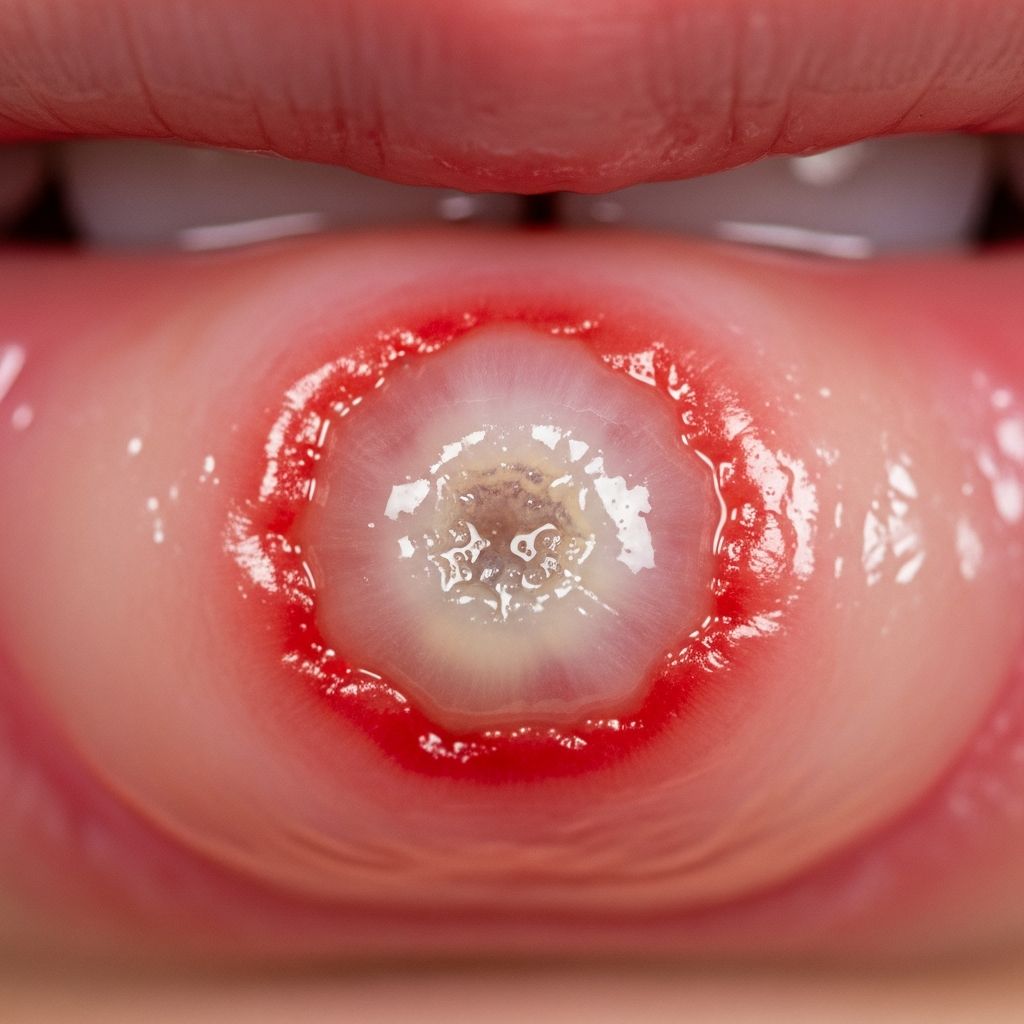
Aphthous ulceration (aphthae, ulcers)
An
aphthous ulcer
is the most common ulcerative condition of the oral mucosa, presenting as a painful punched-out sore on oral or genital mucous membranes. They are also referred to as aphthae, aphthosis, aphthous stomatitis, or canker sores.What is an aphthous ulcer?
Aphthous ulcers are small, painful sores that develop inside the mouth, particularly on non-keratinized mucous membranes such as the inner surfaces of the lips, cheeks, floor of the mouth, underside of the tongue, or soft palate. Less commonly, they can appear on genital mucosa. These ulcers are benign, non-contagious, and typically recur in episodes known as recurrent aphthous stomatitis (RAS).
Approximately 20% of the general population experiences aphthous ulcers at least occasionally, with onset often in childhood or adolescence. Females are affected more frequently than males, and about 40% of individuals with aphthous ulcers report a family history, suggesting a genetic predisposition.
Who gets aphthous ulcers?
Anyone can develop aphthous ulcers, but certain groups are at higher risk:
- Children and adolescents (first episodes common in this age group)
- Females (higher prevalence)
- Individuals with family history (40% heritability)
- People with nutritional deficiencies (e.g., iron, vitamin B12, folate)
- Those under stress or with hormonal changes
Prevalence is higher in non-smokers and those who recently quit smoking, as tobacco may have a protective effect on oral mucosa.
Causes of aphthous ulcers
The exact cause of aphthous ulcers remains unclear, but current understanding points to an abnormal immune response where T-cells attack mucosal proteins, triggered by external factors. This leads to localized inflammation and ulceration.
Key triggering factors include:
- Trauma: Accidental biting, dental procedures, or ill-fitting dentures.
- Stress: Emotional or physical stress often precedes outbreaks.
- Hormonal changes: Common during menstruation, pregnancy, or menopause.
- Nutritional deficiencies: Lack of iron, folate, vitamin B12, or zinc.
- Food sensitivities: Acidic foods (citrus, tomatoes), chocolate, nuts, gluten in sensitive individuals.
- Medications: NSAIDs, beta-blockers, nicorandil.
- Sodium lauryl sulphate: In some toothpastes, irritating mucosa.
- Systemic associations: Rarely linked to celiac disease, inflammatory bowel disease, or Behçet’s syndrome.
In complex cases, underlying systemic diseases must be ruled out.
Types of aphthous ulcer
Aphthous ulceration is classified into three clinical types based on size, number, duration, and scarring:
| Type | Size | Number | Duration | Scarring | Prevalence |
|---|---|---|---|---|---|
| Minor | 1–5 mm | 1–5 | 7–10 days | No | 80% |
| Major | >10 mm | 1–10 | Weeks to months | Yes | 15–20% |
| Herpetiform | Pinpoint (fuses to 1–2 cm) | 10–100+ | ~1 month | Rarely | 5–10% |
Minor aphthous ulcers are the most common, small and shallow, healing without scars.
Major aphthous ulcers (also called Sutton ulcers) are larger, deeper, and may cause significant pain and eating difficulties. They often scar upon healing.
Herpetiform ulcers start as multiple tiny ulcers that cluster and fuse, resembling herpes but not viral. They affect any oral site.
Clinical features of aphthous ulcer
Aphthous ulcers typically begin as a small, round, yellowish elevated spot with a red halo. This evolves into a punched-out ulcer covered by a greyish-white pseudomembrane. Surrounding mucosa remains healthy. Pain is disproportionate to size, worsened by acidic/spicy foods, talking, or brushing.
Related Stories



- Solitary or multiple: Minor often single; others multiple.
- Sites: Non-keratinized areas (labial/buccal mucosa, ventral tongue, floor of mouth, soft palate, fauces, tonsils). Rarely genitals.
- Prodrome: Tingling or burning 24–48 hours before appearance.
- Genital aphthae: Similar appearance on vulva, vagina, penis, scrotum; painful, non-sexually transmitted.
Diagnosis of aphthous ulcer
Diagnosis is primarily clinical based on history and characteristic appearance. No specific tests for simple cases.
For recurrent, multiple, or severe ulcers (complex aphthosis), investigations exclude mimics:
- Blood tests: FBC, ferritin, vitamin B12, folate, anti-gliadin antibodies (celiac screen).
- Swabs: For Candida albicans, herpes simplex virus (HSV), Vincent organisms.
- Biopsy: Rarely, if malignancy suspected.
- Further: Patch testing (allergies), referral to gastroenterology (IBD), rheumatology (Behçet’s).
Differential diagnosis
Consider other causes of oral ulcers:
- Infectious: HSV, primary coxsackievirus (herpangina), acute necrotizing ulcerative gingivitis.
- Traumatic: Physical/chemical injury.
- Drug-induced: e.g., nicorandil.
- Malignancy: Squamous cell carcinoma (persistent ulcers).
- Systemic: Behçet’s disease, PFAPA syndrome (children), Sweet syndrome, IBD, celiac disease, HIV.
Management of aphthous ulcer
No cure exists; ulcers heal spontaneously. Treatment focuses on pain relief, reducing inflammation, preventing secondary infection, and shortening duration.
General measures
- Avoid triggers: Acidic/spicy foods, SLS toothpaste, trauma.
- Soft bland diet, cool foods.
- Good oral hygiene with soft brush.
- Saltwater rinses (1 tsp salt in warm water, 2–3x/day).
Topical treatments (first-line for minor ulcers)
- Analgesics: Benzocaine, lidocaine gels/ointments (e.g., Bonjela®).
- Antimicrobials: Chlorhexidine mouthwash (0.12–0.2%, 2–4x/day).
- Steroids: Hydrocortisone muco-adhesive (e.g., Corlan®), triamcinolone paste (Kenalog in Orabase®), betamethasone tablets dissolved in mouth.
- Others: Tetracycline mouthwash (dissolve capsule in water, rinse 4x/day), silver nitrate cautery (professional use).
Systemic treatments (severe/recurrent cases)
- Anti-inflammatories: Colchicine, steroids (prednisone), dapsone, thalidomide (off-label).
- Immunosuppressants: Azathioprine, ciclosporin for refractory cases.
- Supplements: Vitamin B12, folate, iron if deficient.
Most minor ulcers resolve in 1–2 weeks without scarring. Major/herpetiform take longer.
Home remedies
- Salt/baking soda rinses.
- Milk of magnesia application.
- Ice chips for swelling/pain.
- Avoid irritants, manage stress.
Complications
Rare, but include:
- Secondary bacterial infection (fever, pus; treat with antibiotics).
- Scarring (major ulcers).
- Dehydration/malnutrition if severe/persistent.
- Underlying disease indicator (e.g., Behçet’s).
Prevention
Identify/avoid personal triggers. Correct deficiencies. Stress reduction. SLS-free toothpaste. Nicotine replacement for smokers quitting.
Frequently Asked Questions
Are aphthous ulcers contagious?
No, they are not caused by viruses/bacteria and cannot spread.
Why do I keep getting canker sores?
Recurrence is common due to genetic predisposition and triggers like stress or diet. Track patterns.
How long do aphthous ulcers last?
Minor: 7–10 days; major: weeks–months.
When should I see a doctor for mouth ulcers?
If ulcers >2 weeks, very large/painful, frequent, with fever/systemic symptoms, or genital.
Do aphthous ulcers cause scarring?
Minor/herpetiform rarely; major often do.
References
- Aphthous ulceration (aphthae, ulcers) — DermNet NZ. 2023-05-15. https://dermnetnz.org/topics/aphthous-ulcer
- Aphthous Ulcers (Canker Sore): Signs and Treatments — Ada Health. 2024-01-10. https://ada.com/conditions/aphthous-ulcers/
- Recurrent aphthous stomatitis (episodic mouth ulcers) — BMJ Best Practice. 2025-08-20. https://bestpractice.bmj.com/topics/en-gb/564
- Mouth Ulcers — Patient.info. 2024-03-12. https://patient.info/oral-dental-care/mouth-ulcers-leaflet
- Mouth ulcers — Healthify NZ (Ministry of Health). 2023-11-05. https://healthify.nz/health-a-z/m/mouth-ulcers
Similar Articles








Read full bio of Sneha Tete