Apnea Hypopnea Index (AHI): Understanding Sleep Apnea Severity
Learn how the AHI score measures sleep apnea severity and guides treatment decisions.
What Is the Apnea Hypopnea Index (AHI)?
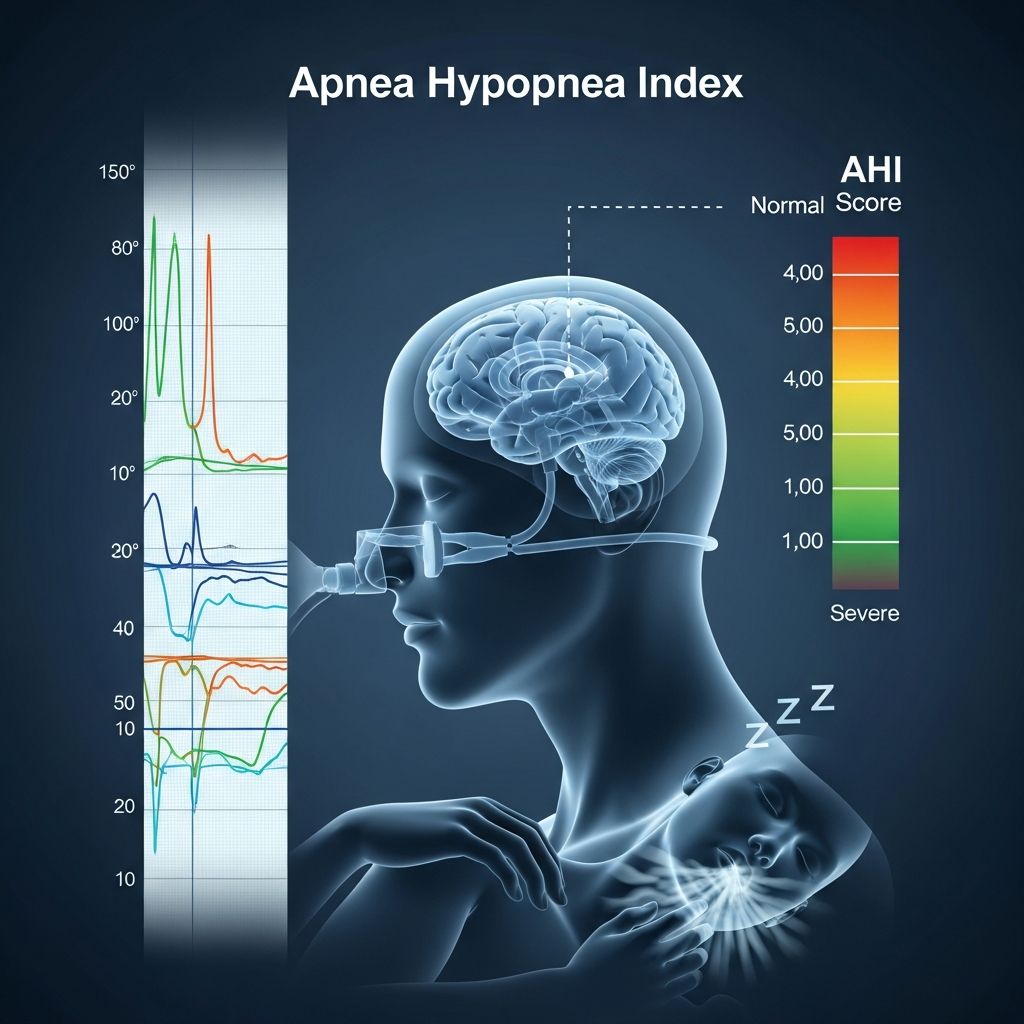
The Apnea Hypopnea Index (AHI) is a crucial diagnostic measurement that healthcare providers use to evaluate and classify the severity of sleep apnea. This metric represents the average number of apnea and hypopnea events that occur during each hour of sleep. Understanding your AHI score is essential for receiving an accurate diagnosis and determining the most appropriate treatment plan for your condition.
An apnea event occurs when you completely stop breathing during sleep, while a hypopnea event involves a significant reduction in airflow. By counting the combined number of these breathing interruptions per hour, the AHI provides clinicians with a standardized measurement that helps identify whether you have sleep apnea and, if so, how severe your condition is.
How Is the AHI Calculated?
The AHI is calculated by dividing the total number of apnea and hypopnea events by the total hours of sleep monitored during a sleep study. This straightforward calculation provides a clear numerical value that healthcare providers can use for diagnosis and monitoring. For example, if you experience 40 combined apnea and hypopnea events over 4 hours of sleep, your AHI would be 10 events per hour.
Sleep studies, also known as polysomnography, are the gold standard for measuring AHI. During an in-lab sleep study, you’ll sleep overnight while various sensors monitor your breathing patterns, oxygen levels, heart rate, and sleep stages. Some at-home sleep studies may also calculate your AHI, though these tests sometimes miss certain types of hypopneas or provide less comprehensive data than laboratory studies.
Understanding AHI Severity Levels
Healthcare providers classify sleep apnea severity based on AHI scores using standardized ranges. These classifications help determine the urgency of treatment and which therapeutic interventions are most appropriate for your specific situation. The severity levels are universally recognized across medical practice and align with recommendations from organizations like the American Academy of Sleep Medicine.
| Severity Level | AHI Range (Events per Hour) | Classification |
|---|---|---|
| Normal | Less than 5 | No sleep apnea |
| Mild | 5 to 14 | Mild sleep apnea |
| Moderate | 15 to 29 | Moderate sleep apnea |
| Severe | 30 or more | Severe sleep apnea |
An AHI below 5 events per hour is considered normal and doesn’t indicate sleep apnea. Mild sleep apnea, with an AHI between 5 and 14, may or may not require treatment depending on your symptoms and other health factors. Moderate sleep apnea (AHI 15-29) typically warrants more active intervention, while severe sleep apnea (AHI 30 or higher) usually requires prompt treatment to prevent serious health complications.
What Do Different AHI Scores Mean?
Your specific AHI number tells a detailed story about your sleep apnea. A score of 5-14 events per hour means you’re experiencing mild sleep apnea, where breathing interruptions occur but are relatively infrequent. While some people with mild apnea don’t notice symptoms, others may experience daytime sleepiness or fatigue.
An AHI between 15 and 29 indicates moderate sleep apnea. At this level, you’re likely experiencing noticeable symptoms and increased health risks. Most people with moderate sleep apnea benefit from treatment interventions to improve their sleep quality and reduce cardiovascular strain.
When your AHI reaches 30 or higher, you have severe sleep apnea. This means you’re experiencing frequent and prolonged breathing interruptions throughout the night. Severe sleep apnea significantly increases your risk of serious health complications and requires prompt medical intervention.
Related Stories



The Role of AHI in Diagnosis
Healthcare providers use the AHI as the primary diagnostic criterion for sleep apnea. Diagnosis of obstructive sleep apnea is generally warranted if your AHI is 15 or more per hour, indicating at least moderate disease. However, diagnosis may also be made with an AHI of 5 or more per hour if you have one or more specific symptoms, such as witnessed breathing pauses, daytime sleepiness, or other indicators of sleep-related breathing disorder.
Your healthcare provider will review your AHI results alongside your reported symptoms, medical history, and physical examination findings to make a comprehensive diagnosis. This holistic approach ensures that the diagnosis accurately reflects your clinical situation and guides appropriate treatment recommendations.
Limitations and Beyond the AHI
While the AHI remains the standard diagnostic metric, researchers have increasingly recognized its limitations. The AHI measures the frequency of breathing events but doesn’t capture the complete picture of sleep apnea severity. Two patients with identical AHI scores may experience vastly different levels of harm based on how much their blood oxygen drops during these events or how severely their sleep is disrupted.
Advanced metrics such as hypoxic burden—the cumulative oxygen desaturation during sleep—may provide additional insight into disease severity and health risk. Recent research suggests that patients with high hypoxia and daytime sleepiness may face greater cardiovascular risks than those with the highest AHI scores alone. This evolving understanding emphasizes the importance of comprehensive sleep study analysis beyond simple event counting.
Machine learning algorithms and wearable technology are emerging as potential future tools to better assess sleep apnea endophenotypes and predict individual treatment responses. Blood biomarkers and genetic factors may eventually complement traditional AHI measurements to provide more personalized risk stratification.
AHI and Treatment Recommendations
Your AHI score directly influences which treatments your healthcare provider recommends. For mild sleep apnea, conservative approaches such as positional therapy, nasal congestion management, weight loss, and lifestyle modifications may be sufficient. Your provider might suggest using a humidifier, sleeping on your side, or avoiding alcohol before bedtime.
For moderate to severe sleep apnea, positive airway pressure therapy using a CPAP machine is typically the first-line treatment. CPAP devices deliver pressurized air through a mask to keep your airway open during sleep, effectively eliminating apnea and hypopnea events. The effectiveness of CPAP is often measured by how much it reduces your AHI—ideally bringing it down to fewer than 5 events per hour.
When CPAP isn’t tolerated or effective, alternative treatments become relevant based on your AHI range. Oral appliances, which reposition your jaw to maintain airway patency, can be effective for many patients with mild to moderate sleep apnea. Surgical options and emerging therapies like hypoglossal nerve stimulation are considered for patients with higher AHI scores who haven’t responded to other treatments.
Monitoring AHI During Treatment
After starting treatment, your healthcare provider will likely repeat sleep testing to measure how well your chosen therapy is working. A successful treatment typically reduces your AHI by at least 50% and ideally brings it below 5 events per hour. Tracking your AHI over time helps your provider assess treatment effectiveness and make adjustments if needed.
Regular AHI monitoring is particularly important if you’re using a CPAP machine or oral appliance, as some devices can track your AHI continuously at home. This data helps both you and your healthcare provider understand your response to therapy and identify any issues with device compliance or fit.
Individual Variability and Treatment Response
It’s important to recognize that two people with the same AHI score may respond differently to the same treatment. Treatment success depends on various factors including your specific type of airway collapse, body mass index, age, sex, and arousal threshold. Your healthcare provider will personalize your treatment plan based on your unique clinical presentation and individual response to initial therapy.
Some patients achieve excellent results with conservative measures alone, while others with similar AHI scores require CPAP therapy. This individual variation underscores why your provider considers the complete clinical picture rather than relying on the AHI number alone.
Frequently Asked Questions (FAQs)
Q: What does an AHI of 10 mean?
A: An AHI of 10 means you’re experiencing approximately 10 apnea or hypopnea events per hour of sleep. This falls in the mild range and may or may not require treatment depending on your symptoms and other health factors.
Q: Is an AHI of 5 considered sleep apnea?
A: An AHI of 5 is at the threshold for sleep apnea diagnosis. If you have an AHI of 5-14 with no symptoms, it’s typically considered mild and may not require immediate treatment. However, if you have symptoms like daytime sleepiness or witnessed breathing pauses, diagnosis of mild sleep apnea is warranted.
Q: Can AHI change over time without treatment?
A: Yes, AHI can fluctuate based on factors like weight changes, sleep position, nasal congestion, alcohol consumption, and sleep deprivation. Some people naturally experience improvement with lifestyle modifications, while others see worsening over time without intervention.
Q: Is CPAP required for all AHI scores above 15?
A: Not necessarily. While moderate to severe sleep apnea often benefits from CPAP, your healthcare provider may recommend alternative treatments based on your specific circumstances, preferences, and response to other therapies.
Q: What’s the difference between AHI and RDI?
A: The Respiratory Disturbance Index (RDI) is similar to AHI but may include additional respiratory events beyond apneas and hypopneas. Home sleep tests often report RDI based on monitoring time, while laboratory studies report AHI based on actual sleep time, which may result in slightly different values.
Q: Can you have a normal AHI but still have sleep apnea symptoms?
A: While less common, it’s possible to experience sleep apnea-like symptoms with a normal AHI. Your healthcare provider may investigate other causes such as upper airway resistance syndrome or other sleep disorders that don’t show up as apnea or hypopnea events.
References
- Treatments for Obstructive Sleep Apnea: CPAP and Beyond — Cleveland Clinic. 2024. https://consultqd.clevelandclinic.org/treatments-for-obstructive-sleep-apnea-cpap-and-beyond
- Metrics of Sleep Apnea Severity: Beyond the Apnea-Hypopnea Index — PubMed Central, National Institutes of Health. 2021. https://pubmed.ncbi.nlm.nih.gov/33693939/
- Sleep Apnea: What It Is, Causes, Symptoms & Treatment — Cleveland Clinic. 2024. https://my.clevelandclinic.org/health/diseases/8718-sleep-apnea
- Beyond Heart Health: Consequences of Obstructive Sleep Apnea — Cleveland Clinic. 2024. https://consultqd.clevelandclinic.org/beyond-heart-health-consequences-of-obstructive-sleep-apnea
- Obstructive Sleep Apnea Basics — Cleveland Clinic Journal of Medicine. 2024. https://www.ccjm.org/content/86/9_suppl_1/2/tab-figures-data
- Hypopnea: What It Is, Causes, Symptoms & Treatment — Cleveland Clinic. 2024. https://my.clevelandclinic.org/health/diseases/hypopnea
Similar Articles








Read full bio of medha deb