Apocrine Chromhidrosis: Causes, Diagnosis, And Treatment
Understanding the rare condition of colored sweat from apocrine glands: causes, symptoms, diagnosis, and management options.
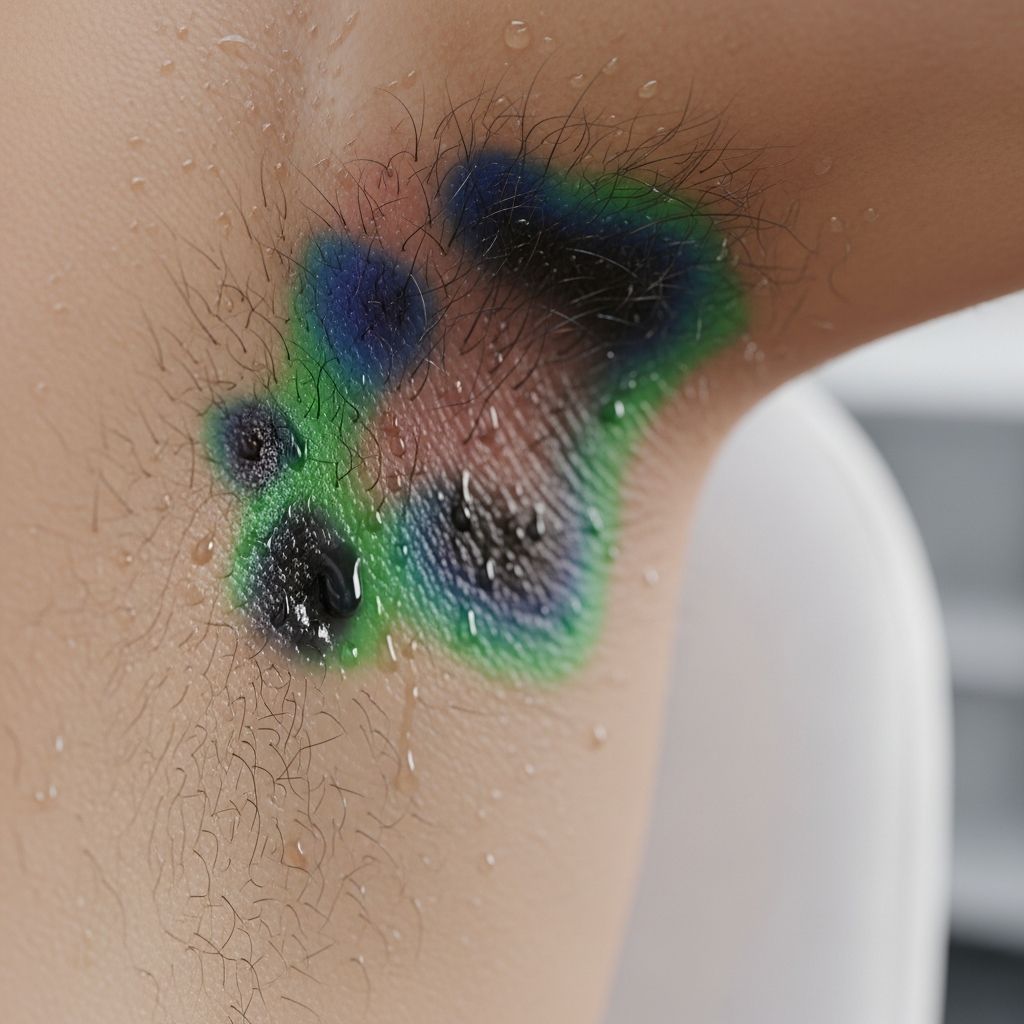
Apocrine chromhidrosis is a rare, benign dermatological condition characterized by the secretion of colored sweat from apocrine sweat glands. This disorder results in sweat that appears blue, black, green, brown, or yellow, primarily affecting areas rich in apocrine glands such as the axillae (armpits), face (especially cheeks), breast areolae, and anogenital regions. Unlike typical sweat, which is colorless, the pigmentation in apocrine chromhidrosis stems from lipofuscin granules within the glands, leading to noticeable staining on skin and clothing. The condition is chronic but tends to regress slowly with advancing age as apocrine glands become less active.
What is apocrine chromhidrosis?
Apocrine chromhidrosis represents one subtype of chromhidrosis, a broader category encompassing true colored sweat disorders. It specifically involves apocrine glands, which are larger sweat glands concentrated in areas like the axillae, face, and genitals, activated post-puberty by emotional or physical stimuli rather than thermoregulation. These glands produce a viscous, odorless secretion that, upon oxidation, turns colored due to lipofuscin—a wear-and-tear pigment accumulated from oxidized fatty acids. Patients often notice the issue after exercise, heat exposure, or stress, requiring frequent clothing changes. The secretion may be preceded by a prickly or warm sensation on the skin.
Distinguishing it from eccrine chromhidrosis (affecting widespread eccrine glands due to external pigments) and pseudochromhidrosis (coloration from external dyes or bacteria mixing with sweat) is crucial for management. Apocrine chromhidrosis is endogenous and localized, making it clinically distinct.
Who gets apocrine chromhidrosis?
Apocrine chromhidrosis typically manifests after puberty when apocrine glands mature, though rare pediatric cases exist, such as blue-colored sweating in infants. It affects individuals of any age post-puberty but is more noticeable in adults due to gland activity. No strong gender or ethnic predisposition is reported, though it may be underdiagnosed due to its rarity and cosmetic concerns. Emotional distress, including shame and social withdrawal, is common, exacerbating psychological impact.
Causes
The primary cause is elevated lipofuscin granule concentration in apocrine glands, formed from oxidation of unsaturated fatty acids. Higher oxidation levels produce darker colors: yellow (least oxidized) to black (most oxidized). The reason for excessive lipofuscin accumulation remains unknown, but it is not linked to external dyes, heavy metals, or infections like in other chromhidrosis types. Triggers include friction, hot showers, anxiety, pain, or sexual arousal, which stimulate gland secretion.
Clinical features
Symptoms localize to apocrine gland distributions: axillae, cheeks, eyelids, ears, scalp, areolae, and anogenital areas. Colored sweat appears as discrete droplets or stains post-stimulation, often blue, black, green, brown, or yellow. A preceding tingling, prickling, or warm sensation is reported. Staining persists on skin and fabrics, worsened by exercise or stress, leading to daily clothing changes. No associated odor or pain beyond initial sensation; psychological effects include embarrassment, low mood, irritability, and social isolation.
Diagnosis
Diagnosis is primarily clinical, based on history of localized colored sweat in apocrine areas post-trigger. Confirmation involves:
- Wood lamp examination: Fluorescence or color accentuation in affected areas.
- Sweat provocation (heat, exercise) followed by microscopy or spectrophotometry to detect lipofuscin pigments.
- Skin biopsy: Reveals lipofuscin-laden apocrine glands (gold standard but rarely needed).
Other tests rule out pseudochromhidrosis (bacterial culture), eccrine type (chemical analysis), or systemic causes like heavy metal poisoning. No routine blood tests unless suspecting extracutaneous issues.
Management
Treatments aim to reduce sweat production or deplete gland contents temporarily, as no cure exists for lipofuscin accumulation. Options with reported success include:
Related Stories



- Capsaicin cream (0.025-0.1% applied 1-2x daily): Depletes substance P, reducing secretion; burning sensation common initially.
- Topical aluminum chloride hexahydrate (20%): Antiperspirant blocking ducts; applied nightly.
- Botulinum toxin (Botox) injections: Inhibits acetylcholine release, effective for 3-6 months in face/axillae.
- Manual expression: Pressure empties glands for 24-72 hours relief.
- Other: Methylene blue lotion, selenium sulfide, oral anticholinergics (e.g., glycopyrrolate); limited evidence.
Treatments provide temporary relief; discoloration recurs as effects wane. Patient education emphasizes benign, self-limiting nature. Psychological support recommended for distress.
| Treatment | Mechanism | Duration of Effect | Side Effects |
|---|---|---|---|
| Capsaicin cream | Depletes substance P | Days | Burning sensation |
| Aluminum chloride | Blocks ducts | Weeks | Skin irritation |
| Botox injections | Inhibits nerve signals | 3-6 months | Injection pain, weakness |
| Manual pressure | Empties glands | 24-72 hours | Painful |
Frequently Asked Questions
What causes the colored sweat in apocrine chromhidrosis?
Lipofuscin granules from oxidized fatty acids in apocrine glands cause pigmentation, varying by oxidation level.
Is apocrine chromhidrosis dangerous?
No, it is benign and chronic, regressing with age; no systemic risks.
Can it affect children?
Rarely, as in blue sweat cases in infants; usually post-puberty.
How effective are treatments?
Temporary relief (days to months); recurrence common upon cessation.
Does stress worsen it?
Yes, emotional stimuli like anxiety trigger secretion.
References
- Chromhidrosis: Definition, causes, and treatment — Medical News Today. 2023-10-12. https://www.medicalnewstoday.com/articles/chromhidrosis
- Chromhidrosis — MD Searchlight. 2024-05-15. https://mdsearchlight.com/health/chromhidrosis/
- Blue-colored sweating: four infants with apocrine chromhidrosis — The Turkish Journal of Pediatrics. 2021-01-01. https://turkjpediatr.org/article/download/1240/1233
- Apocrine chromhidrosis — DermNet NZ. 2024-08-20. https://dermnetnz.org/topics/apocrine-chromhidrosis
- Transient Blue Skin: Pseudochromhidrosis — European Journal of Case Reports in Internal Medicine. 2020-06-15. https://www.ejcrim.com/index.php/EJCRIM/article/download/84/174
- Symptoms of Chromhidrosis — Hines Dermatology Associates. 2023-11-05. https://www.hinesdermatologyassociates.com/blog/symptoms-of-chromhidrosis
- Chromhidrosis: A Rare Clinical Finding — Dermatology Times. 2024-02-28. https://www.dermatologytimes.com/view/chromhidrosis-a-rare-clinical-finding
- Chromhidrosis — StatPearls, NCBI Bookshelf. 2023-07-17. https://www.ncbi.nlm.nih.gov/books/NBK554395/
Similar Articles








Read full bio of medha deb