Appendectomy: Appendix Removal Surgery & Recovery
Complete guide to appendectomy surgery, recovery, and what to expect after appendix removal.
Understanding Appendectomy: Appendix Removal Surgery
Appendectomy is a surgical procedure to remove an inflamed or infected appendix. This operation remains the standard and definitive treatment for appendicitis, a condition where the appendix becomes swollen and infected. Surgeons have been successfully performing appendectomies for over a century, and the procedure continues to be one of the most common surgical interventions performed worldwide. In the United States alone, approximately 300,000 appendectomies are performed each year, with success rates exceeding 95% for both surgical approaches.
The appendix is a small, tube-shaped organ attached to the large intestine in the lower-right portion of the abdomen. When it becomes inflamed or infected, it can cause severe pain and serious complications if left untreated. Appendectomy is considered the safest and most effective way to treat appendicitis and prevent the spread of infection, which can become catastrophic if the appendix ruptures.
Why Appendectomy Is Necessary
Appendicitis requires swift medical intervention because the appendix can rupture within 36 hours of the first symptoms appearing. Once diagnosed with appendicitis, surgeons typically schedule the appendectomy within 24 hours to prevent complications. When an appendix ruptures, infection spreads throughout the abdominal cavity, leading to peritonitis—a life-threatening condition that can result in severe complications or even death if not treated immediately.
The inflammation and infection associated with appendicitis cause intense pain and systemic symptoms. Without surgical removal, the infected appendix poses an ongoing risk to the patient’s health and can lead to multiple emergency department visits and hospitalizations. Appendectomy eliminates this risk by removing the source of the infection permanently.
Types of Appendectomy Procedures
Modern surgeons have two primary approaches to appendectomy: laparoscopic and open surgery. Each method has distinct advantages, and your surgeon will determine which approach is most appropriate based on your specific condition and clinical circumstances.
Laparoscopic Appendectomy
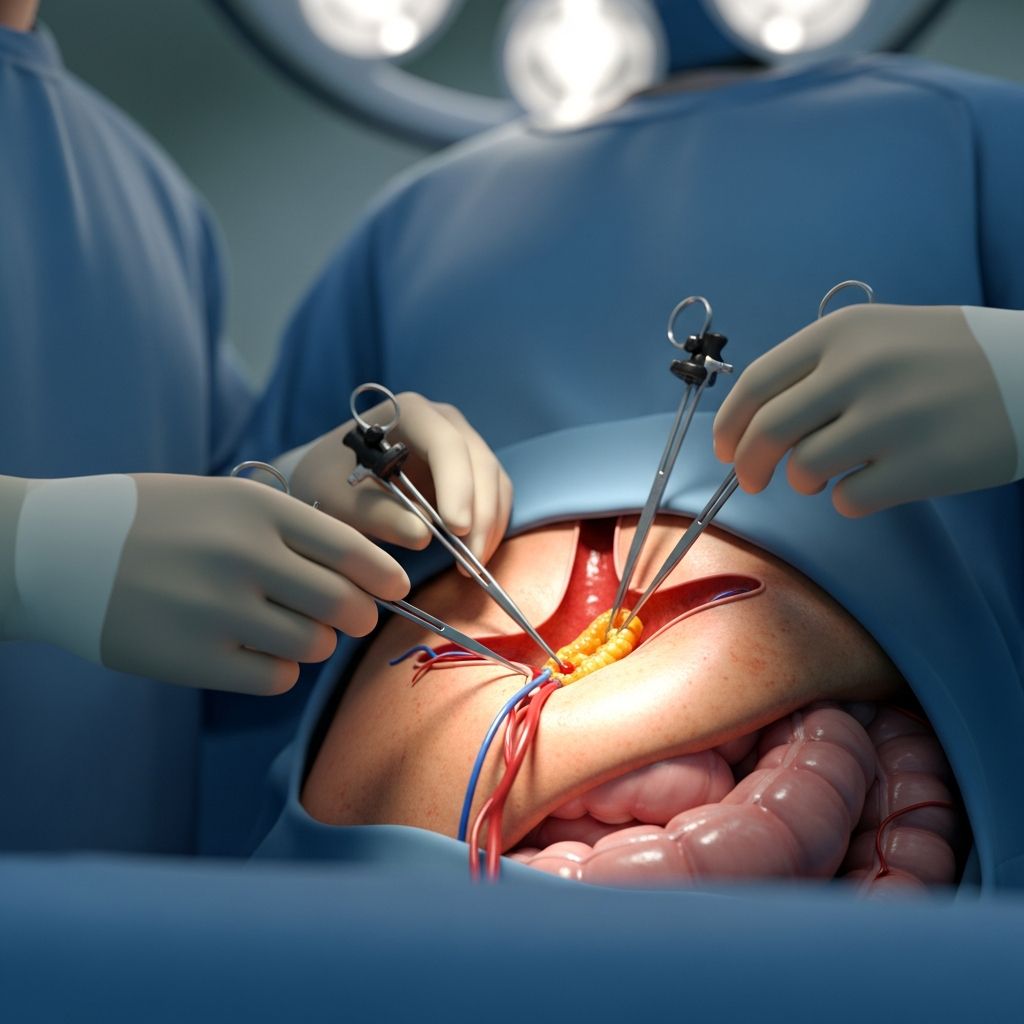
Laparoscopic appendectomy is a minimally invasive surgical technique that has become increasingly common in the United States. This approach uses several small incisions—typically three—positioned between the belly button and pubic hairline, rather than one large incision. During the procedure, your surgeon inserts a laparoscope (a thin tube with a camera and light) through one incision to visualize the appendix on a monitor, then uses specialized surgical instruments inserted through the other small incisions to remove the appendix.
Advantages of laparoscopic appendectomy include:
– Smaller incisions result in less tissue trauma- Reduced post-operative pain compared to open surgery- Faster recovery time, allowing patients to return to normal activities more quickly- Minimal scarring, which is often barely visible- Lower infection risk at the incision sites- Potential for same-day discharge in uncomplicated cases
Open Appendectomy
Open appendectomy involves making a single larger incision, typically about 3 inches (7.63 centimeters) long, on the lower-right side of the abdomen near an anatomical landmark called McBurney’s point. Through this incision, your surgeon directly visualizes and removes the infected appendix. This traditional approach may be necessary in certain situations, such as when there is widespread infection throughout the abdominal cavity or if complications arise during laparoscopic surgery.
Related Stories



Open surgery may be preferred or necessary when:
– Peritonitis (widespread abdominal infection) is present- The appendix has ruptured with significant contamination- The patient’s condition requires conversion from laparoscopic to open approach- The surgeon determines it is safer for the patient’s specific circumstances
Pre-Surgery Preparation and Requirements
Proper preparation before your appendectomy is essential for ensuring the surgery proceeds safely and smoothly. Your healthcare team will provide specific instructions tailored to your individual situation.
Initial Medical Evaluation
Before scheduling your appendectomy, your healthcare provider will conduct a thorough evaluation. This includes reviewing your complete medical history, current medications, any known allergies, and existing medical conditions. Your provider may order additional diagnostic tests such as blood work and imaging scans to confirm the appendicitis diagnosis and assess the severity of infection. They will also check your response to initial antibiotic therapy to ensure surgery is necessary before proceeding.
Pre-Operative Instructions
You will receive specific fasting instructions prior to your surgery. Typically, you must avoid eating and drinking for eight hours before the procedure, including water and any oral medications. However, you will receive necessary fluids through an intravenous (IV) line that your healthcare team will place before surgery. This IV line also allows them to administer antibiotics as soon as possible and provide pain medications as needed. Prior to your surgery, your healthcare provider may place an IV line into a vein and begin administering antibiotics immediately, continuing this therapy through the surgery and into the post-operative period—usually one to seven days depending on infection severity.
Anesthesia Preparation
An anesthesiologist will meet with you before surgery to discuss anesthesia options and assess your medical history. You will receive general anesthesia, which will keep you asleep throughout the procedure and prevent you from feeling any pain. During surgery, your anesthesia team will place a tube through your mouth into your throat to keep your airway open and allow them to monitor your breathing throughout the procedure.
The Appendectomy Procedure
While the exact surgical steps vary depending on whether you’re having laparoscopic or open surgery, the goal remains the same: safely remove the infected appendix and prevent complications.
Laparoscopic Procedure Steps
During a laparoscopic appendectomy, your surgeon will:
– Position you on the operating table, sometimes slightly tilted- Make three small incisions between your belly button and pubic hairline- Insert a tube to fill your abdomen with carbon dioxide gas, which helps the surgeon see your organs more clearly- Insert the laparoscope through one incision to visualize the surgical area- Use specialized surgical instruments through the other incisions to carefully identify, isolate, and remove the appendix- Carefully seal the stump where the appendix attached to the colon to prevent infection- Remove the instruments and laparoscope, then deflate the abdomen of gas- Close each small incision with sutures or surgical tape
Open Procedure Steps
During an open appendectomy, your surgeon will:
– Make a single incision approximately 3 inches long on the lower-right side of your abdomen- Carefully visualize and locate the appendix- Isolate the appendix from surrounding tissues and organs- Carefully remove the appendix while sealing the connection point to prevent leakage- If peritonitis is present, may place a drainage tube in the abdomen to prevent fluid accumulation- Close the incision with sutures
In some cases, a surgeon may need to convert from laparoscopic to open appendectomy during the procedure. This conversion, sometimes called “switching gears,” may become necessary if widespread infection is discovered, if the appendix is in an unusual position, or if complications arise that make safe laparoscopic removal impossible.
Surgical Duration
On average, an appendectomy takes approximately one hour to complete. However, the actual time can vary significantly depending on factors such as the complexity of your condition, the presence of infection or rupture, anatomical variations, and any complications encountered during surgery. More complex cases may require additional time.
Hospital Stay and Immediate Recovery
Your hospital stay following appendectomy depends on the type of surgery performed and any complications.
Same-Day Discharge
If you had an uncomplicated laparoscopic appendectomy with no complications, you may be discharged on the same day as your surgery. However, you will need someone else to drive you home, as the effects of general anesthesia will still be wearing off and it is unsafe for you to operate a vehicle.
Extended Hospital Stay
If you had a ruptured appendix or underwent open surgery, you may need to remain hospitalized for several days. During this time, your healthcare team will continue administering IV antibiotics and closely monitor your condition. If you have a drainage tube in place to manage infected fluid, your provider will remove it before you are discharged. Your provider will ensure you are stable and healing appropriately before allowing you to go home.
Post-Operative Recovery and Pain Management
Recovery from appendectomy varies depending on the surgical approach and your individual circumstances, but most patients experience a relatively quick return to normal activities.
Pain and Discomfort
After surgery, it is normal to experience some degree of discomfort at the incision site and in your abdomen. This discomfort typically improves significantly within a few days. Your healthcare provider will prescribe pain medications to help manage post-operative pain and reduce swelling. It is important to take these medications as prescribed and communicate with your healthcare team if pain is not adequately controlled.
Recovery Timeline
Patients who undergo laparoscopic appendectomy typically recover faster than those who have open surgery due to the smaller incisions and less tissue trauma. Most patients can return to light activities and work within one to two weeks after laparoscopic surgery, while open surgery may require three to four weeks of recovery before returning to normal activities. Strenuous exercise and heavy lifting should be avoided for several weeks to allow the incisions to heal completely.
What to Expect During Recovery
During the first few weeks after appendectomy, you may experience mild abdominal swelling, bruising around the incision sites, and occasional discomfort. These symptoms are normal and should gradually resolve. You should follow your surgeon’s specific instructions regarding wound care, activity restrictions, and when you can resume normal activities like bathing and exercise.
Life After Appendectomy
One of the most reassuring facts about appendectomy is that your body functions perfectly well without your appendix. The appendix does not have a critical role in digestion or immune function, and its removal does not negatively impact your quality of life.
Normal Activities and Diet
After recovery, you will be able to eat all the same foods and enjoy all the same activities you did before surgery. There are no dietary restrictions or activity limitations specific to having your appendix removed. You can return to your regular exercise routine, sports, and all other activities as soon as your surgeon clears you to do so.
No Long-Term Effects
Appendectomy does not cause long-term complications or require ongoing medical management. Your digestive system, immune function, and overall health remain unaffected by the absence of your appendix. The procedure is permanent—your appendix cannot grow back—so you will never need to worry about appendicitis occurring again.
Success Rates and Outcomes
Appendectomy is the definitive treatment for appendicitis, with success rates exceeding 95% for both laparoscopic and open approaches. The high success rate reflects the procedure’s effectiveness in eliminating the infected appendix and preventing serious complications. Complications from appendectomy itself are rare, and the risks associated with the surgery are significantly lower than the risks of leaving a ruptured or infected appendix untreated.
Laparoscopic vs. Open Appendectomy Comparison
| Aspect | Laparoscopic Appendectomy | Open Appendectomy |
|---|---|---|
| Incision Size | Three small incisions (approximately 0.5-1 inch each) | One larger incision (approximately 3 inches) |
| Invasiveness | Minimally invasive | More invasive |
| Recovery Time | 1-2 weeks for normal activities | 3-4 weeks for normal activities |
| Post-Operative Pain | Less pain, typically resolves quickly | More pain, takes longer to resolve |
| Scarring | Minimal, barely visible scars | More noticeable scar on lower-right abdomen |
| Hospital Stay | Often same-day discharge if uncomplicated | May require several days hospitalization |
| Infection Risk | Lower infection risk at incision sites | Higher infection risk due to larger incision |
| When Preferred | Standard choice for uncomplicated appendicitis | Used when peritonitis present or complications arise |
Frequently Asked Questions
Q: Is appendectomy painful during the surgery?
A: No, you will not feel any pain during the surgery because you will be under general anesthesia and completely asleep. You will not be conscious or aware of the procedure. Afterward, you may experience some discomfort, which is normal and manageable with prescribed pain medications.
Q: Will I need laparoscopic or open appendectomy?
A: In the United States today, laparoscopic appendectomy is more commonly performed than traditional open appendectomy. Your surgeon will recommend the approach based on your specific condition, the severity of your appendicitis, any complications present, and their clinical judgment. Laparoscopic surgery is preferred when possible because it is less invasive, results in faster recovery, and causes less post-operative pain. However, if complications develop or extensive infection is present, your surgeon may recommend open surgery or may need to convert to open surgery during the procedure.
Q: Can I live normally without my appendix?
A: Yes, absolutely. Your body functions perfectly well without your appendix. The appendix does not have a critical role in digestion or immune function. After recovery from your appendectomy, you will be able to eat the same foods, engage in the same activities, and enjoy the same quality of life as you did before. There are no long-term effects or restrictions related to having your appendix removed.
Q: How long will I be in the hospital?
A: If you have an uncomplicated laparoscopic appendectomy, you may be discharged the same day. If you had a ruptured appendix or open surgery, you may need to stay in the hospital for several days while you recover and receive continued antibiotic therapy. Your healthcare team will determine when you are ready to go home based on your individual condition and healing progress.
Q: When can I return to work and normal activities?
A: After laparoscopic appendectomy, most people can return to light work and normal activities within one to two weeks. After open surgery, it typically takes three to four weeks. You should follow your surgeon’s specific instructions regarding when you can resume strenuous exercise, heavy lifting, and other demanding activities. Most people experience a relatively quick and smooth recovery.
Q: What are the risks of appendectomy?
A: Appendectomy is a safe procedure with a success rate exceeding 95%. Serious complications are rare. The risks associated with the surgery are significantly lower than the risks of leaving an infected or ruptured appendix untreated. Possible complications are minimal and include infection at the incision site, bleeding, or anesthesia-related issues, all of which are uncommon and treatable.
Q: Will my appendix grow back after removal?
A: No, your appendix will not grow back after removal. Appendectomy is a permanent solution to appendicitis, and you will never need to worry about developing appendicitis again in the future.
References
- Appendectomy (Appendix Removal): Surgery & Recovery — Cleveland Clinic. 2024. https://my.clevelandclinic.org/health/procedures/21922-appendectomy
- Appendicitis: Signs, Symptoms and Treatment — Cleveland Clinic. 2024. https://my.clevelandclinic.org/health/diseases/8095-appendicitis
- Laparoscopy — Cleveland Clinic. 2024. https://my.clevelandclinic.org/health/procedures/4819-laparoscopy
- Appendicitis Management: Is It Time for a Change? — Cleveland Clinic Journal of Medicine. 2022. https://www.ccjm.org/content/89/6/309
Similar Articles








Read full bio of Sneha Tete