Appendectomy: Surgical Treatment for Appendicitis
Complete guide to appendectomy surgery: procedures, recovery, and what to expect.
What is an Appendectomy?
An appendectomy is a surgical procedure in which the appendix is removed from the body. The appendix is a small, tube-shaped organ connected to the large intestine in the lower right portion of the abdomen. While the exact function of the appendix remains unclear, it can become inflamed or infected, leading to a condition called appendicitis. When appendicitis occurs, the appendix must be removed surgically to prevent serious complications such as rupture, which can lead to life-threatening infections. An appendectomy is one of the most commonly performed emergency surgical procedures in the United States and worldwide.
Understanding Appendicitis
Appendicitis is an inflammation of the appendix that occurs when the organ becomes blocked or infected. This condition requires prompt medical attention and diagnosis, as a ruptured appendix can release infection throughout the abdominal cavity. Symptoms of appendicitis typically include sudden pain in the lower right abdomen, nausea, vomiting, fever, and loss of appetite. The condition can develop rapidly, making early recognition and treatment essential to prevent serious complications and the need for more complex surgical interventions.
Indications for Appendectomy
An appendectomy is indicated when a patient has been diagnosed with acute appendicitis. The diagnosis is typically confirmed through a combination of clinical evaluation, laboratory tests, and imaging studies such as ultrasound or CT scans. In most cases, once appendicitis is diagnosed, surgical removal of the appendix is the recommended treatment. Prompt surgical intervention helps prevent appendiceal rupture, which can lead to peritonitis—a serious infection of the abdominal lining—and other life-threatening complications.
Preparation for Appendectomy
Pre-operative Assessment
Before undergoing an appendectomy, patients will undergo a comprehensive pre-operative assessment. This typically includes a review of medical history, current medications, and any allergies. Laboratory tests such as blood work are performed to evaluate overall health and identify any underlying conditions that might affect surgery or anesthesia. Imaging studies such as ultrasound or CT scans confirm the diagnosis of appendicitis and help the surgical team plan the procedure.
Fasting and Medication Instructions
Since most appendectomies are emergency procedures, patients may not have time to fast before surgery. However, when possible, patients are advised not to eat or drink for several hours before the procedure. Patients are typically instructed to stop taking certain medications before surgery, particularly blood thinners. Anti-nausea medications may be administered before surgery to reduce discomfort during recovery.
Anesthesia Preparation
The anesthesiologist will meet with the patient to discuss anesthesia options and review medical history. General anesthesia is used for appendectomy procedures to ensure the patient remains unconscious and pain-free throughout the surgery. The anesthesiologist will determine the appropriate type and dosage of anesthesia based on individual health factors and medical history.
Surgical Techniques for Appendectomy
Open Appendectomy
Open appendectomy, also known as traditional open surgery, involves making a single incision of approximately 2 to 3 inches in the lower right portion of the abdomen. Through this incision, the surgeon directly visualizes the appendix and surrounding tissues, then carefully removes the appendix. The incision is then closed with stitches or staples. While open appendectomy provides direct visualization and access to the appendix, it results in a larger wound and typically involves more post-operative pain compared to minimally invasive techniques.
Related Stories



Laparoscopic Appendectomy
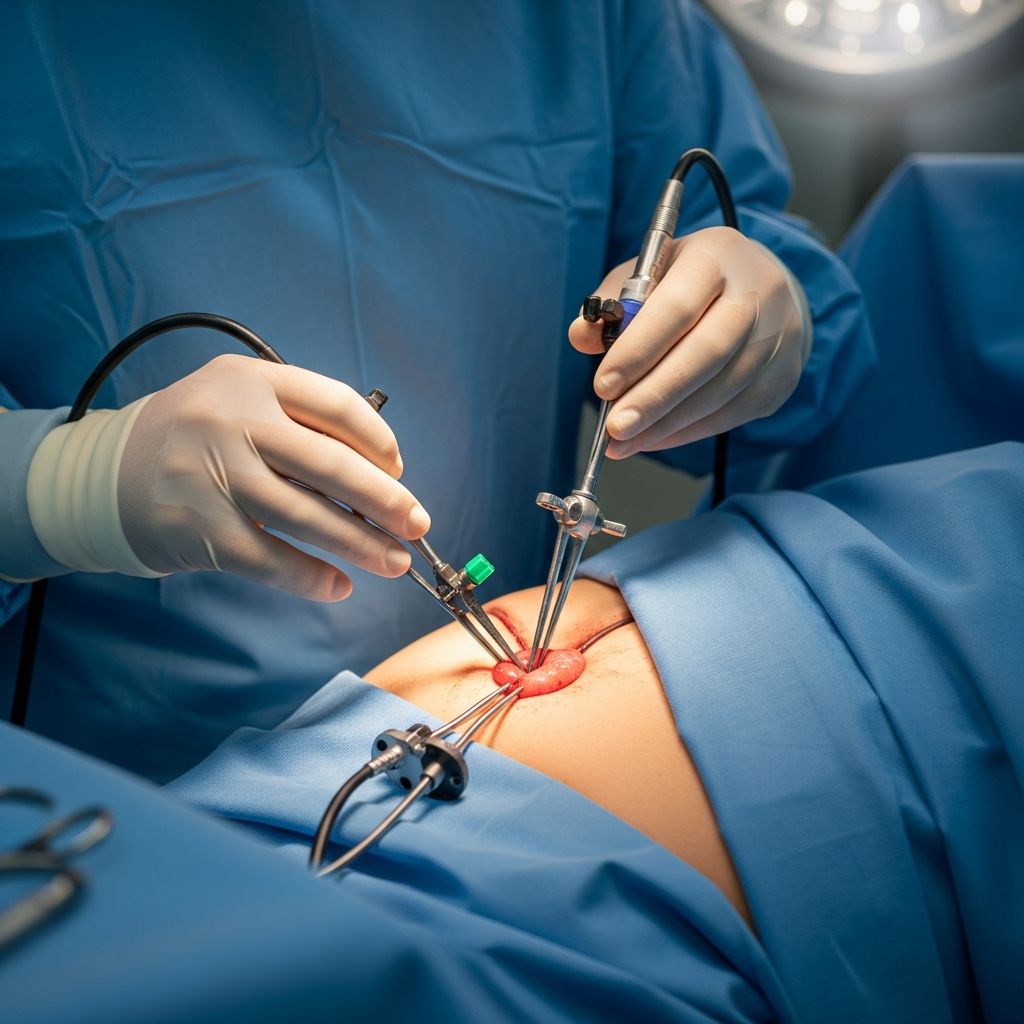
Laparoscopic appendectomy is a minimally invasive surgical approach that has become increasingly common. This procedure involves making several small incisions, typically ranging from one-half to one inch in length. A laparoscope—a thin instrument with a camera attached—is inserted through one incision to visualize the appendix and surrounding tissues on a monitor. Specialized surgical instruments are inserted through additional small incisions to remove the appendix. The laparoscopic approach offers several advantages, including reduced post-operative pain, smaller scars, faster recovery time, and lower infection rates compared to open surgery.
Comparison of Surgical Approaches
| Aspect | Open Appendectomy | Laparoscopic Appendectomy |
|---|---|---|
| Incision Size | Single 2-3 inch incision | Multiple small incisions (0.5-1 inch) |
| Recovery Time | 7-10 days for normal activities | 3-7 days for normal activities |
| Post-operative Pain | Moderate to significant | Minimal to mild |
| Scarring | More visible scar | Minimal scarring |
| Infection Rates | Higher | Lower |
| Hospital Stay | 1-2 days | Same-day or overnight |
The Appendectomy Procedure
Operating Room Preparation
The patient is brought to the operating room and positioned on the surgical table. The surgical team ensures proper positioning to allow optimal access to the appendix. The abdomen is thoroughly cleaned and prepared with sterile solutions to prevent infection. Sterile drapes are placed around the surgical site to maintain a sterile field throughout the procedure.
Step-by-Step Surgical Process
Once general anesthesia has been administered and the patient is unconscious, the surgeon begins the appendectomy procedure. For laparoscopic surgery, carbon dioxide gas is carefully introduced into the abdominal cavity to create space for visualization and instrument manipulation. Small incisions called trocars are made to allow insertion of the laparoscope and surgical instruments. The surgeon visualizes the appendix on the monitor and carefully identifies the blood vessels and tissues surrounding it.
The blood vessels connected to the appendix are carefully ligated or sealed to prevent bleeding. The base of the appendix is then secured using clips, staples, or sutures to prevent infection and ensure a secure closure. Once the appendix has been properly isolated, it is carefully removed from the abdominal cavity and placed in a specimen bag to prevent contamination. The surgical instruments are carefully removed, the carbon dioxide gas is evacuated from the abdominal cavity, and the incisions are closed with sutures or staples.
Recovery After Appendectomy
Immediate Post-operative Period
Immediately following surgery, the patient is moved to the recovery room where vital signs are monitored closely. As the anesthesia wears off, the patient gradually becomes conscious. Pain management medications are administered as needed to keep the patient comfortable. Most patients are able to go home within 24 to 48 hours for laparoscopic procedures, though some may require an overnight hospital stay.
At-Home Recovery
After discharge from the hospital, patients should follow specific post-operative care instructions. This typically includes keeping the incision area clean and dry, avoiding strenuous activities and heavy lifting for several weeks, and gradually returning to normal activities as tolerated. Most patients can resume light activities within one to two weeks and return to normal activities within three to seven days following laparoscopic surgery, though this timeline may be longer for open appendectomy.
Activity Restrictions
Patients are advised to avoid heavy lifting, strenuous exercise, and contact sports for at least four to six weeks following surgery. Walking and gentle movement are encouraged to promote healing and prevent complications such as blood clots. Driving should be avoided until the patient is no longer taking narcotic pain medications and feels confident in their ability to react quickly if needed.
Potential Complications
Common Complications
While appendectomy is generally a safe procedure, some complications can occur. Infection at the incision site is one of the more common complications, though it is relatively rare with modern surgical techniques and antibiotic use. Bleeding from the appendiceal stump or surrounding tissues may occur but is usually minor. Some patients may experience temporary constipation or bowel irregularities as the digestive system recovers from surgery.
Rare but Serious Complications
Rare complications may include damage to surrounding organs such as the bowel or blood vessels, which may require additional surgery to repair. Allergic reactions to anesthesia or antibiotics can occur. Abscess formation—a collection of infected fluid—may develop after surgery if bacteria are released during the appendectomy, particularly if the appendix has ruptured. Blood clots can form in the legs after surgery, though this is uncommon with modern surgical techniques and early mobilization.
When to Contact Your Healthcare Provider
Patients should contact their healthcare provider if they experience signs of infection such as fever above 101 degrees Fahrenheit, increasing redness or warmth around the incision, or discharge from the incision site. Severe or increasing abdominal pain that is not relieved by prescribed medications warrants immediate medical attention. Excessive bleeding from the incision, persistent nausea or vomiting, or difficulty urinating should also be reported to the healthcare team. Any signs of blood clots such as calf pain, swelling, or shortness of breath require immediate emergency care.
Frequently Asked Questions
How long does an appendectomy take?
A typical appendectomy usually takes 30 to 60 minutes, depending on the surgical approach and complexity of the case. Laparoscopic procedures may take slightly longer than open procedures due to the setup time for equipment, though overall recovery is faster.
What is the success rate of appendectomy?
Appendectomy has a very high success rate, with more than 95% of patients experiencing complete resolution of appendicitis symptoms. Complications occur in fewer than 5% of cases when performed by experienced surgeons using modern techniques.
Can the appendix grow back after removal?
No, the appendix cannot grow back after it has been surgically removed. Once removed, the appendix is gone permanently, and appendicitis cannot develop again.
Is laparoscopic appendectomy safer than open appendectomy?
Studies demonstrate that laparoscopic appendectomy is generally well-tolerated and associated with lower infection rates, less post-operative pain, and faster recovery compared to open surgery. Both techniques are considered safe when performed by experienced surgeons, though laparoscopic surgery is preferred for most uncomplicated cases.
How soon can I return to work after appendectomy?
Most patients can return to light desk work within one to two weeks following laparoscopic appendectomy. Return to physically demanding work typically requires four to six weeks. The timeline depends on the type of work and individual healing progress.
Will I have a visible scar after appendectomy?
Laparoscopic appendectomy results in minimal scarring, with small scars that typically fade significantly over time. Open appendectomy results in a more visible scar in the lower right abdomen, though this also fades over time.
References
- Appendectomy Procedure, Recovery Time, Surgery, Complications — MedicineNet. 2024. https://www.medicinenet.com/appendectomy/article.htm
- How to Take Out an Appendix: Laparoscopic Appendectomy Steps — LIV Hospital. 2024. https://int.livhospital.com/how-to-take-out-an-appendix-laparoscopic-appendectomy-steps-scar-guide/
- Appendectomy in Houston: Expert Surgical Treatment for Acute Appendicitis — Advanced Houston Surgical. 2024. https://advancedhoustonsurgical.com/
Similar Articles








Read full bio of Sneha Tete