Appendicitis: Complete Guide To Symptoms And Treatment
Understand appendicitis symptoms, causes, diagnosis, treatment, and prevention for timely medical intervention.
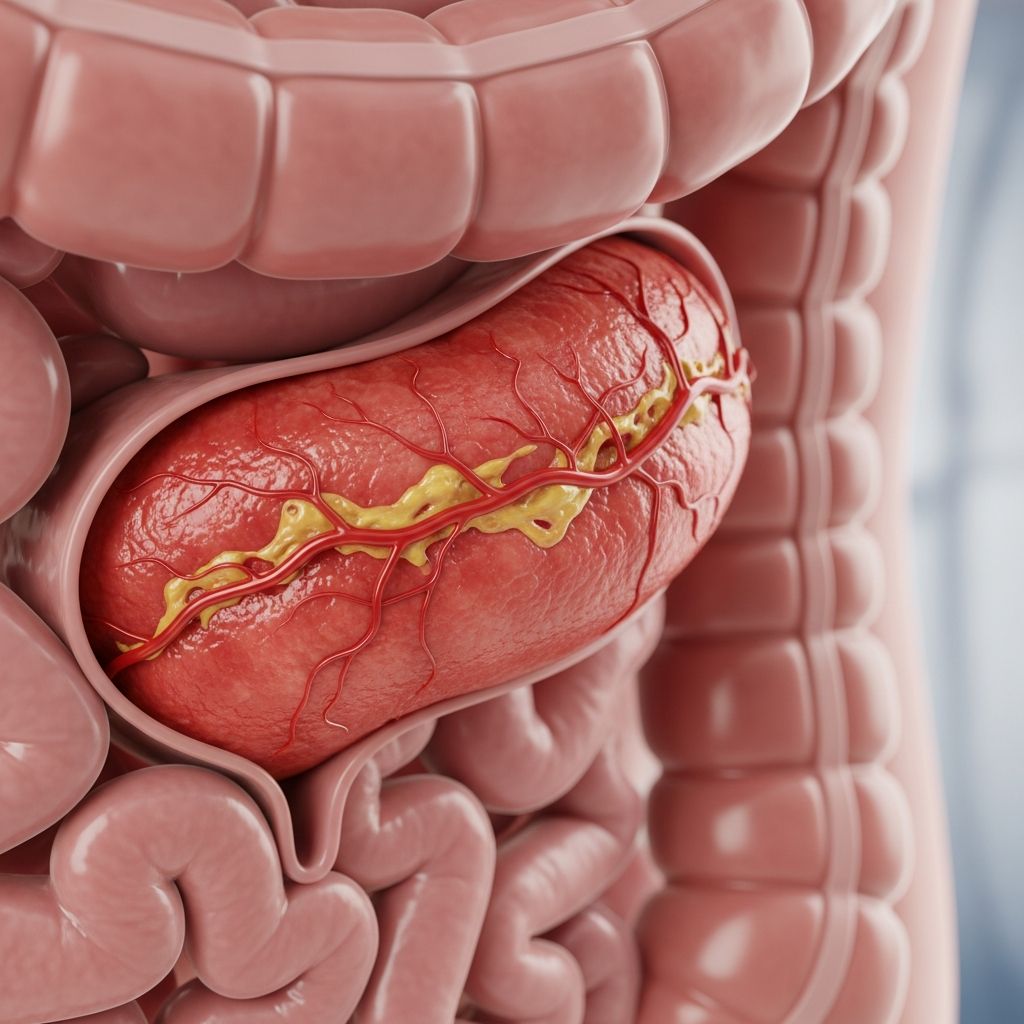
Appendicitis is the inflammation of the appendix, a small finger-shaped pouch attached to the large intestine, often leading to acute abdominal pain that requires prompt medical attention to prevent complications like rupture.
What Is Appendicitis?
The appendix is a narrow, tubular organ, approximately the size of a finger, protruding from the lower right end of the large intestine (colon). Appendicitis occurs when this organ becomes inflamed, typically due to blockage, causing swelling, infection, and potential rupture if untreated. Acute appendicitis is the most common form, presenting suddenly and worsening rapidly, while chronic appendicitis is rare and involves intermittent mild inflammation over time.
In the United States, about 5% of the population experiences acute appendicitis in their lifetime, making it the leading cause of emergency abdominal surgery, particularly among those aged 10 to 30.
Symptoms of Appendicitis
Recognizing appendicitis symptoms is crucial, as only about half of cases follow the classic pattern. The hallmark is abdominal pain, but presentations vary, especially in children, pregnant individuals, and the elderly.
Typical progression includes:
- Pain starting near the belly button (periumbilical), vague or cramping, lasting several hours.
- Pain intensifying and shifting to the lower right abdomen (right lower quadrant), becoming sharp and constant.
- Worsening with movement, coughing, or jarring activities.
- Nausea, vomiting, and loss of appetite following pain onset.
- Low-grade fever (under 100°F or 38°C), potentially rising if untreated.
- Constipation, diarrhea, bloating, or inability to pass gas.
Atypical symptoms may include urinary issues or pain in other areas due to appendix position variations. In chronic cases, symptoms are milder and recurrent.
Causes and Risk Factors
Appendicitis primarily results from obstruction of the appendiceal lumen, leading to bacterial overgrowth, mucus buildup, swelling, and inflammation. Common obstructing factors include:
- Fecaliths (hardened stool stones).
- Enlarged lymphoid tissue (common in children due to infections).
- Intestinal worms or parasites.
- Appendiceal tumors (rare).
Bacteria such as Escherichia coli, Bacteroides spp., Peptostreptococcus, and Pseudomonas proliferate post-obstruction, causing ischemia, necrosis, and potential perforation.
Risk factors encompass age (peak 10-30 years), family history, and male sex (slightly higher incidence). Recent gastrointestinal infections may trigger lymphoid hyperplasia.
Pathophysiology of Appendicitis
Obstruction raises intraluminal pressure, compressing blood vessels and lymphatics, leading to mucus distension, ischemia, and bacterial invasion. Early inflammation is suppurative (neutrophil infiltration); advanced stages involve gangrene, perforation, abscess, or peritonitis.
Uncomplicated cases show mucosal/submucosal inflammation; complicated ones feature transmural damage, thrombosis, and periappendiceal spread. Perforated appendicitis increases bacterial load, risking sepsis.
Diagnosis
Diagnosis combines history, physical exam, labs, and imaging, as symptoms mimic other conditions (e.g., gastroenteritis, ovarian issues).
Physical Exam: Right lower quadrant tenderness (McBurney’s point), rebound tenderness, guarding, or Rovsing’s sign (pain on left palpation).
Labs: Elevated white blood cell count (leukocytosis), C-reactive protein; urinalysis to rule out UTI.
Imaging:
- Ultrasound: First-line, especially in children/pregnant (detects swelling, fluid).
- CT scan: Gold standard (95% accuracy), shows appendiceal diameter >6mm, wall thickening, fat stranding.
- MRI: For equivocal cases or pregnancy.
Scoring systems like Alvarado aid risk stratification.
Related Stories



Treatment
Immediate intervention prevents rupture (occurring 24-72 hours post-onset). Primary treatment is appendectomy.
Surgical Options:
- Laparoscopic appendectomy: Minimally invasive, 3 small incisions, faster recovery (1-2 days hospital stay).
- Open appendectomy: For complicated cases (perforation, abscess), larger incision.
Antibiotics pre- and post-op target aerobes/anaerobes. Non-operative management (antibiotics alone) possible for uncomplicated cases but higher recurrence risk.
For ruptured appendix with abscess: Percutaneous drainage + antibiotics, delayed surgery.
Complications
Untreated appendicitis risks perforation (15-30% cases), leading to peritonitis, abscess, sepsis, or bowel obstruction. Postoperative issues include wound infection (5%), intra-abdominal abscess (3-5%). Long-term, appendectomy has minimal impact as the appendix is vestigial.
| Complication | Risk Factors | Management |
|---|---|---|
| Perforation | Delayed treatment | Extended antibiotics, drainage |
| Abscess | Perforation | Percutaneous drainage |
| Sepsis | Immunocompromise | IV antibiotics, support |
| Wound infection | Obesity, diabetes | Antibiotics, debridement |
Recovery and Outlook
Post-laparoscopic: Resume light activity in 1-2 weeks, full recovery 2-4 weeks. Avoid heavy lifting/strenuous exercise initially. Pain managed with OTC meds; monitor for fever/drainage.
Prognosis excellent (98% survival); recurrence impossible post-appendectomy. Chronic cases may recur if not removed.
Prevention
No sure prevention, but high-fiber diet reduces fecalith risk. Prompt treatment of GI infections may help. No vaccines exist.
When to See a Doctor
Seek emergency care for sudden abdominal pain, especially right lower, with fever/nausea. Do not use heating pads or laxatives, as they may worsen rupture risk.
Frequently Asked Questions (FAQs)
Can appendicitis go away on its own?
Rarely; antibiotics may resolve uncomplicated cases, but surgery is standard to prevent recurrence/rupture.
How long does appendicitis last without treatment?
Symptoms peak in 24-48 hours; rupture likely by 72 hours.
Is appendicitis contagious?
No, though infections triggering it may be.
What foods trigger appendicitis?
Low-fiber diets increase fecalith risk, but no direct cause.
Can you live without an appendix?
Yes, it has no essential function; some immunity role theorized.
References
- Appendicitis: Signs, Symptoms and Treatment — Cleveland Clinic. 2023-10-20. https://my.clevelandclinic.org/health/diseases/8095-appendicitis
- Appendicitis – StatPearls — NCBI Bookshelf / NIH. 2023-07-17. https://www.ncbi.nlm.nih.gov/books/NBK493193/
- Appendicitis – Symptoms and causes — Mayo Clinic. 2025-01-18. https://www.mayoclinic.org/diseases-conditions/appendicitis/symptoms-causes/syc-20369543
Similar Articles








Read full bio of medha deb