Apple Cider Vinegar vs. Probiotics: Key Insights for Gut Health
Discover how apple cider vinegar and probiotics compare for gut health, weight loss, blood sugar control, and more in this expert breakdown.
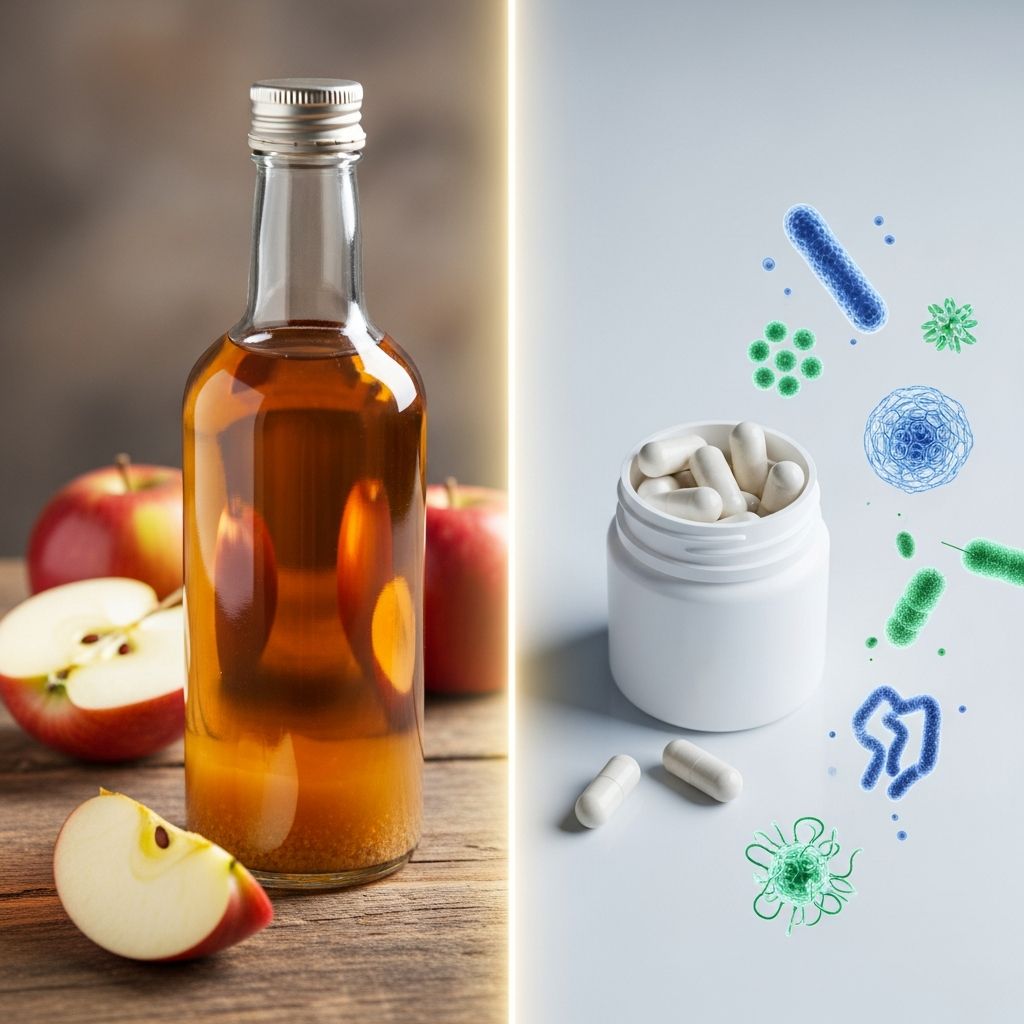
Apple cider vinegar (ACV) and probiotics have surged in popularity as natural remedies for improving digestion, supporting weight loss, and enhancing overall wellness. Both are touted for their gut health benefits, but they differ in composition, mechanisms, and evidence-based effects. This article compares their benefits, uses, and limitations to help you decide which—or if both—might suit your health goals.
What Is Apple Cider Vinegar?
Apple cider vinegar is produced by fermenting apple juice twice: first, yeast converts sugars into alcohol, then bacteria transform the alcohol into acetic acid, the primary active compound responsible for many health claims. Raw, unpasteurized ACV contains “the mother,” a cloudy sediment rich in enzymes, proteins, and beneficial bacteria that resemble probiotics.
Nutritionally, ACV offers minimal calories, vitamins, or minerals on standard labels, but it provides acetic acid (4-8%), polyphenols (antioxidants), and trace B-vitamins similar to apple juice. The mother contributes natural probiotics, potentially balancing gut microbiota.
- Key components: Acetic acid, probiotics from the mother, polyphenols, B-vitamins.
- Forms: Raw (with mother) vs. pasteurized (clear, fewer benefits).
What Are Probiotics?
Probiotics are live microorganisms, primarily bacteria like Lactobacillus and Bifidobacterium, or yeasts, that confer health benefits when consumed in adequate amounts. They are found in fermented foods (yogurt, kefir, sauerkraut) or supplements.
Unlike ACV’s incidental probiotics, dedicated probiotic products contain specific, high-potency strains (often billions of CFUs) targeted for conditions like irritable bowel syndrome (IBS) or antibiotic recovery. The NIH notes probiotics influence gut microbiota composition, immune function, and pathogen inhibition.
- Key types: Lactobacillus (acid production), Bifidobacterium (pathogen competition), Saccharomyces boulardii (anti-diarrheal).
- Sources: Foods or supplements with guaranteed viable cultures.
Apple Cider Vinegar vs. Probiotics: Key Differences
| Aspect | Apple Cider Vinegar | Probiotics |
|---|---|---|
| Primary Active Ingredient | Acetic acid (4-8%) | Live bacteria/yeasts (e.g., 10-50 billion CFUs) |
| Probiotic Content | Incidental (from mother) | High, strain-specific |
| Other Benefits | Antioxidants, blood sugar modulation | Targeted gut restoration |
| Evidence Strength | Moderate (small studies) | Stronger for specific strains |
| Cost | Affordable ($5-10/bottle) | Varies ($20-50/month supplements) |
ACV provides broad, acidic benefits with mild probiotics, while probiotics deliver precise microbial support without acidity.
Potential Health Benefits: Head-to-Head Comparison
Gut Health and Digestion
Both support gut microbiota. ACV’s fermentation yields probiotics that may balance bacteria and improve immunity, per Cleveland Clinic experts. Its acetic acid slows gastric emptying, aiding digestion. Probiotics excel here, with NIH-reviewed evidence for reducing IBS symptoms, diarrhea, and antibiotic-associated issues.
- ACV: Antibacterial properties may curb pathogens like Salmonella on produce.
- Probiotics: Restore microbiota post-disruption; stronger for chronic issues.
Blood Sugar Control
ACV shows promise in small studies: a meta-analysis found it lowers post-meal glucose by delaying stomach emptying, beneficial for type 2 diabetes management (not a cure). Probiotics have mixed evidence; some strains improve insulin sensitivity via gut-brain axis, but less direct than ACV.
Related Stories



Weight Loss
A randomized trial showed 2 tbsp daily ACV with calorie restriction led to 8.8 lbs loss over 12 weeks vs. 5 lbs without, plus cholesterol improvements. Probiotics may aid via appetite regulation and fat metabolism, but evidence is preliminary.
Heartburn and Acid Reflux
ACV is anecdotally used for GERD due to probiotics, but lacks strong evidence and may worsen symptoms from acidity. Probiotics like Lactobacillus reuteri show better support for reflux reduction.
Immunity and Antioxidants
ACV’s polyphenols neutralize free radicals; gut health indirectly boosts immunity. Probiotics directly enhance immune response by modulating microbiota.
Other Claims
ACV may lower cholesterol/triglycerides and has antimicrobial effects. Probiotics aid oral health and vaginal infections with specific strains.
How to Use Apple Cider Vinegar and Probiotics
For ACV
- Dilute 1-2 tbsp in 8-12 oz water; consume before meals.
- Use raw with mother for max benefits.
- Alternatives: Salads, marinades, or diluted shots.
For Probiotics
- Choose refrigerated supplements with 10+ billion CFUs, verified strains.
- Take with food; pair with prebiotics (fiber) for synergy.
- Foods: Yogurt, kimchi daily.
Combining both? ACV’s mild probiotics complement high-potency supplements.
Safety and Side Effects
ACV Risks
- Tooth enamel erosion, throat irritation (dilute always).
- Drug interactions (e.g., diabetes meds, diuretics).
- Avoid with gastroparesis or kidney disease.
Probiotics Risks
- Generally safe; rare gas/bloating in healthy adults.
- Caution in immunocompromised (infection risk).
Consult a doctor before starting, especially if pregnant or medicated. Limit ACV to 2 tbsp/day.
Expert Opinions
“ACV might lower glucose modestly, but it’s no diabetes cure—pair with diet and exercise,” says RD Beth Czerwony.
“Probiotics offer proven benefits for specific gut issues, but strain matters,” per NIH fact sheet.
Experts agree neither replaces medical treatment; evidence for ACV is promising but limited by small studies.
Frequently Asked Questions (FAQs)
Can I take apple cider vinegar and probiotics together?
Yes, they complement each other—ACV’s acetic acid enhances probiotic survival in the gut.
Is apple cider vinegar a good source of probiotics?
It contains some from the mother, but not as potent or strain-specific as supplements.
Does ACV really help with weight loss?
Modest effects in studies (e.g., 8.8 lbs over 12 weeks with diet), but not a magic bullet.
Are there side effects from probiotics?
Mild digestive upset initially; safe for most.
How much ACV should I drink daily?
1-2 tbsp diluted; start low to assess tolerance.
Bottom Line: ACV or Probiotics?
Choose ACV for affordable, multi-benefit support (blood sugar, antimicrobials) with mild probiotics. Opt for probiotics for targeted gut restoration. Both aid wellness when part of a balanced lifestyle. More research is needed, but current evidence supports moderate use.
References
- Exploring the Health Benefits of Apple Cider Vinegar — Cleveland Clinic. 2023-10-12. https://health.clevelandclinic.org/exploring-the-health-benefits-of-apple-cider-vinegar
- Debunking the Health Benefits of Apple Cider Vinegar — University of Chicago Medicine. 2018-08-01. https://www.uchicagomedicine.org/forefront/health-and-wellness-articles/2018/august/debunking-the-health-benefits-of-apple-cider-vinegar
- Probiotics – Health Professional Fact Sheet — NIH Office of Dietary Supplements. 2025-06-09. https://ods.od.nih.gov/factsheets/Probiotics-HealthProfessional/
- Apple Cider Vinegar: The “Mother” of Cures? — Pharmacist.com. 2024-03-15. https://www.pharmacist.com/Blogs/CEO-Blog/Article/apple-cider-vinegar-the-mother-of-cures
Similar Articles








Read full bio of medha deb