Apple Cider Vs Apple Juice: 5 Essential Differences Explained
Unpack the differences between apple cider and apple juice: nutrition, health benefits, risks, and smart ways to enjoy both beverages.
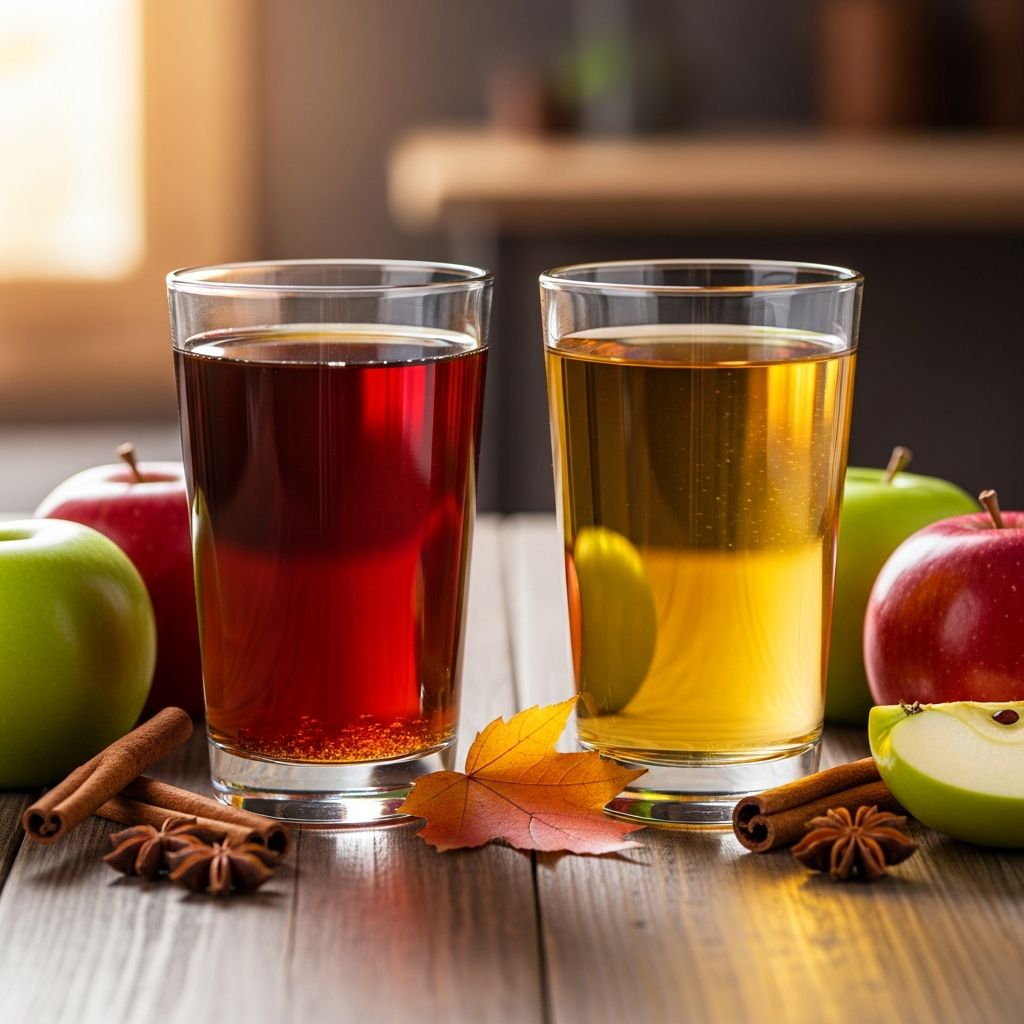
Apple cider and apple juice are popular beverages derived from apples, but they differ significantly in production, appearance, nutrition, and health impacts. Apple cider is typically unfiltered fresh apple juice with a cloudy appearance and pulp, while apple juice is filtered, pasteurized, and often clearer. These distinctions affect their nutrient content and potential benefits for cardiovascular health, digestion, and more.
What Is Apple Cider?
Apple cider is the fresh, unfiltered juice pressed directly from apples. It retains natural pulp, sediment, and a cloudy hue due to minimal processing. Traditional cider ferments slightly, containing 1-3% alcohol, but non-alcoholic versions are common for everyday drinking. Its production involves crushing apples and pressing without heavy filtration, preserving fibers and phytochemicals.
- Cloudy appearance: From suspended apple particles.
- Seasonal availability: Fresh in fall, pasteurized for year-round use.
- Nutritional edge: Higher in polyphenols and fiber than filtered juice.
What Is Apple Juice?
Apple juice results from filtering and pasteurizing cider to remove pulp, yielding a clear liquid. Commercial versions often undergo concentration and reconstitution, reducing some nutrients. Clear apple juice lacks the sediment of cider, making it shelf-stable but lower in certain bioactive compounds.
- Clear and smooth: Filtered to eliminate solids.
- Long shelf life: Heat-treated for preservation.
- Common in stores: Widely available, sometimes from concentrate.
Apple Cider vs. Apple Juice: Key Differences
The primary differences lie in processing: cider remains unfiltered and cloudy, retaining more natural components, while juice is clarified and pasteurized. This impacts nutrition—cider has more fiber and antioxidants. Taste-wise, cider is tangier with apple bits; juice is sweeter and uniform.
| Aspect | Apple Cider | Apple Juice |
|---|---|---|
| Appearance | Cloudy, pulpy | Clear, smooth |
| Processing | Minimal filtration | Filtered, pasteurized |
| Fiber Content | Higher (soluble fiber) | Low to none |
| Polyphenols | Retained | Reduced |
| Shelf Life | Shorter (refrigerated) | Longer |
Nutritional Comparison: Apple Cider vs. Apple Juice
Both provide vitamin C, potassium, and antioxidants, but cider edges out due to less processing. A cup of cloudy apple cider offers about 2-3g fiber, polyphenols for heart health, and natural sugars. Clear juice has similar calories (around 120 per cup) but minimal fiber, leading to faster sugar absorption. Cloudy varieties boost nutrient intake closer to whole apples.
- Vitamin C: Both ~10% DV per cup.
- Calories: 110-130 per 8oz serving.
- Sugars: 24g naturally occurring; no added in pure forms.
Cloudy apple juice maintains higher phenolic compounds, enhancing antioxidant effects compared to clear versions.
Health Benefits of Apple Cider
Apple cider’s unfiltered nature links it to digestive aid from pectin fiber, potential blood sugar moderation, and antimicrobial properties. Polyphenols combat oxidative stress, supporting heart health. Limited evidence suggests benefits for gut health via natural bacteria, though not as potent as vinegar.
- Supports digestion with soluble fiber.
- May lower cholesterol via antioxidants.
- Hydrates with electrolytes like potassium.
Health Benefits of Apple Juice
Related Stories



Moderation is key for apple juice benefits. Studies show cloudy juice improves cardiovascular markers, reducing oxidative stress, inflammation, and lipid issues. Interventional trials (20 reviewed) confirm positive effects on heart disease risk factors. It aids fruit intake, boosting vitamins and polyphenols despite processing losses.
Consumption increases blood phenolics, with antioxidant peaks post-ingestion.
Which Is Healthier: Apple Cider or Apple Juice?
Cloudy apple cider generally surpasses clear apple juice nutritionally, retaining fiber and phytochemicals closer to whole fruit. Both benefit heart health in moderation, but cider’s pulp enhances satiety and gut health. Opt for 100% pure, low-sugar versions; whole apples remain superior.
Potential Downsides and Risks
High natural sugars in both raise concerns for blood sugar spikes, weight gain, or dental erosion if overconsumed. Clear juice lacks fiber, accelerating sugar absorption. Acidity may irritate stomachs. For vinegar-like cider (fermented), excess acetic acid risks enamel damage or reflux. Limit to 8-12oz daily.
- Sugar content: Equivalent to 2-3 apples per cup.
- Calories: Adds up without fiber fullness.
- Patulin risk: Mold toxin in poorly stored apples; regulated in commercial products.
How to Use Apple Cider and Apple Juice
Incorporate into diets via smoothies, marinades, or cocktails. Use cider for mulled drinks or salads; juice for baking or kids’ hydration. Dilute with water to cut sugars. Pair with protein for balanced blood sugar.
- Smoothies: Blend with yogurt.
- Cooking: Vinaigrettes or glazes.
- Hydration: Mix 50/50 with water.
FAQs
Is apple cider the same as apple juice?
No, cider is unfiltered and cloudy; juice is clear and processed.
Does apple cider have alcohol?
Fresh cider does not; hard cider ferments to 4-6% ABV.
Is cloudy apple juice better than clear?
Yes, cloudy retains more fiber and antioxidants.
Can apple juice help with digestion?
Cloudy varieties aid via pectin; clear less so.
How much apple cider or juice per day?
4-8oz; count toward fruit intake but prioritize whole fruits.
Frequently Asked Questions (FAQs)
Q: Which has more sugar, apple cider or apple juice?
Both have similar natural sugars (~24g per cup); cider’s fiber slows absorption.
Q: Can apple cider help with weight loss?
Indirectly via hydration and polyphenols, but not a direct aid; moderation key.
Q: Is apple cider vinegar different from cider?
Yes, vinegar is fermented cider with acetic acid; benefits blood sugar.
Q: Are there probiotics in apple cider?
Unpasteurized may have some; evidence limited.
Q: Best for kids: cider or juice?
Diluted cider for fiber; limit both to avoid excess sugar.
References
- Health Benefits of Apple Juice Consumption: A Review of the Literature — Nutrients (PMC). 2022-03-20. https://pmc.ncbi.nlm.nih.gov/articles/PMC8879758/
- Debunking the health benefits of apple cider vinegar — University of Chicago Medicine. 2018-08-28. https://www.uchicagomedicine.org/forefront/health-and-wellness-articles/2018/august/debunking-the-health-benefits-of-apple-cider-vinegar
Similar Articles








Read full bio of Sneha Tete