Apples Vs Pears: Key Insights On Health Benefits And Nutrition
Discover which fruit reigns supreme in nutrition, health benefits, taste, and more in this ultimate apples vs. pears showdown.
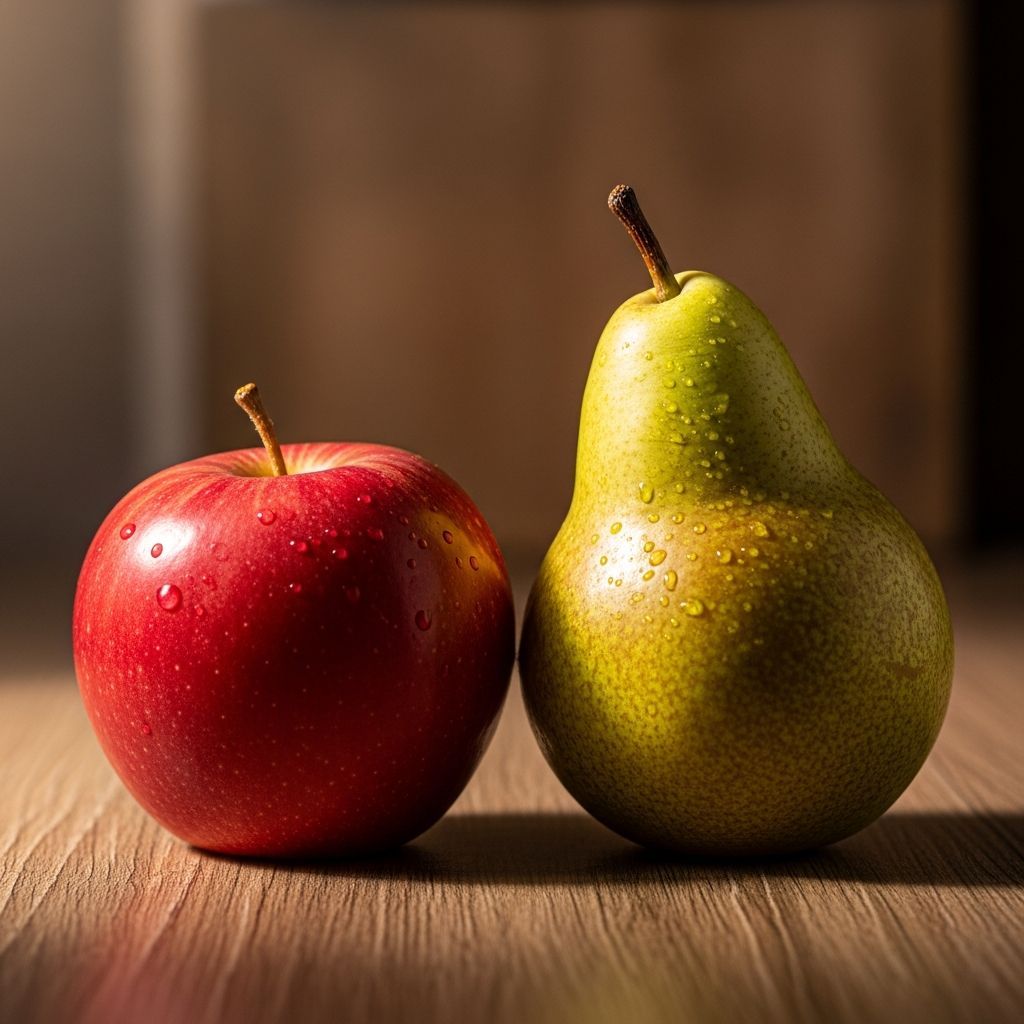
Apples and pears, two beloved fruits often compared for their similar appearance and nutritional profiles, offer distinct health advantages. While both are low-calorie, fiber-packed options ideal for snacks, pears edge out in fiber and certain minerals, while apples shine in specific vitamins and antioxidants.
Apples vs. Pears: A Quick Answer
Neither fruit is definitively “healthier” overall—both excel in promoting digestion, heart health, and blood sugar control—but
pears
have a slight edge due to higher fiber (6g vs. 4g per medium fruit), more minerals like copper and iron, and better blood sugar regulation from a lower glycemic index. Apples counter with superior vitamin A, E, and brain-protective antioxidants like quercetin. Choose based on needs: pears for gut health, apples for cognitive support.Nutrition Comparison: Apples vs. Pears
Per 100g serving (USDA data via sources), pears and apples are neck-and-neck in calories and hydration (84-85% water), but differences emerge in macros and micros.
| Nutrient (per 100g) | Apple | Pear | Winner |
|---|---|---|---|
| Calories | 52 | 57 | Tie |
| Carbs (g) | 13.8 | 15.2 | Apple (lower sugar impact) |
| Fiber (g) | 2.4 | 3.1 | Pear |
| Sugar (g) | 10.4 | 9.8 | Pear (slightly less) |
| Protein (g) | 0.3 | 0.4 | Pear |
| Vitamin C (mg) | 4.6 | 4.3 | Apple |
| Potassium (mg) | 107 | 116 | Pear |
Pears provide more fiber—soluble types like pectin that feed gut bacteria and lower cholesterol—plus higher calcium (9mg), magnesium (7mg), iron, copper, zinc, B3, and K. Apples lead in vitamins A (3mcg), E, B1, and flavonoids like epicatechin for blood pressure. Both match in C, B2, phosphorus, sodium, and potassium.
Health Benefits of Apples vs. Pears
Both fruits combat chronic diseases via fiber, antioxidants, and low glycemic loads, but unique compounds set them apart.
Digestion and Gut Health
Pears win: With 5-6g fiber per medium fruit (vs. apple’s 4g), pears excel at preventing constipation, supporting regularity, and detoxifying via soluble fiber. Their prebiotic fiber nourishes gut bacteria, easing inflammation. Apples’ pectin aids cholesterol and gut health but less potently. Harvard research links 10g daily fruit fiber to 14% lower heart disease risk.
Heart Health
Apples and pears reduce “bad” LDL cholesterol and stroke risk via fiber and polyphenols. Pears’ quercetin fights cancer and hypertension; apples’ epicatechin lowers blood pressure. Vitamin C in both correlates with lower BMI, BP, and inflammation. A meta-analysis found apple/pear intake cuts cardiovascular mortality.
Blood Sugar and Diabetes
Pears’ higher fiber and lower GI steady blood sugar better, reducing diabetes risk. Both lower Type 2 diabetes odds; observational data shows significant risk drop.
Brain Health and Cancer Prevention
Apples edge: Antioxidants like quercetin reduce brain inflammation, potentially preventing Alzheimer’s and dementia. Both fight free radicals (vitamins C/K, copper in pears; flavonoids in apples), lowering breast cancer risk. Pears bolster immunity via anti-inflammatory nutrients.
Weight Management
Low-cal, high-fiber profiles promote satiety. Pears’ extra fiber moderates hunger better; RCTs link apple/pear intake to lower BMI.
Taste Test: Apples vs. Pears
Apples offer crisp, tart-sweet crunch (e.g., Honeycrisp, Granny Smith); pears deliver juicy, buttery softness (e.g., Bartlett, Bosc). Pears have subtler sweetness, more floral notes. Preference is subjective—apples for snacking, pears for baking.
Related Stories



Which Is Better for Weight Loss?
Pears slightly ahead: More fiber (6.2g/200g) fills you longer despite similar sugars (all fruit sugars are low-GI). Both beat processed snacks for steady energy and fullness.
Apples vs. Pears for Skin
Antioxidants in both (quercetin, vitamin C) combat free radicals for youthful skin. Apples’ vitamin A/E support collagen; pears’ copper aids pigmentation. Hydration from high water content benefits glow.
Are Apples or Pears Better for You?
“An apple a day keeps the doctor away,” but pears match or exceed in fiber/minerals. Meta-analyses confirm both reduce CVD, diabetes, all-cause mortality. Eat both for synergy.
Potential Downsides
- High fructose may upset sensitive digestion.
- Pesticides on skins—wash thoroughly or choose organic.
- Allergies rare but possible (oral allergy syndrome).
Dietitian Tips: How to Choose and Eat Apples and Pears
- Eat with skin for max fiber/antioxidants.
- Pair in salads, smoothies, oats.
- Store pears at room temp; apples in fridge.
- Aim for 2-3 servings daily.
Frequently Asked Questions (FAQs)
Which has more fiber, apples or pears?
Pears: 3.1g vs. 2.4g per 100g, aiding digestion and satiety.
Are pears or apples better for diabetics?
Pears, due to lower GI and higher fiber for blood sugar control.
Do apples or pears have more sugar?
Similar; pears slightly less (9.8g vs. 10.4g/100g), but both low-GI.
Can apples and pears help with weight loss?
Yes—fiber promotes fullness; linked to lower BMI.
Which is healthier: apples or pears?
Pears for fiber/minerals, apples for vitamins/antioxidants—both excellent.
References
- Pears Vs. Apples: Nutritional Comparison And Health Benefits — Food to Live. 2023. https://foodtolive.com/healthy-blog/pears-vs-apples-nutritional-comparison-and-health-benefits/
- Are Pears or Apples Healthier? — Pittman & Davis Blog. 2024. https://blog2.pittmandavis.com/are-pears-or-apples-healthier/
- Apple Vs. Pear: Dietitians Reveal Which Fruit Is More Nutritious — Prevention.com. 2024-10-15. https://www.prevention.com/food-nutrition/a69842121/apple-vs-pear/
- 10 Reasons Why Apples & Pears are Good for Your Heart — Stemilt. 2023. https://www.stemilt.com/stem-blog/10-reasons-why-apples-pears-are-good-for-your-heart/
- Effects of Intake of Apples, Pears, or Their Products on Cardiovascular Risk Factors and Clinical Outcomes — PMC (Peer-reviewed). 2019-10-04. https://pmc.ncbi.nlm.nih.gov/articles/PMC6813372/
Similar Articles








Read full bio of Sneha Tete