Aquaculture: A Sustainable Seafood System
Discover how aquaculture supports global food security while protecting marine ecosystems and coastal communities.
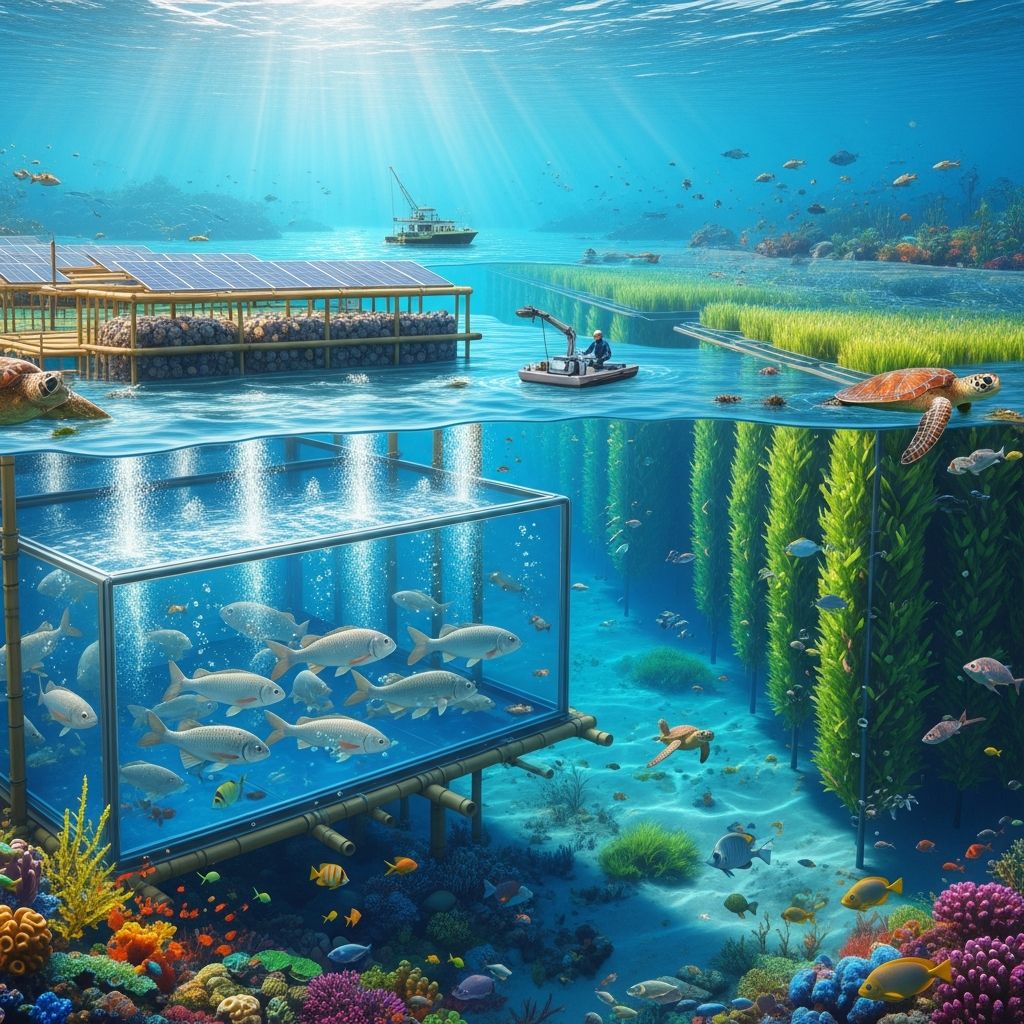
As the global population approaches 8 billion people and continues to grow, the demand for nutritious food sources has never been more critical. Among the solutions gaining recognition as a pathway toward sustainable food security is aquaculture—the farming of fish, shellfish, and seaweed in both marine and freshwater environments. Unlike traditional land-based agriculture, which faces constraints from limited arable land and freshwater resources, aquaculture offers a compelling alternative that can meet seafood demand while protecting our planet’s ecosystems. This article explores how aquaculture serves as a cornerstone of food security and sustainability for present and future generations.
Understanding Aquaculture and Its Scope
Aquaculture encompasses the cultivation of a diverse range of aquatic species, including finfish such as cobia and salmon, shellfish like oysters and mussels, and seaweed. The industry operates across multiple environments—from coastal marine farms to inland freshwater systems—and currently produces approximately 122.6 million tons of aquatic food globally, representing a significant portion of the world’s seafood supply.
The scope of aquaculture extends far beyond simple fish farming. Modern aquaculture systems include open-ocean deep-water farms, integrated multi-trophic aquaculture, and restorative shellfish cultivation. Each approach offers distinct advantages and addresses different sustainability challenges, making aquaculture a versatile tool for addressing global food security.
Meeting Global Food Demand
With projections suggesting an additional 3 billion people will inhabit Earth by 2050, the challenge of feeding a growing population is urgent and complex. Aquaculture addresses this challenge by providing a reliable, scalable source of nutrient-dense protein.
Key contributions of aquaculture to global food security include:
- Diversifying the food supply by producing an alternative to wild-caught fish and reducing dependence on overexploited marine resources
- Increasing seafood availability at prices that make nutritious protein accessible to populations worldwide
- Supporting local economies by creating jobs in coastal and rural communities where other economic opportunities may be limited
- Enabling fresh, local food production that reduces transportation-related carbon emissions
According to recent UN research, aquaculture can significantly improve food security and nutrition by increasing the amount of seafood available for human consumption while maintaining the health and biodiversity of our oceans.
Environmental Advantages Over Traditional Livestock
When compared to land-based livestock production, aquaculture demonstrates remarkable efficiency and sustainability advantages. Fish are significantly more efficient feeders than cattle, pork, or poultry, converting feed into protein with substantially less waste and resource consumption.
Environmental benefits of aquaculture include:
- Lower carbon footprint compared to beef, pork, and chicken production
- Reduced freshwater consumption per pound of protein produced
- Minimal land requirements, preserving terrestrial ecosystems and agricultural capacity
- Improved feed conversion efficiency, requiring less input to generate equivalent protein output
These advantages make aquaculture particularly valuable in addressing climate change and resource scarcity challenges that threaten traditional agriculture globally.
Protecting Wild Fish Populations
One of the most compelling reasons to support sustainable aquaculture is its role in relieving pressure on increasingly depleted wild fish stocks. Global overfishing has devastated many marine populations, threatening ecosystem balance and biodiversity. By producing seafood through farming rather than wild capture, aquaculture reduces the need for extractive fishing practices that harm vulnerable species and damage marine habitats.
Benefits to wild fish populations include:
- Reduced fishing pressure on overexploited species and populations
- Conservation of endangered species whose habitats are disrupted by fishing activities
- Preservation of ecosystem balance by maintaining natural predator-prey relationships
- Protection of juvenile fish and breeding populations critical for species recovery
As wild fish stocks continue to decline, the expansion of responsible aquaculture becomes increasingly essential to meeting global seafood demand without further degrading marine ecosystems.
Ecosystem Restoration Through Aquaculture
Beyond simply reducing harm to marine environments, certain forms of aquaculture actively contribute to ecosystem restoration and improvement. Shellfish farming exemplifies this restorative potential.
Shellfish Restoration and Water Quality
Oysters, clams, and mussels play critical ecological roles in coastal waterways. These filter-feeding organisms remove excess nutrients from water, a process known as bioremediation. In many coastal areas where eutrophication—excessive nutrient accumulation—threatens water quality and creates harmful algal blooms, shellfish farms help restore ecological balance.
Shellfish farming benefits include:
- Water filtration that improves clarity and reduces nutrient pollution
- Habitat creation for smaller organisms and juvenile fish species
- Shoreline stabilization through wave energy dampening
- Biodiversity enhancement by increasing species diversity in sea beds
Seaweed Cultivation and Climate Mitigation
Seaweed aquaculture represents one of the fastest-growing components of global food production and offers remarkable environmental benefits. Seaweed operations provide multiple sustainability advantages, from carbon sequestration to nutrient management.
Seaweed farming contributes to sustainability through:
- Carbon sequestration that helps mitigate ocean acidification in localized areas
- Nutrient removal from coastal waters, preventing algal blooms and eutrophication
- Biofuel production potential for renewable energy generation
- Soil enhancement through use as a sustainable alternative to synthetic fertilizers
Minimizing Environmental Footprint Through Responsible Design
Not all aquaculture operations deliver equal environmental benefits. The design, location, and management practices employed determine whether farms contribute positively or negatively to marine ecosystems. Well-designed sustainable aquaculture minimizes environmental impact through several mechanisms.
Water Efficiency and Natural Circulation
Advanced mariculture systems, particularly deep-water open-ocean farms, leverage natural water circulation to maintain optimal conditions without requiring artificial filtration or treatment. By locating farms in areas where ocean currents naturally cycle water through production zones, these systems:
- Allow native nutrients to support fish growth naturally
- Enable waste products to disperse without concentrating in localized areas
- Permit fish to thrive on their natural diet in their native environment
- Eliminate the need for energy-intensive treatment systems
This design philosophy differs substantially from land-based systems requiring elaborate water management infrastructure, making deep-water mariculture particularly attractive for sustainability-conscious producers.
Environmental Monitoring and Risk Assessment
Research from the National Oceanic and Atmospheric Administration (NOAA) indicates that well-managed aquaculture farms pose low environmental risk when properly designed and monitored. Responsible operators implement comprehensive environmental monitoring to ensure operations maintain ecosystem stability and do not harm surrounding marine life.
Nutritional Benefits and Food Safety
Beyond sustainability considerations, farmed seafood delivers substantial nutritional value. Fish and shellfish provide essential nutrients that support human health and development, making aquaculture significant from both food security and public health perspectives.
Nutritional advantages of farmed seafood include:
- High-quality protein with all essential amino acids
- Omega-3 fatty acids that support cardiovascular and cognitive health
- Essential vitamins and minerals including vitamin D, selenium, and B vitamins
- Bioavailable nutrients that the human body readily absorbs and utilizes
Farmed seafood grown in optimal conditions, such as fish raised in natural Caribbean waters, develops superior flavor profiles and enhanced nutrient density compared to some alternatives. Additionally, controlled farming environments enable producers to ensure food safety through quality management, disease prevention, and feed monitoring—providing consumers with reliable access to safe, nutritious seafood.
Economic and Social Dimensions
The economic benefits of aquaculture extend beyond food production to encompass job creation and community development in coastal regions worldwide. As the aquaculture industry expands, it provides employment opportunities ranging from farm operations to processing, distribution, and research.
Socioeconomic contributions include:
- Employment in coastal communities where other economic opportunities may be limited
- Income generation for rural and developing regions
- Economic growth support in maritime communities worldwide
- Technology transfer and innovation through industry development
These economic benefits help sustain coastal communities while supporting global food security objectives.
Challenges and Future Directions
While aquaculture offers tremendous potential, the industry faces ongoing challenges that require attention and innovation. Current limitations include:
- Regulatory gaps in some regions regarding environmental standards and practices
- Geographic constraints limiting suitable farming locations for certain species
- Technical requirements for offshore operations in harsh marine environments
- Market development for emerging aquaculture products and species
The future of aquaculture depends on continued investment in sustainable practices, research into low-impact farming technologies, and development of stronger partnerships between industry, government, academia, and conservation organizations. Leaders in deep-water farming emphasize the responsibility of early movers to establish best practices that guide responsible industry development.
Frequently Asked Questions
Q: What percentage of global seafood consumption comes from aquaculture?
A: Currently, approximately 42% of the seafood consumed worldwide is farmed through aquaculture, with this percentage continuing to increase as wild fish stocks decline and demand grows.
Q: How does fish farming compare to beef production in terms of environmental impact?
A: Fish are far more efficient feeders than cattle, requiring significantly less feed per pound of protein produced. Aquaculture also generates fewer carbon emissions and uses less freshwater and arable land than beef production.
Q: Can aquaculture help restore damaged coastal ecosystems?
A: Yes, certain forms of aquaculture, particularly shellfish and seaweed farming, can actively restore ecosystems by improving water quality, creating habitat, sequestering carbon, and preventing erosion.
Q: Is farmed seafood as nutritious as wild-caught fish?
A: Farmed seafood provides excellent nutrition with high-quality protein, omega-3 fatty acids, and essential vitamins and minerals. Fish grown in optimal conditions, particularly in natural marine environments, can achieve comparable or superior nutritional profiles to wild-caught alternatives.
Q: What makes deep-water aquaculture more sustainable than land-based farms?
A: Deep-water mariculture leverages natural ocean circulation to manage water quality without artificial filtration systems, reducing energy consumption and environmental impact while allowing fish to thrive in their natural habitat.
Q: How does aquaculture contribute to food security?
A: Aquaculture increases accessible protein availability, produces fresh local food that reduces transportation emissions, creates jobs in coastal communities, and provides a sustainable alternative to overexploited wild fish populations.
Conclusion
Aquaculture represents a critical solution to one of humanity’s most pressing challenges: feeding a growing population while protecting the natural systems upon which all life depends. Through responsible farming practices, the aquaculture industry demonstrates that food production and environmental stewardship need not be in opposition. Whether through efficient fish farming, ecosystem-restoring shellfish cultivation, or carbon-sequestering seaweed production, aquaculture offers pathways toward sustainability that address global food security, climate change, and economic development simultaneously.
The continued growth and improvement of aquaculture systems will be essential as the world navigates demographic change, resource constraints, and environmental challenges. By supporting responsible aquaculture development and advocating for strong environmental standards, stakeholders worldwide can help ensure that this sustainable seafood system fulfills its promise of feeding humanity while preserving our oceans for future generations.
References
- Aquaculture Supports a Sustainable Earth — NOAA Fisheries, U.S. Department of Commerce. 2024. https://www.fisheries.noaa.gov/feature-story/aquaculture-supports-sustainable-earth
- The Aquaculture Opportunity — The Nature Conservancy, Conservation Science and Policy. 2023. https://www.nature.org/en-us/what-we-do/our-insights/perspectives/the-aquaculture-opportunity/
- Aquaculture is Agriculture: USDA’s Role in Supporting Farmers of Fish and Shellfish — U.S. Department of Agriculture. 2024. https://www.usda.gov/farming-and-ranching/aquaculture/aquaculture-agriculture-usdas-role-supporting-farmers-fish-and-shellfish
- What are the main benefits of aquaculture? — European Commission Directorate-General for Maritime Affairs and Fisheries. 2024. https://aquaculture.ec.europa.eu/faq/1-what-are-main-benefits-aquaculture
- Sustainable Aquaculture — The Ocean Foundation, Sustainable Fisheries and Communities Program. 2023. https://oceanfdn.org/sustainable-aquaculture/
- 8 Benefits of Sustainable Fish Aquaculture Farms — Open Blue, Sustainable Mariculture. 2024. https://openblue.com/blogs/cobia/8-benefits-of-sustainable-fish-aquaculture-farms
Similar Articles






Read full bio of Sneha Tete