Aquagenic Urticaria: 7 Key Insights On Diagnosis & Treatment
Rare water-induced hives: symptoms, diagnosis, and effective management strategies for aquagenic urticaria.
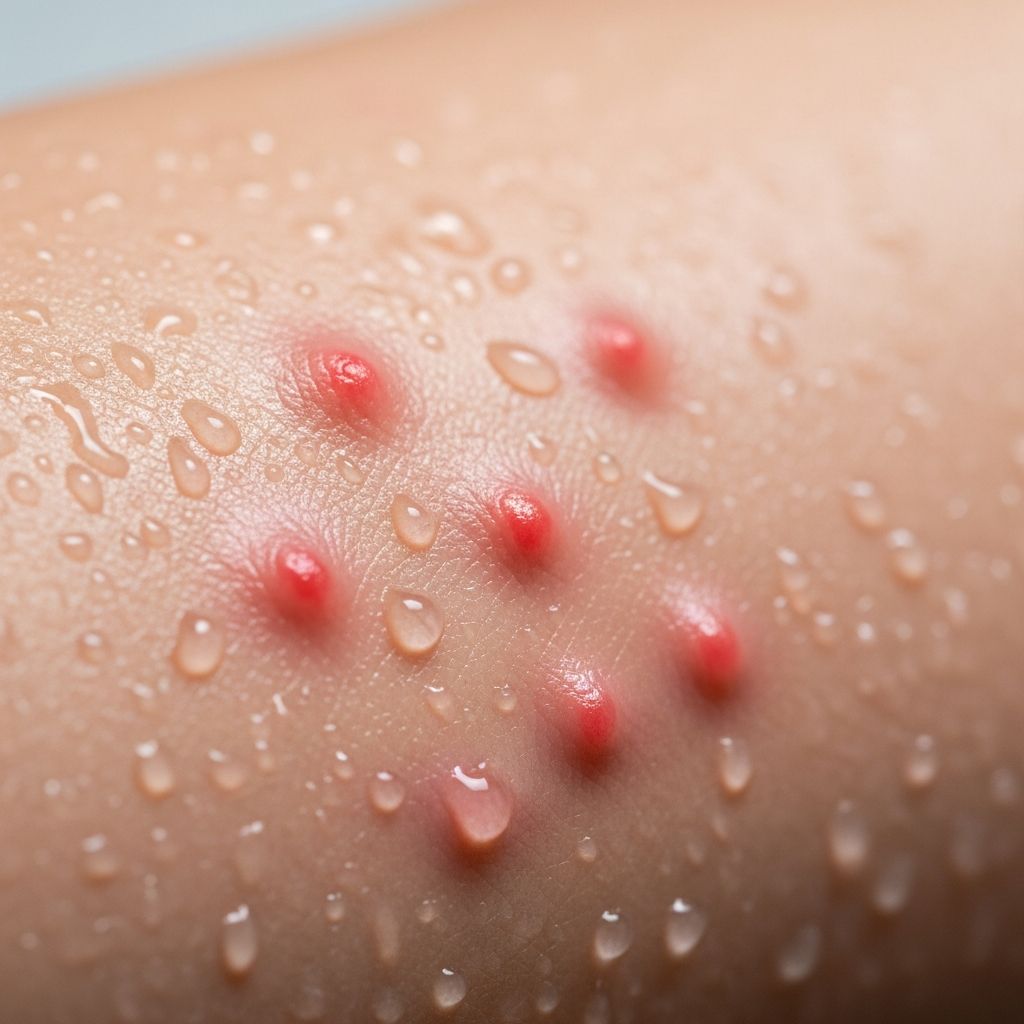
Aquagenic urticaria is an exceptionally rare form of physical urticaria characterised by the development of urticarial papules upon exposure of the skin to water, irrespective of its temperature. This condition, sometimes referred to as ‘water allergy’, affects a small number of individuals worldwide, predominantly young females, and poses unique challenges due to the ubiquity of water in daily life.
Who gets aquagenic urticaria (epidemiology)?
Aquagenic urticaria is extremely rare, with fewer than 100 cases documented in medical literature since its first description. It typically manifests in adolescence or early adulthood, with onset often between ages 10 and 25. Females are disproportionately affected, comprising approximately 85% of reported cases, though the reasons for this gender bias remain unclear. Familial occurrences are exceptional but have been noted, hinting at a possible genetic predisposition in select families. The condition shows no strong ethnic or geographic predilection, occurring sporadically across populations.
What causes aquagenic urticaria?
The precise aetiology of aquagenic urticaria eludes full comprehension, but it is classified as a non-immunological physical urticaria. Exposure to water triggers an abnormal reaction in the skin, potentially involving interaction between water molecules and epidermal proteins or lipids, forming a complex that stimulates mast cell degranulation and histamine release. This leads to the characteristic wheals. Unlike true allergies, no specific IgE-mediated response to water has been identified. Proposed mechanisms include:
- Hypersensitivity where water alters skin substances into allergens, activating mast cells.
- Possible cholinergic pathway involvement, akin to cholinergic urticaria, though distinct as symptoms occur independently of temperature.
- Rare associations with other conditions like polycythaemia vera or monoclonal gammopathy, but most cases are idiopathic.
Importantly, the reaction persists across water temperatures (cold, warm, or room), distinguishing it from cold or heat urticaria.
What are the clinical features of aquagenic urticaria?
Symptoms emerge rapidly, within 1–5 minutes of water contact, peaking at 10–30 minutes. Small wheals (1–3 mm) with a white or red halo appear, often described as ‘goosebumps’ or ‘prickly heat’. Associated sensations include intense pruritus, burning, or stinging. Common sites are the upper trunk, arms, and neck; palms and soles are typically spared, possibly due to thicker stratum corneum. Wheals resolve spontaneously within 30–60 minutes after drying, without residual marks.
Rarely, systemic symptoms occur, such as headache, wheezing, dyspnoea, or anaphylaxis-like reactions, necessitating urgent epinephrine. Drinking water may provoke perioral rash or lip swelling in sensitive individuals.
Diagnosis
Diagnosis hinges on clinical history and provocation testing. Key is reproducing symptoms with room-temperature water application (e.g., 30 mL at 35°C for 30 minutes on the trunk or arm). Positive response: wheals within 5–10 minutes.
Differential diagnosis includes:
| Condition | Distinguishing Features |
|---|---|
| Aquagenic pruritus | Itching without wheals; no hives. |
| Cold urticaria | Triggered by cold water only; ice cube test positive. |
| Cholinergic urticaria | Small punctate hives from heat/sweat, not pure water. |
| Dermatographism | Linear wheals from scratching. |
Related Stories



Laboratory tests (e.g., serum tryptase) are normal unless systemic reaction occurs. Skin biopsy, if performed, shows dermal oedema and mast cell degranulation without vasculitis.
Management and treatment of aquagenic urticaria
As water avoidance is impractical, treatment focuses on symptom prevention and minimisation. No curative therapy exists, but most patients achieve control.
Author: Author information is not given.
DermNet NZ Editor: Dr Amanda Oakley
DermNet NZ Editor:: Dr Martin Keefe
October 2024
Prophylactic therapy
The cornerstone is daily non-sedating second-generation H1 antihistamines (e.g., cetirizine 10–40 mg, loratadine 10–20 mg, fexofenadine 180 mg), taken 1–2 hours before anticipated exposure. Up to fourfold dose escalation may be required for refractory cases.
Other reported treatments
- Topical agents: Petroleum jelly or barrier creams applied pre-exposure reduce water-skin contact.
- Phototherapy: Narrowband UVB or PUVA (8–12 sessions) desensitises skin by thickening epidermis; useful adjunct.
- Omalizumab: Anti-IgE monoclonal antibody (300–600 mg/month) effective in antihistamine failures.
- Other systemic: SSRIs (e.g., fluoxetine), anabolic steroids (danazol), or leukotriene antagonists (montelukast) reported anecdotally.
- Epinephrine: For anaphylaxis.
Lifestyle measures: Brief showers (cool water), dry shampoos, wet wipes over bathing, protective clothing in rain, rubber gloves for chores, and avoiding sweat-inducing activities.
Disease course and prognosis
Aquagenic urticaria is chronic, persisting for years, but rarely worsens. Spontaneous remission occurs in some after puberty or in 20–30% over time; rate unknown. Quality of life improves with management.
Frequently Asked Questions
Q: Is aquagenic urticaria a true allergy to water?
A: No, it is not IgE-mediated; it’s a physical urticaria from water contact stimulating mast cells.
Q: Can aquagenic urticaria be fatal?
A: Rarely, via anaphylaxis; carry epinephrine if history of systemic symptoms.
Q: Does it affect bathing or swimming?
A: Yes, profoundly; use barriers, antihistamines, and minimise exposure time.
Q: Is it hereditary?
A: Familial cases rare; possible genetic factor but mostly sporadic.
Q: How is it diagnosed?
A: Water challenge test: apply water to skin and observe for hives.
References
- Aquagenic urticaria: Causes, Symptoms, Treatments — Medpark Hospital. 2023. https://www.medparkhospital.com/en-US/disease-and-treatment/aquagenic-urticaria
- Aquagenic urticaria – DermNet — DermNet NZ. 2024-10-01. https://dermnetnz.org/topics/aquagenic-urticaria
- Aquagenic Urticaria – Symptoms, Causes, Treatment | NORD — National Organization for Rare Disorders. 2024. https://rarediseases.org/rare-diseases/aquagenic-urticaria/
- Aquagenic Urticaria: Causes, Symptoms, and Treatment — Healthline. 2024. https://www.healthline.com/health/aquagenic-urticaria
- What is aquagenic urticaria? — WebMD. 2024. https://www.webmd.com/allergies/what-is-aquagenic-urticaria
- Aquagenic urticaria: diagnostic and management challenges — PMC (NCBI). 2016-11-15. https://pmc.ncbi.nlm.nih.gov/articles/PMC5136360/
Similar Articles








Read full bio of Sneha Tete