Aquagenic Wrinkling Of The Palms: What You Need To Know
Rare skin condition causing rapid palm wrinkling after water exposure, often linked to cystic fibrosis.
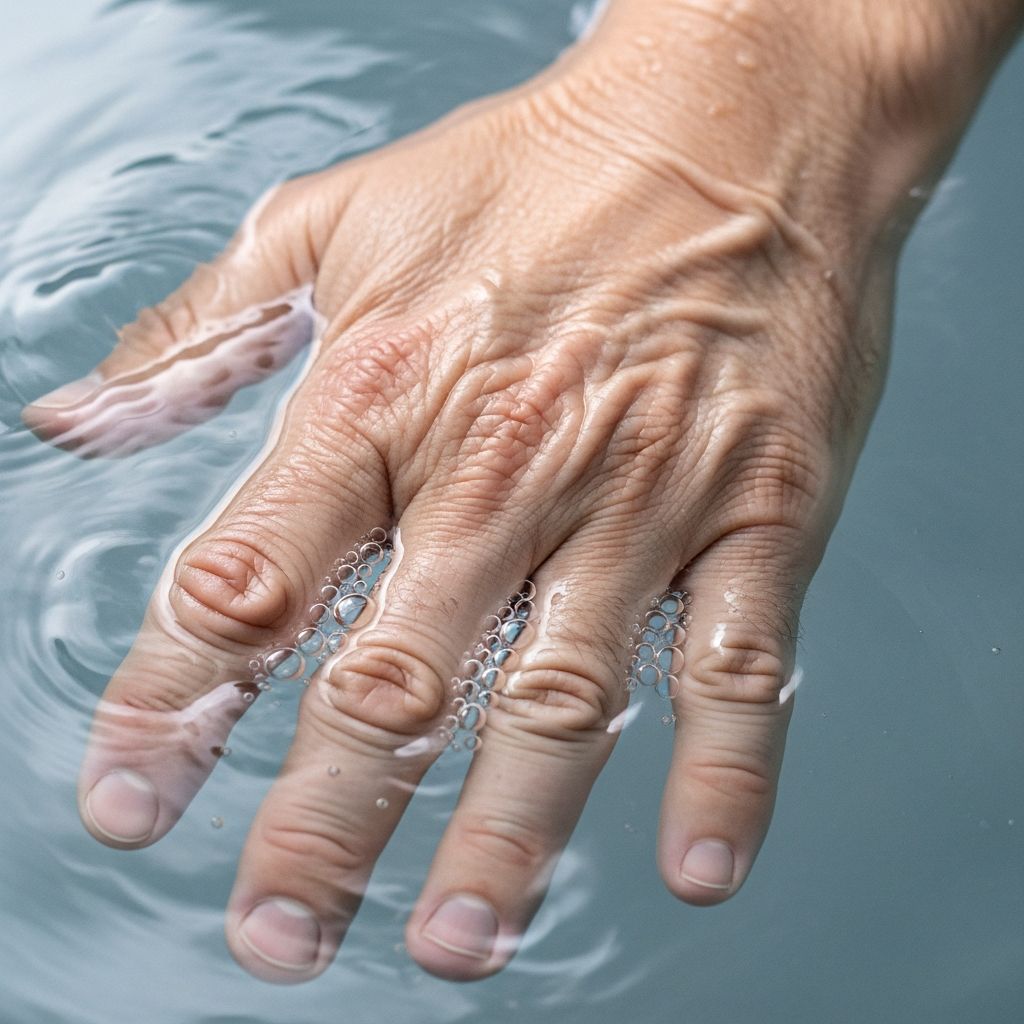
Aquagenic wrinkling of the palms is a rare dermatological condition characterized by transient oedematous changes in the skin of the palms following brief exposure to water. This phenomenon manifests as rapid wrinkling, swelling, and the appearance of small white or translucent papules, often accompanied by burning or tingling sensations. It primarily affects the palms but can occasionally involve the soles or other sites. Most notably observed in patients with cystic fibrosis (CF) or CF gene carriers, it represents an exaggerated form of normal water-induced skin wrinkling.
Introduction
Aquagenic wrinkling of the palms (AWP), also known as aquagenic palmoplantar keratoderma or aquagenic acrokeratoderma, is a benign yet distinctive skin reaction. Upon contact with water—even for as little as 3 minutes—the palms develop a characteristic eruption of white papules and plaques due to oedema within the stratum corneum. This contrasts sharply with physiological wrinkling, which requires prolonged immersion (around 11 minutes). The condition resolves spontaneously upon drying, typically within 10-60 minutes, though sensations may persist longer. AWP is not merely cosmetic; it can cause significant discomfort, particularly in individuals with palmar hyperhidrosis, impacting daily activities like washing dishes or swimming.
Understanding AWP is crucial because of its strong association with cystic fibrosis, where it affects up to 84% of patients. Even in non-CF individuals, it signals potential CF carrier status, warranting genetic screening. Early recognition allows for symptomatic relief and appropriate medical evaluation.
Demographics
AWP predominantly affects young females, with onset often in early childhood or adolescence. It is reported across various ethnicities but appears more frequently in Caucasian populations. Prevalence is higher in females (ratio up to 4:1), possibly due to hormonal influences or reporting bias. While rare in the general population, it occurs in 40-84% of CF patients and 25-50% of CF heterozygotes. Age-related improvement is common, with symptoms diminishing in adulthood.
- Age of onset: Childhood to early adulthood
- Gender predominance: Females
- Association: 40-84% in CF patients; 25-50% in carriers
Causes
The precise pathogenesis remains unclear, but AWP is linked to abnormalities in the cystic fibrosis transmembrane conductance regulator (CFTR) gene. In CF patients, CFTR mutations impair chloride transport, leading to altered aquaporin expression and increased water permeability in epidermal cells. This results in rapid osmotic oedema in the stratum corneum upon water exposure. Saltwater does not trigger AWP, highlighting the role of an osmotic gradient.
Other contributing factors include:
- Palmar hyperhidrosis: Excessive sweating primes the skin by increasing surface moisture and sodium concentration.
- Aquaporin dysregulation: Upregulation facilitates excessive water influx into keratinocytes.
- Genetic predisposition: CFTR heterozygosity in non-CF cases.
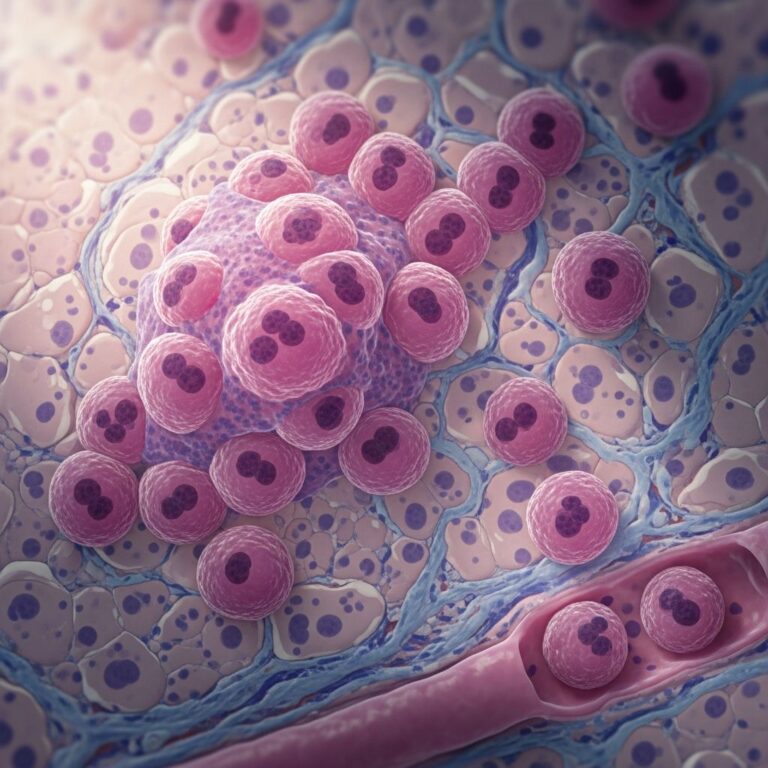
Histologically, biopsies reveal compact orthokeratosis, acanthosis, and dilated eccrine sweat ducts, supporting the name aquagenic syringeal acrokeratoderma.
Clinical Features
The hallmark of AWP is the rapid onset (1-5 minutes) of palmar skin changes post-water immersion:
- Appearance: Symmetrical white/translucent papules (1-3mm) coalescing into plaques; exaggerated ridging and pitting around eccrine ducts; pallor and oedema mimicking ‘prune fingers’.
- Sensation: Burning, stinging, prickling, tightness, or itching during exposure; resolves with drying.
- Distribution: Bilateral palms (especially thenar eminence, finger bases); occasionally soles, fingertips, forehead, or heels.
- Duration: Peaks at 3-7 minutes; fades in 10-60 minutes post-drying, faster in carriers than CF patients.
Triggers include tap water, fresh water, sweat, or even humid environments. Saltwater immersion does not provoke symptoms.
Related Stories



| Feature | AWP | Normal Wrinkling |
|---|---|---|
| Onset | 1-5 min | ~11 min |
| Texture | Papules/pits | Uniform ridges |
| Sensation | Burning/tingling | None |
| Triggers | Brief exposure/sweat | Prolonged soak |
Diagnosis
Diagnosis is primarily clinical, based on history and reproduction of signs via the ‘hand-in-the-bucket’ test: immerse hands in water for 3-7 minutes and observe changes under dermoscopy. Magnification reveals perieccrine white halos.
Confirmatory tests:
- Sweat chloride test: Elevated in CF (>60 mmol/L).
- CFTR genetic testing: For equivocal cases or carriers.
- Skin biopsy: Rarely needed; shows eccrine duct dilatation.
Screen all patients for CF, especially with family history or hyperhidrosis.
Differential Diagnoses
AWP must be distinguished from mimicking conditions:
- Dyshidrotic eczema: Vesicles, pruritus; persists beyond drying.
- Tinea manuum: Scaling, fungal microscopy positive.
- Contact dermatitis: Asymmetrical, irritant-specific.
- Aquagenic urticaria: Generalized hives, not palm-limited.
- Pseudoxanthoma elasticum: Perifollicular papules, systemic signs.
Dermoscopy and water challenge aid differentiation.
Treatment
No curative therapy exists; management focuses on prevention and symptom relief:
- Avoidance: Minimize water exposure; use gloves, barrier creams (though often ineffective).
- Topicals: Aluminium chloride hexahydrate 20% nightly for hyperhidrosis.
- Iontophoresis: Tap water iontophoresis reduces sweating.
- Botulinum toxin: Intradermal injections inhibit eccrine glands; effective but temporary (3-6 months).
- CFTR modulators: In CF patients (e.g., ivacaftor), may improve AWP.
Patient education on triggers and self-management is key.
Outcome
AWP is benign and self-resolving per episode. Many cases improve spontaneously with age. Persistent symptoms warrant CF screening and targeted therapies. Quality of life enhances with hyperhidrosis control. Regular follow-up monitors for CF complications.
Frequently Asked Questions (FAQs)
Q: Is aquagenic wrinkling of the palms dangerous?
A: No, it is benign but may indicate cystic fibrosis, requiring screening.
Q: How quickly does AWP appear?
A: Within 1-5 minutes of water exposure, much faster than normal wrinkling.
Q: Does saltwater trigger AWP?
A: No, only fresh/tap water or sweat provokes symptoms.
Q: Can AWP affect the soles?
A: Yes, occasionally, but palms are primary site.
Q: What is the best treatment?
A: Antiperspirants, iontophoresis, or Botox for severe cases; CF therapy if applicable.
References
- Aquagenic Wrinkling of the Palms | Causes, Symptoms & Treatment — Skin Horizon. 2023. https://skinhorizon.co.uk/conditions/aquagenic-wrinkling-of-the-palms/
- Aquagenic Wrinkling of the Palms — DermNet NZ. 2023-10-01. https://dermnetnz.org/topics/aquagenic-wrinkling-of-the-palms
- Aquagenic wrinkling of the palms (aquagenic acrokeratoderma) — Dermatology Advisor. 2024. https://www.dermatologyadvisor.com/home/decision-support-in-medicine/dermatology/aquagenic-wrinkling-of-the-palms-aquagenic-acrokeratoderma/
- Aquagenic palmoplantar keratoderma — NORD Rare Diseases. 2023. https://rarediseases.org/mondo-disease/aquagenic-palmoplantar-keratoderma/
- Aquagenic wrinkling of the palms: review of the literature — PMC / NIH. 2023-01-15. https://pmc.ncbi.nlm.nih.gov/articles/PMC9826168/
- Aquagenic Wrinkling of the Palm: A Rare Diagnostic Clue of Cystic Fibrosis — Cureus. 2021. https://www.cureus.com/articles/55874-aquagenic-wrinkling-of-the-palm-a-rare-diagnostic-clue-of-cystic-fibrosis-and-the-response-to-cftr-modulating-therapy
Similar Articles








Read full bio of medha deb