Arachnoid Cysts: Causes, Symptoms, and Treatment Options
Understanding arachnoid cysts: Fluid-filled sacs affecting the brain and spinal cord with comprehensive symptom and treatment information.
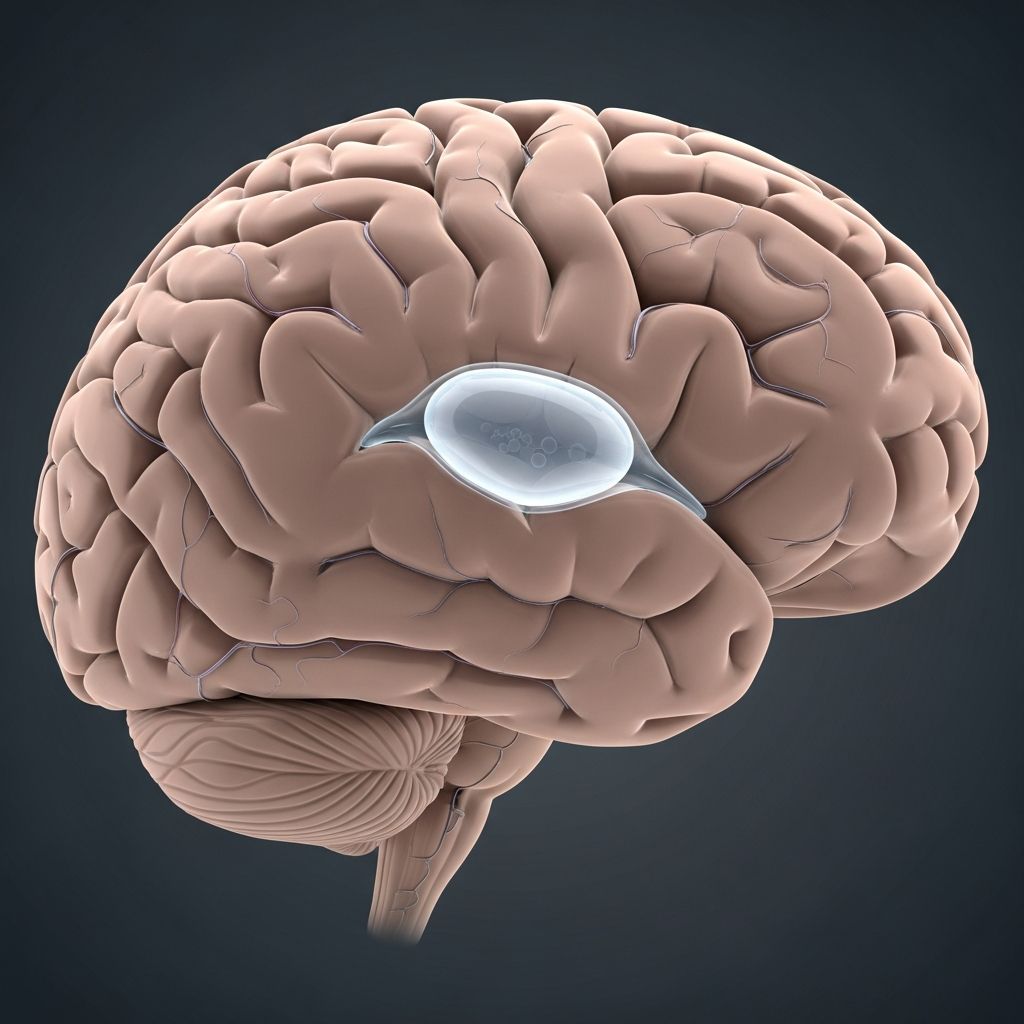
What Are Arachnoid Cysts?
Arachnoid cysts are fluid-filled sacs that develop on the arachnoid membrane, which is a thin layer of tissue that covers and protects the brain and spinal cord. These cysts contain cerebrospinal fluid (CSF), the protective fluid that surrounds the nervous system. Arachnoid cysts are the most common type of intracranial cyst, occurring in approximately 1% of the population, though many people never experience symptoms or even become aware they have them.
The arachnoid membrane is the middle layer of the three membranes, called meninges, that envelope the brain and spinal cord. When fluid accumulates between this membrane and the brain or spinal cord tissue, it forms an arachnoid cyst. These cysts can vary significantly in size, ranging from small lesions that cause no problems to larger formations that may exert pressure on surrounding neural structures.
Most arachnoid cysts are present from birth, though they may not be detected until later in life, often during imaging studies performed for unrelated reasons. In rare cases, cysts may develop following head injury, infection, brain surgery, or as a result of a tumor.
Types and Classification of Arachnoid Cysts
Arachnoid cysts are classified based on their location within the nervous system and the timing of their formation. Understanding these classifications helps medical professionals determine appropriate management strategies and predict potential complications.
Primary (Congenital) Arachnoid Cysts: These are present at birth and result from abnormal development of the arachnoid membrane during fetal development. The exact cause of this abnormal development remains unknown, though genetic factors may play a role in rare familial cases.
Secondary Arachnoid Cysts: These develop later in life as a result of head trauma, infection, brain surgery, radiation therapy, or complications from other conditions such as tumors or spinal cord injuries.
Location-Based Classification: Arachnoid cysts are also categorized by their anatomical location. The most common sites include the middle fossa region of the brain, the suprasellar region (above the pituitary gland), and the spinal canal. Each location presents different potential complications and symptomatology.
Signs and Symptoms of Arachnoid Cysts
One of the defining characteristics of arachnoid cysts is that most people with them never experience symptoms. Many cysts remain asymptomatic throughout an individual’s entire lifetime, discovered only incidentally during imaging for unrelated medical conditions. However, when symptoms do occur, they depend primarily on the size and location of the cyst.
Symptoms Related to Brain-Located Cysts
When arachnoid cysts located around the brain cause symptoms, they typically result from increased pressure on brain tissue or interference with normal cerebrospinal fluid circulation. Common symptoms include:
- Chronic or recurring headaches
- Nausea and vomiting
- Dizziness or vertigo
- Vision problems or visual disturbances
- Hearing difficulties
- Balance problems and gait disturbances
- Seizures
- Developmental delays in children
- Behavioral changes or mood disturbances
- Cognitive impairment or decreased mental performance
Related Stories



In rare cases, especially in infants and young children, arachnoid cysts can cause macrocephaly, an abnormally enlarged head resulting from malformation of cranial bones or excessive accumulation of cerebrospinal fluid.
Symptoms Related to Spinal Cord Cysts
Arachnoid cysts occurring near the spinal cord are less common than brain cysts but can produce significant neurological symptoms. These cysts may compress the spinal cord itself or the nerve roots that exit the spinal column. Symptoms associated with spinal arachnoid cysts include:
- Progressive back and leg pain
- Neck pain
- Tingling or numbness in the arms or legs
- Weakness in the arms or legs
- Abnormal side-to-side spinal curvature (scoliosis)
- Difficulty with balance and coordination
- Problems with bowel and bladder control
- Involuntary muscle spasticity causing stiff movements
In rare cases, spinal arachnoid cysts may progress to cause paraplegia, which is paralysis of the legs. Individuals with spinal arachnoid cysts may also experience urinary tract infections due to neurological dysfunction affecting bladder control.
Causes and Risk Factors
The precise etiology of primary arachnoid cysts remains elusive despite extensive research. These congenital cysts likely result from abnormal embryological development of the arachnoid membrane during fetal formation, but the specific mechanisms triggering this abnormal development are not fully understood.
Research suggests that genetic factors may contribute to cyst formation in some families, though arachnoid cysts rarely demonstrate clear familial inheritance patterns. Males are approximately four times more likely to develop arachnoid cysts compared to females, indicating a possible sex-linked genetic component, though this relationship requires further investigation.
Secondary arachnoid cysts may develop following various triggers, including head injury or trauma, intracranial infections, brain surgery or neurosurgical procedures, radiation therapy to the brain, or complications from existing brain tumors or other space-occupying lesions.
Diagnosis and Imaging
Arachnoid cysts are typically identified through neuroimaging studies. Modern imaging technology allows physicians to visualize these fluid-filled structures with remarkable clarity.
Magnetic Resonance Imaging (MRI): MRI is the gold standard for evaluating arachnoid cysts. This imaging modality provides excellent soft tissue contrast and clearly demonstrates the cyst’s size, location, and relationship to surrounding brain structures. MRI can differentiate arachnoid cysts from other types of brain lesions and help assess whether the cyst is causing mass effect or compression of nearby structures.
Computed Tomography (CT): CT scanning may be used as an alternative imaging method, particularly in patients who cannot undergo MRI or require rapid assessment. CT effectively visualizes arachnoid cysts and can detect associated complications such as hydrocephalus.
Clinical Correlation: The diagnosis of an arachnoid cyst must be correlated with clinical symptoms. Many incidentally discovered cysts do not require treatment or follow-up if they are not causing neurological symptoms or complications.
Associated Conditions
Arachnoid cysts can be associated with several secondary conditions that may result from the cyst’s presence and effects on surrounding structures.
Hydrocephalus: This condition refers to excessive accumulation of cerebrospinal fluid within the brain, leading to increased intracranial pressure. When arachnoid cysts obstruct normal CSF circulation, hydrocephalus may develop, potentially causing headaches, cognitive changes, and other neurological symptoms.
Neurological Dysfunction: Depending on location and size, arachnoid cysts may cause various neurological manifestations including ataxia (lack of muscle coordination), hemiparesis (weakness on one side of the body), developmental delays, behavioral disturbances, cognitive impairment, or language difficulties (aphasia).
Endocrine Abnormalities: Cysts located in the suprasellar region, near hormone-producing glands, may interfere with endocrine function, affecting growth, sexual development, and metabolic regulation.
Treatment and Management Options
The management approach for arachnoid cysts depends on whether they are symptomatic or asymptomatic, and if symptomatic, the severity and progression of symptoms.
Observation and Conservative Management
Most arachnoid cysts do not require active treatment. Since the majority remain stable throughout life and do not cause symptoms, a conservative approach involving periodic clinical evaluation and imaging surveillance is appropriate. Patients should be monitored for the development or progression of neurological symptoms that might indicate the need for intervention.
Surgical Intervention
Surgery may be recommended for arachnoid cysts that are causing significant neurological symptoms, progressive neurological decline, or complications such as hydrocephalus or mass effect on vital structures.
Cyst Drainage: Neurosurgeons can surgically drain arachnoid cysts through various techniques, including open microsurgical fenestration, where the cyst wall is opened to allow fluid to drain into the surrounding subarachnoid space or ventricular system.
Shunting Procedures: When cysts cause hydrocephalus or significant mass effect, ventriculoperitoneal (VP) shunts or other drainage systems may be placed to redirect excess cerebrospinal fluid to the abdominal cavity.
Endoscopic Management: Minimally invasive endoscopic techniques allow neurosurgeons to visualize and fenestrate cysts through small burr holes, reducing surgical trauma and recovery time compared to traditional open procedures.
The prognosis following appropriate surgical intervention is generally excellent, with most patients experiencing improvement or resolution of symptoms. Surgery for arachnoid cysts is considered safe and effective when performed by experienced neurosurgeons.
Frequently Asked Questions
Q: Are arachnoid cysts hereditary?
A: Although arachnoid cysts are congenital, meaning present from birth, they rarely run in families. Most cases appear to be sporadic without clear familial inheritance, though a genetic component may exist in rare familial cases.
Q: Can arachnoid cysts disappear on their own?
A: Arachnoid cysts typically remain stable throughout life and do not spontaneously resolve. However, most cysts do not grow significantly, and many never cause symptoms even if they persist for decades.
Q: Is an arachnoid cyst more serious than other brain cysts?
A: The seriousness of an arachnoid cyst depends on its size, location, and whether it causes symptoms or complications. Many arachnoid cysts are asymptomatic and never require treatment, making them less clinically significant than symptomatic lesions of other types.
Q: How often should asymptomatic arachnoid cysts be monitored?
A: Follow-up imaging for asymptomatic arachnoid cysts that do not cause neurological symptoms or mass effect is not routinely necessary. Periodic clinical evaluation is appropriate, and imaging may be repeated if new symptoms develop.
Q: Can arachnoid cysts cause seizures?
A: Yes, seizures can occur in individuals with arachnoid cysts, particularly those causing mass effect on brain tissue. However, most arachnoid cysts do not cause seizures, and the exact relationship between cyst presence and seizure development varies among individuals.
Q: What should I do if an arachnoid cyst is discovered incidentally?
A: If an arachnoid cyst is discovered incidentally without causing symptoms, consultation with a neurologist or neurosurgeon can help determine whether imaging follow-up or clinical monitoring is warranted. In most cases, no immediate treatment is necessary.
When to Seek Medical Attention
While most arachnoid cysts never cause problems, certain symptoms warrant medical evaluation. Individuals experiencing progressive headaches, recurrent seizures, vision or hearing changes, balance problems, progressive weakness or numbness, or cognitive changes should consult with a healthcare provider. These symptoms may indicate that an arachnoid cyst is affecting neurological function and requires evaluation and possible intervention.
New-onset symptoms in individuals with known arachnoid cysts should be reported to their healthcare provider promptly, as symptom progression might indicate cyst growth or the development of associated complications requiring treatment.
References
- Arachnoid Cysts — National Organization for Rare Disorders (NORD). 2025. https://rarediseases.org/rare-diseases/arachnoid-cysts/
- Arachnoid Cyst Symptoms and Treatment — University of Pittsburgh Medical Center (UPMC) Neurosurgery. 2025. https://www.upmc.com/services/neurosurgery/brain/conditions/brain-tumors/arachnoid-cyst
- Symptoms of an Arachnoid Cyst — Weill Cornell Medicine Neurological Surgery. 2025. https://neurosurgery.weillcornell.org/condition/arachnoid-cysts-intracranial-cysts/symptoms-arachnoid-cyst
- Arachnoid Cysts — BrainFacts, National Institute of Neurological Disorders and Stroke (NINDS). 2025. https://www.brainfacts.org/diseases-and-disorders/neurological-disorders-az/diseases-a-to-z-from-ninds/arachnoid-cysts
- Arachnoid Cyst — University of Florida Health. 2025. https://ufhealth.org/conditions-and-treatments/arachnoid-cyst
- Arachnoid Cyst: What It Is, Causes, Symptoms & Treatment — Cleveland Clinic. 2025. https://my.clevelandclinic.org/health/diseases/6023-arachnoid-cysts
Similar Articles








Read full bio of medha deb