Arcus Senilis: Causes, Diagnosis, And Treatment Guide
Discover the facts about arcus senilis, the common gray ring around the cornea, its causes, and when it signals health concerns.
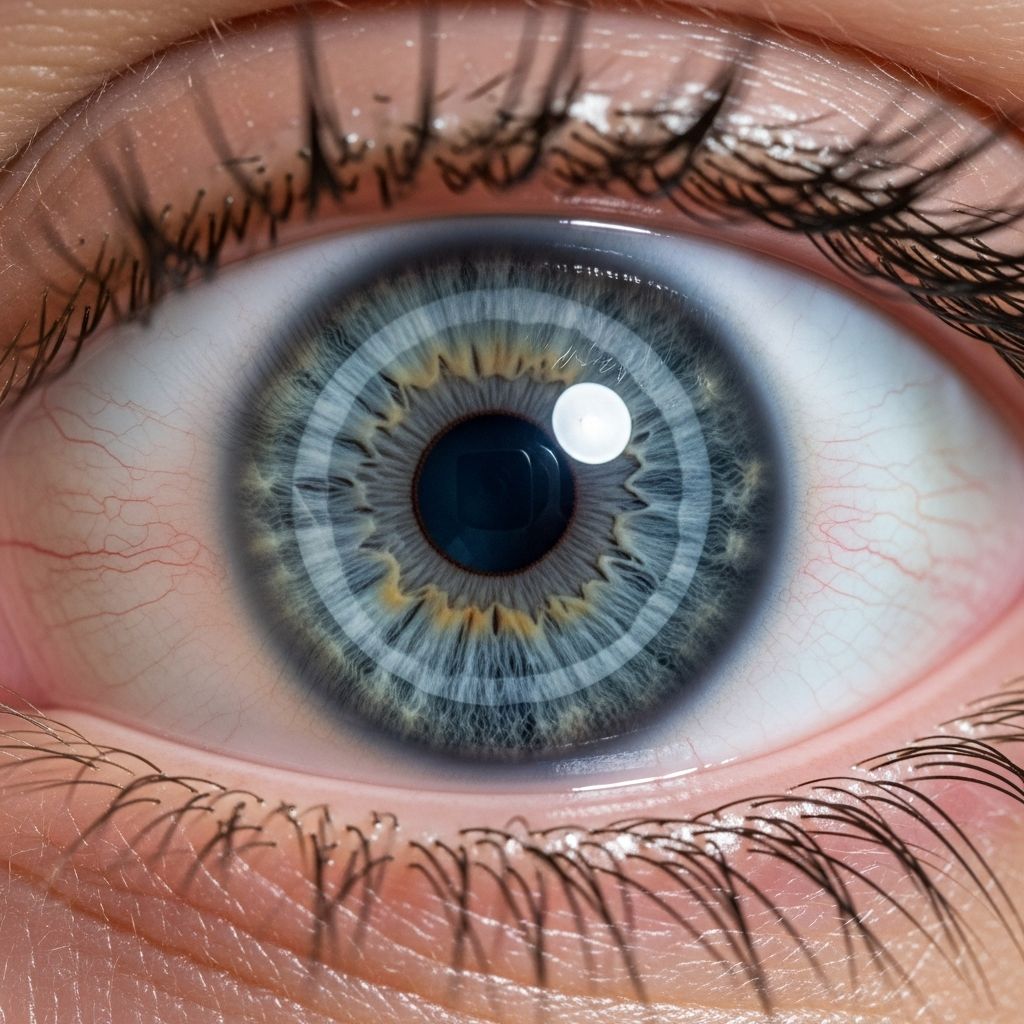
Arcus senilis, also known as corneal arcus, manifests as a distinctive gray, white, or bluish ring encircling the cornea, the clear front surface of the eye. This condition becomes increasingly prevalent with advancing age, affecting a significant portion of the population over 60, yet it remains benign for most individuals without impacting vision.
Understanding the Anatomy Behind the Ring
The cornea serves as the eye’s transparent dome, refracting light to focus images on the retina. At its periphery lies the limbus, the border where the cornea meets the sclera, the eye’s white outer layer. Arcus senilis forms precisely at this junction due to lipid deposits accumulating in the corneal stroma, particularly in layers like Bowman’s and near Descemet’s membrane.
These deposits create a sharp outer edge with a more diffuse inner boundary, often starting as partial arcs superiorly and inferiorly before completing a full circle. Unlike changes in the iris, which dictates eye color, arcus senilis resides entirely in the cornea and does not interfere with light transmission or pupil function.
Prevalence Across Age Groups
By age 60, approximately 60% of people exhibit some degree of corneal arcus, rising dramatically to nearly universal presence by age 80. Men tend to develop it earlier and more prominently than women, though the reasons remain under study.
- Over 60: Common and typically bilateral (affecting both eyes).
- Over 80: Present in the vast majority, considered a normal aging marker.
- Men vs. Women: Higher incidence in males.
How Arcus Senilis Develops: The Role of Lipids
Lipid buildup drives arcus formation, where cholesterol and other fats from the bloodstream deposit in the corneal periphery. As arteries widen with age, these lipids leak into the eye’s tissues via limbal vessels.
The process unfolds gradually:
- Initial Arcs: Deposits appear first at the top and bottom of the cornea.
- Progression: Arcs extend laterally, forming a complete ring over months or years.
- Stabilization: The ring halts growth, remaining static without tissue degradation.
Dietary fats and liver-produced cholesterol contribute, but in older adults, this reflects age-related vascular changes rather than acute disease.
Symptoms and Visual Impact
The hallmark symptom is a visible grayish-white or blue-tinged ring around the iris, often noticed incidentally or during routine eye exams using a slit lamp. It presents no pain, redness, or functional disruption.
| Feature | Description |
|---|---|
| Color | Gray, white, blue, or flaxen |
| Shape | Partial arcs progressing to full circle |
| Edges | Sharp outer, blurred inner |
| Vision Effect | None |
| Pain/Discomfort | Absent |
Unlike cataracts, which cloud the lens and blur sight, arcus senilis stays peripheral and transparent enough to preserve clarity.
Related Stories



When Arcus Senilis Warrants Concern: The Youth Factor
In individuals under 50-60, particularly men under 40, arcus senilis—termed arcus juvenilis—may signal hyperlipidemia, elevated cholesterol, or triglycerides. This prompts cardiovascular risk evaluation, as it can foreshadow heart disease.
Rarely, unilateral (one eye) arcus links to conditions like ocular hypotony or carotid issues. Genetic disorders such as Schnyder crystalline dystrophy also produce similar rings.
Risk Levels by Age
| Age Group | Risk Profile | Recommended Action |
|---|---|---|
| Under 40 | High (possible high cholesterol) | Blood lipid tests, GP consult |
| 40-60 | Moderate | Monitor lipids if family history |
| Over 60 | Low (aging norm) | Routine eye exams |
Diagnosis in Clinical Practice
Eye care professionals diagnose arcus via biomicroscopy, illuminating the anterior segment to reveal the ring’s details. No specialized tests suffice alone; history and risk factors guide further steps.
- Slit Lamp Exam: Gold standard for confirmation.
- Patient History: Age, family lipids, diet.
- Referral Triggers: Youth onset, unilaterality.
Differentiate from pterygium (fleshy growth) or scleral plaques, which invade rather than encircle.
Management and Lifestyle Strategies
Arcus senilis requires no direct treatment, as it neither progresses nor impairs sight. Focus shifts to underlying risks in atypical cases.
Key Strategies:
- Lipid-lowering meds (statins) if hypercholesterolemia confirmed.
- Heart-healthy diet: Reduce saturated fats, boost fiber.
- Exercise: 150 minutes weekly moderate activity.
- Regular check-ups: Annual lipids for at-risk groups.
Surgical removal is neither feasible nor advised due to recurrence risk and corneal integrity concerns.
Debating the Cardiovascular Link
Studies conflict on arcus as a reliable heart disease predictor. Some link early-onset arcus to atherosclerosis; others find no correlation in seniors. Authoritative bodies like the AAO emphasize evaluation only in youth.
Lipids in the cornea mirror systemic levels but do not cause vascular damage themselves.
Common Myths Debunked
- Myth: Arcus senilis blinds you. Fact: Purely cosmetic.
- Myth: Always means high cholesterol. Fact: Only concerning pre-60.
- Myth: Contagious or diet-curable. Fact: Age-driven, unmanaged needed rarely.
Frequently Asked Questions (FAQs)
What causes the ring to form?
Lipid deposits from blood vessels leak into the cornea over time.
Does it affect eyesight?
No, vision remains sharp.
Is arcus juvenilis dangerous?
It flags potential cholesterol issues needing bloodwork.
Can diet reverse it?
Diet manages risks but not the ring itself.
How common is it in seniors?
60% by 60s, nearly all by 80s.
Prevention Through Proactive Eye Care
Maintain heart health to minimize early arcus risks: balanced diet, exercise, no smoking. Annual dilated exams catch changes early, ensuring timely intervention if needed.
While arcus senilis marks time’s passage on the eye, understanding it empowers informed health choices.
References
- What Are Arcus Senilis and Corneal Arcus? — All About Vision. 2023. https://www.allaboutvision.com/conditions/arcus-senilis-corneal-arcus/
- Arcus Senilis: Eye Health Warning You Shouldn’t Ignore! — Vision Concern. 2024. https://visionconcern.com/blog/arcus-senilis
- Arcus senilis: Causes, symptoms, and treatment — Medical News Today. 2023-10-12. https://www.medicalnewstoday.com/articles/319490
- Corneal Arcus Senilis Treatment — Eye Doctor Ophthalmologist NYC. 2024. https://www.eyedoctorophthalmologistnyc.com/treatment/corneal-arcus-senilis/
- Arcus Senilis (Corneal Arcus): Causes & Treatment — Cleveland Clinic. 2024-05-15. https://my.clevelandclinic.org/health/symptoms/24243-arcus-senilis
- High Cholesterol Symptoms in Eyes: What to Watch For — Docus.ai. 2025. https://docus.ai/symptoms-guide/high-cholesterol-symptoms-eyes
Similar Articles








Read full bio of medha deb