Are Acai Bowls Healthy? What You Need To Know
Uncover the truth about acai bowls: nutrient-packed superfood or sugar-laden treat? Learn how to make them truly healthy.
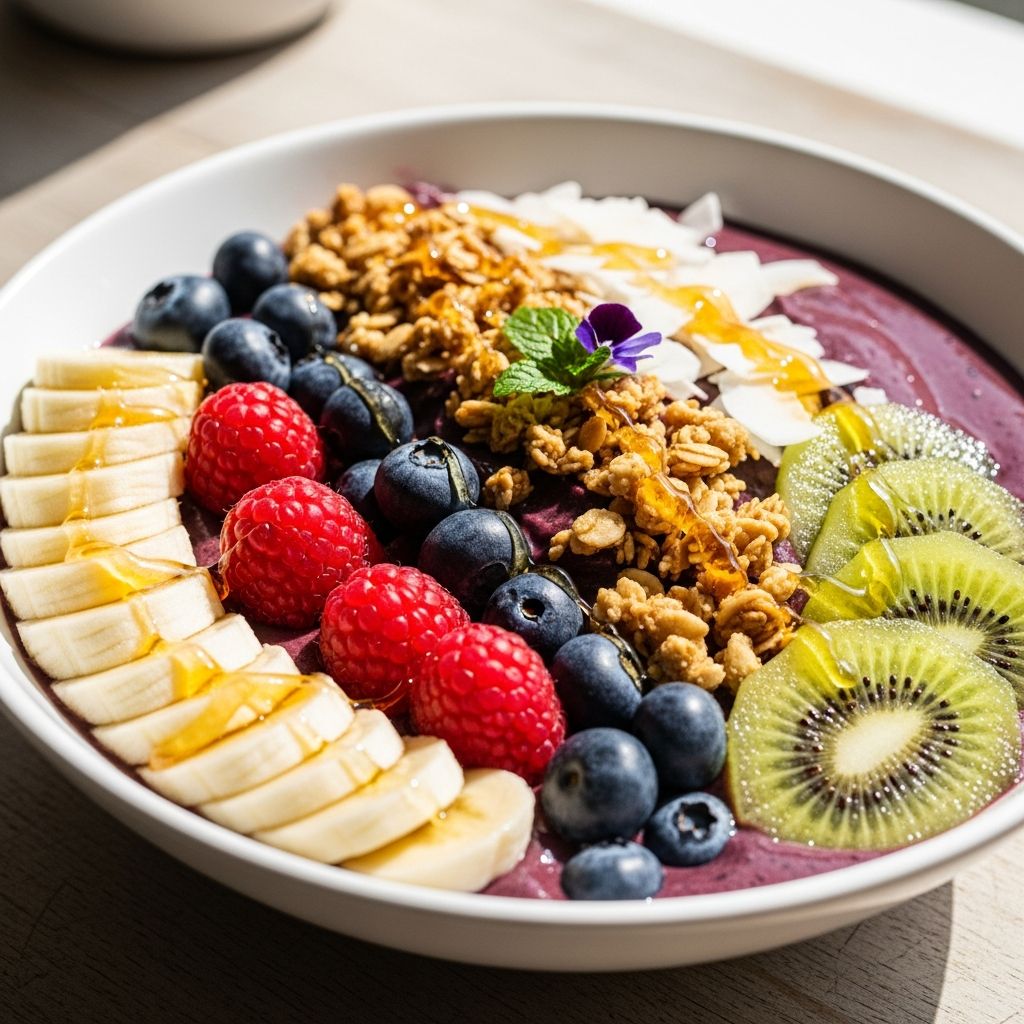
Acai bowls blend frozen acai berries with fruits and toppings, celebrated for antioxidants but scrutinized for sugar content. Their healthiness depends on ingredients and portions.
What Is an Acai Bowl?
An
acai bowl
features a thick base of pureed acai berries, often blended with banana or berries for creaminess, topped with granola, fruits, nuts, and seeds. Originating from Brazil, acai (pronounced ah-sigh-EE) comes from Amazon palm berries, now popularized worldwide as a superfood breakfast.The base provides a smooth, sorbet-like texture. Common additions include:
- Fruits: Strawberries, blueberries, kiwi, mango for vitamins and natural sweetness.
- Crunchy toppings: Granola, coconut flakes, chia seeds for texture and fiber.
- Proteins: Nut butters, Greek yogurt to boost satiety.
While visually appealing and refreshing, nutritional value varies widely based on preparation.
Nutrition Facts of Acai Bowls
A typical 6-8 ounce acai bowl ranges from 200-700 calories, influenced by portion and toppings. Acai puree itself is low-calorie: 100g frozen pulp offers about 80 calories, 6g fat, 5g carbs, 2g sugar, and 3g fiber, plus vitamins A and C.
However, blended bowls with banana and toppings escalate numbers. For example:
| Nutrient | Basic Acai Bowl (6oz) | Loaded Commercial Bowl |
|---|---|---|
| Calories | ~200-300 | 500-700 |
| Carbs | 38g | 70-100g |
| Sugar | 20-30g | 50-75g |
| Fiber | 6-10g | 8-12g |
| Protein | 2-5g | 5-10g (with add-ons) |
| Fat | 3-6g | 10-20g |
Acai berries excel in
antioxidants
like anthocyanins, plus manganese, potassium, iron, and calcium. They provide healthy fats (omega-3/6) but minimal protein unless enhanced.Health Benefits of Acai Bowls
Acai bowls deliver antioxidants that combat free radicals, potentially reducing oxidative stress. Key benefits include:
- Antioxidant Power: High in anthocyanins, acai neutralizes cell-damaging free radicals. A 2020 study showed acai juice raised blood antioxidants and HDL cholesterol in adults.
- Heart Health: Anthocyanins may lower bad cholesterol, reduce inflammation, and improve blood vessel function.
- Digestion Support: Fiber (up to 14% daily value per half-cup) promotes gut health, prevents constipation, and stabilizes blood sugar.
- Brain Boost: Antioxidants linked to better cognitive function; one study noted improvements in older adults after acai juice.
- Energy and Recovery: Carbs and fats offer sustained energy; aids muscle recovery post-exercise.
- Skin and Immunity: Vitamins A/C support collagen, reduce wrinkles, and bolster defenses.
National Kidney Foundation notes acai suits CKD patients if potassium is monitored (60-121mg per serving). Cleveland Clinic highlights chronic illness protection and cholesterol benefits.
Potential Downsides of Acai Bowls
Despite benefits, acai bowls can be
sugar bombs
. An average bowl packs 21-62g sugar, exceeding WHO’s 45g daily limit for 1800kcal diets, risking obesity and decay. Commercial versions hit 75g from sweetened granola, honey, or juices.Other issues:
- High Calories: Toppings like nuts/granola add fats/calories quickly.
- Low Protein: Base offers ~2g; without add-ons, not filling.
- Portion Traps: Large bowls undermine health goals.
- Interactions: Supplements may clash with meds; consult providers.
Custom bowls mitigate risks, but pre-made ones often prioritize taste over nutrition.
Related Stories



Are Acai Bowls Good for Weight Loss?
Acai bowls can aid weight loss if controlled: fiber promotes fullness, curbing overeating. However, high sugar/carbs in loaded versions spike calories, hindering deficits.
Pros for Weight Loss:
- Nutrient-dense, satisfying alternative to processed snacks.
- Fiber slows digestion, stabilizes energy.
Cons: A 700-calorie bowl rivals donuts. Opt for smaller portions, low-sugar toppings.
How to Make a Healthy Acai Bowl at Home
Control ingredients for a
balanced bowl
(300-400 calories, <30g sugar):- Base: 1 frozen acai pack (100g), ½ banana, ¼ cup berries, splash almond milk. Blend thick.
- Protein Boost: 2 tbsp Greek yogurt or protein powder.
- Toppings (1-2 tbsp each): Chia/hemp seeds, sliced fruits, few almonds, cacao nibs.
- Avoid: Sugary granola, excess honey, dried fruits.
Recipe Example:
- 200 cal base + 100 cal toppings = nutrient-rich meal.
Swaps: Cauliflower or stevia for lower sugar.
Acai Bowl Toppings: Healthy vs. Unhealthy
| Healthy Choices | Why Good | Unhealthy Choices | Why Avoid |
|---|---|---|---|
| Chia seeds, flax | Fiber, omega-3s | Sugary granola | High added sugar |
| Fresh berries, kiwi | Vitamins, low cal | Honey, chocolate syrup | Empty calories |
| Nut butters (1 tsp) | Healthy fats, protein | Coconut flakes (excess) | Saturated fat overload |
| Hemp seeds | Complete protein | Dried fruit | Concentrated sugars |
Prioritize whole foods for max benefits.
Frequently Asked Questions (FAQs)
Are acai bowls high in protein?
No, base has ~2g; add yogurt, nuts, or powder for 10-15g.
Can acai bowls help with digestion?
Yes, fiber aids regularity and gut health.
Is acai good for skin?
Antioxidants and vitamins A/C promote glow and collagen.
Are acai bowls keto-friendly?
Rarely; high carbs from fruits. Use low-carb swaps.
How often should I eat acai bowls?
2-3 times weekly as part of balanced diet; vary for nutrients.
References
- Are Acai Bowls Healthy? Calories and Nutrition — Healthline. 2023. https://www.healthline.com/nutrition/acai-bowl-calories-and-nutrition
- 4 Benefits of Acai Berries — Cleveland Clinic Health Essentials. 2023-05-10. https://health.clevelandclinic.org/acai-benefits
- Açai Berries — National Kidney Foundation. 2024. https://www.kidney.org/kidney-topics/acai-berries
- Are Acai Bowls Healthy? — Mount Elizabeth Hospitals. 2023. https://www.mountelizabeth.com.sg/health-plus/article/healthy-acai-bowl
- 10 Benefits of Adding Acai Bowls to Your Weekly Routine — The Spot OBX. 2023. https://www.thespotobx.com/blog/10-benefits-of-adding-acai-bowls-to-your-weekly-routine
Similar Articles








Read full bio of medha deb