Are You Really Pregnant? Early Test Truths
Uncover the realities of early pregnancy tests: accuracy, timing, pitfalls, and when to trust results for reliable confirmation.
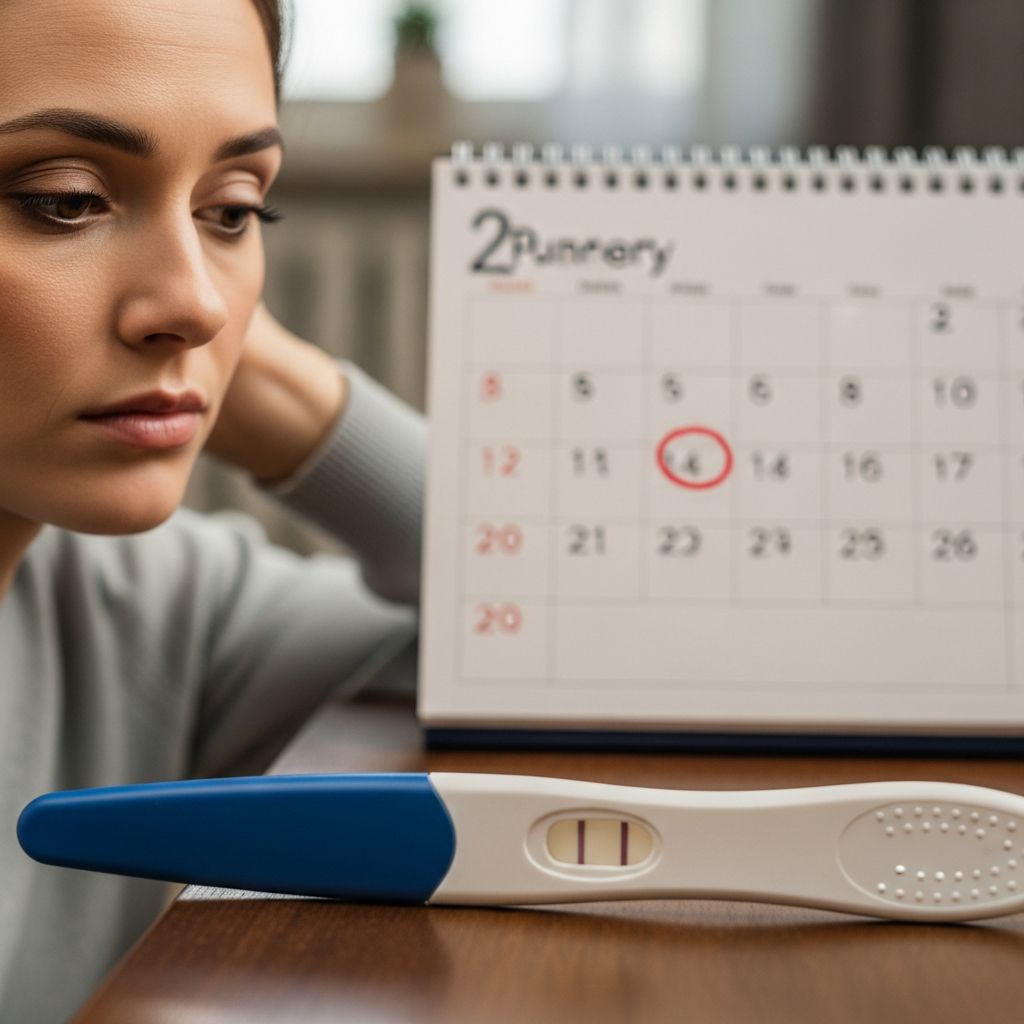
Home pregnancy tests offer a quick way to detect pregnancy by measuring human chorionic gonadotropin (hCG), a hormone produced after implantation. While many claim over 99% accuracy, real-world performance depends on timing, sensitivity, and usage. This guide explores how these tests function, their limitations, and strategies for accurate results.
How Do Pregnancy Tests Work?
Pregnancy tests detect
hCG
in urine, which rises rapidly after a fertilized egg implants in the uterus, typically 6-12 days post-ovulation. Most at-home tests use immunochromatographic strips: urine migrates across a pad with hCG-specific antibodies, triggering a visible line or digital readout if hCG exceeds the test’s sensitivity threshold, often 10-25 mIU/mL.Digital tests interpret the reaction electronically for ‘Pregnant’ or ‘Not Pregnant’ displays, reducing subjective line-reading errors. Sensitivity varies: standard tests detect ~25 mIU/mL, while early-detection models claim 6.3-10 mIU/mL for use 4-6 days before missed periods. However, hCG levels differ widely; at the expected period, they range from 25 mIU/mL (2nd percentile) to much higher, affecting early test reliability.
Understanding Test Sensitivity and Claims
Manufacturers advertise detection ‘days before your missed period,’ but claims like ‘8 days early’ at 10 mIU/mL often underperform clinically. Studies show tests need consistent 25 mIU/mL detection for >99% accuracy on missed period day; many fail, yielding false negatives.
| Test Type | Sensitivity (mIU/mL) | Detection Timing | Reported Accuracy (Post-Miss) |
|---|---|---|---|
| Standard | 25 | Day of missed period | >99% |
| Early Detection (e.g., First Response) | 6.3-10 | 5-6 days before | 60-99% escalating |
| Digital | 25 | 4 days before | ~99% on miss day |
European and U.S. brands like Clearblue and First Response align claims with FDA standards, unlike some generic tests with exaggerated ’10 mIU/mL, 8 days early’ promises that tests disprove. A 12.4 mIU/mL sensitivity detects 95% of pregnancies on missed period day, but only top brands achieve this reliably.
When Should You Take a Pregnancy Test?
For highest accuracy, test
after your missed period
. hCG doubles every 48-72 hours early on, peaking detectability then. Early testing (pre-miss) risks false negatives as hCG may be below threshold—e.g., First Response detects in 60% at 5 days before, rising to >99% by miss day.- Irregular cycles: Wait 21 days post-unprotected sex.
- First morning urine: Concentrated hCG for better sensitivity.
- Retest: If negative but symptoms persist, retest in 2-3 days.
Ultrasound or blood tests via healthcare providers offer definitive confirmation around 5-6 weeks, measuring hCG more precisely than urine.
How Accurate Are Early Pregnancy Tests?
Most claim
99% accuracy
post-missed period if used correctly, matching lab tests. Positive results are highly reliable (>99%), as false positives are rare outside menopause or medical issues. False negatives dominate early use: one study found only 16-44% detection on miss day for many brands at lower hCG.Independent reviews confirm FDA-reviewed tests meet claims, while others with bold early-detection ads fail—e.g., 40% error rates or inability to hit 25 mIU/mL. Factors like hook effect (very high hCG masking results) or diluted urine reduce accuracy further.
False Negatives: Why They Happen and How to Avoid Them
**False negatives** occur in ~1-5% of correct-use cases, mainly from testing too early when hCG is low. Other causes:
- Diluted urine (test later in day without holding).
- Expired/ faulty tests.
- Improper technique (insufficient urine time).
- Recent fertility drugs with hCG.
A Washington University study highlighted manufacturing flaws causing ‘hook effect’ false negatives in early weeks. Tips: Follow instructions precisely, use FMU, and confirm negatives with blood test if needed.
Related Stories



False Positives: Rare but Possible
**False positives** (<1%) stem from chemical pregnancy loss (hCG lingers), evaporation lines, or reading too late. Perimenopausal women show higher baseline hCG, risking positives (up to 6.7% over 55). Recent miscarriage or hCG medications also trigger them. Always verify with a doctor.
Who Should Avoid Home Tests or Seek Professional Help?
Certain groups benefit from lab confirmation:
- Irregular/ absent periods: Timing uncertainty.
- PCOS/ perimenopause: Hormonal interference.
- Fertility treatments: Exogenous hCG.
- Symptoms despite negative: Ectopic risk.
Blood tests quantify hCG (qualitative/ quantitative) with >99% accuracy from 7-12 days post-ovulation.
Choosing the Right Pregnancy Test
Select FDA-cleared brands with proven sensitivity:
- First Response Early Result: 6 days early, 99% on miss day.
- Clearblue Digital: Weeks estimator via hCG.
- Avoid unverified cheap tests with unrealistic claims.
Consider packs for retesting. Digital reduces interpretation errors but costs more.
Frequently Asked Questions (FAQs)
What does a faint line mean on a pregnancy test?
A faint line indicates low hCG, often early pregnancy. Retest in 48 hours; positives darken as hCG rises. Evaporation lines (gray, post-read time) are not positive.
Can I take a pregnancy test while breastfeeding?
Yes, breastfeeding doesn’t affect results unless recent hCG meds were used.
How soon after implantation can I test?
Implantation ~6-12 days post-ovulation; test 2-3 days after for ~50% detection, better post-miss.
Do all pregnancy tests detect early the same way?
No; sensitivity varies. Early tests (lower mIU/mL) outperform standards pre-miss but equal post-miss.
What if my test is positive but I don’t feel pregnant?
See a doctor for bloodwork/ultrasound to rule out ectopic or chemical pregnancy.
Final Advice for Reliable Results
Patience yields accuracy: wait until missed period, use first urine, follow instructions meticulously. Positive? Schedule prenatal care. Negative but suspect? Retest or consult professionally. Early tests empower but aren’t infallible—combine with symptoms and medical advice for certainty.
References
- Accuracy of Home Pregnancy Tests and New Developments — Cole LA. 2014-08-01. https://pmc.ncbi.nlm.nih.gov/articles/PMC4119102/
- Understanding the Accuracy of Pregnancy Tests — First Response. Recent (2023+ access). https://www.firstresponse.com/en/articles-listings/accuracy-and-knowing-sooner
- Accuracy of Early Results with Home Pregnancy Test Kits — AAFP. 2004-10-01. https://www.aafp.org/pubs/afp/issues/2004/1001/p1370.html
- Pregnancy Test: When To Take, Types & Accuracy — Cleveland Clinic. Recent (2023+). https://my.clevelandclinic.org/health/diagnostics/9703-pregnancy-tests
- Flaw in many home pregnancy tests can return false negative results — Washington University School of Medicine. Recent (2023+). https://medicine.washu.edu/news/flaw-in-many-home-pregnancy-tests-can-return-false-negative-results/
Similar Articles








Read full bio of Sneha Tete