Arm Fracture A To Z: Complete Guide To Causes And Treatment
Complete guide to arm fractures: symptoms, causes, treatment options, and recovery.
Arm Fracture A to Z: Understanding Broken Bones
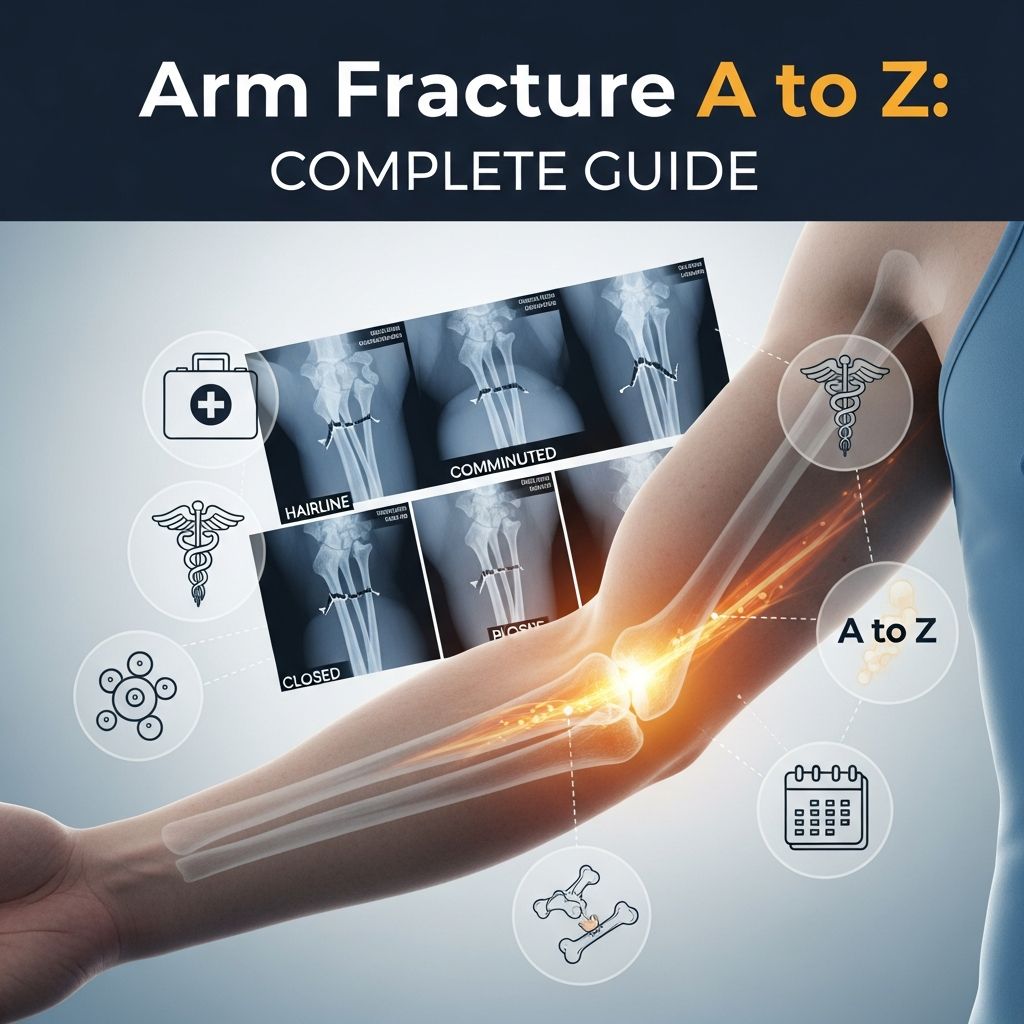
An arm fracture, commonly referred to as a broken arm, is one of the most frequently encountered orthopedic injuries. Whether due to a fall, sports injury, or direct trauma, arm fractures affect both children and adults across all age groups. Understanding the fundamentals of arm fractures—from recognition to recovery—is essential for proper management and optimal healing outcomes. This comprehensive guide covers everything you need to know about arm fractures, including their causes, symptoms, classification, diagnostic methods, treatment options, and potential complications.
What is an Arm Fracture?
An arm fracture occurs when one or more bones in the arm break due to trauma or force. The arm contains three primary bones: the humerus in the upper arm, and the radius and ulna in the forearm. The arm’s structure allows for diverse movements including bending, straightening, and rotation. When these bones fracture, these movements become limited or impossible, requiring immediate medical attention.
Arm fractures rank among the most common fractures treated by orthopedic specialists. The injury typically occurs when people fall and instinctively reach out to break the fall, placing tremendous downward force on the arm bones. However, fractures can also result from direct blows, motor vehicle accidents, or sports-related trauma.
Types of Arm Fractures
Arm fractures are classified into four main categories based on the severity and pattern of the break:
Stable Fractures
In a stable fracture, the ends of the broken bones remain very close to each other, with minimal displacement. These fractures typically respond well to conservative treatment methods such as casting or splinting, making them less severe than other fracture types.
Displaced Fractures
Displaced fractures occur when the broken bone fragments are misaligned or out of place. This type of fracture usually requires more aggressive intervention, such as manual reduction or surgical realignment to restore proper bone positioning.
Comminuted Fractures
A comminuted fracture involves the bone breaking into three or more fragments or pieces. These complex fractures are typically more severe and often require surgical intervention to properly align and stabilize all bone fragments during healing.
Compound (Open) Fractures
Compound fractures represent the most severe type, where broken bone protrudes through the skin, creating an open wound. These fractures carry increased risk of infection and require immediate surgical intervention and antibiotic treatment.
Causes and Risk Factors
Arm fractures result from various causes, with trauma being the primary factor. Understanding the common causes helps in prevention and risk awareness.
Common Causes
Falls remain the leading cause of arm fractures in both children and adults. During falls, the natural reflex to brace oneself by extending the arms creates significant force on the bones. Sports injuries, particularly in contact sports and activities with fall potential, frequently cause arm fractures. Motor vehicle accidents can produce high-impact trauma resulting in fractures. Direct blows to the arm, falls from heights, and workplace injuries also contribute significantly to fracture incidence.
Related Stories



Risk Factors
Age plays a crucial role in fracture risk. Young children have developing bones that are more vulnerable to breaks, while older adults have decreased bone density making bones more brittle. Osteoporosis significantly increases fracture risk by reducing bone mineral density. Participation in high-risk sports and activities increases the likelihood of traumatic injury. Previous fractures or bone conditions predispose individuals to future breaks.
Symptoms of Arm Fractures
Recognizing arm fracture symptoms is critical for timely diagnosis and treatment. While mild fractures may present subtle symptoms, more severe breaks produce obvious signs.
Common Symptoms
Severe pain at the injury site is the primary symptom, ranging from mild discomfort in hairline fractures to intense pain in displaced or open fractures. Swelling develops quickly as the body’s inflammatory response increases blood flow to the injured area. Reduced range of motion, including inability to bend the elbow or rotate the arm, often occurs. Many patients experience numbness or tingling below the fracture site, extending to the fingers. Visible deformity such as abnormal bending, limb shortening, or bone protruding through the skin indicates serious fractures.
When to Seek Emergency Care
Certain symptoms warrant immediate emergency attention. Call 911 or go to the emergency room if visible bleeding occurs, significant trauma is evident, or signs of shock develop. If blood vessels or nerves are damaged, you may experience severe bleeding, loss of sensation, or loss of limb color and warmth.
Diagnosis of Arm Fractures
Proper diagnosis determines the appropriate treatment approach. Healthcare providers use multiple diagnostic methods to assess fracture severity and location.
Physical Examination
An orthopedic specialist performs a comprehensive physical examination, assessing pain location, range of motion, swelling, and any visible deformities. The provider carefully palpates the injury site to determine fracture location and checks for signs of nerve or blood vessel damage.
Imaging Studies
X-rays remain the standard diagnostic tool for arm fractures, providing clear images of bone fracture patterns, displacement, and alignment. X-rays are taken from multiple angles to fully visualize the fracture. Advanced imaging such as CT scans may be ordered for complex fractures to provide three-dimensional visualization. MRI imaging might be used if soft tissue damage is suspected.
Treatment Options for Arm Fractures
Treatment approaches vary based on fracture type, severity, patient age, and overall health status. The primary goal is realigning bone fragments and maintaining proper alignment during healing.
Non-Surgical Treatment
Many arm fractures heal successfully without surgery. A cast or splint immobilizes the arm, preventing movement that could disrupt healing. Casts are typically worn for four to six weeks for simple fractures. Manual reduction involves gently repositioning bone fragments without surgery, often performed in the emergency department. Rest, ice, and elevation reduce swelling and pain. Pain medications manage discomfort during the healing process.
Surgical Treatment
Surgery becomes necessary for complex, displaced, or compound fractures. Surgical approaches include internal fixation using plates and screws to hold bones together, intramedullary rodding where rods stabilize bones through their central canal, and external fixation using pins inserted through skin into bones, connected to an external frame for stability.
Comparison of Treatment Approaches
| Treatment Type | Best For | Duration | Advantages | Considerations |
|---|---|---|---|---|
| Cast/Splint | Simple, stable fractures | 4-6 weeks | Non-invasive, lower cost | Requires compliance, limited mobility |
| Manual Reduction | Displaced but reducible fractures | Acute intervention | Avoids surgery, immediate | May require repeated procedures |
| Internal Fixation (Plates/Screws) | Complex, multi-fragment fractures | Surgical recovery 8-12 weeks | Precise alignment, early mobilization | Surgical risks, possible hardware removal |
| Intramedullary Rodding | Long bone fractures, comminuted breaks | Surgical recovery 8-12 weeks | Minimal soft tissue damage | Requires specialized expertise |
| External Fixation | Open fractures, temporary stabilization | Variable, weeks to months | Allows wound access, adjustable | Pin site infections, longer recovery |
Recovery and Rehabilitation
Recovery timelines vary significantly based on fracture severity and individual factors. Simple fractures in children often heal within four to six weeks, while complex adult fractures may require several months. After immobilization removal, physical therapy and occupational therapy accelerate recovery through targeted exercises. Hand therapy helps regain range of motion and strength, particularly important for forearm fractures affecting rotation.
Recovery Phases
The inflammation phase (first one to two weeks) involves pain management and swelling reduction. The early healing phase (two to six weeks) involves bone callus formation and protective immobilization. The remodeling phase (six weeks to one year or longer) involves gradual strengthening and return to normal activities. Complete recovery may take six months to a year for complex fractures.
Potential Complications
While arm fractures are common, complications can arise without proper treatment or management. Compartment syndrome develops when excessive swelling cuts off blood supply to arm tissues, potentially leading to tissue death and amputation if untreated. Damage to surrounding blood vessels and nerves can result in permanent nerve damage, affecting sensation or motor function. Infection occurs particularly with compound fractures where bone breaks through skin, or from post-operative contamination. Non-union develops when bones fail to properly reconnect after surgery or immobilization. Malunion occurs when bones heal in improper alignment, potentially affecting arm function. Arthritis may develop following severe fractures, causing long-term pain and stiffness.
Special Considerations in Children
Children’s arm fractures often heal remarkably well without surgery due to their natural growth processes and bone remodeling capabilities. The pediatric skeleton is more flexible than adult bone, sometimes resulting in greenstick fractures where bones bend but don’t completely break. Children typically regain full function more quickly than adults, though supervision remains essential to prevent re-injury during early healing.
Arm Fracture Prevention
While accidents happen unpredictably, several strategies reduce fracture risk. Maintaining strong bones through adequate calcium and vitamin D intake supports bone density. Regular weight-bearing exercise strengthens bones and supporting muscles. Proper protective equipment during sports includes wrist guards, elbow pads, and appropriate eyewear. Home safety modifications reduce fall risks, particularly for older adults. Awareness of surroundings and careful movement during activities prevent traumatic injuries.
Frequently Asked Questions
Q: How long does an arm fracture take to heal?
A: Simple arm fractures typically heal in four to six weeks with proper immobilization. More complex fractures require eight to twelve weeks or longer. Complete functional recovery may take six months to one year.
Q: Can a broken arm heal without a cast?
A: Some very minor fractures might heal with a splint or sling rather than a full cast, but most fractures require immobilization with a cast to ensure proper alignment and optimal healing.
Q: What should I do immediately after injuring my arm?
A: Apply the RICE protocol: Rest the arm, apply Ice to reduce swelling, apply Compression with a bandage, and Elevate the arm above heart level. Seek medical evaluation promptly to rule out fractures.
Q: Will I regain full function after an arm fracture?
A: Many simple fractures result in nearly complete recovery with proper treatment and rehabilitation. More complicated fractures may result in some permanent loss of motion or strength, particularly without appropriate therapy.
Q: When can I return to normal activities after an arm fracture?
A: Activities may be restricted for two to three months following cast removal, with gradual progression as approved by your healthcare provider. Return timelines depend on fracture severity and individual healing rates.
Q: What is physical therapy’s role in arm fracture recovery?
A: Physical and occupational therapy help restore strength, flexibility, and range of motion through targeted exercises. Hand therapy is particularly important for regaining forearm rotation and grip strength.
References
- Broken Arm: Symptoms, Causes, Risk Factors & Treatment — Healthgrades. 2024. https://resources.healthgrades.com/right-care/bones-joints-and-muscles/broken-arm
- Hand and Arm Bone Fractures — Brigham and Women’s Hospital Department of Orthopaedic Surgery. 2024. https://www.brighamandwomens.org/orthopaedic-surgery/hand-and-upper-extremity/fractures
- Forearm Fractures: Overview and Treatment Options — Massachusetts General Hospital Hand & Arm Service. 2024. https://www.massgeneral.org/orthopaedics/hand/conditions-and-treatments/forearm-fractures
Similar Articles








Read full bio of medha deb