Arnica: Traditional Remedy for Bruises and Injuries
Explore arnica's uses, effectiveness, and safety in treating sprains, bruises, and muscle pain.
Arnica: A Comprehensive Overview
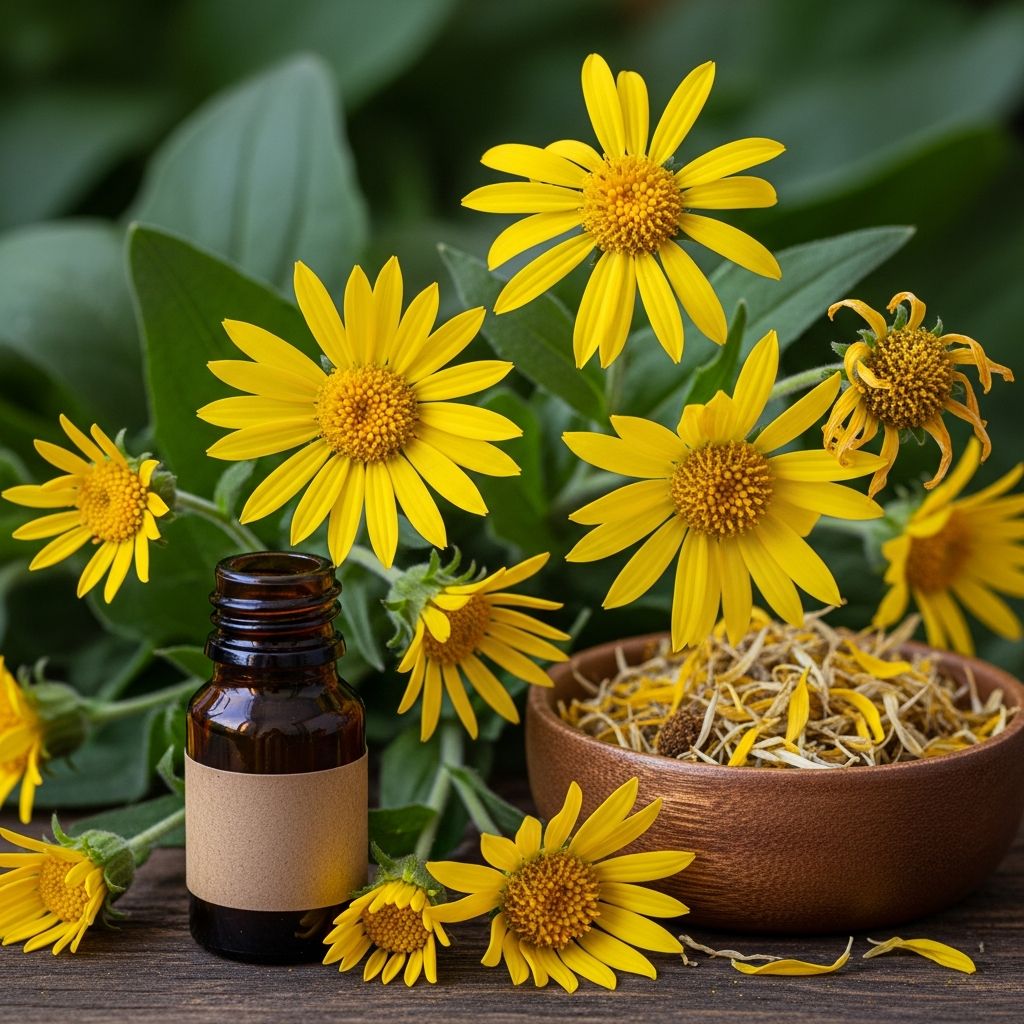
Arnica montana, commonly known as arnica or leopard’s bane, is a yellow-flowered aromatic herbaceous perennial that naturally grows in meadows and light woodland areas. This hardy plant typically flowers in early summer and features hairy leaves arranged in a basal rosette pattern. For centuries, arnica has been a staple in traditional medicine cabinets and herbal healing practices across Europe and beyond.
Description and Botanical Characteristics
Arnica montana is distinguished by its vibrant yellow flowers and aromatic properties, making it easily recognizable among alpine flora. The plant thrives in temperate climates and produces flowers suitable for medicinal extraction. While Arnica montana remains the primary species cultivated for medicinal purposes, other related species including A. longifolia, A. chamissonis, and A. schalinensis are also utilized in herbal preparations.
Traditional and Common Uses
Arnica has been employed across numerous traditional medicine systems to address diverse health conditions. The plant is most frequently applied to manage:
- Bruises and contusions (skin discoloration from injury)
- Sprains involving torn or stretched ligaments
- Muscle pain and soreness
- Swelling and edema
- Osteoarthritis-related joint pain
- Rheumatic conditions
- Wounds and skin injuries
- Chilblains
- Inflammation of the mouth and throat
- Insect bites
The German Commission E has officially approved arnica flower products for treating hematomas, dislocations, contusions, edema, rheumatic joint and muscle pain, inflammation of the mouth and throat, insect bites, and superficial phlebitis. The European Union similarly authorizes several arnica-containing preparations for external use, particularly tinctures and liquid flower extracts.
Active Chemical Compounds
Arnica’s therapeutic potential stems from its complex chemistry. The plant contains numerous bioactive compounds that contribute to its medicinal properties:
- Sesquiterpene lactones: The primary active constituents responsible for anti-inflammatory and immunomodulatory effects
- Flavonoids: Antioxidant compounds found throughout the plant
- Carotenoids: Pigments with antioxidant properties
- Essential oils: Volatile compounds contributing to the plant’s aroma and bioactivity
- Diterpenes: Complex organic compounds with anti-inflammatory potential
- Arnidiol: A specific compound unique to arnica
- Pyrrolizidine alkaloids: Alkaloid compounds present in the plant material
- Coumarins and phenolic acids: Secondary metabolites with various biological activities
- Lignans and oligosaccharides: Complex carbohydrates and phenolic compounds
Sesquiterpene lactones, the primary active constituents, function through multiple mechanisms, including inhibiting the binding of transcription factors AP-1 and NF-κB to DNA, thereby reducing inflammatory gene expression.
Mechanisms of Action
Arnica’s therapeutic effects result from multiple biological mechanisms working synergistically:
Anti-inflammatory Properties
The anti-inflammatory activities of arnica have been extensively investigated in laboratory and animal models. Arnica diminishes the expression of intracellular cell adhesion molecule (ICAM-1) induced by inflammatory mediators in endothelial cells and increases the population of anti-inflammatory macrophages compared to pro-inflammatory variants in mice with injured skeletal muscles. Research demonstrates that arnica tinctures suppress collagenase enzymes (MMP1 and MMP13) that contribute to cartilage destruction in osteoarthritis and rheumatoid arthritis.
Antimicrobial and Antioxidant Effects
Plant extracts demonstrate antibacterial, antifungal, and antitumor properties. In vitro studies confirm antimicrobial activity, though clinical evidence in humans remains limited. Arnica’s antioxidant compounds help neutralize harmful free radicals that contribute to tissue damage and inflammation.
Related Stories



Immunomodulatory Activity
Sesquiterpene lactones suppress NF-κB activation and IL-12 production in dendritic cells at high concentrations, though they can exhibit immunostimulatory effects when diluted. This dual action suggests arnica may help modulate immune responses appropriately depending on concentration and application context.
Clinical Evidence and Research Findings
Clinical trials examining arnica’s effectiveness show mixed but generally promising results:
Bruising and Contusions
Topical arnica significantly reduces bruising compared with placebo or low-concentration vitamin K ointments. This represents one of arnica’s most well-supported applications in clinical practice.
Osteoarthritis
A few clinical trials suggest that topical arnica provides helpful benefits for osteoarthritis management. Fresh plant gel showed similar activity to gel extracts in patients with knee osteoarthritis, with pain scores significantly reduced through treatment for three and six weeks. In one trial studying calcific periarthritis of the shoulder, an ointment mixture combining arnica with other herbs produced more potent pain reduction than arnica alone, suggesting possible synergistic effects.
Exercise-Induced Muscle Pain
Results have been inconsistent in this area. Topical arnica applied to the skin every four waking hours reduced pain three days following a downhill run. However, a small study reported that topical arnica actually increased leg pain 24 hours after eccentric calf raises, suggesting variable effectiveness depending on timing and exercise type.
Tendinitis and Other Conditions
A gel cream containing 5% Brazilian arnica extract (Solidago chilensis) applied to the skin for 21 days reduced arm pain in patients suffering from tendinitis of the flexor and extensor tendons. Additional research indicates arnica may benefit acute and chronic pain management as an adjunctive therapeutic approach.
Rigorous research remains necessary to fully determine the clinical benefits of homeopathic arnica formulations specifically.
Forms and Preparations
Arnica is available in multiple formulations, each with different applications and penetration characteristics:
External Preparations
- Tinctures: Concentrated liquid extracts, the major traditional form, frequently applied to sprains, bruises, and wounds, though evidence of effectiveness is limited
- Gels and creams: Topical formulations providing convenient application for local pain and swelling
- Ointments: Oil-based preparations showing continuous skin penetration for extended effects
- Fresh plant extracts: Preparations using freshly harvested plant material
Research indicates that sesquiterpene lactone penetration from arnica extracts is approximately 10-fold higher than from isolated compounds, suggesting that whole plant preparations may be more effective than single isolated constituents. Penetration rates from gel preparations decrease after 4 hours, while ointment preparations facilitate continuous skin penetration.
Safety and Adverse Effects
While arnica is generally well-tolerated when used topically, several important safety considerations exist:
Allergic Reactions and Contact Dermatitis
Allergy to arnica has been recognized for several centuries, with over 100 cases documented in medical literature. Most cases result from self-treatment with arnica products. The allergenic potential may be partly due to sesquiterpene lactones and other allergens such as polyacetylenes. Dermal irritation potential varies with concentration, with slight patchy erythema observed in some studies using high-concentration arnica absolute.
Cross-Reactivity Concerns
Do not take arnica or use it on your skin if you are allergic to sunflowers, marigolds, ragweed, or other plants in the Asteraceae family, as cross-reactivity is possible.
Bleeding Risk
Arnica may increase bleeding risk, particularly concerning when combined with anticoagulant medications. Sesquiterpene lactones inhibit platelet function by interacting with platelet sulfhydryl groups, potentially reducing phospholipase A2 activity.
Internal Use Concerns
While topical use is generally safe and approved for external application, internal use requires careful consideration due to potential toxicity concerns, particularly regarding pyrrolizidine alkaloids.
Evidence Quality and Research Status
A systematic review examining arnica’s use in traumatic injuries and inflammation suggests that both phytotherapeutic and homeopathic formulations of arnica have potential for managing pain and inflammation. However, the quality and quantity of clinical evidence remains variable across different applications, necessitating continued research to establish definitive efficacy and optimal dosing protocols.
Frequently Asked Questions
Q: Is arnica effective for all types of bruises?
A: Arnica shows significant effectiveness for reducing bruising compared to placebo and vitamin K ointments, making it particularly useful for contusions from trauma. However, effectiveness may vary depending on bruise severity, individual response, and preparation type.
Q: Can I use arnica if I am taking blood thinners?
A: Arnica may increase bleeding risk due to its effects on platelet function. Consult your healthcare provider before using arnica if taking anticoagulant or antiplatelet medications.
Q: What form of arnica is most effective?
A: Whole plant extracts (tinctures, gels, and ointments) appear more effective than isolated compounds, with ointments providing continuous penetration. The optimal form depends on your specific condition and application site.
Q: How long does it take for arnica to work?
A: Response times vary by condition. For exercise-induced muscle pain, arnica reduced pain by day three after activity. For osteoarthritis, significant pain reduction occurred within three to six weeks of treatment.
Q: Can I be allergic to arnica?
A: Yes, allergic reactions and contact dermatitis have been documented, particularly in individuals with sensitivities to plants in the Asteraceae family (sunflowers, marigolds, ragweed). Avoid use if you have known allergies to these plants.
Q: Is homeopathic arnica effective?
A: While systematic reviews suggest potential benefits, rigorous research specifically examining homeopathic arnica formulations remains limited, requiring more definitive clinical evidence.
Conclusion
Arnica montana represents a well-established herbal remedy with centuries of traditional use supporting its application for bruises, sprains, muscle pain, and inflammatory conditions. Scientific investigation has identified multiple active compounds and mechanisms explaining its therapeutic effects, particularly for reducing bruising and potentially benefiting osteoarthritis management. While clinical evidence is promising for specific applications, continued rigorous research is necessary to optimize dosing, formulations, and identify ideal patient populations. When used appropriately as a topical preparation and with attention to safety considerations, arnica may serve as an effective adjunctive approach for acute and chronic pain management.
References
- Arnica — Memorial Sloan Kettering Cancer Center. 2024. https://www.mskcc.org/cancer-care/integrative-medicine/herbs/arnica
- Arnica montana L. – a plant of healing: review — Journal of Pharmacy and Pharmacology, Wiley Online Library. 2020. https://doi.org/10.1111/jphp.12724
- Clinical Trials, Potential Mechanisms, and Adverse Effects of Arnica — National Center for Biotechnology Information (NCBI). 2021. https://www.ncbi.nlm.nih.gov/pmc/articles/PMC8537440/
- Final Report on the Safety Assessment of Arnica Montana Extract — Cosmetic Ingredient Review (CIR). 2001. https://journals.sagepub.com/doi/pdf/10.1080/1091581015290254711
- Assessment report on Arnica montana L., flos — European Medicines Agency (EMA). 2015. https://www.ema.europa.eu/en/documents/herbal-report/draft-assessment-report-arnica-montana-l-flos_en.pdf
- Arnica — DermNet New Zealand. 2024. https://dermnetnz.org/topics/arnica
- Systematic Review of Arnica’s Use in Traumatic Injuries and Inflammation — HerbalGram. 2026. https://www.herbalgram.org/resources/herbclip/issues/2026/776/arnica-traumatic-injuries-inflammation/
Similar Articles








Read full bio of medha deb