Art Therapy: Creative Ways to Boost Mental Health
Unlock emotional healing through art: reduce stress, manage anxiety, and enhance well-being with creative therapy techniques.
Art therapy combines creative expression with psychological principles to foster emotional healing, self-discovery, and mental well-being. It engages non-verbal parts of the brain, allowing individuals to process emotions that words alone cannot capture, making it accessible for people of all ages and backgrounds.
What is art therapy?
Art therapy is a form of psychotherapy that uses visual arts, such as drawing, painting, sculpting, and collage, to help individuals explore feelings, reconcile emotional conflicts, and develop self-awareness. Delivered by trained art therapists in clinical settings or practiced self-guided at home, it bridges the gap between the conscious and subconscious mind through color, shape, and form.
Unlike traditional talk therapy, art therapy leverages the creative process to bypass verbal limitations, particularly beneficial for those struggling to articulate emotions. Research from the National Institutes of Health highlights its role in treating mental illnesses by controlling psychosocial behaviors, slowing cognitive decline, and enhancing quality of life.
Art therapists, equipped with psychological training and expertise in art media, tailor sessions to therapeutic goals, selecting materials that promote insight, stress reduction, trauma healing, and interpersonal growth.
What are the benefits of art therapy?
Art therapy offers multifaceted benefits for mental health, supported by clinical evidence. It significantly reduces symptoms of
anxiety
anddepression
, improvesself-esteem
, supportsemotional regulation
, enhancesself-awareness
, and lowerscortisol levels
—the stress hormone.- Reduces stress and anxiety: The meditative focus required in creating art promotes mindfulness, naturally lowering stress by keeping individuals present.
- Improves emotional expression: Non-verbal outlets allow cathartic release of pent-up emotions, aiding those with communication barriers.
- Boosts self-esteem and confidence: Mastering artistic skills fosters a sense of accomplishment and value.
- Enhances interpersonal relationships: Group sessions build social networks and empathy through shared creativity.
- Supports trauma and illness coping: Helps navigate terminal illnesses or psychosis by externalizing internal struggles.
A randomized controlled trial showed art therapy improved depression and anxiety in pharmacologically treated patients, with techniques like clay modeling and painting enhancing emotion regulation. The American Psychiatric Association notes creative arts engage body, mind, and soul beyond verbal therapy.
Who can benefit from art therapy?
Art therapy is versatile, benefiting children, adults, seniors, and those with diverse mental health challenges. It’s particularly effective for
depression
,anxiety disorders
,schizophrenia
,dementia
,trauma
, andsocial isolation
.| Group | Key Benefits | Evidence |
|---|---|---|
| Adults with depression/anxiety | Symptom reduction, better emotion acceptance | RCTs show gains in goal-oriented actions |
| Teens with social anxiety | Identity development, peer reintegration | Programs emphasize process over product |
| Schizophrenia patients | Decline in positive/negative symptoms | Pilot studies vs. standard care |
| Seniors with dementia | Cognitive slowing, quality of life | Community art-making |
Even healthy individuals use it for stress management and personal growth, with no artistic skill required—the process matters more than the product.
How does art therapy work?
Art therapy operates on the principle that creative expression facilitates psychological insight. Therapists guide clients through processes that externalize inner experiences, using techniques like drawing emotions or sculpting fears.
Neurologically, it activates brain regions linked to emotion and memory, promoting neuroplasticity. Studies indicate it strengthens emotional expression, self-esteem, and awareness, with patients reporting easier sharing of feelings post-sessions.
Sessions may be individual, group-based, or community-oriented, incorporating mindfulness to achieve goals like trauma resolution or relationship improvement.
Related Stories



Art therapy techniques and activities
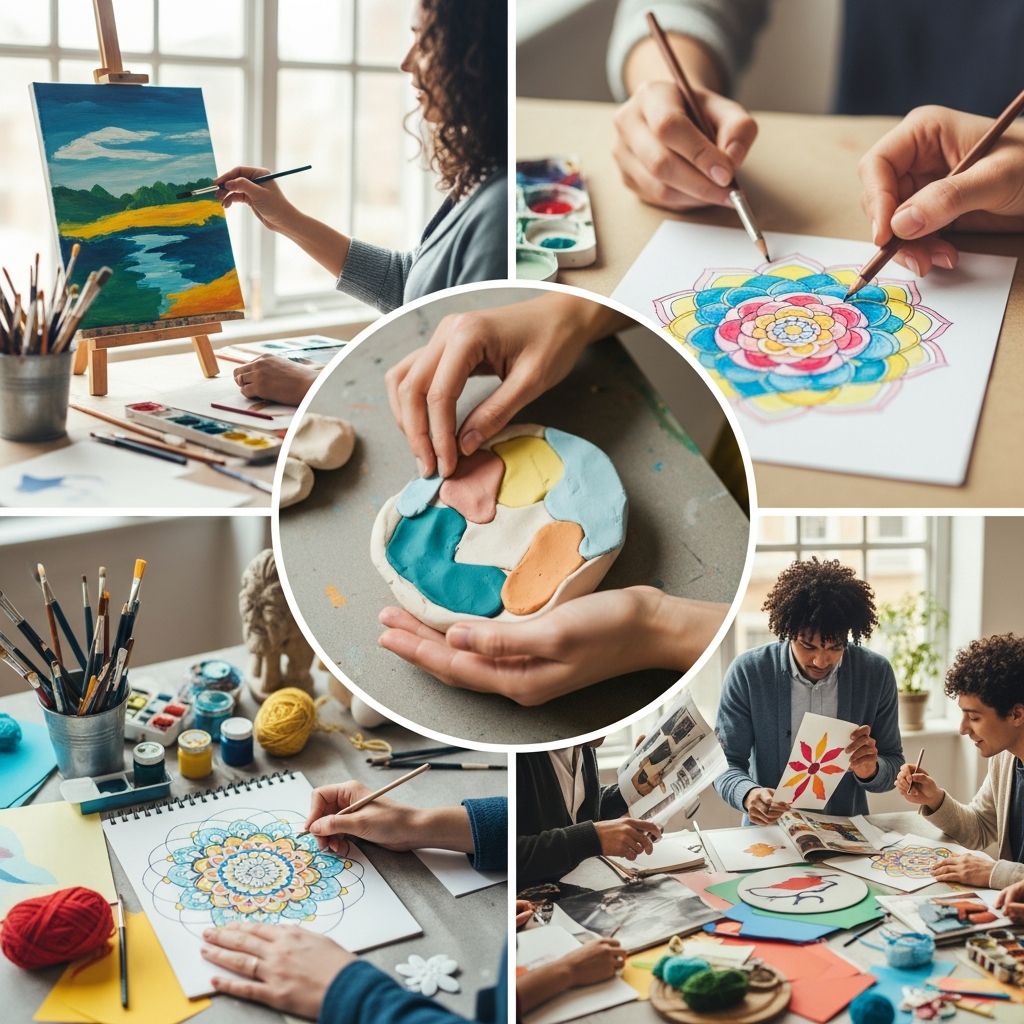
Common techniques include painting, drawing, clay work, collage, and photography. Here’s how to try them:
- Mindful coloring: Focus on patterns to reduce anxiety; accessible for beginners.
- Emotion mapping: Draw feelings as colors/shapes to identify triggers.
- Clay modeling: Sculpt worries to ‘release’ them physically.
- Collage journaling: Assemble images representing goals or past events.
- Free drawing: Doodle without judgment for subconscious insights.
For home practice, set aside 20-30 minutes daily with simple supplies like paper, markers, or recycled materials. Track progress in a journal to deepen self-awareness.
Art therapy in clinical vs. self-guided practice
Clinical art therapy, led by professionals, targets specific disorders with structured interventions. Self-guided versions empower personal use, though combining both maximizes benefits.
Evidence from Frontiers in Psychology confirms art therapy as a complementary treatment reducing mental symptoms across ages and environments.
Evidence and research on art therapy
Peer-reviewed studies affirm art therapy’s efficacy. A NIH review found it improves mental health rehabilitation via visual arts, with RCTs demonstrating anxiety reduction through emotion regulation.
Another study on schizophrenia patients showed superior outcomes over standard care. Limitations include small samples, but consensus supports its adjunct role.
Frequently Asked Questions (FAQs)
Do I need artistic talent for art therapy?
No, art therapy emphasizes process over skill. Anyone can benefit regardless of experience.
How often should I practice art therapy?
Daily 15-30 minute sessions yield best results, but consistency trumps duration.
Can art therapy replace medication?
No, it’s complementary. Consult professionals for integrated care.
Is art therapy suitable for children?
Yes, it helps with emotional expression in kids who struggle verbally.
Where can I find an art therapist?
Seek certified professionals via associations like the American Art Therapy Association.
Getting started with art therapy at home
Begin with low-pressure activities: Gather supplies, choose a quiet space, set an intention (e.g., ‘express today’s stress’), create freely, then reflect. Over time, notice patterns in your work for deeper insights.
Apps and online communities offer guided sessions, but professional guidance enhances safety for trauma-related work.
References
- Art therapy: creative ways to boost your mental health — Patient.info. 2023. https://patient.info/features/treatment-medication/art-therapy-creative-ways-to-boost-your-mental-health
- Role of Art Therapy in the Promotion of Mental Health — National Library of Medicine, NIH. 2022-09-01. https://pmc.ncbi.nlm.nih.gov/articles/PMC9472646/
- Creative Arts: Enhancing Mental Health and Well-being — American Psychiatric Association. 2023. https://www.psychiatry.org/news-room/apa-blogs/creative-arts-enhancing-mental-health
- Benefits of Art Therapy for Mental and Physical Health — Husson University. 2024-02-28. https://www.husson.edu/online/blog/2024/02/benefits-of-art-therapy
- Art Therapy & Its Mental Health Benefits — Horsham Clinic. 2023. https://horshamclinic.com/blog/art-therapy-its-mental-health-benefits/
- Art Therapy: A Complementary Treatment for Mental Disorders — Frontiers in Psychology. 2021-05-04. https://www.frontiersin.org/journals/psychology/articles/10.3389/fpsyg.2021.686005/full
- What is Art Therapy? — American Art Therapy Association. 2023. https://arttherapy.org/what-is-art-therapy/
Similar Articles








Read full bio of Sneha Tete