Arteries: What They Are, Anatomy & Function
Understanding arteries: Essential blood vessels delivering oxygen throughout your body.
What Are Arteries?
Arteries are a critical part of your cardiovascular system and function as the primary blood vessels responsible for distributing oxygen-rich blood from your heart to every organ and tissue throughout your body. These powerful, muscular vessels work continuously to maintain circulation and support all bodily functions. Unlike veins, which return deoxygenated blood to the heart, arteries carry blood away from the heart under high pressure, ensuring that vital oxygen reaches every corner of your body.
Your arteries are more than simple tubes—they are sophisticated biological structures designed to withstand the constant force of blood pumping from your heart. The largest artery in your body, the aorta, begins at the left ventricle of your heart and branches into progressively smaller arteries that penetrate deep into your organs and tissues. This branching network creates an extensive highway system for blood delivery, with arteries becoming progressively smaller as they approach their destinations.
Understanding Artery Anatomy
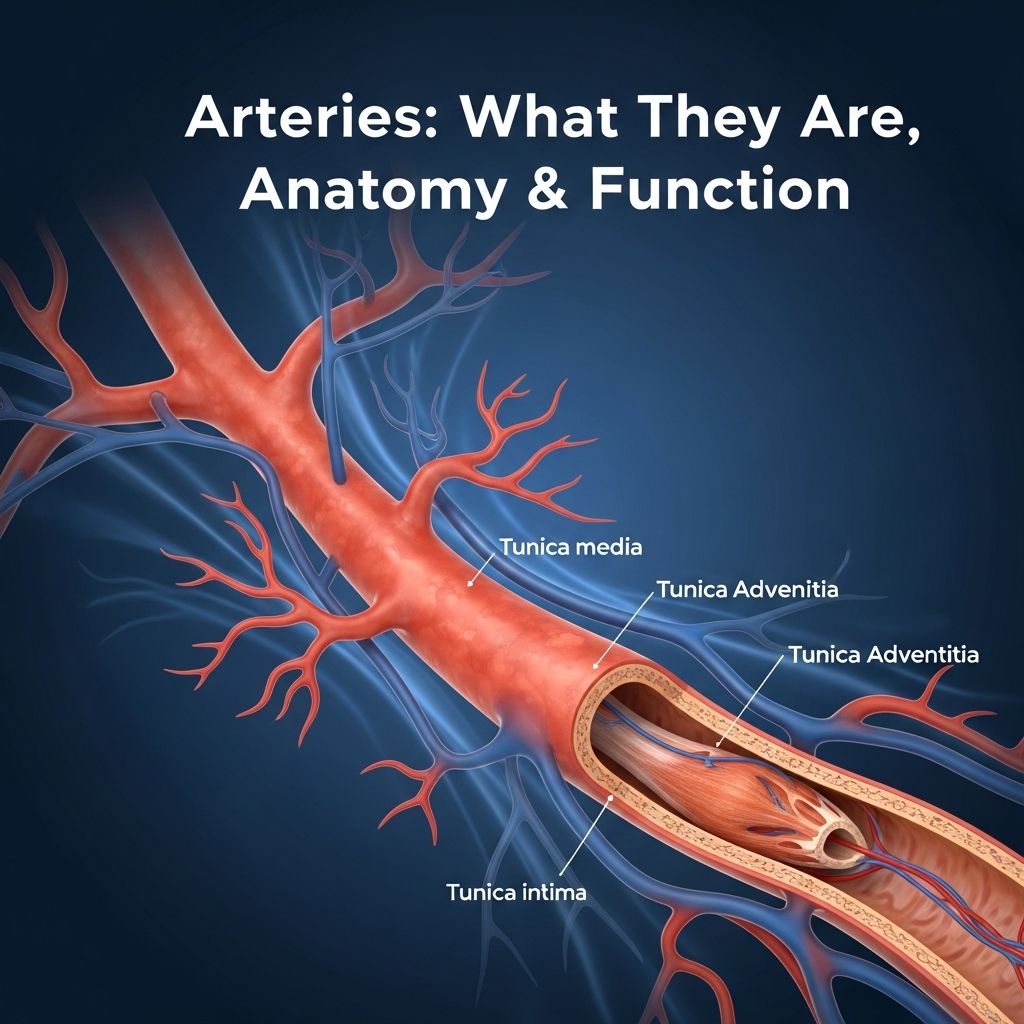
To comprehend how arteries function, it’s essential to understand their internal structure. Arteries possess a sophisticated three-layer design that enables them to perform their demanding role in circulation.
The Three Layers of Artery Walls
Each artery consists of three distinct layers, each serving specific purposes:
Tunica Intima (Inner Layer): The innermost layer, made of endothelial cells, provides a smooth surface for blood flow. This layer is thin yet critical, as it prevents blood from clotting and minimizes resistance to flow.
Tunica Media (Middle Layer): This muscular layer contains smooth muscle cells and elastic fibers. It provides elasticity and strength, allowing arteries to expand when blood surges from the heart and contract to maintain pressure during the resting phase. This layer is particularly prominent in elastic arteries like the aorta.
Tunica Adventitia (Outer Layer): The outermost connective tissue layer anchors the artery to surrounding structures and provides additional strength. It contains collagen fibers and elastic tissue that help the artery maintain its shape and integrity.
Types of Arteries
Not all arteries are identical. They vary in size, structure, and function depending on their location and role in circulation.
Elastic Arteries
Elastic arteries, such as your aorta and pulmonary artery, are large vessels that carry substantial amounts of blood away from your heart. These arteries have a high elastic content that allows them to handle the force of blood surging from the heart. Because your heart pumps blood in bursts rather than providing steady flow, elastic arteries must accommodate these pressure changes. Their flexibility allows blood to flow steadily throughout your circulatory system, even between heartbeats.
Muscular Arteries
Muscular arteries are medium-sized vessels with thicker smooth muscle layers relative to their size. They branch from elastic arteries and distribute blood to specific organs and regions. These arteries can constrict or dilate to regulate blood flow to different areas based on the body’s needs.
Arterioles
Arterioles are the smallest arteries, serving as the bridge between larger arteries and capillaries. They play a crucial role in regulating blood pressure and directing blood flow to specific tissues. Arterioles can constrict to reduce blood flow or dilate to increase it, making them important regulators of circulation.
How Arteries Function in Your Cardiovascular System
Arteries function as part of an integrated system that keeps your entire body supplied with oxygen and nutrients. Blood flows from your arteries into smaller blood vessels called arterioles, which then connect to capillaries where oxygen exchange occurs. Once oxygen is delivered to tissues, blood returns through veins to the heart, completing the circuit.
Your circulatory system begins when blood leaves your heart into big highways for blood called arteries that deliver blood to your organs and tissues. The aorta, the main artery leaving your left ventricle, represents the starting point for this extensive distribution network. As the aorta branches repeatedly, arteries become progressively smaller yet remain essential for maintaining adequate blood pressure and flow to reach all body parts.
Specialized Arteries and Their Functions
Coronary Arteries: These specialized arteries supply oxygen-rich blood directly to the heart muscle itself. Your right and left coronary arteries branch off the aorta and are the first branches of this main vessel. The right coronary artery supplies the right atrium and ventricle, while the left main coronary artery supplies the left atrium and ventricle. These arteries are typically between 3 and 4 millimeters in diameter, about the size of a drinking straw.
Carotid Arteries: Located in your neck, carotid arteries supply blood and oxygen to your brain. You have two common carotid arteries, one on each side of your neck, beginning in your upper chest just below your neck and traveling upward toward your skull. These vessels are critically important because blockages can lead to strokes.
Conditions That Can Harm Your Arteries
Despite their strength and resilience, arteries are vulnerable to several conditions that can compromise their function and pose serious health risks.
Atherosclerosis and Plaque Buildup
Atherosclerosis represents one of the most common and serious threats to arterial health. This condition involves the gradual buildup of plaque—composed of fat, cholesterol, and other substances—inside artery walls. As plaque accumulates, artery walls become thicker and harder in a process known as “hardening of the arteries.” Initially silent, this process may cause no noticeable symptoms for years.
As plaque grows, the opening (lumen) of your artery narrows, leaving less room for blood to flow. This means less blood can reach your organs and tissues. Additionally, the constant force of blood flow can lead to plaque erosion or rupture, causing blood clots to form. These clots can completely block blood flow, leading to heart attacks or strokes.
Coronary Artery Disease
Coronary artery disease (CAD) is the most common condition affecting coronary arteries and represents the most common form of heart disease in the United States. CAD often results from atherosclerosis, with clogged arteries preventing blood from reaching the heart muscle. A blockage in one or more coronary arteries typically causes a heart attack.
Carotid Artery Disease
Carotid artery disease is a serious condition affecting these vital neck vessels. Plaque buildup in carotid arteries may limit or block blood flow to the brain, causing a stroke. This condition develops gradually, making it particularly dangerous because many people experience no symptoms until a medical emergency occurs.
High Blood Pressure and High Cholesterol
Some conditions that harm arteries, such as high blood pressure and high cholesterol, don’t initially produce symptoms. You may not notice your arteries getting stiffer or clogging with plaque that collects over time. However, these problems make it progressively harder for blood to move through your arteries, eventually leading to narrow or blocked vessels.
Risk Factors and Prevention
Understanding risk factors is crucial for maintaining arterial health. Lifestyle factors including smoking, poor diet, sedentary behavior, obesity, and chronic stress all contribute to arterial disease. Additionally, conditions like diabetes, high blood pressure, and high cholesterol significantly increase risk.
Prevention strategies focus on lifestyle modifications and medical management. Regular physical activity strengthens the cardiovascular system, while a heart-healthy diet rich in fruits, vegetables, and whole grains supports arterial health. Maintaining a healthy weight, avoiding tobacco, managing stress, and controlling blood pressure and cholesterol through medication when necessary all help preserve arterial function.
Recognizing Symptoms of Arterial Problems
While early arterial disease often causes no symptoms, advanced conditions may produce warning signs. These can include chest pain or discomfort, shortness of breath, fatigue, numbness in extremities, or difficulty with cognitive function. For carotid artery disease specifically, symptoms may include sudden weakness, vision problems, or difficulty speaking. Any concerning symptoms warrant immediate medical evaluation.
Diagnostic and Treatment Options
Healthcare providers use various tools to assess arterial health, including blood pressure monitoring, blood tests, imaging studies like ultrasound or angiography, and stress tests. Early detection of arterial disease through screening allows for intervention before serious complications develop.
Treatment approaches vary depending on disease severity and location. Lifestyle modifications form the foundation of management for all patients. Medications may include statins to lower cholesterol, antihypertensives to control blood pressure, antiplatelet agents to prevent clots, and other drugs targeting specific risk factors. For severe blockages, procedures like angioplasty or stent placement may restore blood flow, while bypass surgery may be necessary in some cases.
Frequently Asked Questions
Q: What’s the difference between arteries and veins?
A: Arteries carry oxygen-rich blood away from the heart under high pressure, while veins return deoxygenated blood to the heart. Arteries have thicker, more muscular walls to withstand this pressure, while veins have thinner walls and often contain valves to prevent backflow.
Q: How can I keep my arteries healthy?
A: Maintain a heart-healthy diet low in saturated fats and sodium, exercise regularly, avoid smoking, manage stress, maintain a healthy weight, and have regular blood pressure and cholesterol screenings. These steps help prevent plaque buildup and maintain optimal arterial function.
Q: What are the early signs of arterial disease?
A: Early arterial disease often causes no symptoms, which is why it’s called a “silent” condition. This makes regular health screenings essential, especially for people with risk factors like family history, diabetes, or high blood pressure.
Q: Can arterial damage be reversed?
A: While established plaque cannot be completely eliminated, progression can be slowed or stopped through aggressive lifestyle modifications and medications. In some cases, modest plaque regression may occur with comprehensive treatment.
Q: How often should I get my arteries checked?
A: The frequency depends on your age, risk factors, and existing health conditions. Most adults should have baseline cardiovascular screening, with more frequent monitoring for those with risk factors or existing disease. Consult your healthcare provider about appropriate screening intervals.
References
- Coronary Arteries: Function & Anatomy — Cleveland Clinic. 2024. https://my.clevelandclinic.org/health/body/22973-coronary-arteries
- What Are The Carotid Arteries? — Cleveland Clinic. 2024. https://my.clevelandclinic.org/health/body/21492-carotid-artery
- Atherosclerosis: Symptoms, Causes & Treatment — Cleveland Clinic. 2024. https://my.clevelandclinic.org/health/diseases/16753-atherosclerosis-arterial-disease
- Arteries: What They Are, Anatomy & Function — Cleveland Clinic. 2024. https://my.clevelandclinic.org/health/body/22896-arteries
- What Are Elastic Arteries? — Cleveland Clinic. 2024. https://my.clevelandclinic.org/health/body/24774-elastic-arteries
- Blood Vessels: Types, Function & Anatomy — Cleveland Clinic. 2024. https://my.clevelandclinic.org/health/body/21640-blood-vessels
- How Blood Flows Through the Heart & Body — Cleveland Clinic. 2024. https://my.clevelandclinic.org/health/articles/17060-how-does-the-blood-flow-through-your-heart
Similar Articles








Read full bio of Sneha Tete