Arteriovenous Fistula: Causes, Symptoms & Treatment
Understanding AVF: An abnormal connection between arteries and veins requiring medical attention.
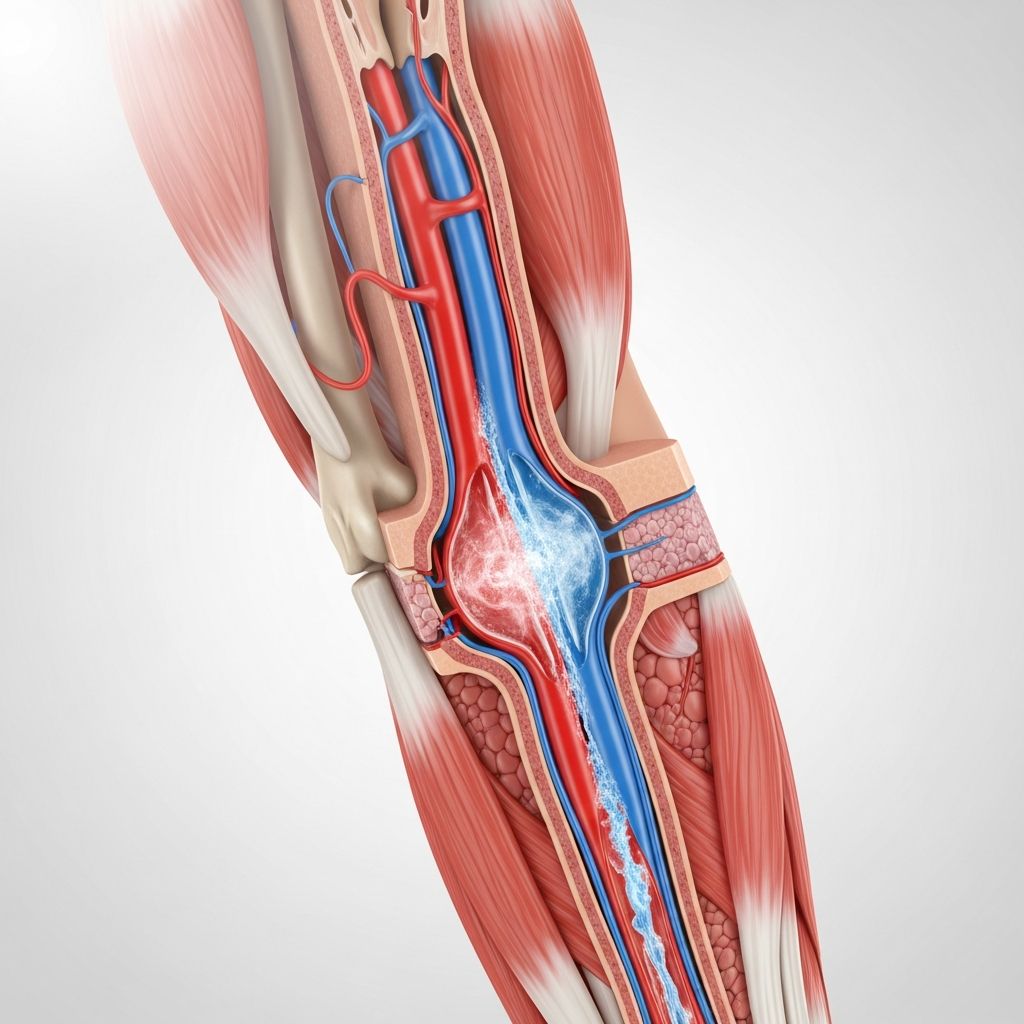
Arteriovenous Fistula (AVF): What You Need to Know
An arteriovenous fistula (AVF) is an abnormal connection or channel that develops directly between an artery and a vein. In normal circulatory function, blood flows from arteries through tiny blood vessels called capillaries, where oxygen and nutrients are delivered to tissues, before continuing into veins to return to the heart. However, when an AVF is present, blood bypasses the capillaries entirely, flowing directly from the artery into the vein under high pressure. This abnormal shunting disrupts the normal blood flow pattern and can lead to various health complications if left untreated.
Understanding the Causes of Arteriovenous Fistulas
Arteriovenous fistulas can develop through several different mechanisms. The three main causes include congenital conditions present at birth, acquired conditions that develop over time, and traumatic injuries. Understanding the cause is important for determining the appropriate treatment approach and monitoring strategy.
Congenital Arteriovenous Fistulas
Congenital AVFs are present from birth and result from abnormal development of blood vessels during fetal growth. These fistulas often affect how the involved body part develops. For instance, an AVF on your arm or leg may cause that limb to have greater muscle mass, longer bones, or visible swelling in the fingertips, a condition known as clubbing. In some cases, congenital AVFs may result in insufficient blood flow to the affected limb, causing it to appear blue or pale. Congenital fistulas require lifelong monitoring by healthcare providers.
Acquired Arteriovenous Fistulas
Acquired AVFs develop after birth and can result from various causes. Traumatic injuries, including those from accidents, gunshot wounds, or stab wounds, are common causes. Many acquired AVFs are iatrogenic, meaning they result from medical procedures. Attempted percutaneous femoral artery cannulation, a procedure used in cardiac catheterization and dialysis access, accounts for most iatrogenic AVFs. Inexpert central venous cannulation can also injure adjacent arteries, resulting in an unintended fistula. In rarer cases, AVFs can develop from conditions such as cancer, infections, or when a weak artery wall bulges out (aneurysm) and presses against a nearby vein.
Surgical Creation for Medical Purposes
In some cases, AVFs are intentionally created by surgeons for medical purposes. The most common reason is to provide vascular access for patients who require kidney dialysis. A surgically created AVF in the forearm or upper arm creates a high-flow connection that allows for efficient blood removal and return during dialysis treatments. These fistulas require regular monitoring and maintenance to ensure proper function.
Recognizing Symptoms of Arteriovenous Fistulas
The symptoms of an AVF depend significantly on its size and location within the body. Small AVFs often produce no symptoms and may be discovered incidentally during imaging for other conditions. Larger AVFs, however, can cause noticeable and sometimes serious symptoms.
Related Stories



Common Symptoms
Patients with significant AVFs commonly experience the following symptoms:
– Purplish or reddish, bulging veins visible through the skin, resembling varicose veins- Swelling in the arms, legs, or fingers (edema)- Decreased blood pressure, which can lead to fatigue and lightheadedness- Excessive fatigue and exhaustion- Limb pain or heaviness, particularly when the affected limb is in a dependent position- Skin discoloration or inflammation at the fistula site- Skin ulcers if the fistula diverts significant blood flow from an area
Symptoms by Location
When an AVF occurs in the brain, it can cause a cerebral hemorrhage or present with non-specific neurological symptoms including severe headaches, tinnitus (ringing in the ears), visual disturbances, and epileptic seizures. Pulmonary AVFs (in the lungs) can cause shortness of breath and reduced oxygen levels in the blood. Visceral AVFs (in internal organs) may present with internal bleeding symptoms such as bloody stools, blood in urine, or blood in vomit.
Complications Associated with Arteriovenous Fistulas
When large AVFs remain untreated, serious complications can develop that affect multiple organ systems. Early detection and treatment are crucial to prevent these life-threatening conditions.
Cardiovascular Complications
One of the most significant complications is heart failure. Because blood flows directly from arteries to veins through the fistula, it bypasses the normal resistance of the capillary system. This creates a low-resistance pathway that causes blood pressure to drop. To compensate for the decreased blood pressure, the heart must pump harder and faster than normal. Over time, this increased workload strains the heart muscle and can lead to heart failure, a condition in which the heart cannot pump blood efficiently throughout the body. Research has shown that high-output heart failure can be completely reversed after closing a high-flow AVF, particularly when intervention occurs early.
Vascular Complications
Large AVFs can lead to blood clots forming in the affected vessels. These clots can travel through the bloodstream and cause strokes or pulmonary embolisms. Additionally, the high pressure in veins can cause them to weaken and rupture, leading to internal or external bleeding. In limbs with large AVFs, insufficient blood flow to tissues distal to the fistula can result in tissue death (necrosis) and potential limb loss if untreated.
Local Complications
Venous hypertension from the fistula can cause chronic swelling, skin changes, and ulcer formation in the affected limb. Patients may experience severe limb pain due to ischemia (lack of blood flow). In some cases, the fistula can cause functional impairment of the limb or joint due to mass effect or tissue damage.
Diagnostic Approach for Arteriovenous Fistulas
Healthcare providers use several diagnostic methods to identify and characterize AVFs. During a physical examination, doctors look for characteristic signs including a palpable thrill (a vibration felt over the fistula), an audible bruit (abnormal sound heard through a stethoscope), visible bulging veins, skin discoloration, and limb swelling. The affected limb may show signs of ischemia or other circulatory changes.
Imaging studies confirm the diagnosis and assess the fistula’s size, location, and flow characteristics. Duplex ultrasound is often the first imaging modality used, as it is non-invasive and can measure blood flow through the fistula. Computed tomography (CT) angiography and magnetic resonance angiography (MRA) provide detailed visualization of the fistula and surrounding blood vessels. In some cases, conventional angiography may be performed, particularly when intervention is planned.
Treatment Options for Arteriovenous Fistulas
Treatment decisions depend on the fistula’s size, location, symptoms, and potential complications. Small, asymptomatic AVFs may only require monitoring with regular follow-up imaging and clinical evaluation.
Minimally Invasive Interventions
For symptomatic or enlarging fistulas, minimally invasive endovascular techniques offer effective alternatives to surgery. These procedures, performed under local anesthesia or mild sedation, include embolization using coils, plugs, or liquid agents to block blood flow through the fistula, and sclerotherapy, which involves injecting substances to close the abnormal connection.
Surgical Treatment
Surgical intervention may be necessary for large, complex, or symptomatic AVFs, or when endovascular approaches are unsuccessful. Surgical options include ligation, which involves tying off the fistula, or more complex reconstructive procedures to restore normal blood flow architecture. For surgically created dialysis fistulas that are no longer needed, surgical closure may be performed.
Stages of Arteriovenous Fistula Progression
Untreated AVFs progress through predictable stages of deterioration. Understanding these stages helps explain why early intervention is important.
Stage 1 (Dilatation): The fistula is small and primarily causes local vascular changes with minimal systemic effects.
Stage 2 (Expansion): The fistula enlarges, and blood flow through the shunt increases significantly.
Stage 3 (Destruction/Steal Syndrome): Tissues distal to the fistula become starved of blood flow, leading to skin changes, ulceration, and tissue ischemia.
Stage 4 (Decompensation): High-output heart failure develops as the heart can no longer compensate for the abnormal blood flow demands.
Why Arteriovenous Fistulas Enlarge
When blood flows directly from an artery into a vein through an AVF, the vein is exposed to arterial pressure, which is much higher than the normal venous pressure. Vein walls are not designed to withstand this level of pressure and gradually stretch and enlarge. The high-pressure flow also creates a low-resistance pathway that preferentially directs blood flow through the fistula rather than through normal capillary beds. Over time, this leads to progressive enlargement of both the feeding artery and the draining vein, creating the characteristic bulging, purplish appearance visible through the skin.
Living with an Arteriovenous Fistula
Patients with AVFs require ongoing medical supervision and lifestyle modifications. Those with dialysis fistulas must keep the access site clean and protected from injury. All patients should report new or worsening symptoms to their healthcare provider promptly. Regular follow-up appointments with vascular specialists help monitor fistula stability and prevent complications. Patients should avoid heavy lifting or strenuous exercise with the affected limb, particularly if the fistula is in an arm or leg.
Frequently Asked Questions About Arteriovenous Fistulas
Q: Can a small AVF disappear on its own?
A: Small AVFs may remain stable for years without growing or causing symptoms. However, they typically do not close on their own. Regular monitoring with imaging is recommended to detect any changes that might require intervention.
Q: Is an AVF always symptomatic?
A: No. Many small AVFs produce no symptoms and are discovered incidentally during imaging for other conditions. Symptoms depend on the fistula’s size, location, and how much blood it shunts away from normal pathways.
Q: Can AVF complications be reversed?
A: Yes, particularly when intervention occurs early. Research shows that high-output heart failure from large AVFs can be completely reversed after the fistula is closed, especially if the patient seeks treatment before significant cardiac damage occurs.
Q: What is the difference between an AVF and an aneurysm?
A: An AVF is an abnormal connection between an artery and vein that allows blood to shunt between them. An aneurysm is an abnormal bulging or weakening of a blood vessel wall. While these are different conditions, an aneurysm can sometimes press against and create an AVF in adjacent vessels.
Q: How often should I have imaging if I have an AVF?
A: The frequency of imaging depends on the size and location of the fistula, your symptoms, and your provider’s recommendations. Small, asymptomatic AVFs may be monitored with annual or less frequent imaging, while larger or symptomatic ones may require more frequent follow-up.
Q: Is pregnancy safe with an AVF?
A: This depends on the size and location of the fistula and how it affects your overall cardiovascular health. Women with AVFs who wish to become pregnant should discuss this with their vascular specialist before conception to assess individual risk factors.
References
- Arteriovenous Fistula — National Center for Biotechnology Information (NCBI), National Institutes of Health. 2022. https://www.ncbi.nlm.nih.gov/books/NBK559213/
- Arteriovenous Fistula: Symptoms & Causes — Mayo Clinic. 2022-05-17. https://www.mayoclinic.org/diseases-conditions/arteriovenous-fistula/symptoms-causes/syc-20369567
- Arteriovenous Fistula — UPMC (University of Pittsburgh Medical Center). https://www.upmc.com/services/heart-vascular/conditions/av-fistula
- Arteriovenous Fistula — MSD Manuals. https://www.msdmanuals.com/home/heart-and-blood-vessel-disorders/venous-disorders/arteriovenous-fistula
- Arteriovenous Fistula: Symptoms and Causes — Tampa General Hospital. https://www.tgh.org/institutes-and-services/conditions/arteriovenous-fistula
- Arteriovenous Fistula — University Hospital Zurich (USZ). https://www.usz.ch/en/disease/arteriovenous-fistula/
- Arteriovenous Fistulas: Etiology and Treatment — Endovascular Today. 2012-04. https://evtoday.com/articles/2012-apr/arteriovenous-fistulas-etiology-and-treatment
Similar Articles








Read full bio of Sneha Tete