Arteriovenous Malformations: Understanding AVMs
Comprehensive guide to arteriovenous malformations, symptoms, causes, and treatment options.
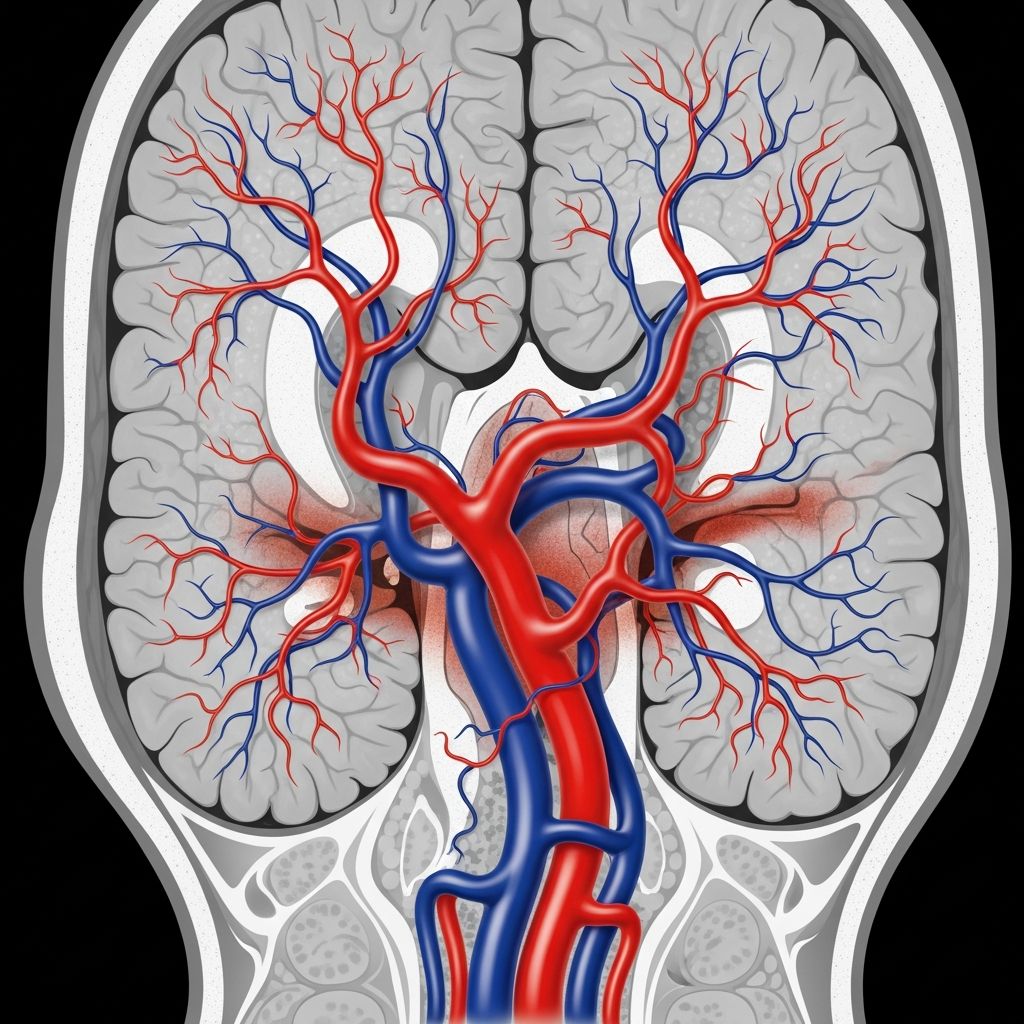
An arteriovenous malformation, commonly abbreviated as AVM, is an abnormal tangle of blood vessels that creates irregular connections between arteries and veins. Instead of following the normal circulatory pathway where arteries deliver oxygen-rich blood to capillaries, which then transfer oxygen to tissues before blood returns through veins, an AVM causes blood to flow directly from arteries to veins, bypassing the crucial capillary network. This disruption fundamentally alters how oxygen reaches surrounding tissues and can lead to serious complications if left untreated.
AVMs can occur anywhere in the body, but they are most commonly found in the brain and spinal cord. The condition affects blood flow in a manner that deprives surrounding tissues of adequate oxygen supply. Understanding this condition is essential for recognizing symptoms early and seeking appropriate medical intervention.
What Happens During an AVM?
Blood Flow Disruption
In a normal circulatory system, blood flows from arteries into smaller vessels called capillaries, where oxygen exchange occurs with surrounding tissues. In an AVM, this orderly process breaks down. Blood flows rapidly from arteries directly into veins without passing through capillaries. This accelerated blood flow prevents tissues from absorbing adequate oxygen, leading to tissue damage and potential cell death.
Pressure and Vessel Weakness
The abnormal blood vessel tangle in an AVM puts extreme pressure on the walls of affected arteries and veins. Over time, this constant pressure weakens the vessel walls, making them thin and prone to rupture. A bulge in a weakened blood vessel wall, known as an aneurysm, may develop and carries significant risk of bursting. The increased pressure and flow can elevate blood pressure inside these abnormal vessels to dangerous levels.
Symptoms of Arteriovenous Malformations
One of the challenging aspects of AVMs is that many people have no symptoms at all. Up to 15% of individuals with AVMs experience no symptoms, and their condition may be discovered incidentally during medical imaging for other reasons. However, when symptoms do occur, they can be serious and warrant immediate medical attention.
Common Symptoms
The symptoms of an AVM depend largely on its location and size. Common symptoms include:
- Seizures
- Headaches, often localized to one area
- Dizziness and loss of balance
- Vision problems, including vision loss or difficulty moving the eyes
- Muscle weakness or numbness in specific body areas
- Paralysis or loss of movement and feeling
- Problems with speech or language comprehension
- Loss of consciousness
- Confusion or difficulty thinking
- Hallucinations or perceiving things that are not present
- Memory loss or dementia
- Nausea and vomiting
- Loss of coordination affecting walking and balance
- Back pain (particularly with spinal AVMs)
Brain AVM Symptoms
Brain AVMs present particular challenges because approximately 50% of people experience bleeding (hemorrhage) as their initial symptom. When this occurs, symptoms can be sudden and severe, including a sudden severe headache, weakness or numbness on one side of the body, vision loss, trouble speaking, and confusion. These symptoms often resemble stroke symptoms and constitute a medical emergency.
Special Presentation in Infants
A specific type of brain AVM called a vein of Galen malformation presents symptoms at or shortly after birth. Affected infants may show signs including an abnormally enlarged head due to fluid buildup, swollen veins visible on the scalp, seizures, failure to thrive, and congestive heart failure. This type requires specialized attention from pediatric neurological specialists.
Related Stories



Causes and Risk Factors
Unlike many medical conditions, AVMs are believed to be congenital, meaning they are present from birth, although the exact cause remains unclear. AVMs are not thought to be hereditary or caused by lifestyle factors. They develop due to abnormal formation of blood vessels during fetal development. Research suggests that AVMs may result from a combination of genetic and environmental factors that disrupt normal vascular development in the womb, though the specific mechanisms are not fully understood.
Complications of AVMs
Brain Hemorrhage
The most serious complication of an AVM is brain hemorrhage or bleeding into the brain tissue. This occurs when weakened blood vessel walls rupture under pressure. Brain AVMs have a bleeding risk of approximately 2-3% per year, though this risk may be higher for certain types of AVMs or in individuals who have previously experienced a hemorrhage. Severe bleeding can cause stroke, brain damage, and potentially life-threatening situations.
Reduced Oxygen Supply
The abnormal blood vessel configuration prevents normal oxygen delivery to surrounding tissues. As oxygen-deprived tissue weakens or dies, stroke-like symptoms develop, including speech difficulties, weakness, numbness, vision loss, and balance problems. This process can occur gradually over time as the AVM persists.
Aneurysm Formation
Weakened blood vessel walls may develop bulges called aneurysms. These thin-walled, balloon-like formations are at risk of rupturing, which can lead to life-threatening bleeding.
Brain Tissue Displacement
As an AVM grows, it may expand and displace or compress adjacent brain tissue. The body may develop additional blood vessels to supply the growing malformation. If fluid accumulates around the compressed tissue, it can push brain tissue against the skull, causing increased intracranial pressure and neurological damage.
Diagnosis of Arteriovenous Malformations
AVMs are diagnosed through various imaging techniques. These may include magnetic resonance imaging (MRI), computerized tomography (CT) scans, angiography, or ultrasound. Many AVMs are discovered incidentally when patients undergo imaging for other medical concerns. If an AVM is suspected based on symptoms or imaging findings, specialized imaging such as cerebral angiography may be performed to precisely characterize the malformation and guide treatment planning.
When to Seek Medical Attention
Medical evaluation is necessary if you experience any symptoms associated with AVMs, including persistent headaches, dizziness, vision problems, seizures, or changes in thinking patterns. If you experience sudden severe headache, sudden weakness or numbness, vision loss, trouble speaking, confusion, or loss of consciousness, seek emergency care immediately by calling 911 or going to the nearest emergency department. These symptoms may indicate a bleeding AVM requiring urgent intervention.
Treatment Options
Treatment approaches for AVMs vary depending on the size, location, and symptoms of the malformation. Options may include observation with regular monitoring, surgical removal, endovascular intervention (using catheters to deliver medications or embolic agents), radiation therapy, or a combination of approaches. The goal of treatment is typically to eliminate the AVM or reduce bleeding risk while minimizing damage to surrounding healthy tissue.
Living with an AVM
Many people live with asymptomatic AVMs without requiring treatment. However, regular follow-up with a neurologist or neurovascular specialist is important. Those with symptomatic AVMs may need ongoing treatment and monitoring. Support from healthcare providers, family, and potentially patient support groups can help individuals manage their condition effectively.
Frequently Asked Questions
Q: Can an AVM be cured?
A: Yes, AVMs can be cured through surgical removal, endovascular intervention, or radiation therapy. However, the specific treatment depends on the AVM’s size, location, and characteristics. Some AVMs may be monitored rather than treated if they are not causing symptoms.
Q: Is an AVM hereditary?
A: AVMs are not thought to be hereditary. They are believed to be congenital malformations that occur during fetal development, though the exact cause remains unknown.
Q: What is the risk of an AVM bleeding?
A: Brain AVMs have a bleeding risk of approximately 2-3% per year. However, this risk may be higher for certain AVM types or in individuals who have previously experienced a hemorrhage. The bleeding risk varies based on AVM characteristics and individual factors.
Q: Can I die from an AVM?
A: Yes, AVMs can be life-threatening, particularly if they rupture and cause severe brain hemorrhage. However, many people with AVMs live normal lifespans, especially if the condition is detected early and managed appropriately.
Q: How common are AVMs?
A: AVMs affect approximately 0.1% of the general population. They are most common in the brain and spinal cord but can occur anywhere in the body.
Q: What should I do if I think I have symptoms of an AVM?
A: Consult with your healthcare provider. If you experience symptoms like sudden severe headache, weakness, vision loss, or loss of consciousness, seek emergency medical care immediately.
References
- Arteriovenous Malformation: Symptoms and Causes — Mayo Clinic. 2024-04-06. https://www.mayoclinic.org/diseases-conditions/arteriovenous-malformation/symptoms-causes/syc-20350544
- Brain AVM (Arteriovenous Malformation): Symptoms and Causes — Mayo Clinic. 2024-04-06. https://www.mayoclinic.org/diseases-conditions/brain-avm/symptoms-causes/syc-20350260
- Arteriovenous Malformations — MedlinePlus, U.S. National Library of Medicine. https://medlineplus.gov/arteriovenousmalformations.html
- Arteriovenous Malformation: Causes & Symptoms — Cleveland Clinic. https://my.clevelandclinic.org/health/diseases/16755-arteriovenous-malformation-avm
- Arteriovenous Malformations: Symptoms and Causes — Penn Medicine. https://www.pennmedicine.org/conditions/arteriovenous-malformations-avm
- Arteriovenous Malformations — Stanford Healthcare. https://stanfordhealthcare.org/medical-conditions/brain-and-nerves/arteriovenous-malformation/symptoms.html
- Brain Arteriovenous Malformation (AVM) — Society of NeuroInterventional Surgery. https://snisonline.org/avm/
Similar Articles








Read full bio of Sneha Tete